

Sustainable hotels are defined by their use of eco-friendly materials, energy-efficient systems, and design practices that reduce environmental impact. A direct consequence of these choices is superior acoustic comfort. The same recycled insulation that cuts energy loss also blocks sound. The same vibration-isolated HVAC that saves power also eliminates mechanical hum. Understanding why sustainable hotels have quieter environments means understanding that green design and acoustic design share the same physical principles. Standards like LEED and BREEAM align acoustic comfort with sustainability goals, making quietness a built-in feature rather than an afterthought. For travellers who value rest, this connection matters enormously.
Why sustainable hotels have quieter environments: the core design link
Sustainable construction uses materials with high mass and density, and both properties block sound transmission. Recycled concrete, rammed earth, and cork-backed flooring all perform double duty: they reduce a building's carbon footprint and they stop noise from travelling between rooms.
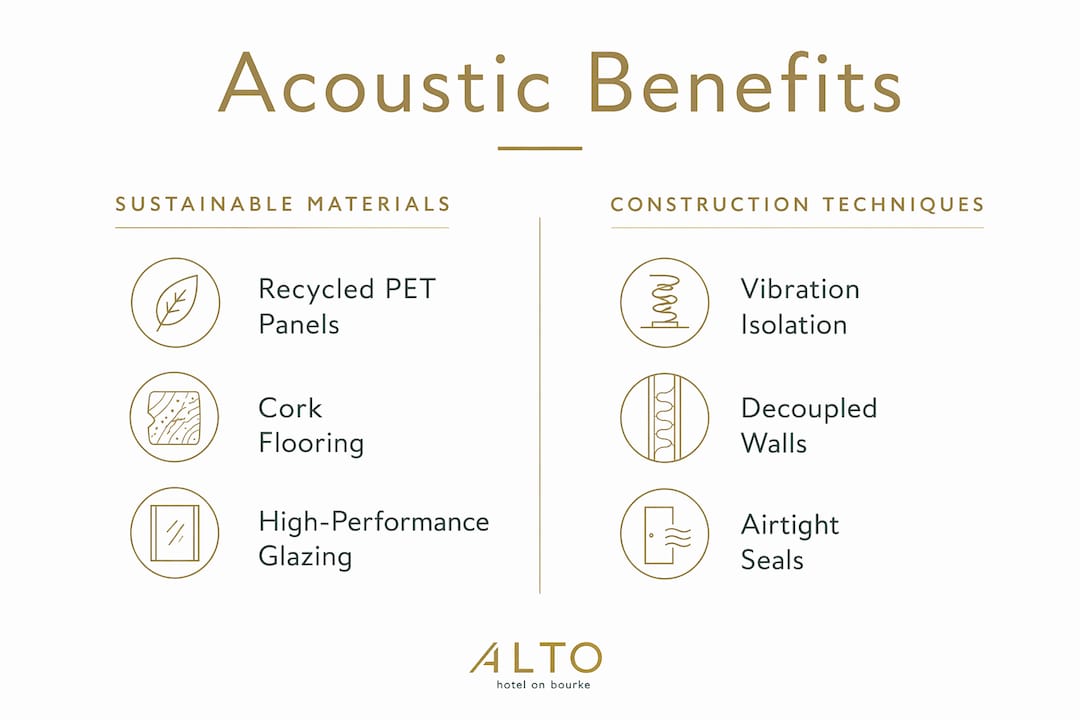
The acoustic performance of these materials is measurable. Recycled PET acoustic panels reach Noise Reduction Coefficient (NRC) values above 0.85, meaning they absorb more than 85% of sound energy that strikes them. That figure puts them ahead of many conventional synthetic panels, which typically score in the 0.60–0.75 range.
Green building certifications reinforce this advantage. LEED and BREEAM both include acoustic performance criteria, so hotels pursuing these ratings must meet minimum sound isolation standards. The result is that a certified sustainable hotel has been independently verified to control noise, not just energy.
Pro Tip: When booking, look for hotels that display LEED or BREEAM certification. These ratings confirm that acoustic standards were assessed during construction, not just claimed in marketing copy.
How construction techniques seal out sound
Material choice is only part of the story. Construction technique determines whether those materials perform as intended. The most common failure point in hotel soundproofing is not the wall itself but the gaps around it.
Flanking paths such as electrical back-boxes, exhaust ducts, and slab edges allow sound to bypass even well-built walls. Sustainable construction addresses these paths directly because airtight building envelopes are also a requirement for energy efficiency. Sealing a gap to stop heat loss simultaneously stops sound leakage. This overlap is one of the clearest examples of why eco-friendly hotel noise reduction is structurally superior to conventional approaches.
Decoupling is another technique used in sustainable builds. Walls and floors are constructed so that surfaces do not share a rigid connection, which prevents vibration from transferring between spaces. Combined with dense, recycled infill materials, decoupled assemblies produce the kind of silence that travellers notice the moment they close the door.
| Feature | Conventional approach | Sustainable approach |
|---|---|---|
| Wall insulation | Fibreglass batts, NRC ~0.65 | Recycled PET or cork, NRC >0.85 |
| Flooring underlay | Foam sheet, minimal mass | Cork or recycled rubber, high mass |
| Electrical back-boxes | Standard, unlined | Acoustically sealed, airtight |
| Window glazing | Single or basic double glaze | High-performance acoustic glazing |
| HVAC mounting | Direct fixed to structure | Vibration-isolated from structure |
How do sustainable operational practices reduce hotel noise?
Design sets the baseline, but operations determine the day-to-day acoustic experience. Sustainable hotels maintain their equipment to a higher standard, and that discipline directly reduces noise.
HVAC systems are the single largest source of guest complaints. HVAC noise accounts for 35–40% of all noise complaints in hotels. Sustainable properties address this through vibration isolators, fan balancing, and regular servicing, which together reduce complaints by 60–80%. Energy-efficient HVAC units also run at lower speeds for longer periods rather than cycling on and off loudly, which produces a steadier and quieter background.

Door seals and window glazing are the weakest acoustic links in any guest room, and they are also the highest-return upgrades available. Replacing worn door seals reduces corridor noise by 50–70%, and upgrading to acoustic glazing cuts external noise by 30–60%. Sustainable hotels prioritise these upgrades because they also improve thermal performance, making the investment worthwhile on two fronts simultaneously.
Thermal and acoustic insulation improvements overlap in sustainable hotels, reducing energy consumption and noise at the same time. This is not a coincidence. It reflects a design philosophy where every material and system serves multiple purposes.
Pro Tip: Ask the hotel whether their HVAC units are vibration-isolated from the building structure. This single detail predicts more about room quietness than almost any other factor.
The top noise-reduction measures that deliver the best return in green hotels are:
- Vibration isolation mounts on all mechanical plant and HVAC equipment
- Acoustic door seals replaced on a scheduled maintenance cycle
- High-performance acoustic glazing on street-facing and corridor-adjacent rooms
- Airtight sealing of all penetrations through walls and floors
- Preventive maintenance programmes that catch bearing wear before it becomes audible noise
What role does soundscaping play in sustainable hotels?
Noise and sound are not the same thing. Noise is unwanted sound. Sound, when curated, can actively improve wellbeing. Sustainable hotels recognise this distinction and use it deliberately.
Acoustic biophilia is the practice of introducing natural sounds, flowing water, wind through foliage, and birdsong, to mask disruptive urban noise. These sounds are non-repetitive and non-mechanical, which means the brain processes them as calming rather than intrusive. Hotels that use acoustic biophilia report measurable improvements in guest relaxation without adding any chemical or energy-intensive intervention.
"The most effective hotel soundscapes do not eliminate all sound. They replace harsh, unpredictable urban noise with gentle, natural sound that the nervous system interprets as safe. The result is a room that feels quieter than its decibel reading would suggest."
Sound masking systems in sustainable hotels use naturalistic, non-repetitive ambient sounds rather than clinical white noise. This approach aligns with sustainability values because it avoids synthetic, energy-intensive audio equipment and instead draws on recordings of natural environments.
Acoustic zoning is the spatial complement to soundscaping. Sustainable hotels design their floor plans so that noise-generating areas, lobbies, restaurants, and lift cores, are physically separated from guest rooms by buffer zones. Acoustic zoning creates a gradation from lively public spaces to calm private suites, with each transition absorbing more sound. Travellers who choose eco boutique hotels for a quiet stay benefit from this zoning even when they are not aware it exists.
The practical elements of effective soundscaping in sustainable hotels include:
- Curated water features in corridors and courtyards to mask street noise
- Planted green walls that absorb mid-frequency sound and add natural texture
- Acoustic zoning plans that place service areas away from sleeping zones
- Natural material finishes such as timber, stone, and wool that absorb rather than reflect sound
- Guest-controlled ambient sound options using recordings of natural environments
Why do travellers prefer sustainable hotels for quiet stays?
Travellers have become explicit about what they want from accommodation. 84% of travellers would pay more for a guaranteed quiet stay, and 70% rank soundproofing above in-room entertainment when choosing a hotel. These figures show that acoustic comfort is no longer a luxury preference. It is a mainstream expectation.
The connection between quietness and perceived quality runs deep. Guests who sleep well write better reviews. Better reviews attract more guests. Systematic noise reduction cuts guest relocations due to noise by up to 70%, which directly reduces service failures and the negative reviews that follow them. For hotel operators, acoustic investment is also a reputation investment.
Eco-conscious travellers add another layer to this preference. They choose sustainable accommodations because they want their stay to align with their values. When quietness is a direct product of sustainable design, it reinforces the sense that the hotel has thought carefully about every aspect of the guest experience. Understanding how to choose an environmentally rated boutique hotel helps travellers identify properties where this integration is genuine rather than cosmetic.
The guest experience in a well-designed sustainable hotel reflects this alignment at every point of contact, from the moment a guest enters a room to the quality of sleep they achieve. Couples travelling together particularly benefit from this, as shared rest in a genuinely quiet room is one of the most consistent drivers of positive stay memories.
The reasons travellers prefer sustainable hotels for quiet stays include:
- Verified acoustic performance through green building certification
- Energy-efficient equipment that runs quietly rather than cycling noisily
- Natural materials that absorb sound rather than reflecting it
- Thoughtful zoning that keeps noise sources away from sleeping areas
- A design philosophy that treats guest wellbeing as inseparable from environmental responsibility
Key takeaways
Sustainable hotels produce quieter environments because their materials, construction methods, and operational practices all reduce noise as a direct consequence of reducing environmental impact.
| Point | Details |
|---|---|
| Material performance | Recycled PET panels absorb over 85% of sound energy, outperforming most conventional alternatives. |
| Construction precision | Sealing flanking paths like ducts and back-boxes prevents sound from bypassing well-built walls. |
| Operational discipline | Vibration-isolated HVAC and scheduled door seal replacement reduce noise complaints by 60–80%. |
| Soundscaping | Natural sound masking and acoustic zoning create calm without energy-intensive interventions. |
| Traveller preference | 84% of travellers will pay more for quiet, making acoustic comfort a direct driver of guest loyalty. |
Quiet by design: what I've learned about sustainable hotels and sound
Most travellers assume that a quiet hotel room is simply a matter of thick walls. After spending considerable time studying how sustainable properties approach acoustic comfort, I can say that assumption misses most of the picture.
The hotels that get this right treat acoustic design as a system. Materials, maintenance schedules, floor plan zoning, and even the sounds played in corridors all interact. A hotel can have excellent wall construction and still be noisy because someone forgot to seal the exhaust duct penetrations. I have seen this exact failure in otherwise well-built properties.
What sustainable hotels do differently is that they cannot afford to cut corners on sealing and insulation because those same corners affect their energy ratings. The discipline required for a LEED or BREEAM certification forces a level of construction rigour that conventional hotels simply do not face. Quietness arrives as a consequence of that rigour.
My advice for travellers seeking genuinely quiet eco-friendly stays: look beyond the marketing language. Ask specifically whether the property holds a recognised green building certification. Check whether rooms are described as acoustically zoned or thermally insulated with recycled materials. These details signal that the quietness is structural, not cosmetic. Properties like Altohotel, which hold verified environmental ratings, are the clearest example of what this integrated approach looks like in practice.
— Kamal
Altohotel: where sustainable design meets genuine quiet

Altohotel is Melbourne's first environmentally rated boutique hotel, and its acoustic comfort is a direct product of its sustainable design. The hotel's eco-conscious materials, energy-efficient systems, and thoughtful room layouts work together to create the kind of quiet that travellers actually notice. Every room type reflects this commitment, from the spacious 2 Bedroom Sleepover to the compact and considered Petite Queen. Altohotel has earned Hall of Fame recognition in the Victorian tourism sector, a result of consistently delivering on the promise that sustainability and comfort are not competing priorities. Browse the full accommodation overview to find the room that suits your stay.
FAQ
Why are sustainable hotels generally quieter than standard hotels?
Sustainable hotels use dense, recycled materials and airtight construction techniques that block sound as a direct consequence of reducing energy loss. Green building standards like LEED and BREEAM require acoustic performance criteria, so certified properties meet verified noise isolation benchmarks.
What materials make eco-friendly hotels quieter?
Recycled PET acoustic panels, cork-backed flooring, and high-performance acoustic glazing are the most common materials. Recycled PET panels reach NRC values above 0.85, absorbing more than 85% of sound energy in guest rooms.
How does HVAC design affect hotel noise levels?
HVAC noise accounts for 35–40% of all guest noise complaints. Sustainable hotels mount equipment on vibration isolators and balance fans regularly, which reduces complaints by 60–80% compared to conventionally maintained systems.
What is acoustic zoning in a hotel?
Acoustic zoning is the practice of arranging a hotel's floor plan so that noisy public areas, such as lobbies and restaurants, are separated from guest rooms by buffer spaces. This creates a gradation from loud to quiet that protects sleeping areas without relying solely on wall insulation.
Do sustainable hotels use sound masking systems?
Many sustainable hotels use naturalistic, non-repetitive ambient sounds, recordings of water, wind, or birdsong, rather than synthetic white noise. This approach aligns with sustainability values and improves guest relaxation more effectively than mechanical noise generators.