
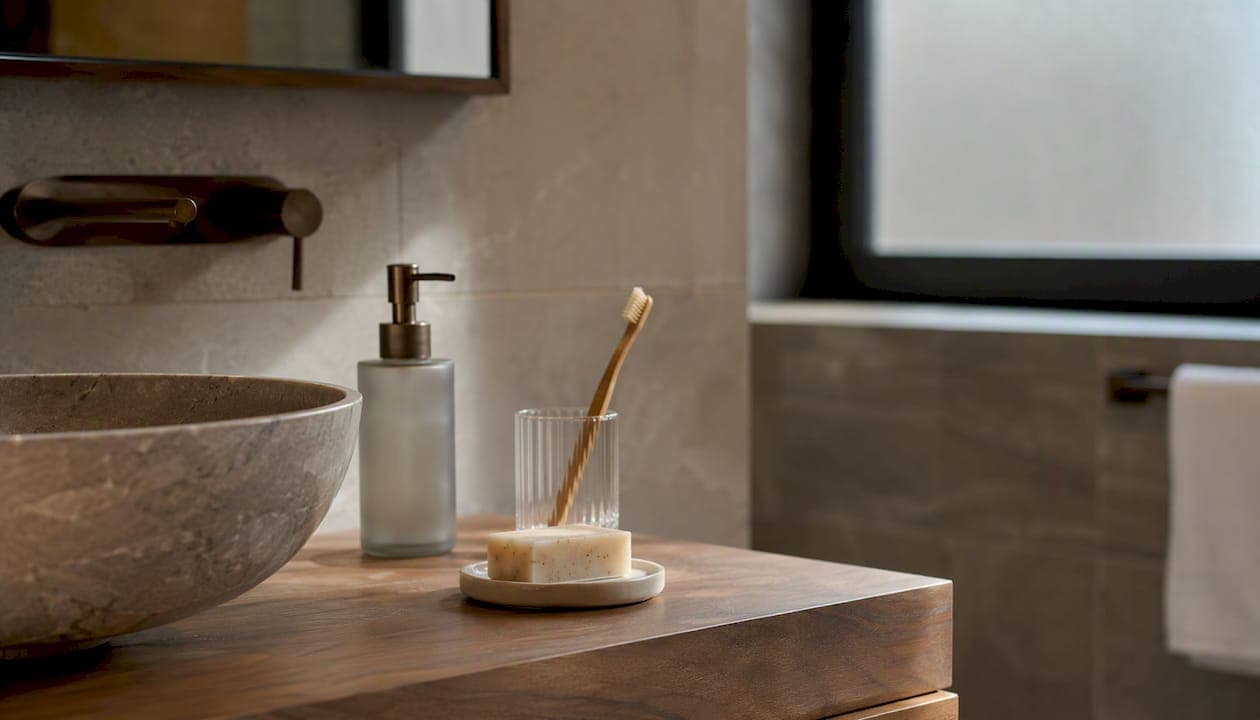
Plastic-free hotel amenities matter because they reduce pollution at every stage of a product's life, meet the expectations of a growing share of travellers who actively choose greener accommodation, and position hotels ahead of tightening regulation. The single best first step for any property is a room-by-room amenity audit: count every single-use plastic SKU, estimate nightly waste per occupied room, and use that baseline to run a focused pilot on one floor or room type before committing to a full rollout. Survey data from Statista confirms that a sizeable share of travellers intend to choose green lodging in the coming year, and the EU's Packaging and Packaging Waste Regulation (PPWR) is already pushing the hospitality industry toward refillable and bulk formats. Alto Hotel on Bourke in Melbourne has been running this playbook since its earliest days as one of the city's first environmentally rated properties.
Key takeaways
Plastic-free hotel amenities reduce environmental harm, meet growing guest demand, and position properties ahead of regulatory change, making the switch both a values decision and a sound business move.
| Point | Details |
|---|---|
| Start with an audit | Count every single-use plastic SKU and measure nightly waste per room before buying anything. |
| Pilot before you scale | Test one floor or room type for four to six weeks, collect guest feedback, then roll out. |
| Guest demand is real | Survey data shows a sizeable share of travellers actively choose green lodging, supporting the business case. |
| Regulation is accelerating | The EU PPWR phases out single-use miniatures toward 2030; Australian packaging targets are tightening too. |
| Measure what matters | Track kilograms of plastic avoided, refill utilisation rate, and sustainability mentions in guest reviews. |
Table of Contents
- Why plastic-free hotel amenities matter for the environment
- Do guests actually care, and what does it mean for your brand?
- What does switching actually cost, and how long does it take?
- How to switch to plastic-free amenities step by step
- What are the best plastic-free amenity alternatives?
- Hygiene, safety and regulatory considerations
- How do you measure the impact of going plastic-free?
- Alto Hotel on Bourke: a real-world example
- Final checklist before you start, and pitfalls to avoid
- The shift is real, and it rewards early movers
- Sources
Why plastic-free hotel amenities matter for the environment
Every miniature shampoo bottle starts life as a fossil-fuel feedstock. Petrochemical refining, injection moulding, filling, labelling, and then shipping a water-heavy 30 ml product thousands of kilometres before a guest uses it for three minutes and throws it away: the lifecycle is genuinely wasteful at every link. Once in landfill or waterways, those bottles fragment into microplastics that persist in marine ecosystems for centuries.
The carbon footprint of bathroom amenities is relatively small compared with a hotel's energy and water use, and The Independent's analysis makes this point clearly: refillable dispensers are a practical, low-effort first step, but they work best as part of a broader sustainability strategy rather than a standalone fix. That context matters for procurement teams who want to communicate honestly with guests rather than overstate the impact of a single swap.
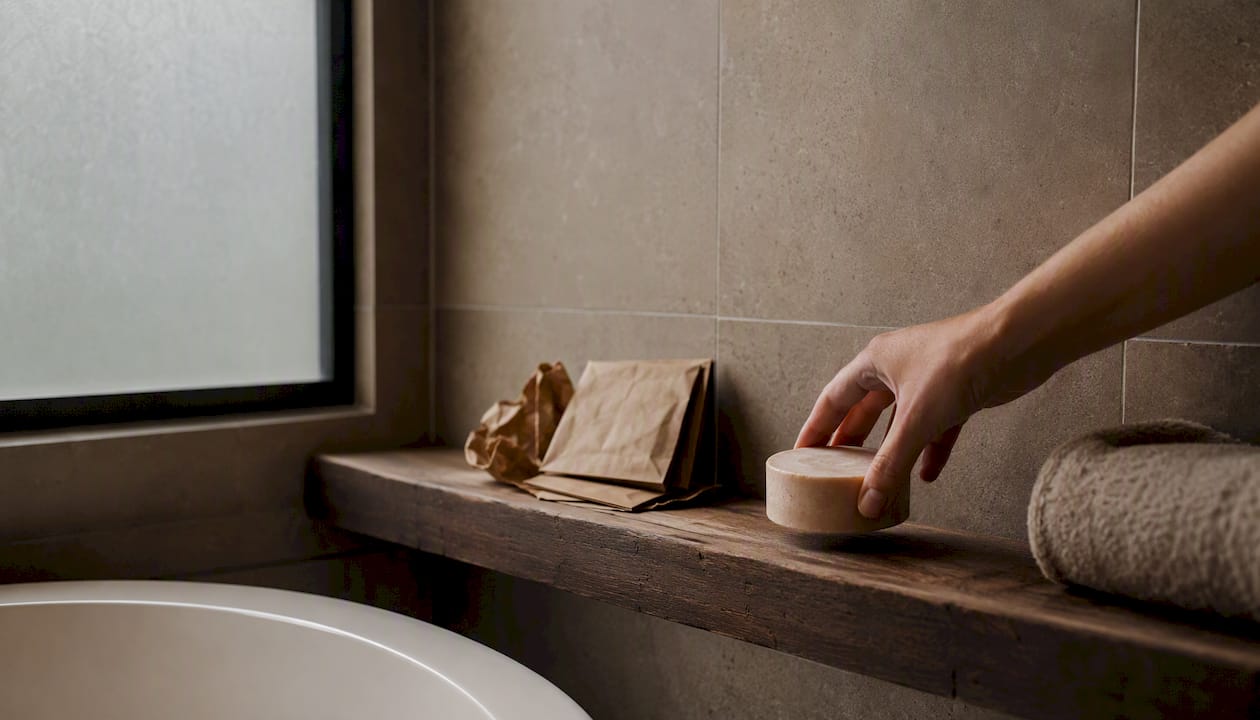
Solid bars and concentrated powder formats cut transport emissions more sharply than liquid refillables do, because they remove the water weight that drives freight costs and fuel burn. A pallet of solid shampoo bars ships the equivalent of many times more doses than the same pallet of miniature bottles. That arithmetic alone makes the format worth serious consideration beyond the plastic-waste angle.
Pro Tip: Ask suppliers for Environmental Product Declarations (EPDs) or third-party lifecycle assessment summaries before signing a procurement contract. An EPD gives you a verified, comparable carbon and waste figure rather than a marketing claim, and it gives your sustainability reporting real teeth.
Do guests actually care, and what does it mean for your brand?
The short answer is yes, and the signal is getting stronger. Statista's survey data shows a meaningful share of travellers plan to stay in green lodging in the near term, and that preference is translating into booking behaviour, not just stated intention.
The wellness angle is where the guest-experience argument gets particularly sharp. Hotel Yearbook's industry commentary notes that travellers increasingly notice the contradiction when a property markets itself as a wellness destination while still stocking single-use plastic amenities. A bamboo toothbrush and a refillable dispenser in a thoughtfully designed bathroom reinforce the wellness story; a rack of miniature bottles undermines it. The credibility gap is real, and travel influencers and wellness communities amplify it quickly.
Direct guest-facing benefits of switching include:
- Stronger review mentions. Guests who notice eco-friendly amenities tend to call them out in reviews, which improves a property's visibility on OTA platforms that surface sustainability filters.
- Loyalty and repeat bookings. Eco-conscious travellers are often deliberate choosers; when a property earns their trust, they return and refer.
- Corporate travel wins. Many corporate travel policies now require accommodation partners to meet minimum sustainability criteria. A sustainable corporate travel policy alignment opens doors to business accounts that would otherwise pass.
- Premium positioning. Private-label amenity kits with consistent, minimal packaging read as luxury. Research confirms that product presentation matters as much as the product itself: a well-designed solid bar in a kraft-paper sleeve can feel more premium than a plastic miniature.
Understanding what eco-conscious travellers look for when booking helps properties frame their amenity choices as a genuine differentiator rather than a compliance exercise.
What does switching actually cost, and how long does it take?
The honest answer is that upfront costs vary widely by property size and format choice, but the medium-term economics tend to favour the switch. Here is a realistic picture.
Typical cost components:
- Dispenser hardware: wall-mounted units range from budget stainless to premium ceramic; a mid-range unit per bathroom is the most common starting point.
- Refill product: bulk liquid or concentrate costs less per dose than miniatures once you account for packaging and logistics.
- Staff time: initial training and adjusted housekeeping procedures add hours in the pilot phase, then normalise.
- Guest communication materials: welcome cards, bathroom signage, and OTA listing updates.
Hotels that have tracked the numbers report that switching to eco-friendly consumables can eliminate hidden costs including complaint handling, excess inventory from unused miniatures, and logistics inefficiencies. At scale, several tracked examples show net cost improvements after the first year.
Innlead frames the sustainable hotel supplies market as a significant commercial opportunity, with regulatory changes including 2026 packaging actions accelerating demand for bulk and refillable formats. Properties that move early avoid the cost of reactive compliance later.
Pilot to full rollout: a realistic timeline:
- Weeks 1–2: Amenity audit, supplier shortlist, baseline waste measurement.
- Weeks 3–6: Pilot on one floor or room type; test dispenser installation, refill logistics, and housekeeping workflow.
- Weeks 7–10: Collect guest feedback, review waste data, adjust product selection if needed.
- Month 3–6: Phased rollout to remaining room types; update OTA listings and CSR reporting.
- Month 6+: Full scale, supplier SLA review, and annual impact reporting.
The EU PPWR regulatory timeline phases out single-use miniatures and sets targets toward 2030. Properties operating in or supplying EU markets should treat 2026 as the planning year, not the compliance year.
Pro Tip: Negotiate a trial order with your preferred supplier before committing to a full property rollout. Most reputable wholesale suppliers will provide sample dispensers and a small refill batch at cost. This protects your budget and gives housekeeping a real-world test before the contract is signed.
How to switch to plastic-free amenities step by step
A structured approach prevents the two most common failure modes: buying product before testing it, and rolling out without staff buy-in.
Quick audit checklist:
- List every amenity SKU currently in rooms: shampoo, conditioner, body wash, soap, toothbrush, toothpaste, razor, shower cap, cotton buds, and any branded extras.
- Record the packaging material and weight for each SKU.
- Calculate nightly plastic waste per occupied room (weight of all single-use items placed, minus any returned unused).
- Check supplier capability: can your current supplier provide refillable or solid alternatives, or do you need a new procurement relationship?
- Identify any allergen or 'free-from' labelling requirements your guest profile demands.
Pilot plan:
- Select one room type or a single floor as the test environment.
- Install dispensers or place solid bars; brief housekeeping on refill schedules and cleaning protocols.
- Run the pilot for a minimum of four weeks to capture a statistically useful sample of guest stays.
- Collect feedback via a short in-room card or post-stay survey question.
- Review waste weight data against the pre-pilot baseline and adjust.
Staff training bullets:
- Explain the why before the how: staff who understand the environmental and brand rationale communicate it naturally to guests.
- Demonstrate dispenser refill and cleaning procedures in a hands-on session, not just a written manual.
- Establish a clear escalation path for guest complaints about product quality or dispenser function.
Guest communication template (welcome card):
Keep it short. Guests who care will appreciate it; guests who don't will ignore it without feeling lectured.
Pro Tip: For a practical, detailed reference on how hotels reduce single-use plastics, Altohotel's own guide covers procurement decisions and operational considerations specific to boutique properties.
What are the best plastic-free amenity alternatives?
The four main format categories each suit different operational contexts. Here is a realistic assessment.
-
Wall-mounted refillable dispensers. The most operationally straightforward option for properties with consistent room turnover. Pros: lowest per-dose cost at scale, minimal guest-facing change. Cons: upfront hardware cost, cleaning discipline required, not ideal for luxury positioning without premium unit design.
-
Solid shampoo and soap bars. Excellent for boutique and lifestyle properties. Pros: no plastic packaging, high perceived quality when well-presented, easy to private-label. Cons: some guests are unfamiliar with solid shampoo; a brief card explaining use reduces complaints.
-
Powder-to-liquid concentrate formats. Emerging option with strong logistics advantages: dramatically reduced storage volume and transport emissions. Pros: long shelf life, low freight cost. Cons: requires guest instruction or pre-mixing by housekeeping; less intuitive than ready-to-use formats.
-
Bamboo toothbrushes and toothpaste tablets. Practical swaps that reduce plastic and tend to generate positive guest comments. Bamboo handles are compostable; toothpaste tablets eliminate the plastic tube entirely. Widely available from wholesale suppliers in both white-label and private-label formats.
-
Compostable and fibre-based packaging. For properties that retain some individually packaged items (soap, dental kits), kraft paper, moulded pulp, and certified compostable films are the standard alternatives. Verify compostability certification (e.g., AS 4736 in Australia) rather than relying on supplier claims.
Operational fit by property type:
| Format | Economy | Boutique | Luxury |
|---|---|---|---|
| Wall-mounted dispensers | Strong fit | Good fit | Fit with premium units |
| Solid bars | Good fit | Strong fit | Strong fit with private label |
| Concentrate powders | Good fit | Moderate fit | Moderate fit |
| Bamboo toothbrush | Strong fit | Strong fit | Strong fit |
| Compostable packaging | Good fit | Strong fit | Strong fit |
Private-label programmes let boutique and luxury properties put their own branding on solid bars and bamboo kits, which lifts perceived quality and reinforces brand identity without requiring a bespoke formulation.
Hygiene, safety and regulatory considerations
Dispensers require a cleaning protocol, and that protocol needs to be written down, trained, and audited. A dispenser that is refilled without cleaning the nozzle and reservoir is a hygiene risk, and a single guest complaint about contamination will cost more in reputation than the plastic saving is worth. The standard approach: empty and sanitise dispensers on a defined cycle (typically weekly for high-turnover rooms), log each clean, and use a tamper-evident seal on bulk refill containers.
Allergen labelling is non-negotiable. Every product in a guest-facing context must carry a full ingredient list accessible to the guest, whether that is printed on a solid bar wrapper, displayed on a QR code linked to a dispenser, or listed in the in-room compendium. Guests with contact allergies to common ingredients such as fragrance compounds or preservatives need this information.
On the regulatory side, the EU PPWR is the most significant current driver, phasing out single-use miniatures and setting reuse targets toward 2030. Properties in Australia should monitor the National Packaging Targets and state-level single-use plastics bans, which are tightening progressively. InnLead.ai's industry analysis notes that 2026 packaging actions are accelerating the shift across multiple jurisdictions, not just the EU.
Regulatory and hygiene checklist:
- Confirm compostability certifications on any packaging claiming to be compostable (AS 4736 or equivalent).
- Maintain a product traceability record: supplier, batch number, and date of refill for each room.
- Display or make accessible full ingredient lists for all amenity products.
- Schedule and log dispenser cleaning on a written housekeeping protocol.
- Monitor National Packaging Targets and relevant state bans for your jurisdiction.
- For properties with EU guests or EU market exposure, track PPWR implementation milestones.
How do you measure the impact of going plastic-free?
Measurement turns a sustainability initiative into a credible story, both for guest communication and for internal reporting. Without a baseline, you cannot demonstrate progress.
Core KPIs to track:
- Kilograms of plastic avoided per occupied room per month (compare post-switch weight against pre-audit baseline).
- Waste diversion rate: percentage of amenity waste diverted from landfill (compostable, recyclable, or refillable).
- Refill utilisation rate: volume of bulk product dispensed versus volume purchased (identifies waste in the refill system itself).
- Guest NPS or review sentiment: track the frequency of sustainability mentions in post-stay reviews using a simple keyword search on your OTA dashboard.
- Complaint rate related to amenity quality: a rising complaint rate after switching signals a product quality or communication problem.
Simple guest feedback question (post-stay survey):
Run this question for the first three months post-switch, then quarterly. A five-point scale plus an open comment field gives you both a trackable number and qualitative insight.
Data collection tools:
| Data source | What it measures | Cadence |
|---|---|---|
| Procurement records | Product volume purchased vs. prior period | Monthly |
| Housekeeping waste logs | Weight of amenity waste per room type | Weekly |
| OTA review dashboard | Sustainability keyword mentions | Monthly |
| Post-stay survey | Guest satisfaction with amenities | Quarterly |
Attribute savings carefully: reduced procurement spend on miniatures, lower waste disposal costs, and fewer complaint-related service recoveries are all measurable. Combine them into an annual impact summary for CSR reporting.
Alto Hotel on Bourke: a real-world example
Alto Hotel on Bourke moved away from conventional single-use amenities as part of its founding commitment to environmental stewardship, well before regulatory pressure made the conversation mainstream. The motivation was straightforward: the property's positioning as Melbourne's premier eco-friendly boutique hotel required its amenity choices to match its stated values. Guests booking an environmentally rated hotel notice when the bathroom tells a different story.
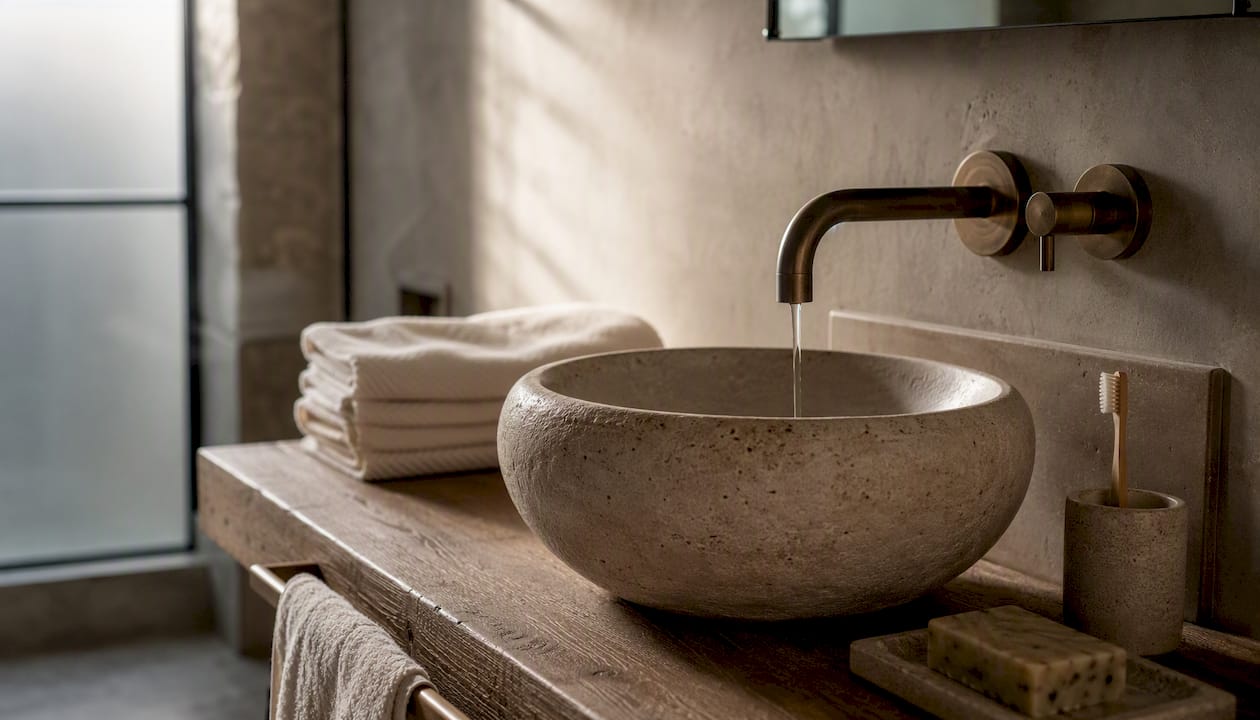
The operational shift involved replacing individually packaged miniatures with carefully selected alternatives aligned to the hotel's aesthetic. Housekeeping procedures were updated, staff were briefed on both the environmental rationale and the guest communication approach, and the change was integrated into the property's broader sustainability programme rather than treated as a standalone project.
Early outcomes at Alto Hotel reflected what the research predicts: guest feedback on amenities became a positive rather than a neutral element of reviews, and the property's sustainability credentials strengthened its positioning in a competitive Melbourne CBD market. The Hall of Fame recognition in the Victorian tourism sector reflects a sustained commitment, not a one-off initiative.
Lessons for other boutique properties:
- Start with the amenity audit before buying anything. Knowing your baseline waste figure makes every subsequent decision easier to justify.
- Choose products that fit your brand aesthetic, not just your environmental targets. A solid bar in mismatched packaging undermines both goals.
- Brief your team before guests arrive. Staff confidence in explaining the change is the single biggest factor in guest acceptance.
- Connect amenity choices to local sourcing and community partnerships where possible. MDPI research on sustainable amenities supports the view that integrated programmes linking local supply chains and community engagement build stronger reputations than product swaps alone.
Final checklist before you start, and pitfalls to avoid
Pre-launch checklist:
- Procurement sign-off: confirmed supplier, pricing, and delivery lead times for pilot quantities.
- Housekeeping sign-off: written cleaning and refill protocol, training session scheduled.
- Supplier SLA: agreed response time for product quality issues and refill delivery.
- Guest communications: welcome card copy approved, OTA listing sustainability section updated.
- Baseline data recorded: nightly plastic waste per room, current amenity spend per occupied room.
Common pitfalls:
- Over-engineering the pilot. Switching every amenity category simultaneously makes it impossible to isolate what is working. Start with one or two categories.
- Choosing on price alone. The cheapest solid bar or dispenser unit often fails on product quality or durability, generating guest complaints that cost more than the saving.
- Ignoring staff feedback. Housekeeping teams know within a week whether a dispenser is practical to clean and refill. Build in a formal feedback loop during the pilot.
- Forgetting the guest communication. Guests who encounter an unfamiliar format without explanation assume something has gone wrong. A single sentence on a welcome card prevents most complaints.
- Treating it as finished. Supplier formulations change, guest preferences shift, and regulation evolves. Schedule an annual amenity review.
As a longer-term move, look at circular procurement programmes where suppliers take back empty bulk containers for cleaning and reuse. These programmes reduce your waste stream further and often come with preferential pricing at volume. Integrating sustainability across food service operations alongside amenity changes compounds the impact; the 2026 operator guide on sustainability in food services offers a useful parallel framework for cross-department buy-in.
The shift is real, and it rewards early movers
The hospitality industry's move away from single-use plastic amenities is not a trend that will plateau. Regulatory pressure, guest expectations, and the economics of bulk purchasing are all pointing in the same direction, and properties that treat this as a compliance exercise will always be a step behind those that treat it as a brand opportunity.
What strikes me most, watching properties navigate this shift, is how often the hesitation comes down to fear of guest complaints rather than genuine operational barriers. The evidence does not support that fear. Guests who encounter a well-presented solid bar or a clean, clearly labelled dispenser respond positively, particularly when the property has taken the trouble to explain the choice. The complaints tend to come from poor product selection or absent communication, both of which are solvable before the pilot even launches.
Alto Hotel on Bourke is not an outlier. It is an early example of what a considered, integrated approach looks like in practice. The properties that will lead this space in the next five years are the ones starting their audits now, not waiting for a regulatory deadline to force the conversation.
Sources
The sources below are the most useful starting points for verifying claims, understanding regulation, and making procurement decisions.
- How hotel toiletries affect the environment — The Independent
- Innlead
- How hotels reduce plastic waste in 2026 — CHOOSE!™ Your Needs
- Share of travellers intending to stay in green lodging — Statista