
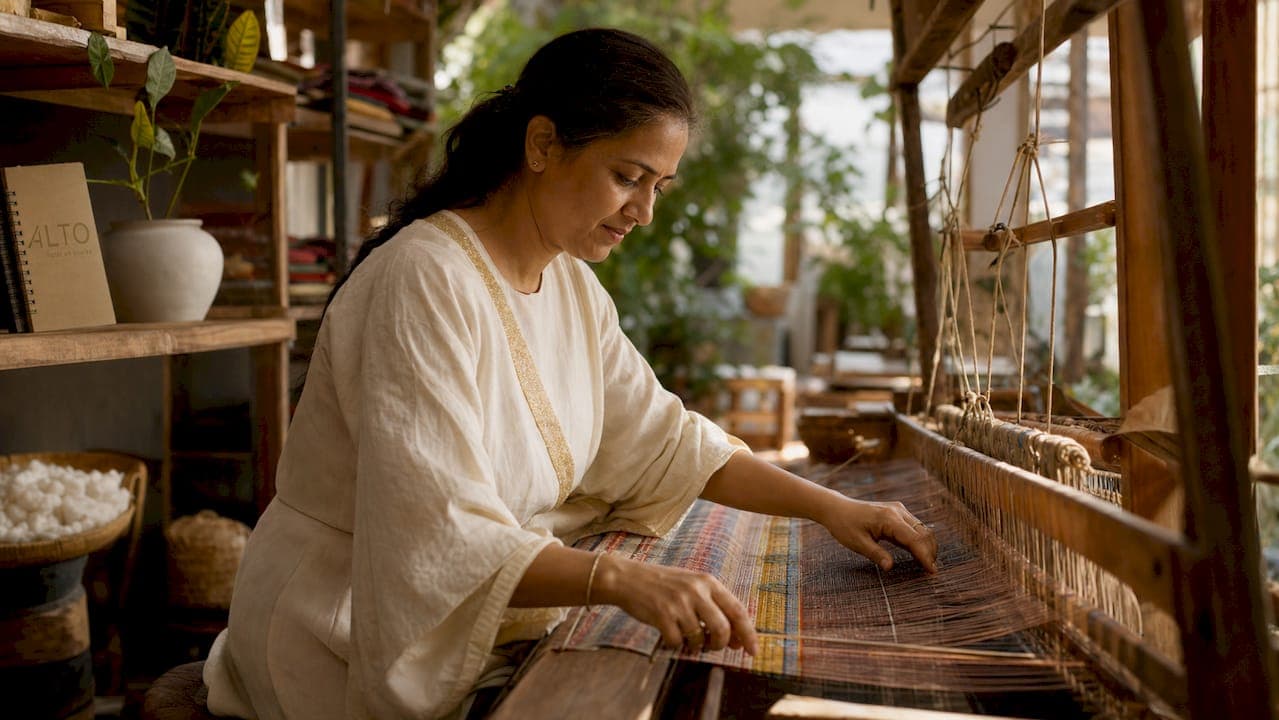
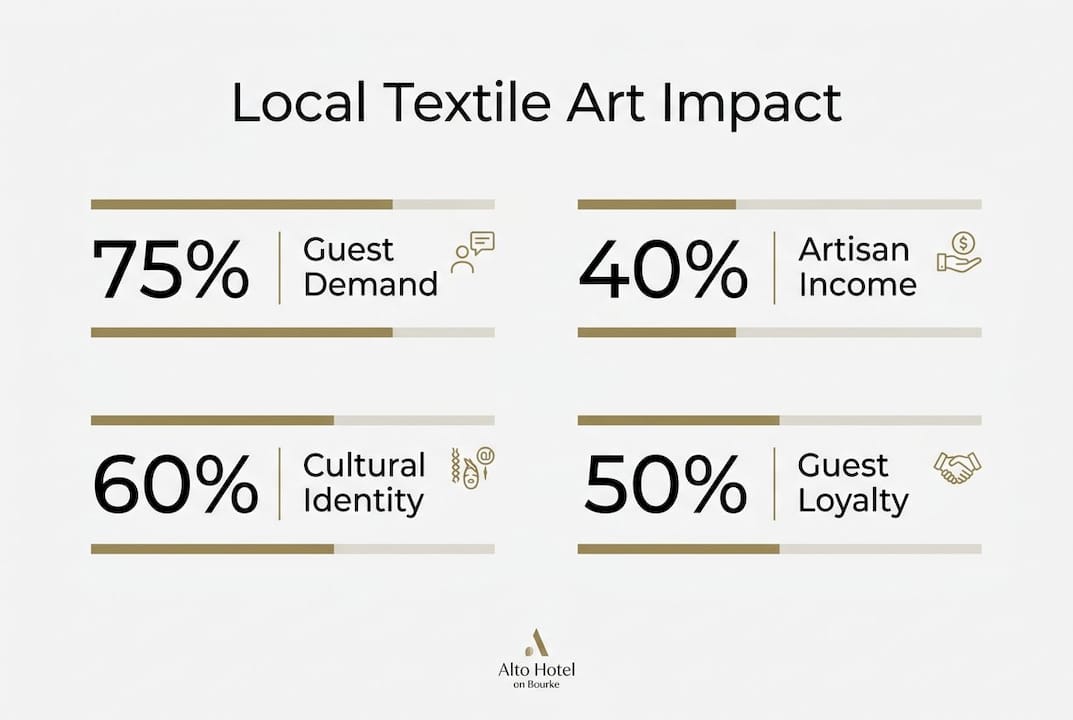
Local textile art is defined as handcrafted fabric work produced by regional artisans using traditional techniques, materials, and cultural motifs specific to a place. Hotels feature it because it solves a problem that generic decor cannot: 75% of young travellers express strong interest in hotels that integrate local artistic elements. That figure signals a fundamental shift in what guests expect from a stay. Altohotel, Melbourne's award-winning eco-friendly boutique hotel, recognises this shift and builds its guest experience around authentic local partnerships. The result is a space that feels rooted in place rather than assembled from a catalogue.
Why local textile art featured in hotels matters for guest experience
Local textile art gives a hotel a cultural identity that no paint colour or imported furniture can replicate. A handwoven wall piece or a block-printed linen tells a story about the region before a guest reads a single word of the welcome booklet. That storytelling function is the core reason why regional textile art has moved from a niche design choice to a mainstream hospitality strategy.
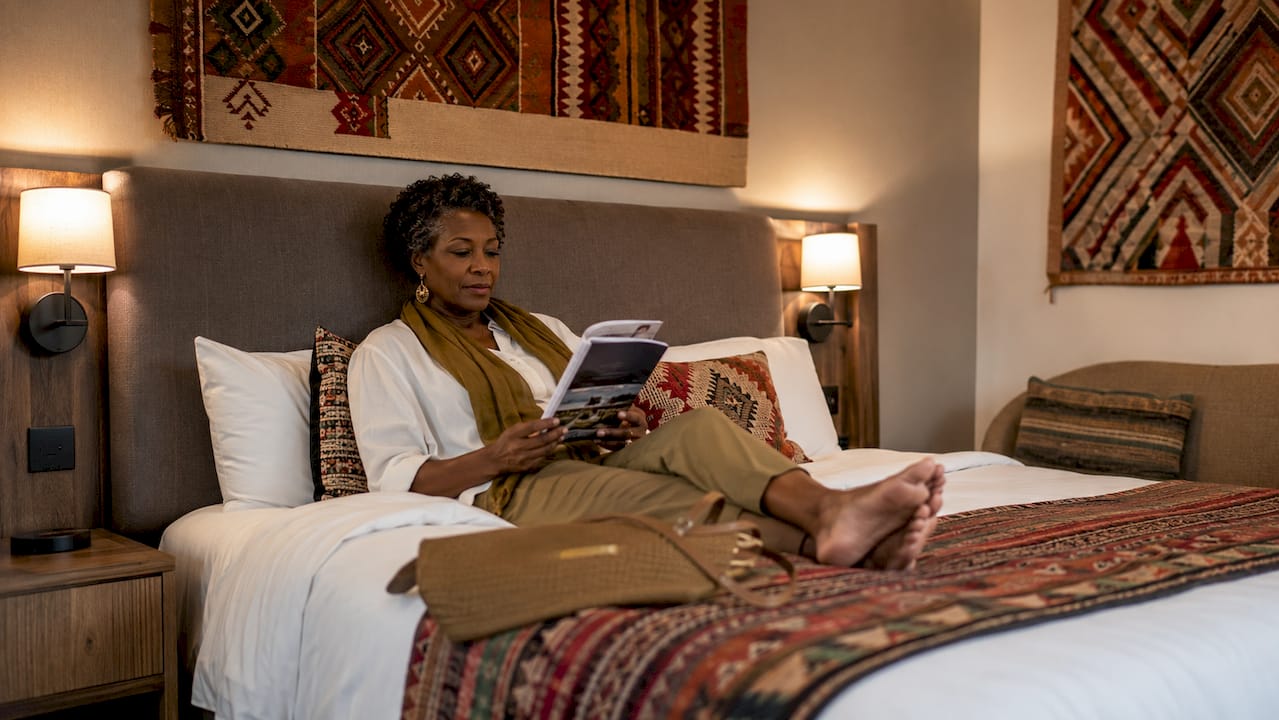
The guest satisfaction data supports this directly. 70% of travellers feel hotel stays lack a genuine connection to local culture. Hotels that address this gap with authentic textile art improve that perception measurably. The fix is not complicated: replace mass-produced wall art with a commissioned piece from a local weaver, and the room immediately carries a sense of place.
The benefits extend well beyond aesthetics. Local textile art:
- Creates a distinct visual identity that sets a property apart from templated global brands
- Gives guests a multisensory experience through texture, colour, and craft detail
- Signals the hotel's values around sustainability and community investment
- Generates natural conversation between guests and staff about artisan stories
- Supports repeat visits, because guests associate the experience with something they cannot find elsewhere
Authentic artisan collaboration elevates cultural capital in hospitality and drives guest loyalty over the long term. Loyalty built on cultural resonance is far more durable than loyalty built on loyalty points.
How do hotels integrate local textile art without tokenism?
Authentic integration requires a deliberate sourcing strategy, not a one-off purchase from a craft market. The difference between genuine cultural integration and tokenism comes down to relationships. Hotels that build direct partnerships with local artisan clusters, rather than buying through wholesalers, get pieces with traceable origins and consistent quality.
Pro Tip: Ask the hotel whether they can name the artisan who made a textile piece in your room. A hotel with genuine artisan relationships will answer immediately. One that cannot is likely sourcing through a middleman.
The most effective approach embeds textiles into functional spaces rather than treating them as decorative afterthoughts. Hotels that avoid templatisation use regional textiles in everyday spaces: headboards upholstered in locally woven fabric, hand-loomed throws on beds, and hand-printed cushions in common areas. Guests interact with these pieces daily rather than glancing at them once.
Transparent storytelling is the other non-negotiable. A small card beside a textile piece explaining the weaving technique, the artisan's name, and the community it comes from transforms a decorative object into a cultural encounter. Successful textile integration pairs tactile interaction with this kind of transparent sourcing to boost guest engagement. Without the story, even a beautiful piece reads as decoration. With it, the piece becomes a reason to remember the stay.
Key practices that separate genuine integration from tokenism:
- Source directly from artisan cooperatives or community workshops, not import wholesalers
- Commission pieces specific to the property's location and cultural context
- Integrate textiles into functional items guests touch and use, not just wall displays
- Provide written or digital artisan profiles accessible to guests
- Maintain ongoing relationships with artisans rather than making one-off purchases
What cultural and community impacts come from showcasing regional textile art?
The cultural significance of hotel decor goes far beyond the guest room. When a hotel commissions local textile art consistently, it creates a reliable income stream for artisans who might otherwise lose their craft to economic pressure. Hotels that commission local crafts sustainably create repeat income, improve artisan product quality, and preserve traditions that would otherwise fade within a generation.
The community impact follows a clear sequence:
- A hotel commissions a piece from a local weaving cooperative.
- The cooperative uses the income to train younger artisans in traditional techniques.
- Younger artisans develop skills and begin producing for the hotel and other buyers.
- The tradition survives and evolves rather than disappearing.
- The hotel gains a unique, evolving collection that no competitor can replicate.
This cycle turns a hotel into something closer to a cultural institution than a commercial property. Boutique hotels that source from artisan cooperatives build reliable demand that enhances consistency, sustainability, and community economic development simultaneously.
"Local textile art in hotels is a form of cultural stewardship, combining sustainability, authenticity, and storytelling to enhance guest experiences. Hotels that embrace this role become living galleries for the communities around them."
The Indian hospitality sector offers a well-documented example. Properties across Rajasthan and Gujarat have partnered with block-printing and weaving communities, creating what analysts describe as hospitality-driven craft economies. Sustainable tourism growth fuels demand for these culturally immersive experiences, and the craft communities benefit directly from that demand. The hotel gains authenticity. The artisan gains economic stability. The tradition gains a future.
How does textile art deepen a traveller's sensory connection?
Textile art engages the senses in ways that paintings or sculptures cannot. A woven wall piece catches light differently at dawn than at dusk. A hand-loomed throw has a weight and texture that a machine-made blanket cannot replicate. These sensory details accumulate across a stay and create a physical memory of place that guests carry home.
Natural light positioning and tactile integration of textiles deepen sensory perception and cultural absorption beyond mere visual decor. A hotel that understands this places woven pieces where morning light hits them, and uses textured linens in spaces where guests spend time rather than just pass through.
The difference between a textile as display and a textile as experience is significant:
| Textile as display | Textile as experience |
|---|---|
| Framed behind glass | Accessible to touch |
| Generic placement on walls | Integrated into beds, seating, and surfaces |
| No accompanying context | Artisan story provided |
| Static and unchanging | Rotated or updated seasonally |
| Decorative only | Functional and cultural |
Pro Tip: When you check into a hotel, run your hand across the textiles in your room. If the fabric has irregular texture and slight variations in weave, it is almost certainly handmade. That irregularity is the artisan's signature.
Treating textiles as a living narrative rather than a static display transforms the guest's relationship with the space. A room that tells a story through its surfaces becomes a place worth returning to, not just a place to sleep.
What should travellers look for when choosing hotels with genuine textile art?
Travellers who care about local art in boutique hotel design can identify genuine cultural integration before they even check in. The signals are specific and consistent across properties that do this well.
Look for these markers of authentic textile art integration:
- The hotel names specific artisans or cooperatives on its website or in room materials
- Textiles appear in functional spaces, not just lobby displays
- The property can explain the cultural technique behind each piece (batik, ikat, block printing, hand-weaving)
- Pieces vary slightly from room to room, indicating individual handcraft rather than mass production
- The hotel has an ongoing relationship with its artisan partners, not a one-time purchase history
Over 67% of younger consumers prioritise sustainable, ethically sourced materials. That preference is reshaping hotel procurement decisions at scale. Properties that respond to this demand with genuine artisan sourcing attract guests who stay longer, spend more, and return more often.
For travellers, the practical test is simple. Ask the front desk about the textiles in your room. A hotel with real artisan relationships will give you a specific answer. A hotel using generic decor will not know where to start. That single question separates cultural stewardship from surface-level decoration. You can also explore how hotels connect guests to local makers as a starting point for finding properties that take this seriously.
Key takeaways
Local textile art featured in hotels creates authentic cultural identity, supports artisan communities, and delivers the genuine local connection that the majority of travellers actively seek.
| Point | Details |
|---|---|
| Guest demand is real | 75% of young travellers prefer hotels that integrate local artistic elements. |
| Tokenism is avoidable | Direct artisan partnerships and transparent storytelling separate genuine integration from decoration. |
| Community impact is measurable | Consistent hotel commissions create stable income and preserve traditional craft techniques. |
| Sensory engagement matters | Tactile integration and natural light placement deepen cultural absorption beyond visual appeal. |
| Travellers can verify authenticity | Ask hotel staff to name the artisan. A genuine answer confirms real cultural investment. |
Textile art as cultural dialogue, not decoration
I have visited a lot of hotels over the years, and the ones I remember are never the ones with the biggest lobbies or the most expensive finishes. They are the ones where something in the room made me stop and look twice. Usually, it was a textile.
What strikes me most about this trend is how much it asks of a hotel. Genuine textile integration is not a design decision you make once and forget. It requires ongoing relationships with artisans, a willingness to tell stories that are not always polished, and a commitment to spaces that feel handmade rather than perfect. That is a harder brief than ordering from a catalogue, and most large hotel groups are not built for it.
The hotels that get this right are almost always smaller, independently operated properties with a clear point of view about where they sit in their community. They understand that how hotels support local creative communities is not a marketing angle. It is an operating philosophy.
My honest view is that the hospitality industry is still in the early stages of understanding what cultural stewardship actually means. Hanging a locally made piece in the lobby is a start. Building a programme where artisans visit the property, where guests can watch techniques demonstrated, and where pieces are commissioned specifically for each space. That is the standard worth aiming for. The hotels that reach it will not need to explain their cultural credentials. Guests will feel them the moment they walk in.
— Kamal
Altohotel and the art of staying local in Melbourne
Altohotel on Bourke has held Hall of Fame recognition in the Victorian tourism sector precisely because it treats local partnerships as central to the guest experience, not peripheral to it.
Altohotel's rooms are designed with eco-conscious materials and a clear commitment to the Melbourne creative community. The hotel's artisan collaborations mean guests encounter pieces with genuine provenance, not generic prints sourced from overseas suppliers. For travellers who want a stay that reflects where they actually are, Altohotel offers locally curated hotel experiences that connect you to Melbourne's culture from the moment you arrive. The benefits of locally curated stays are tangible: a stronger sense of place, a more memorable experience, and the knowledge that your stay supports the community around you.
FAQ
Why do hotels feature local textile art?
Hotels feature local textile art to create a genuine sense of place and meet growing guest demand for cultural authenticity. 70% of travellers feel hotel stays lack a real connection to local culture, and textile art directly addresses that gap.
How can I tell if a hotel's textile art is genuinely local?
Ask hotel staff to name the artisan or cooperative behind the pieces in your room. Genuine artisan partnerships produce specific, traceable answers. Mass-produced decor does not.
What is the difference between local textile art and generic hotel decor?
Local textile art is handcrafted using regional techniques and materials, with traceable artisan origins. Generic hotel decor is typically mass-produced, sourced from wholesale suppliers, and carries no cultural specificity.
Does local textile art in hotels benefit the wider community?
Hotels that commission local crafts consistently create stable income for artisans, fund skills training for younger makers, and preserve traditional techniques that would otherwise disappear. The cultural significance of hotel decor extends well beyond the guest room.
What types of local textile art are commonly featured in hotels?
Common forms include hand-woven wall pieces, block-printed linens, ikat-dyed cushions, batik throws, and embroidered headboards. You can find a detailed overview of the types of indigenous art featured across hospitality contexts in Altohotel's traveller guide.