
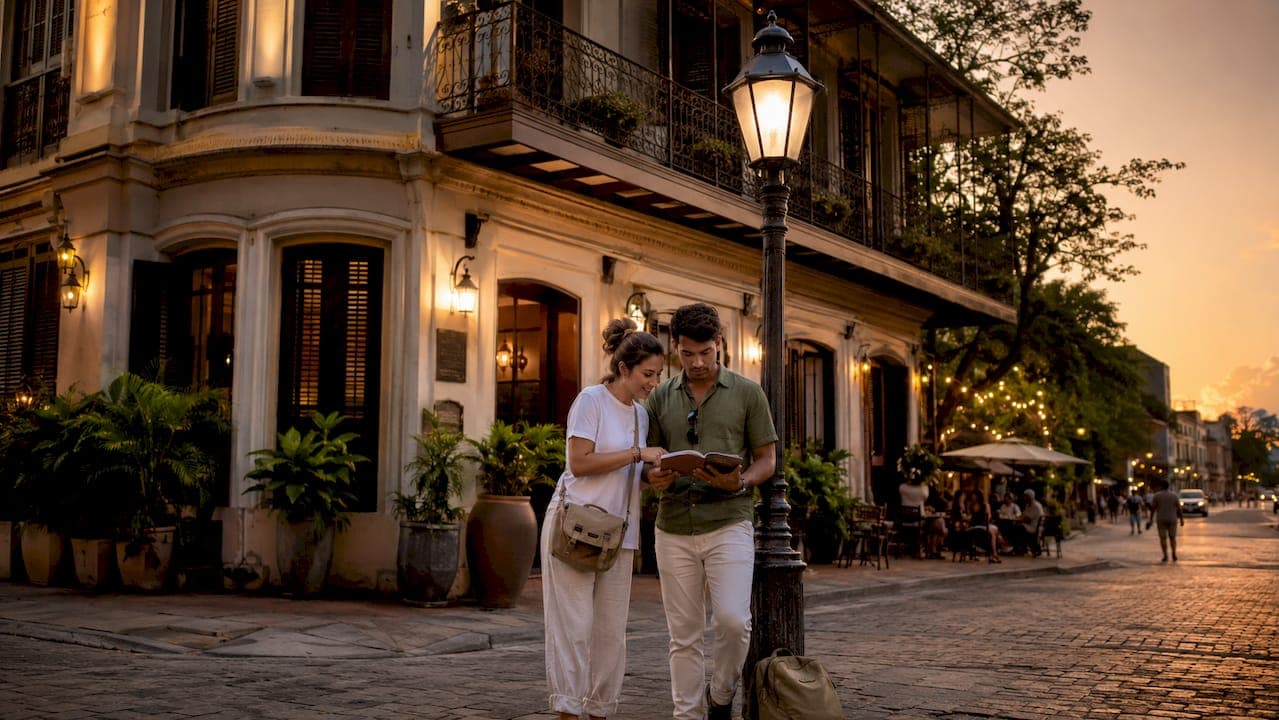
Heritage neighbourhood hotels are distinctive lodging properties that preserve authentic architecture, embed themselves within active local communities, and deliver cultural experiences that purpose-built modern hotels structurally cannot replicate. The term "boutique heritage hotel" is the recognised industry standard for this category, and it describes properties typically fewer than 100 rooms housed in buildings at least 50 years old with confirmed architectural or cultural significance. What makes heritage neighbourhood hotels unique is not nostalgia. It is the convergence of layered physical history, living neighbourhood culture, and an intimacy of scale that chain hotels and new builds are architecturally incapable of offering. Travellers from Melbourne to Penang are increasingly choosing these properties precisely because of that difference.
Why are heritage neighbourhood hotels unique?
The answer lies in three converging forces: the building itself, the neighbourhood it sits within, and the scale at which it operates. Each element reinforces the others in ways that produce an experience no design brief can manufacture from scratch.
Boutique heritage properties occupy buildings where time has done the decorating. Worn timber thresholds, plaster walls carrying the memory of previous coats, and ceiling heights that shift between rooms are not oversights. They are the product of adaptive reuse design, where architects negotiate with existing structures rather than override them. The result is spatial character that evolves rather than gets engineered. A corridor that bends unexpectedly or a staircase that narrows mid-flight tells a story no interior designer can write from a blank canvas.
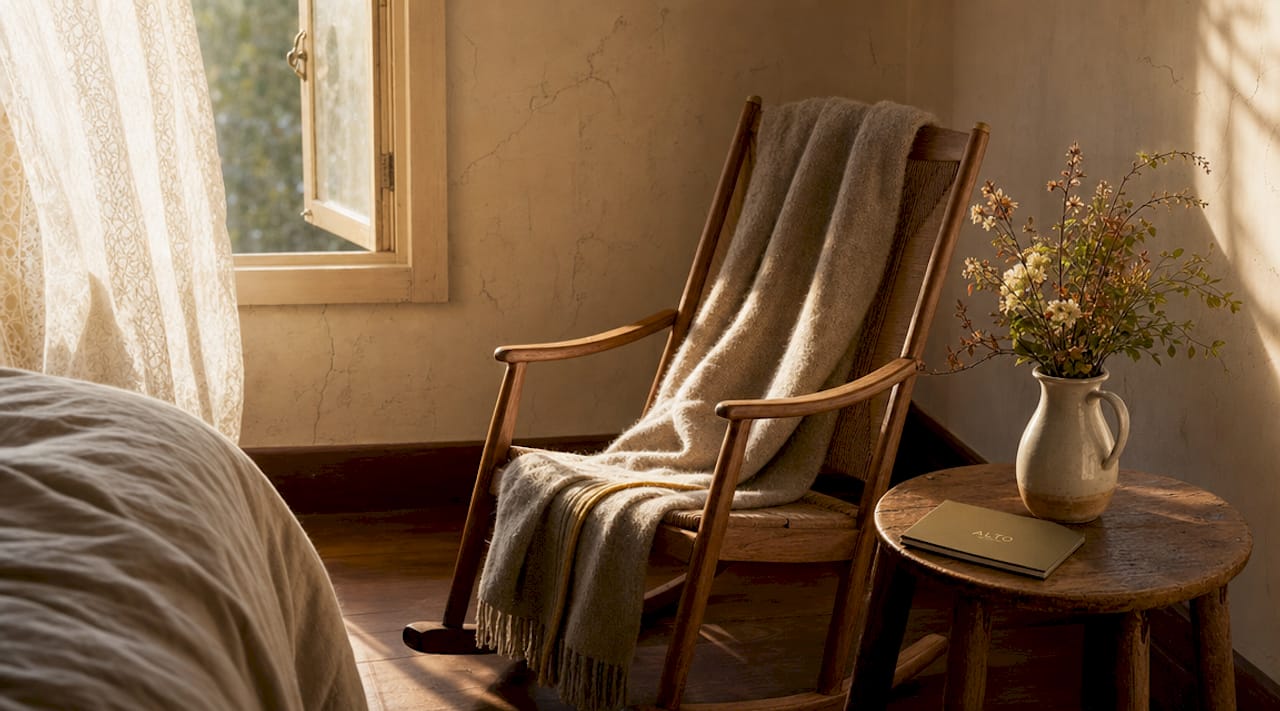
The neighbourhood dimension is equally defining. Heritage hotels do not sit behind lobbies designed to insulate guests from the street. They sit within the street, sharing walls with local businesses, morning markets, and decades of community life. This porous relationship between hotel and neighbourhood is the core of what travellers seek when they choose heritage stays over global chain properties. They are not seeking comfort alone. They are seeking a sense of place.
Scale completes the picture. With fewer than 100 rooms as the defining threshold, these properties offer quiet exclusivity and personalised service that large hotels cannot deliver. Staff know returning guests. Recommendations are genuinely local. The experience feels curated rather than processed.
What architectural features make heritage hotels stand out?
The architecture of a heritage hotel is its most honest form of storytelling. Unlike modern hotels where every surface is specified to a millimetre, heritage properties carry the physical record of their previous lives. Shophouse hotels across Southeast Asia, for example, feature airwells that draw natural light into deep floor plans, kaki lima covered walkways that blur the boundary between interior and street, and louvred timber shutters that regulate airflow in ways no mechanical system fully replicates. These are not decorative choices. They are functional responses to climate and community that have survived because they work.
Adaptive reuse produces what design commentator Ed Murray describes as authenticity through patina. Worn surfaces and irregular geometries generate character that new builds cannot replicate regardless of budget. A heritage hotel room with an uneven floor and exposed brick carries more spatial authority than a perfectly finished modern suite precisely because its imperfections are real.
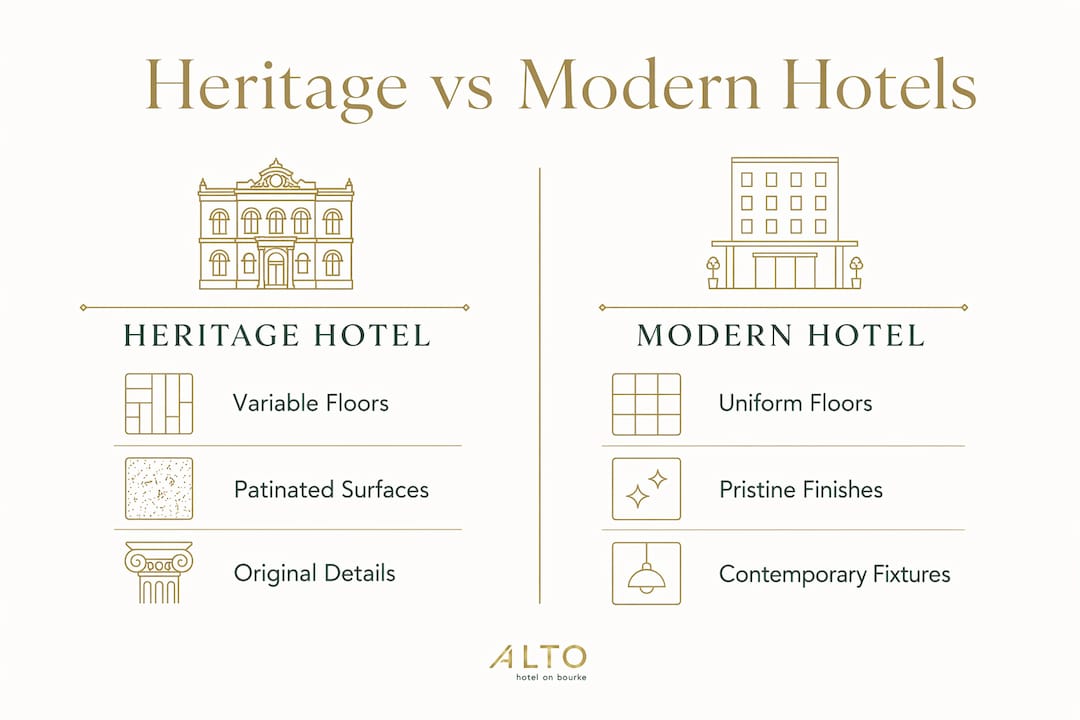
The comparison below illustrates the key differences between heritage hotel architecture and typical modern hotel design.
| Feature | Heritage hotel | Modern hotel |
|---|---|---|
| Floor heights | Variable, reflecting original structure | Uniform across all levels |
| Room layouts | Irregular, shaped by existing walls | Standardised and modular |
| Surface finishes | Patina, original materials, visible age | Specified, uniform, new |
| Natural ventilation | Airwells, louvres, original openings | Mechanical HVAC systems |
| Spatial narrative | Evolved over decades of use | Designed to a brief |
| Street relationship | Porous, integrated with neighbourhood | Separated by lobby and forecourt |
Pro Tip: When booking a heritage hotel, ask specifically about rooms that retain original architectural features such as exposed beams, original windows, or period tiling. These rooms typically offer the strongest sense of place and are worth requesting directly rather than leaving to chance.
How do heritage hotels connect guests to local culture?
The cultural significance of heritage hotels extends well beyond their walls. Acoustic and sensory connections to the surrounding neighbourhood, including the sounds of a morning market, the scent of a nearby bakery, or the rhythm of street life outside a timber shutter, are classified as intangible heritage. These elements are not incidental. They are the experience. Penang's Qing Suites, for instance, places guests within a restored shophouse where the sounds and smells of George Town's living heritage quarter are part of the stay itself. That is not a design feature. It is a geographical and cultural fact that the hotel preserves rather than filters out.
Heritage hotels also function as cultural curators for their neighbourhoods, deliberately avoiding the self-contained hotel ecosystem model. Rather than operating their own restaurants and gift shops, they direct guests toward local vendors, artisans, and micro-businesses. This creates a symbiotic relationship between the property and its surrounding community economy. Guests eat where locals eat. They buy from the same traders. The hotel becomes a point of entry into the neighbourhood rather than a substitute for it.
Here are five ways guests can actively engage with local culture through a heritage hotel stay:
- Ask staff for neighbourhood-specific recommendations. Heritage hotel teams typically live locally and recommend places they actually use, not sponsored listings.
- Walk the surrounding streets before 9am. Morning reveals the neighbourhood's working rhythm, from deliveries to regulars at local cafés, in ways that afternoon visits do not.
- Eat at least one meal at a vendor the hotel recommends. Many heritage properties have genuine relationships with nearby traders that translate into better food and richer conversation.
- Notice the building's previous life. Ask about the property's history. Former warehouses, shophouses, and civic buildings each carry distinct stories that reframe the stay.
- Attend any neighbourhood events the hotel flags. Heritage properties in active communities often know about local markets, cultural festivals, or street events that do not appear in tourism guides.
What are the benefits of heritage hotels compared to modern hotels?
The most direct benefit is emotional. Heritage buildings carry an unreplicable competitive advantage over new builds because their stories are real, accumulated, and site-specific. A guest sleeping in a room that was once a merchant's office or a colonial-era trading floor is participating in history rather than observing it. That emotional register is not available at a purpose-built hotel regardless of its star rating.
The market reflects this preference clearly. Boutique heritage accommodations command a 22% premium in average daily rates over newly constructed luxury hotels. This premium exists because guests are willing to pay for authenticity, locality, and spatial distinctiveness. It also signals that heritage hotels are not a niche curiosity. They represent a measurable shift in how travellers assign value to accommodation. Understanding why boutique hotels reflect local culture helps explain why this premium is growing rather than shrinking.
The benefits for travellers seeking authentic and culturally immersive stays include:
- Spatial authenticity. No two rooms are identical. Layouts, proportions, and features vary in ways that make each stay genuinely different.
- Personalised service. Smaller scale means staff remember preferences, anticipate needs, and provide recommendations grounded in real local knowledge.
- Cultural immersion. The hotel's location within an active neighbourhood means culture is accessible on foot rather than requiring organised tours.
- Storytelling value. Guests leave with a narrative about where they stayed, not just a description of amenities.
- Support for local economies. Spending at heritage hotels typically circulates within the neighbourhood rather than leaving through a corporate supply chain.
For travellers planning a culturally rich trip, exploring the benefits of boutique hotel stays in 2026 provides a useful framework for comparing options.
What should travellers expect from a heritage hotel stay?
Heritage hotels require a different set of expectations than modern properties, and setting those expectations correctly transforms potential frustrations into genuine pleasures. Fluctuating floor heights and uneven layouts are integral to the character of these properties, not design compromises. A room that sits slightly off-square or a bathroom fitted into what was once a storage alcove is evidence of the building's previous life, not evidence of poor renovation.
Noise is the other adjustment worth making consciously. Heritage hotels in active neighbourhood settings are not acoustically sealed. Street sounds, nearby traders, and the general rhythm of community life filter through original windows and timber walls. This is precisely what acoustic and sensory heritage means in practice. Guests who treat these sounds as atmosphere rather than disturbance consistently report richer stays than those who arrive expecting the silence of a modern business hotel.
On-site amenities are typically limited by design. Heritage hotels rarely operate full-service restaurants or large fitness facilities because the building's footprint and philosophy do not support them. The trade-off is direct access to the neighbourhood's own amenities, which are often superior to anything a hotel could replicate in-house.
Pro Tip: When selecting a room in a heritage hotel, request upper-floor options where available. Upper floors typically retain more original architectural detail, receive better natural light through original windows, and sit above the most active street-level noise without losing the neighbourhood atmosphere entirely.
Key takeaways
Heritage neighbourhood hotels are unique because they combine authentic architecture, living neighbourhood culture, and intimate scale in ways that modern hotels are structurally unable to replicate.
| Point | Details |
|---|---|
| Architectural authenticity | Adaptive reuse produces spatial character through patina and irregular features that no new build can engineer. |
| Cultural immersion | Sensory connections to the surrounding neighbourhood, including sound and scent, are core to the heritage hotel experience. |
| Market premium | Heritage boutique hotels command a 22% higher average daily rate than newly built luxury hotels, reflecting genuine guest demand. |
| Community integration | Heritage hotels function as neighbourhood entry points, directing guests to local vendors rather than operating self-contained ecosystems. |
| Realistic expectations | Architectural quirks and ambient street noise are features of authenticity, not shortcomings, and reward guests who embrace them. |
Why heritage hotels matter more now than ever
I have stayed in enough modern hotels to know exactly what I am getting before I arrive. The lobby will be marble or polished concrete. The room will be a rectangle. The minibar will be overpriced. There is nothing wrong with any of that, but there is nothing surprising either.
The first time I stayed in a restored shophouse in George Town, Penang, I woke up to the sound of a nearby temple and the smell of char kway teow from a hawker stall two doors down. The ceiling above me had been there for over a century. The timber floor had been walked by people whose names I would never know. That is not a feeling any design team can brief into existence.
What strikes me most about the current moment in travel is that heritage hotels are not thriving despite global homogenisation. They are thriving because of it. Every new airport hotel that looks identical to the last one makes a restored heritage property feel more necessary. Travellers are not choosing these places out of sentimentality. They are choosing them as a deliberate correction to a travel experience that has become too predictable.
Australia has its own version of this story. Melbourne's inner suburbs carry layers of Victorian-era commercial architecture that, when converted thoughtfully, produce stays with genuine character. The charm of local hotels in these precincts is not manufactured. It is the product of buildings that have already lived full lives before the first guest checked in.
The cultural significance of preserving these buildings through hospitality cannot be overstated. A heritage hotel that operates well keeps a building alive, funds its maintenance, and gives the surrounding community a reason to value its own history. That is a better outcome than demolition, and a more honest one than a museum.
— Kamal
Experience boutique heritage charm at Alto Hotel on Bourke
Alto Hotel on Bourke sits within Melbourne's vibrant Bourke Street precinct, offering guests a boutique stay that blends genuine local character with thoughtful, eco-conscious design. As one of Melbourne's first environmentally rated hotels and a Victorian tourism Hall of Fame recipient, Altohotel delivers the kind of personalised, place-specific experience that defines the best of heritage neighbourhood hospitality.
Whether you are visiting Melbourne for a weekend or an extended stay, the 2 Bedroom Sleepover option offers space, character, and direct access to Melbourne's cultural and culinary neighbourhood life. Explore Melbourne's boutique hotel experience and discover what it means to stay somewhere that genuinely reflects the city around it.
FAQ
What makes heritage neighbourhood hotels different from chain hotels?
Heritage neighbourhood hotels occupy historic buildings with confirmed architectural significance, typically fewer than 100 rooms, and integrate directly with their surrounding communities rather than operating as self-contained environments. Chain hotels are designed for consistency and scale, which produces reliable but interchangeable experiences.
Do heritage hotels cost more than modern hotels?
Boutique heritage accommodations command a 22% premium in average daily rates over newly constructed luxury hotels. Guests pay for authentic spatial character, personalised service, and cultural immersion that modern builds cannot replicate.
Are heritage hotels suitable for travellers who value comfort?
Heritage hotels offer genuine comfort, though room layouts and amenities differ from standardised modern properties. Architectural quirks such as uneven floors and irregular layouts are features of authenticity rather than shortcomings, and most properties balance heritage character with contemporary comfort standards.
What is the cultural significance of staying in a heritage hotel?
Heritage hotels preserve living architectural history and support local neighbourhood economies by directing guests toward community vendors rather than in-house services. The acoustic and sensory connections to surrounding street life are classified as intangible heritage, making the stay itself a form of cultural participation.
How do I choose the right room in a heritage hotel?
Request upper-floor rooms that retain original architectural features such as exposed beams, period windows, or original tiling. These rooms typically offer the strongest sense of place and sit above the most active street-level noise while preserving the neighbourhood atmosphere that defines the heritage hotel experience.