
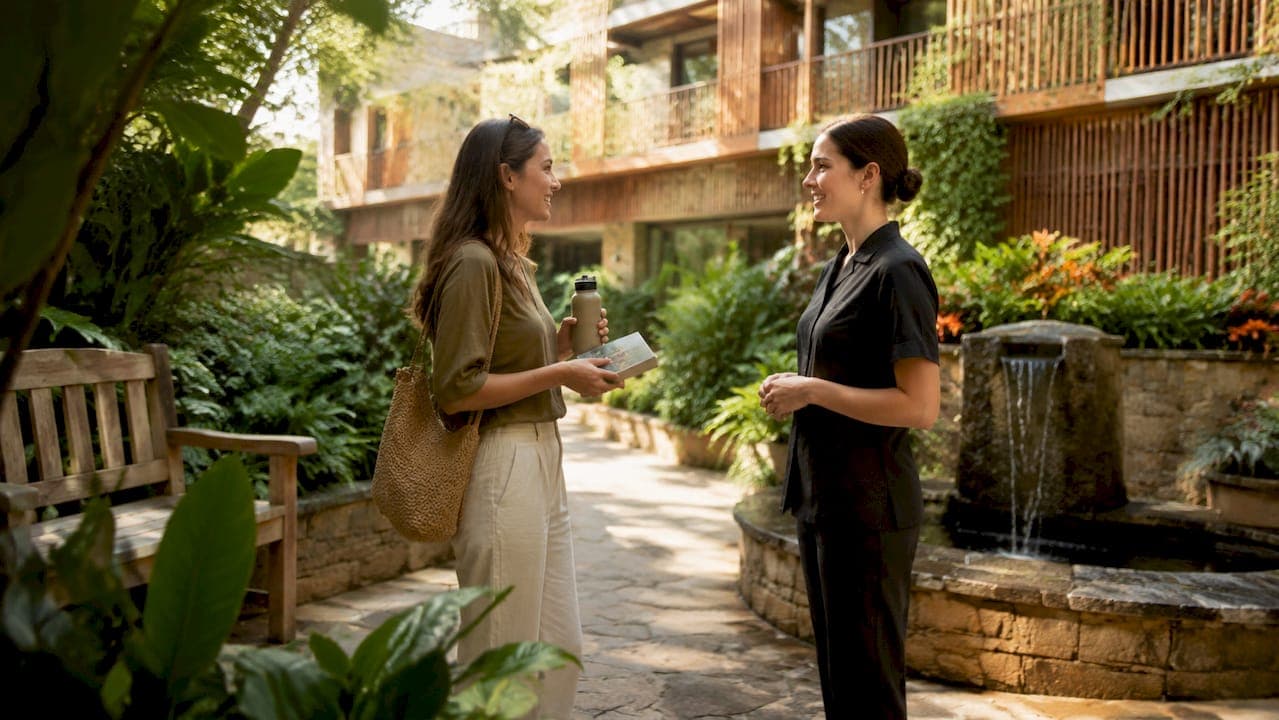
Eco hotels are defined as accommodation properties that integrate verified environmental practices, from renewable energy to waste reduction, into every aspect of the guest experience. They attract curious travellers because they deliver something conventional hotels cannot: a stay that feels meaningful rather than merely comfortable. 30% of travellers booked certified sustainable stays in 2025, totalling 100 million room nights globally. That figure signals a structural shift in travel behaviour, not a passing trend. Altohotel, one of Melbourne's first environmentally rated boutique hotels, sits at the centre of this shift, drawing guests who want comfort and conscience in equal measure.
Why eco hotels attract curious travellers: the core reasons
Eco hotels attract curious travellers by combining genuine sustainability with experiences that feel personal and grounded in place. The appeal is not purely ethical. It is sensory, psychological, and social all at once. Travellers who choose eco accommodation are not just reducing their footprint. They are actively seeking a different quality of experience.
The industry term for this category is sustainable hospitality, and it covers everything from carbon-neutral operations to locally sourced food programmes. The phrase "eco hotel" has become the common shorthand, but the underlying concept is broader. A credible sustainable hospitality property earns its status through measurable actions, not marketing language.
Urban digitisation drives travellers toward nature-immersive stays, with many preferring an outward-facing hospitality model that encourages engagement beyond the room. This nature deficit, the gap between screen-saturated daily life and sensory contact with the natural world, is one of the strongest forces pulling travellers toward eco accommodation. When a hotel is designed to connect you to your surroundings rather than insulate you from them, the experience becomes genuinely memorable.

What sustainable features make eco hotels attractive?
Credible eco hotels share a recognisable set of operational practices: solar or renewable energy systems, greywater recycling, composting programmes, low-VOC building materials, and procurement policies that favour local and organic suppliers. These are not cosmetic choices. They reduce operating costs, lower emissions, and create a physical environment that guests can see and feel.
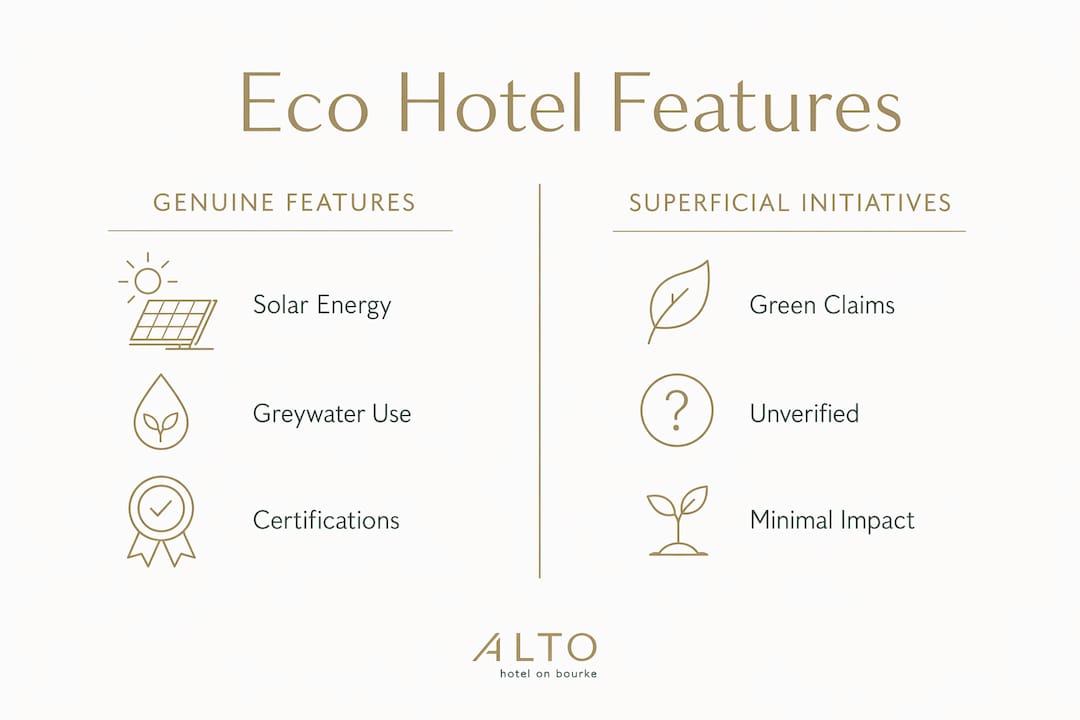
Third-party certification is the clearest signal of genuine commitment. Programmes like LEED (Leadership in Energy and Environmental Design) and Green Key assess properties against rigorous, independently verified standards. Certifications distinguish real eco hotels from properties that rely on superficial gestures, such as a towel-reuse card or a recycling bin in the lobby. Certification matters because it removes the guesswork for travellers who cannot audit a hotel's supply chain themselves.
The contrast between genuine sustainability and greenwashing is stark once you know what to look for.
| Genuine eco feature | Superficial initiative |
|---|---|
| Solar panels with metered output | "We care about the planet" signage |
| LEED or Green Key certification | Unverified self-declared eco status |
| Local and organic food sourcing | One locally sourced menu item |
| Greywater recycling system | Towel reuse programme only |
| Community partnerships with local artisans | Generic nature-themed décor |
Pro Tip: Ask the hotel for its certification number before booking. Any property with a genuine LEED or Green Key rating can provide it instantly. If they cannot, treat that as a red flag.
Altohotel holds a verified environmental rating and was among the first Melbourne hotels to pursue formal eco-accreditation. That history gives it a credibility that newer, unverified properties cannot replicate quickly. Travellers who want to choose an environmentally rated hotel have a clear benchmark to apply.
How do eco hotels create authentic, nature-connected experiences?
Eco hotels differentiate themselves through an outward-facing philosophy: the property is a base for engagement with the surrounding environment and community, not a sealed bubble of comfort. This is the experiential quality that curious travellers find most compelling. A conventional hotel delivers a standardised room. An eco hotel delivers a sense of place.
Guest participation transforms passive eco-stays into meaningful experiences through technologies and educational programmes. Digital concierge tools, in-room energy monitoring, and guided sustainability tours give guests an active role in the property's environmental performance. That active involvement creates a sense of ownership and pride that a passive stay never generates.
Typical authentic experience offerings at credible eco hotels include:
- Partnerships with local artisans for in-room products and décor
- Farm-to-table or locally sourced dining programmes
- Guided nature walks, birdwatching, or habitat restoration activities
- Cultural exchange programmes with nearby communities
- Sustainable food service practices that connect guests to regional producers
- In-room environmental controls that let guests track their energy use
The wellness dimension of eco accommodation is equally significant. Natural building materials improve indoor air quality. Reduced urban noise lowers cortisol levels. Access to green space supports mental recovery. These are not abstract benefits. They are measurable physiological outcomes that guests notice within the first day of a stay.
Pro Tip: When researching eco hotels, look specifically for properties that list their community partnerships by name. Vague references to "supporting local" are common. Named partnerships with specific artisans or producers are the real indicator of depth.
Altohotel's approach to deeper guest connection reflects this philosophy directly. Its partnerships with Melbourne-based artisans and local organisations are named and verifiable, not decorative claims.
What psychological factors drive travellers to choose eco hotels?
Sustainability claims trigger specific moral emotions in travellers, and those emotions directly influence booking decisions. Research identifies eco-guilt and green pride as the two primary psychological drivers. Eco-guilt is the discomfort a traveller feels when their choices conflict with their environmental values. Green pride is the satisfaction they feel when their choices align with those values.
Both emotions influence willingness to pay a premium and intent to return. A traveller who books an eco hotel to avoid eco-guilt is motivated by avoidance. A traveller who books to experience green pride is motivated by aspiration. Eco hotels that communicate their sustainability story clearly activate both responses simultaneously.
"Sustainability claims trigger anticipated moral emotions, including eco-guilt and green pride, which mediate payment willingness and intent to revisit." Frontiers in Sustainability, 2026
Travellers increasingly pay premium prices for eco hotels that integrate health and wellness benefits alongside sustainability credentials. This willingness to pay more is not irrational. It reflects a calculation that the experiential and ethical return on investment justifies the higher nightly rate.
43% of travellers plan to avoid overcrowded destinations in 2026, up 11% from the previous year. This shift shows that sustainability is no longer a niche preference. It has become a mainstream travel value across age groups and income brackets.
What steps help travellers identify genuinely sustainable eco hotels?
Identifying a credible eco hotel requires more than reading the property's own marketing copy. The verification process is straightforward once you know which signals to trust.
- Check for third-party certification. Look for LEED, Green Key, EarthCheck, or equivalent national programmes. These require independent audits and annual renewal.
- Search the certification body's public database. Every major certification programme maintains a searchable register. If the hotel does not appear, the claim is unverified.
- Verify legal planning status. Illegal eco-resort developments on protected land cause significant environmental damage despite eco branding. A quick check of local council planning records confirms whether a property has lawful approval.
- Look for named community partnerships. Genuine eco hotels name the local producers, artisans, and organisations they work with. Generic language about "supporting the community" is not evidence of anything.
- Ask about measurable outcomes. Properties with genuine programmes can tell you their annual energy reduction figures, waste diversion rates, or water savings. If the answer is vague, the programme is likely superficial.
The Melbourne tourism sustainability guide provides a useful regional framework for applying these criteria in an Australian urban context.
Key takeaways
Eco hotels attract curious travellers because they deliver authentic, measurable sustainability alongside experiences that connect guests to place, community, and wellbeing.
| Point | Details |
|---|---|
| Market demand is real | 30% of travellers booked certified sustainable stays in 2025, totalling 100 million room nights. |
| Certification separates fact from fiction | LEED and Green Key ratings require independent audits; self-declared eco status does not. |
| Psychology drives bookings | Eco-guilt and green pride are measurable emotional drivers that influence premiums and return visits. |
| Authentic experiences define the category | Named community partnerships, local sourcing, and guest participation distinguish genuine eco hotels. |
| Verification protects travellers | Checking certification databases and legal planning status prevents support for harmful greenwashing. |
Why I think eco hotels are only getting more compelling
I have watched sustainable hospitality move from a niche curiosity to a genuine market force over the past decade. What strikes me most is not the growth in numbers. It is the change in traveller sophistication. Curious travellers in 2026 are not satisfied with a recycling bin and a card about towels. They want to understand the supply chain behind their breakfast, the energy source powering their room, and the community impact of their nightly rate.
The properties that are thriving are the ones that treat transparency as a feature, not a liability. They publish their certification numbers, name their suppliers, and give guests tools to participate in the property's sustainability performance. That level of openness builds a loyalty that no loyalty points programme can replicate.
Technology is accelerating this. Digital concierge systems and in-room energy dashboards are no longer novelties. They are becoming baseline expectations among eco-conscious travellers. The hotels that integrate these tools well are creating a feedback loop: guests who can see their environmental impact in real time become more engaged, more satisfied, and more likely to return.
The uncomfortable truth is that most properties claiming eco status are not doing the hard work. The gap between genuine sustainable hospitality and performative greenwashing is wide, and travellers are getting better at spotting it. That gap is actually good news for credible operators. It means the market is self-selecting toward properties that have earned their credentials.
— Kamal
Altohotel: where sustainability meets genuine Melbourne character
Altohotel on Bourke is one of Melbourne's first environmentally rated boutique hotels, and its credentials are verifiable, not decorative. The property combines eco-conscious materials, locally sourced partnerships, and thoughtfully designed studio and apartment rooms to create a stay that aligns with the values of genuinely curious travellers. Its Hall of Fame recognition in the Victorian tourism sector reflects a sustained commitment to sustainable hospitality, not a single season of effort. If you are looking for an eco-friendly stay in Melbourne that delivers on its promises, Altohotel is the benchmark worth measuring others against.
FAQ
What makes an eco hotel different from a standard hotel?
An eco hotel integrates verified environmental practices, such as renewable energy, waste reduction, and local sourcing, into its core operations. Credible properties hold third-party certifications like LEED or Green Key rather than relying on self-declared claims.
Why do curious travellers prefer eco-friendly lodging?
Curious travellers choose eco accommodation because it offers authentic connection to local culture, nature, and community alongside measurable environmental benefits. Psychological research confirms that moral emotions like green pride and eco-guilt directly influence booking decisions and willingness to pay a premium.
How can I tell if an eco hotel is genuinely sustainable?
Check the property's certification against a public database maintained by LEED, Green Key, or an equivalent programme. Named community partnerships and measurable sustainability outcomes, such as annual energy savings, are further indicators of genuine commitment.
Is sustainable travel only popular with younger travellers?
Sustainable travel appeals broadly across demographics. Research shows that 43% of travellers across age groups plan to avoid overcrowded destinations in 2026, reflecting a mainstream shift toward responsible travel choices rather than a generational preference.
Are eco hotels more expensive than conventional hotels?
Eco hotels often carry a higher nightly rate, and research confirms that travellers are willing to pay that premium when health, wellness, and sustainability benefits are clearly integrated into the experience. The perceived value, not just the environmental outcome, justifies the price difference for most guests.