

Most travellers assume eco hotels are simply about reducing harm. Fewer plastic bottles, solar panels on the roof, a recycling bin in the corner. That framing misses something far more significant. The real reason why eco boutique hotels inspire deeper connection lies in how they are designed to make you feel. Through authenticity, biophilic architecture, and honest sustainability storytelling, these properties create emotional bonds with place, people, and culture that standard accommodation simply cannot replicate. This article unpacks the mechanisms behind that transformation, drawing on current research and real-world hospitality practice.
Table of Contents
- Key takeaways
- Why eco boutique hotels inspire deeper connection
- Design that makes you feel at home and on earth
- Storytelling and trust: the sustainability communication gap
- Balancing privacy and community
- My take: why the subtle stuff matters most
- Experience deeper connection at Altohotel
- FAQ
Key takeaways
| Point | Details |
|---|---|
| Emotional resonance drives loyalty | Eco boutique hotels that deliver authentic, place-connected experiences build stronger guest loyalty than those relying on green marketing alone. |
| Design shapes wellbeing | Biophilic, site-sensitive architecture reduces environmental footprint while actively improving guest psychological comfort and sense of belonging. |
| Honest sustainability builds trust | Credible storytelling and verifiable practices reassure guests, converting casual visitors into committed, repeat travellers. |
| Privacy and community coexist | Thoughtful spatial design lets guests choose solitude or social engagement, deepening their overall connection to the property and its locale. |
| Connection leads to eco behaviour | When guests feel genuinely attached to a destination, research shows they are far more likely to travel responsibly and return. |
Why eco boutique hotels inspire deeper connection
The term "eco boutique hotel" blends two distinct ideas. Eco refers to verified environmental practice. Boutique signals intimacy, distinctiveness, and a strong sense of place. In the hospitality industry, this combination is increasingly described as regenerative hospitality, a model that goes beyond harm reduction to actively restore cultural, ecological, and social value.
What makes this model so powerful for connection? A 2026 MDPI study found that emotional experiences, authenticity, and sustainability-linked services all work together to increase what researchers call place attachment, the psychological bond a guest forms with a destination. That bond, once formed, drives loyalty, return visits, and word-of-mouth far more reliably than any loyalty programme.
The mechanism works like this. When a hotel authentically reflects its local culture through design, food, and staff knowledge, guests feel they are participating in a place rather than just occupying it. That shift from passive consumer to engaged participant is where deeper connection begins.
Here are the core factors that create emotionally resonant eco boutique experiences:
- Local cultural authenticity. Art, materials, and stories sourced from the surrounding community make the hotel feel irreplaceable rather than interchangeable.
- Sustainability as narrative, not feature. When a hotel explains why it uses reclaimed timber or sources from local growers, guests invest emotionally in that story.
- Staff who are genuinely knowledgeable. A receptionist who can name the artist behind the lobby print or recommend a neighbourhood market creates micro-moments of genuine human connection.
- Emotional service design. Authenticity and stable servicescape elements support destination loyalty more effectively than loud green messaging.
Pro Tip: When researching eco boutique properties, look for hotels that partner with local artisans or community organisations. Those partnerships signal genuine cultural investment, not just branding.
Design that makes you feel at home and on earth
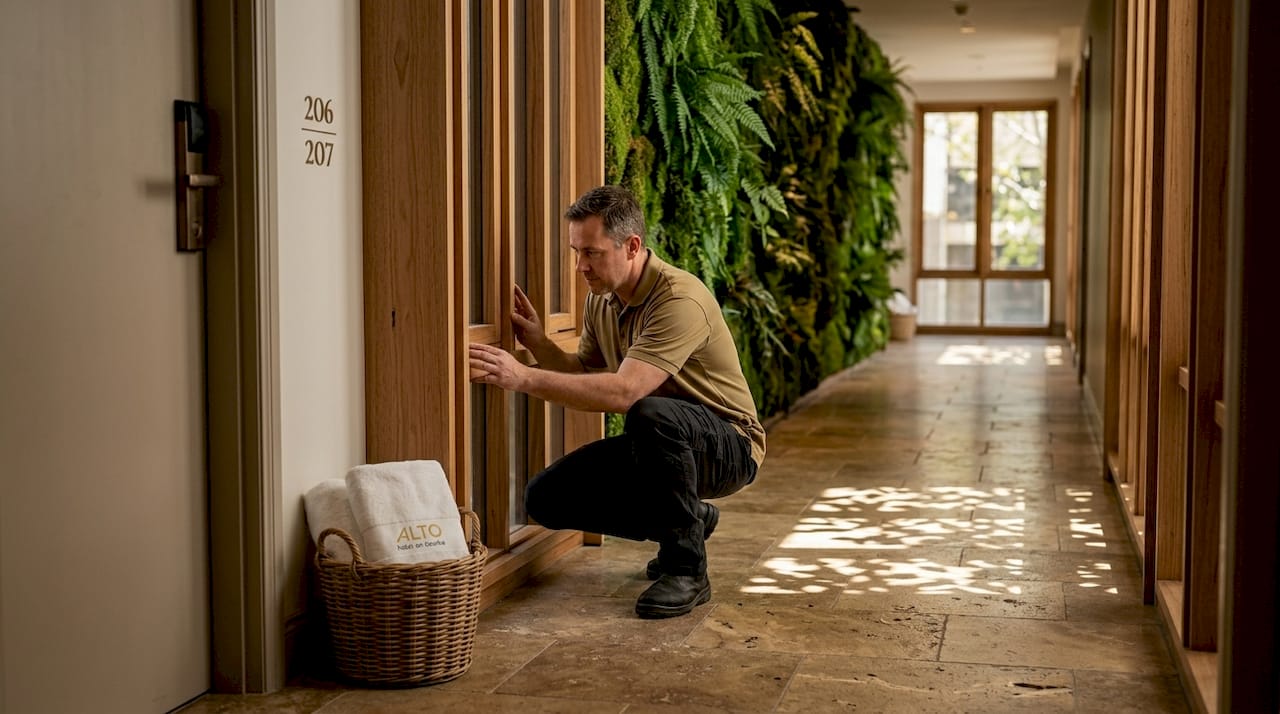
The way a building is designed communicates something to your nervous system before a single word is spoken. Biophilic design, which incorporates natural light, vegetation, natural materials, and views of the outdoors, is not just aesthetically pleasing. It actively reduces stress and improves psychological comfort in ways that synthetic interiors cannot.
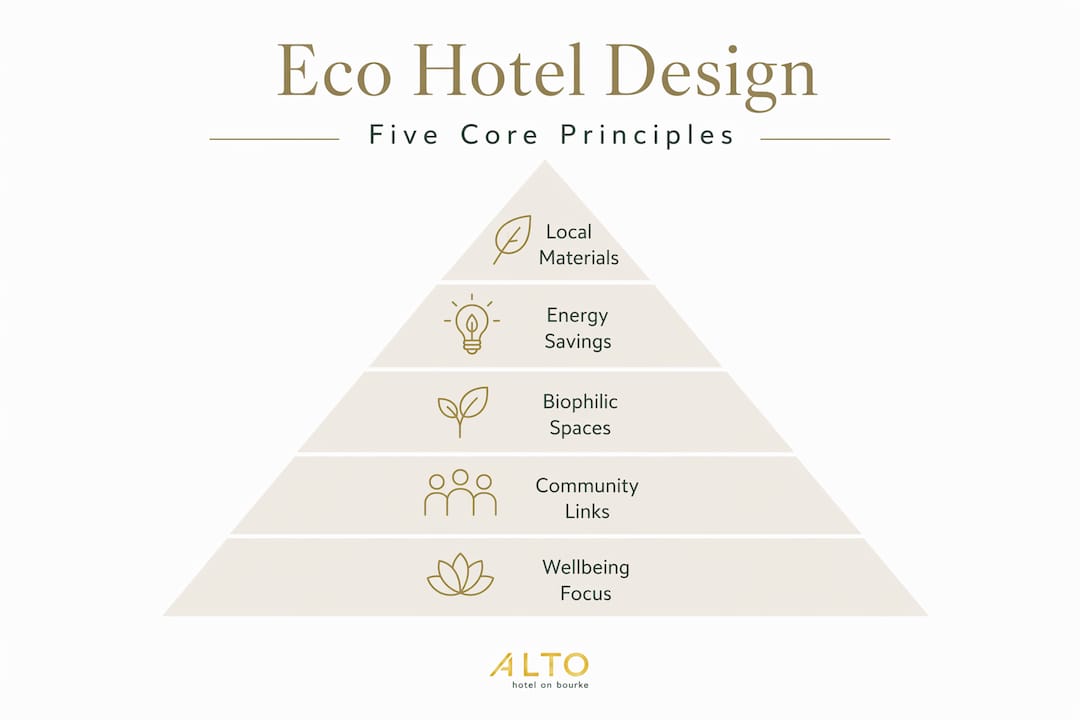
A 2026 architectural-ecological study identified five core eco-hotel design principles that reduce environmental footprint while supporting guest wellbeing. These include ecology-based site selection, integration of local cultural heritage, and the preservation of natural landscape features within the built form. In practice, this means a hotel built around an existing tree canopy rather than clearing it, or one that uses local stone to visually connect the interior to the surrounding geography.
The concept of servicescape, meaning the physical environment in which service is delivered, also plays a significant role. Reliable, coherent design signals trustworthiness. When every detail from the timber flooring to the linen quality to the lighting temperature speaks the same language, guests relax more quickly and engage more openly with their surroundings.
Compare standard hotel design against eco boutique principles:
| Design element | Standard hotel | Eco boutique hotel |
|---|---|---|
| Materials | Generic, cost-driven | Locally sourced, sustainably certified |
| Lighting | Uniform artificial light | Natural light maximised, warm tones at night |
| Vegetation | Decorative only | Functional biophilic features, living walls |
| Cultural expression | Minimal or generic art | Local artists, stories embedded in decor |
| Outdoor connection | Blocked or minimal | Views, courtyards, outdoor dining integrated |
The Preferred Hotels and Resorts 2026 wellbeing framework requires member properties to meet at least ten of twelve criteria spanning wellbeing pillars, including explicit connection to place and environmental responsibility. This kind of industry formalisation confirms what designers have long understood: wellbeing and ecological consciousness are not separate goals. They are the same goal approached from different angles.
Pro Tip: When booking, ask whether the hotel has any formal environmental certification or wellbeing accreditation. This is a fast way to distinguish genuine practice from surface-level green aesthetics.
Storytelling and trust: the sustainability communication gap
There is a significant gap between hotels that are sustainable and hotels that communicate sustainability effectively. Vague claims like "we care about the environment" do almost nothing for guest trust. Specific, verifiable stories do a great deal.
Research published in 2026 found that storytelling quality and interactivity together explain roughly 40% of the variance in destination trust. That is a substantial figure. It means the way a hotel talks about its sustainability practices is nearly as important as the practices themselves, at least when it comes to building the psychological safety guests need to form genuine bonds.
What does credible sustainability communication look like in practice?
- Third-party certifications displayed where guests can see them, with a plain-language explanation of what the certification actually means.
- Specific impact data. "We diverted 85% of our waste from landfill last year" lands very differently than "we try to reduce waste."
- Interactive touchpoints. In-room materials, QR codes linking to supplier stories, or guided neighbourhood walks that bring the hotel's sustainability commitments to life.
- Honest acknowledgement of limitations. Hotels that admit they are still working toward certain goals come across as far more credible than those claiming perfection.
Credible sustainability storytelling is not simply marketing. It is the foundation of trust that allows guests to emotionally invest in a property. When that trust is present, guests are more likely to follow eco-friendly prompts, engage with local experiences, and return. When it is absent or feels manufactured, even the most beautiful eco hotel fails to forge the connections it is capable of creating.
Balancing privacy and community
One common concern among travellers considering boutique eco properties is whether intimacy means sacrificing privacy. The assumption is that smaller, community-oriented hotels will feel intrusive. The best eco boutique hotels prove the opposite through intentional spatial design.
Here is how thoughtful eco boutique properties balance personal space with shared experience:
- Zoned spatial planning. Quiet guest floors or wings are kept genuinely separate from social spaces like garden dining areas, communal lounges, or rooftop terraces. You choose your level of engagement at any given moment.
- Locally rooted programming. Events such as neighbourhood market walks, cooking sessions with local producers, or artist talks create optional connection points. Participation is never assumed, but the opportunity is always present.
- Design that reduces friction. A well-placed reading nook off the main lobby, or a private courtyard attached to a room, gives guests a retreat that does not require locking themselves away entirely.
- Repeat, relational contact. Place attachment and repeated contact help transform guest satisfaction into pro-environmental behaviour and loyalty. When a hotel creates reasons for guests to interact with the same staff, local suppliers, and community spaces across multiple visits, attachment deepens naturally.
- Shared sustainability identity. Guests who choose eco boutique properties often already share values around environmental care and cultural respect. That shared identity creates an organic sense of community without forced socialisation.
This balance is genuinely difficult to achieve and is one of the clearest differentiators between a boutique hotel that uses the label and one that earns it. The benefits of staying in boutique hotels extend well beyond aesthetics. They include this carefully engineered social and spatial intelligence.
A 2025 to 2026 study of 420 eco-tourism participants found that satisfaction creates destination bonds which in turn lead to more eco-conscious travel behaviour. The moderating factor was ecological values. When guests already care about sustainability and the hotel reinforces that care through design, programming, and community, the connection formed is not just with the property. It extends to the destination itself.
My take: why the subtle stuff matters most
In my experience working across the hospitality space, the properties that create the most lasting guest connections are rarely the ones shouting loudest about their green credentials. They are the ones where every detail is quietly consistent. The reclaimed timber on the wall, the local preserves at breakfast, the staff member who recommends a nearby gallery run by an Aboriginal artist. None of those things are loud. All of them compound.
What I've seen is that one-off educational efforts, a sustainability brochure in the room, a single workshop during a stay, rarely convert into lasting attachment. What does convert is when guests feel they are in a place that has been thought about rather than assembled. That coherence is what authenticity in eco boutique hospitality actually looks like in practice.
The research supports this. The hotels that outperform on loyalty are not necessarily the ones with the most certifications. They are the ones where sustainability is lived rather than displayed. For travellers, the practical implication is straightforward. Seek out properties where local culture drives design rather than decorates it. The connections you form in those places will outlast the stay.
— Kamal
Experience deeper connection at Altohotel
Altohotel sits at the heart of Melbourne as one of the city's first environmentally rated boutique hotels, and it demonstrates in practice everything this article explores in theory. The property blends eco-conscious materials, locally partnered design, and a genuine commitment to guest wellbeing without compromising on comfort or style. Whether you choose a Studio King/Twin room designed for quiet reflection or a 2 Bedroom Sleepover suite that gives a group the space to connect, every option has been considered through the lens of sustainability and place. The Green Room restaurant extends the eco ethos to dining, with sustainable, locally sourced ingredients that make every meal feel like a continuation of the hotel's broader story. For eco-conscious travellers who want their accommodation to reflect their values, Altohotel's boutique experience delivers exactly that. You can also explore how dining environments deepen a sense of place and connection during your stay.
FAQ
What makes eco boutique hotels different from standard eco hotels?
Eco boutique hotels combine verified environmental practice with an intimate, place-specific character that large eco hotel chains rarely achieve. Their smaller scale allows for locally rooted design, personalised service, and cultural authenticity that actively build emotional connection rather than simply reducing harm.
How do eco hotels create a more intimate atmosphere?
Intimacy comes from coherent, locally inspired design, knowledgeable staff, and programming that connects guests to the surrounding culture and community. Research shows that emotional and authentic experiences are the primary drivers of guest attachment in eco boutique settings.
Does staying at an eco hotel actually change travel behaviour?
Studies show it can. A 2026 study of 420 travellers found that satisfaction with eco-tourism experiences strengthens destination attachment, which in turn predicts more responsible travel behaviour. The effect is strongest among guests who already hold ecological values.
How do eco boutique hotels balance privacy with a sense of community?
The best properties use zoned spatial planning to keep quiet and social areas distinct, offer locally rooted programming that is optional rather than obligatory, and design individual spaces that provide genuine retreat without isolation. This approach respects guest autonomy while making meaningful interaction easy.
Why does sustainability storytelling matter to the guest experience?
Because trust is the precondition for emotional investment. When hotels communicate their sustainability practices with specificity and honesty rather than vague claims, guests feel safe enough to genuinely connect with the property and its story. Storytelling quality and interactivity together explain roughly 40% of destination trust, making communication a core part of the guest experience, not an afterthought.