

Boutique hotels win Hall of Fame awards by delivering a coherent, intimate guest experience across service, design, locality, and sustainability, pillars that larger chain properties structurally cannot replicate. The European Hotel Awards' Hall of Fame recognises properties that demonstrate a holistic vision spanning innovation, culinary art, sense of place, and guest experience consistency. Altohotel, Melbourne's premier eco-friendly boutique property, holds Hall of Fame recognition in the Victorian tourism sector precisely because it executes across every one of these dimensions. Understanding why boutique hotels earn this distinction reveals what separates genuinely memorable accommodation from the merely comfortable.
Why boutique hotels win Hall of Fame awards through operational intimacy
The single most underestimated advantage a boutique hotel holds is its size. Boutique hotels typically operate under 100 rooms, and that constraint is not a limitation. It is the mechanism that makes award-winning service possible. Smaller teams observe guest patterns, remember preferences, and respond with precision that no 400-room property can match at scale.

Industry analysts describe this as the "discipline of intimacy." According to Bespoke HR's 2026 analysis, boutique hotels in 2026 are defined less by design and more by behavioural precision. That means a staff member who notices a guest always requests extra pillows on the first night and has them ready on the second. It means a breakfast team that knows a returning guest prefers black coffee and a window seat without being asked. These are not scripted rituals. They are the product of small teams paying close attention.
Hall of Fame judges respond to this because it is repeatable and measurable. Award-winning boutique properties prove that their personalised guest handling is documented and consistent across multiple stays and touchpoints, not just a lucky interaction on one visit. That repeatability is what separates a charming hotel from a Hall of Fame contender.
What this looks like in practice:
- Staff recognise returning guests by name and recall specific preferences from prior visits
- Guest notes are shared across departments so housekeeping, reception, and food service operate from the same picture
- Feedback is acted on within the same stay, not filed away for a quarterly review
- Pre-arrival communication is personalised, not templated
Pro Tip: If you want to experience this level of service firsthand, look for boutique properties that ask detailed preference questions before arrival. That pre-stay dialogue is the clearest signal that operational intimacy is genuinely practised, not just marketed.
How sense of place shapes boutique hotel award recognition
Judges evaluating Hall of Fame candidates do not reward locality as a decorative choice. They reward it as an operating system. Sense of place must be embedded across design, food, and staff behaviour in a consistent narrative. A hotel that hangs local artwork but sources its menu from a generic supplier fails this test. A hotel where the chef works with a nearby urban farm, the concierge recommends genuinely local experiences, and the room materials reflect the city's character passes it.
HospitalityNet identifies locality and curated local amenities as a primary differentiator for boutique properties in awards judging. The distinction between hotels that succeed and those that fall short on this criterion comes down to authenticity versus performance. Guests and judges alike detect the difference quickly.
Here is how genuine local curation compares to superficial attempts:
- Culinary sourcing: Award-winning properties name their suppliers, feature seasonal menus tied to regional produce, and change offerings when local availability shifts. Superficial properties add a "local flavours" section to a standard menu without changing the supply chain.
- Design coherence: Genuine sense of place means materials, art, and spatial layout reference the neighbourhood's history or character. Superficial attempts mean framed photos of city landmarks in otherwise generic rooms.
- Staff knowledge: Award-calibre staff recommend specific local businesses, artisans, and experiences from personal familiarity. Scripted recommendations from a printed card do not impress judges.
- Community partnerships: Properties that partner with local artisans and organisations embed locality into the guest experience structurally, not just aesthetically.
| Criterion | Genuine local curation | Superficial attempt |
|---|---|---|
| Culinary sourcing | Named local suppliers, seasonal menus | Generic menu with a "local" label |
| Design | Materials referencing neighbourhood history | City landmark photos in standard rooms |
| Staff knowledge | Personal recommendations from lived experience | Printed card with tourist attractions |
| Community ties | Active partnerships with local businesses | Logo on a website with no operational impact |
Altohotel exemplifies this approach through its partnerships with Melbourne artisans and its commitment to eco-conscious materials that reflect the city's sustainability culture. That coherence across touchpoints is precisely what local culture integration looks like when it is done with conviction.
What Hall of Fame judges look for beyond aesthetics
The most common misconception about boutique hotel awards is that they reward Instagram-worthy design. Judges prioritise behavioural precision and coherent narratives over surface aesthetics. A beautifully designed property with inconsistent service will not reach Hall of Fame status. A modestly designed property with exceptional operational execution can.
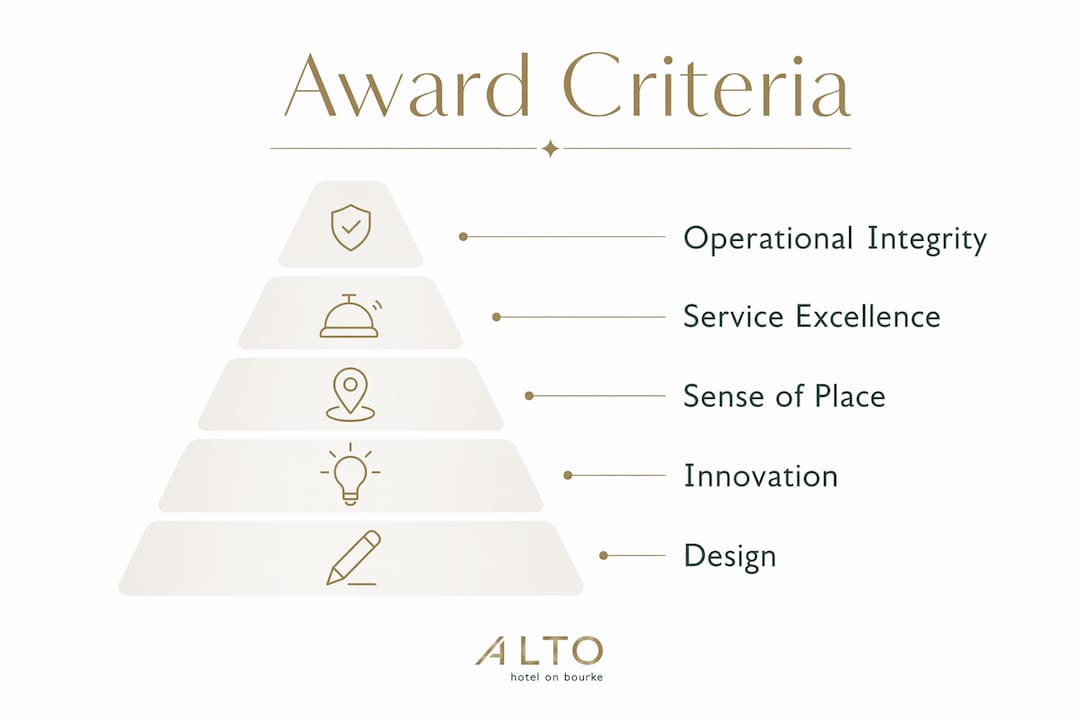
The European Hotel Awards Hall of Fame criteria cover eight distinct dimensions, and a property must demonstrate strength across all of them:
- Innovation: New approaches to guest experience, sustainability, or service delivery that others have not yet adopted
- Service: Personalised, consistent, and genuinely responsive to individual guest needs
- Sense of place: End-to-end coherence of local identity across all guest touchpoints
- Design: Spatial and aesthetic choices that serve the guest experience rather than exist for their own sake
- Culinary art: Food and beverage programmes that reflect quality, creativity, and local identity
- Sustainability: Measurable environmental practices, not just stated commitments
- Leadership: Management culture that enables staff to deliver at this level consistently
- Guest experience: The cumulative impression across the entire stay, from booking to departure
Operational execution matters more than design investment. UK boutique award evaluations focus on whether insider experiences are repeatable and measurable by staff behaviour. A hotel can spend millions on a refurbishment and still fail this test if the team cannot deliver consistently. Conversely, a property with modest physical investment but exceptional staff culture and local integration can score across every category.
Sustainability deserves particular attention here. Judges increasingly treat environmental practices as a baseline expectation, not a bonus criterion. Properties like Altohotel, which was among Melbourne's first environmentally rated hotels, demonstrate that eco-conscious practices are not separate from the guest experience. They are woven into it.
How boutique hotel awards drive tourism and community impact
Winning a Hall of Fame award does more than validate a property's quality. It creates a story that guests carry with them and share. Boutique hotels embedding local stories drive sustained business growth and travel buzz through both in-person and online sharing, according to Platform Magazine's 2026 analysis. That organic visibility is worth more to a boutique property than most paid marketing campaigns.
The community impact extends beyond the hotel itself. When a boutique property sources locally, employs from the neighbourhood, and actively promotes nearby businesses, the economic benefit circulates through the local area rather than flowing to a distant corporate parent. Guests who stay at award-winning boutique hotels are more likely to visit local restaurants, galleries, and markets because the hotel has introduced them to those places as part of the stay.
"The best boutique hotels do not just sit in a neighbourhood. They become part of it. Guests leave knowing the area better than most locals, because the hotel made that introduction deliberately and generously."
Media coverage follows award recognition in ways that compound over time. A Hall of Fame listing generates press interest, travel publication features, and social media content from guests who feel they have discovered something worth sharing. For a boutique property without a global marketing budget, that earned visibility is transformative. It also reinforces the sense of place narrative, because the coverage focuses on what makes the hotel specific and irreplaceable rather than what makes it generically comfortable.
Key takeaways
Boutique hotels win Hall of Fame awards because they deliver repeatable, coherent, and locally grounded guest experiences that larger properties cannot replicate at scale.
| Point | Details |
|---|---|
| Scale enables precision | Fewer than 100 rooms allows staff to learn and act on individual guest preferences consistently. |
| Sense of place is an operating system | Locality must appear in design, food, and staff behaviour, not just décor, to satisfy judges. |
| Execution outranks aesthetics | Operational consistency and staff behavioural precision matter more than design investment. |
| Awards amplify community impact | Hall of Fame recognition drives organic media coverage and local economic benefit beyond the hotel. |
| Sustainability is now a baseline | Environmental practices are a core judging criterion, not an optional differentiator. |
Why operational integrity is the real secret to boutique award success
I have followed boutique hotel awards closely for years, and the pattern that strikes me most is how often the winners are not the most photographed properties. They are the most consistent ones. The hotels that win Hall of Fame recognition are not necessarily the ones with the most striking lobbies or the most talked-about restaurant concepts. They are the ones where every single interaction, from the first email response to the checkout conversation, feels considered.
What I find genuinely counter-intuitive is that scale works against award success in hospitality. Every other industry rewards growth. In boutique accommodation, the moment a property starts prioritising expansion over intimacy, the thing that made it special begins to erode. The benefits of staying boutique are inseparable from the constraints that define the category.
The future of boutique hotel awards will belong to properties that treat their local environment as a genuine collaborator rather than a backdrop. That means chefs who know their farmers by name, front desk staff who can recommend a laneway gallery because they visited it last weekend, and sustainability practices that guests can see and participate in rather than just read about on a placard. Altohotel's Hall of Fame recognition in Victoria reflects exactly this kind of integrity. It did not win by being impressive. It won by being coherent.
— Kamal
Experience award-winning boutique accommodation in Melbourne
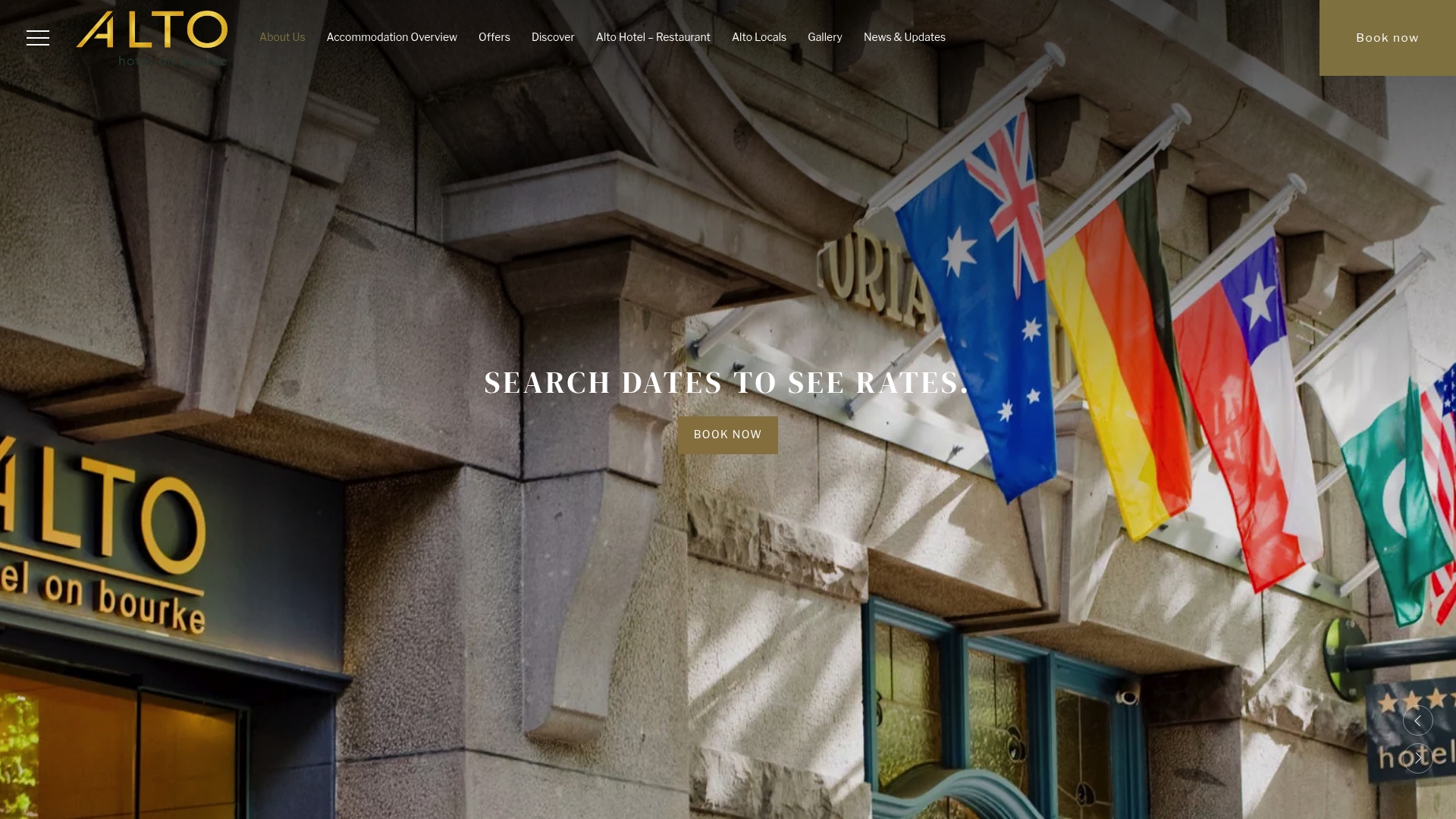
Altohotel brings every principle covered in this article to life at its Melbourne address on Bourke Street. The 2 Bedroom Deluxe Apartments offer the space and personalisation that define boutique accommodation at its best, with eco-conscious design, locally sourced touches, and a team that genuinely knows the city. Whether you are travelling as a couple, a family, or a pair of colleagues, these apartments deliver the kind of stay that earns Hall of Fame recognition. If you want to understand what makes boutique hotels special from the inside, this is where to start.
FAQ
What criteria do Hall of Fame judges use for boutique hotels?
Hall of Fame judges evaluate boutique hotels across eight dimensions: innovation, service, sense of place, design, culinary art, sustainability, leadership, and overall guest experience. A property must demonstrate strength across all categories, not just one or two standout features.
Why do boutique hotels outperform chain hotels in awards?
Boutique hotels typically operate with fewer than 100 rooms, which allows staff to deliver personalised, consistent service that larger chain properties cannot replicate at scale. This operational intimacy is the primary reason boutique properties score well across multiple award categories simultaneously.
Is design the most important factor in boutique hotel awards?
Design is one of eight criteria, not the dominant one. Judges prioritise behavioural precision, operational consistency, and coherent local narratives over surface aesthetics. A beautifully designed property with inconsistent service will not reach Hall of Fame status.
How do boutique hotel awards benefit local communities?
Award-winning boutique hotels drive organic media coverage, repeat visitation, and local economic circulation by sourcing locally, employing from the neighbourhood, and actively introducing guests to nearby businesses, galleries, and experiences.
What makes Altohotel's Hall of Fame recognition significant?
Altohotel earned Hall of Fame recognition in the Victorian tourism sector by combining eco-conscious practices, locally grounded design, and personalised service across its Melbourne property, demonstrating the coherent multi-pillar excellence that judges reward.