
Most hotels give you a bed, a bathroom, and a minibar stocked with the same overpriced chips you could buy anywhere. Boutique hotels do something fundamentally different. They tell you where you are. Understanding why boutique hotels reflect local culture goes well beyond noticing a mural in the lobby or a locally sourced breakfast menu. It runs through ownership decisions, staffing choices, architectural preservation, and community partnerships that shape every hour of your stay. If you have ever left a hotel feeling like you could have been in any city on earth, this is the article that explains what you missed and how to find something better.
Table of Contents
- Key takeaways
- Why boutique hotels reflect local culture differently
- Culture beyond the lobby: how it works in practice
- The guest experience and business case
- Boutique hotels getting it right: real examples
- Avoiding the traps: authenticity versus theming
- My take: why this matters more than people realise
- Experience Melbourne's boutique difference
- FAQ
Key takeaways
| Point | Details |
|---|---|
| Scale enables authenticity | Smaller boutique hotels can curate hyper-local experiences that large chains structurally cannot replicate. |
| Culture runs through operations | Genuine cultural integration appears in staffing, procurement, food, and programming, not just décor. |
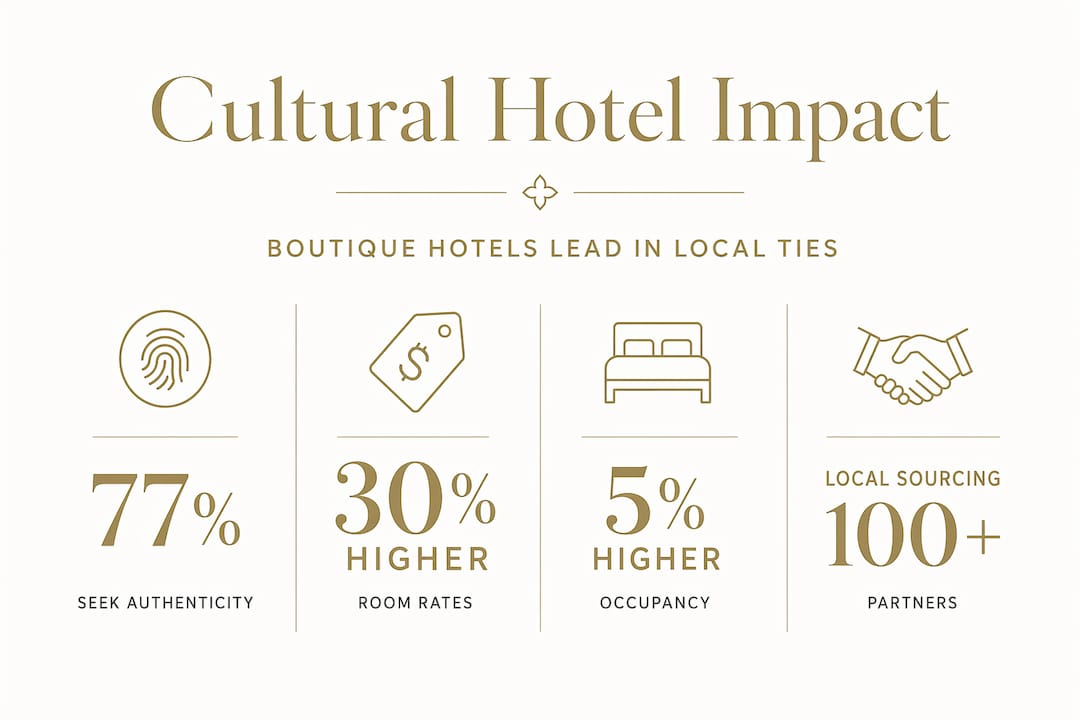
| Financial case is real | Hotels that embed local culture deeply achieve 30% higher room rates and stronger guest loyalty. |
| Authenticity requires provenance | Real cultural representation depends on documented partnerships and community governance, not surface theming. |
| Travellers are demanding it | 77% of travellers want authentic local experiences, and boutique hotels are best placed to deliver them. |
Why boutique hotels reflect local culture differently
The answer starts with ownership. Most boutique hotels are independently owned, which means the person who decides what art hangs on the walls also decides which local baker supplies the breakfast bread. That creative control is not incidental. It is the structural reason why boutique hotels and culture are so deeply connected.
Boutique hotels are characterised by locally rooted personality and curated design that reflects the specific place they occupy. Chain hotels, by contrast, are built around scalability. Their brand standards require consistency across hundreds of properties, which means local character gets traded for operational efficiency. A boutique hotel in Melbourne's CBD will make choices a global chain simply cannot afford to make.
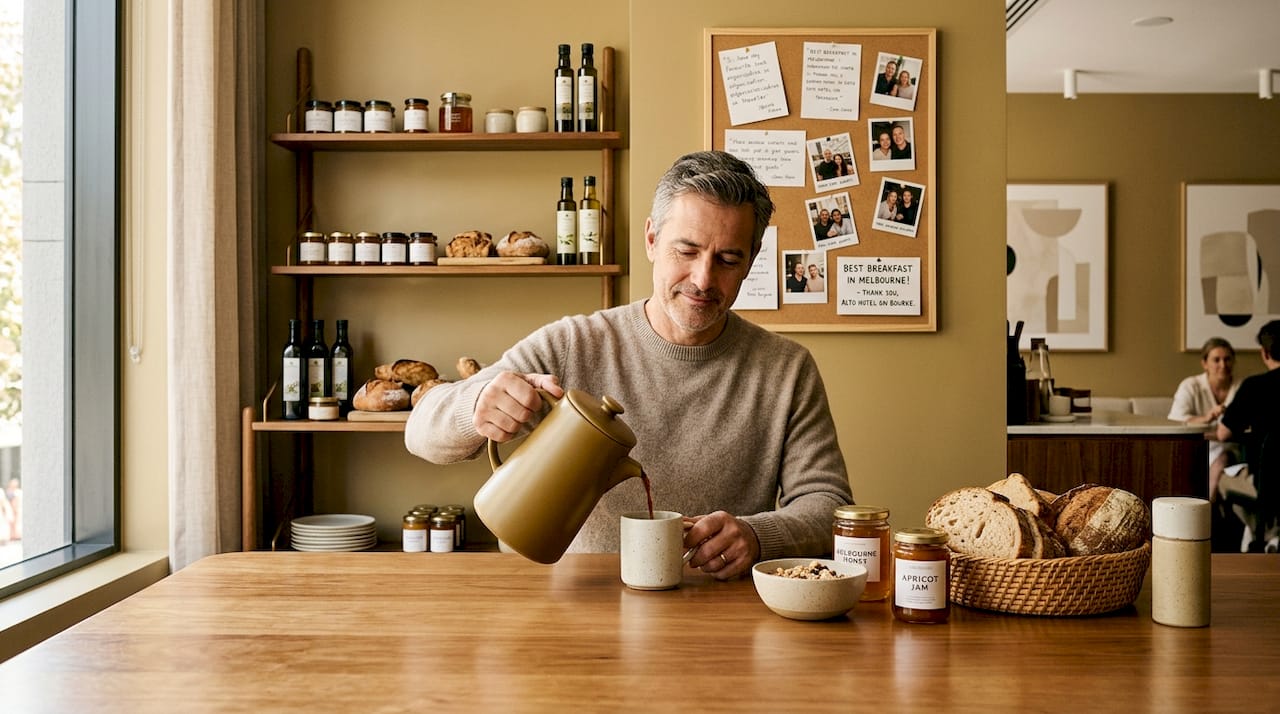
Smaller scale matters too. With fewer rooms to fill, boutique operators can source from local producers, commission local artists, and hire staff who genuinely know the neighbourhood. The result is a guest experience that feels specific rather than generic. You notice it in small things: the coffee sourced from a roaster two suburbs away, the reading material curated around local history, the receptionist who can tell you which laneway gallery is worth the detour.
Here is what sets boutique hotels apart from their chain counterparts:
- Independent ownership giving operators full creative and curatorial control
- Smaller room counts (typically under 100 rooms) enabling personalised service and localised sourcing
- Local design language drawing on regional architecture, materials, and craft traditions
- Culinary programmes built around regional produce and traditional food culture
- Neighbourhood-specific character that reflects the social and historical fabric of the surrounding area
Lifestyle hotel brands use a design-led philosophy that can feel similar, but they operate within a brand framework that limits genuine neighbourhood-level intimacy. The boutique model has no such constraint.
Pro Tip: When researching boutique hotels, look at who owns the property and whether the design credits name local architects or artists. That single detail tells you more about cultural authenticity than any marketing copy.
Culture beyond the lobby: how it works in practice
Decoration is the easiest part. Any hotel can hang a few vintage photographs and call it local. What separates genuinely culturally embedded boutique hotels is how culture operates throughout the entire guest journey, from the moment you book to the moment you check out.
The most authentic properties operationalise culture before guest arrival, weaving it through service routines, staff roles, procurement decisions, and programming to create a consistent, lived experience. That is a fundamentally different approach to what most hotels do with a "local flavour" section on their website.
Here is how the best boutique hotels make this work:
-
Storytelling woven into service. Staff are trained not just to answer questions but to share the history of the building, the neighbourhood, and the cultural context of the experiences on offer. A guided morning walk led by a local resident is worth more than any printed map.
-
Food as cultural documentation. The breakfast menu is not just fuel. It is a record of regional food traditions. Traditional recipes, local producers, and seasonal ingredients all communicate something specific about place that a continental buffet never could.
-
Architectural honesty. Rather than renovating heritage buildings into generic modern spaces, culturally committed boutique hotels preserve the spatial logic of the original structure. Adaptive heritage reuse embeds memory and story into the physical experience of moving through a space.
-
Partnerships with artisans and cultural hosts. Ongoing relationships with local makers, performers, and heritage families create programming that evolves rather than stagnates. This is the difference between a hotel that commissions a mural once and a hotel that runs a monthly artist residency.
-
Community procurement. Sourcing supplies, services, and produce from local cooperatives and social enterprises turns the hotel into an economic participant in the neighbourhood, not just a tenant.
Pro Tip: Ask your hotel whether their cultural programming is ongoing or was installed at opening. A rotating artist residency or seasonal food collaboration signals genuine commitment. A fixed display that has not changed in three years signals decoration.
The guest experience and business case
Cultural immersion in hospitality is not just a feel-good proposition. It produces measurable outcomes for guests and operators alike.
| Metric | Impact of cultural integration |
|---|---|
| Room rate premium | Up to 30% higher than comparable non-cultural properties |
| Occupancy uplift | Approximately 5% higher occupancy rates |
| Guest recommendation | Significantly higher net promoter scores linked to authentic experiences |
| Repeat visitation | Stronger loyalty driven by unique, place-specific experiences |
The numbers reflect something intuitive. When you stay somewhere that genuinely surprises you with its specificity, you talk about it. You recommend it. You go back. Cultural hospitality is becoming a strategic driver of value, contributing to guest satisfaction and sector resilience in ways that generic hospitality simply cannot match.
"Authenticity depends on emotional connection and story consistency rather than surface design tropes. Genuine community partnerships prevent commercialisation from eroding a sense of place." — EHL Hospitality Insights
The benefits of boutique hotels extend beyond the individual guest too. When a hotel sources locally, employs locally, and programmes culturally, it channels visitor spending into the surrounding community in ways that large chains rarely do. That is a meaningful distinction for travellers who care about where their money goes. 77% of travellers want their spending to benefit local communities, and boutique hotels are structurally set up to deliver exactly that.
Boutique hotels getting it right: real examples
Theory is useful. Examples are better. Two properties illustrate what genuine cultural embedding looks like in practice, and what makes boutique hotels special when the approach is done with real commitment.
Soori Penang, George Town, Malaysia
Soori Penang restored heritage structures in one of Southeast Asia's most culturally layered cities and embedded cultural storytelling throughout the property. The design drew on local clan house typologies. Guest routines were informed by neighbourhood rituals rather than imported hospitality conventions. Ongoing relationships with local artisans and cultural families mean the programming continues to evolve rather than becoming a fixed exhibit.
Albergo del Cuore, Ravenna, Italy
This small property demonstrates how staffing and procurement models can turn a hotel into a genuine community hub. By connecting with local cooperatives and social enterprises, Albergo del Cuore links guests to local labour and resources in a way that reinforces culture as a living social system, not just an aesthetic choice.
| Approach | Soori Penang | Albergo del Cuore |
|---|---|---|
| Cultural method | Heritage restoration and storytelling | Community staffing and cooperative procurement |
| Programming model | Ongoing artisan and cultural family partnerships | Local cooperative integration |
| Guest experience | Immersive spatial and narrative journey | Community connection and social exchange |
| Cultural outcome | Preservation of clan house heritage | Regenerative local economic participation |
Both properties demonstrate that boutique hotels act as cultural producers, not mere exhibitors. They refresh and sustain culture over time rather than installing it once and walking away.
Avoiding the traps: authenticity versus theming
Not every boutique hotel gets this right. The risks of getting it wrong are real, and travellers are increasingly good at detecting the difference between genuine cultural immersion and decorative performance.
Sustained local cultural partnerships and programming are what keep boutique hotels credible and trusted. Without them, cultural branding collapses into static décor the moment occupancy dips and the budget for programming disappears.
Watch for these warning signs when evaluating whether a boutique hotel's cultural claims are genuine:
- No named local partners. If the hotel cannot tell you which artists, artisans, or community organisations it works with, the culture is likely decorative.
- Fixed cultural elements with no evolution. A mural painted five years ago and never updated is a design choice, not a cultural commitment.
- Generic "local" language in marketing. Phrases like "inspired by the region" without specific references to history, people, or place are red flags.
- No local staff in senior roles. Cultural knowledge lives in people. A hotel that imports its management and sources its staff from outside the community will struggle to deliver genuine local insight.
- Provenance gaps. Genuine authenticity requires documented provenance of cultural elements and local governance partnerships. Ask where the craft objects came from and who made them.
The good news is that the opposite of these signals is equally easy to spot. When a hotel can tell you the name of the ceramicist who made your coffee cup and explain why the building's layout reflects the original use of the site, you are in the right place.
My take: why this matters more than people realise
I have spent years watching the boutique hotel sector evolve, and the shift from "boutique as aesthetic" to "boutique as cultural stewardship" is the most significant change I have seen. Early boutique hotels were often just smaller hotels with better taste. What is happening now is genuinely different.
The properties I find most compelling are the ones where culture is not a department. It is not managed by a "guest experience coordinator" who books the occasional cooking class. It runs through every procurement decision, every hire, every renovation choice. When I stay somewhere like that, I leave knowing something real about where I have been. That is rare. It is also increasingly what separates the hotels people remember from the ones they forget.
What I have learned from observing this space is that the hotels that sustain genuine cultural authenticity are the ones with genuine community relationships. Not partnerships announced in a press release and quietly dropped after the opening. Ongoing, evolving, sometimes uncomfortable relationships with artists, historians, local businesses, and neighbourhood residents who hold the hotel accountable to its claims.
The uncomfortable truth is that cultural authenticity is not a brand strategy you can install. It is a practice you have to maintain. The boutique hotels that understand this are the ones worth seeking out, supporting, and returning to.
— Kamal
Experience Melbourne's boutique difference
If the idea of staying somewhere that genuinely reflects its city appeals to you, Melbourne is one of the best places in the world to experience it. Altohotel, situated on Bourke Street in the heart of the city, is a strong example of how boutique hospitality and local commitment work together in practice.
As one of Melbourne's first environmentally rated hotels, Altohotel brings together eco-conscious design, partnerships with local artisans, and a guest experience shaped by the city it calls home. The hotel has earned Hall of Fame recognition in the Victorian tourism sector, not by following a formula, but by staying genuinely connected to Melbourne's culture and community. If you are planning a stay in the city and want an experience that goes beyond the standard, it is worth a look.
FAQ
What makes boutique hotels different from chain hotels?
Boutique hotels are independently owned, smaller in scale, and designed to reflect the specific character of their location. Chain hotels prioritise consistency across properties, which limits their ability to offer genuinely local experiences.
How do boutique hotels showcase local culture?
They do it through local design, regional food, partnerships with artisans and community organisations, heritage preservation, and staff who are embedded in the neighbourhood. The best examples treat culture as an ongoing practice, not a one-time installation.
Do boutique hotels perform better financially because of cultural integration?
Yes. Hotels that embed local culture deeply achieve up to 30% higher room rates and approximately 5% higher occupancy compared to properties without genuine cultural integration.
How can I tell if a boutique hotel's cultural claims are genuine?
Look for named local partners, evolving cultural programming, locally sourced materials with documented provenance, and staff with real community connections. Generic "locally inspired" language without specific references is usually a sign of surface theming.
Why do travellers increasingly prefer boutique hotels?
77% of travellers want authentic experiences that represent local culture and benefit local communities. Boutique hotels are structurally better placed than large chains to deliver both.