
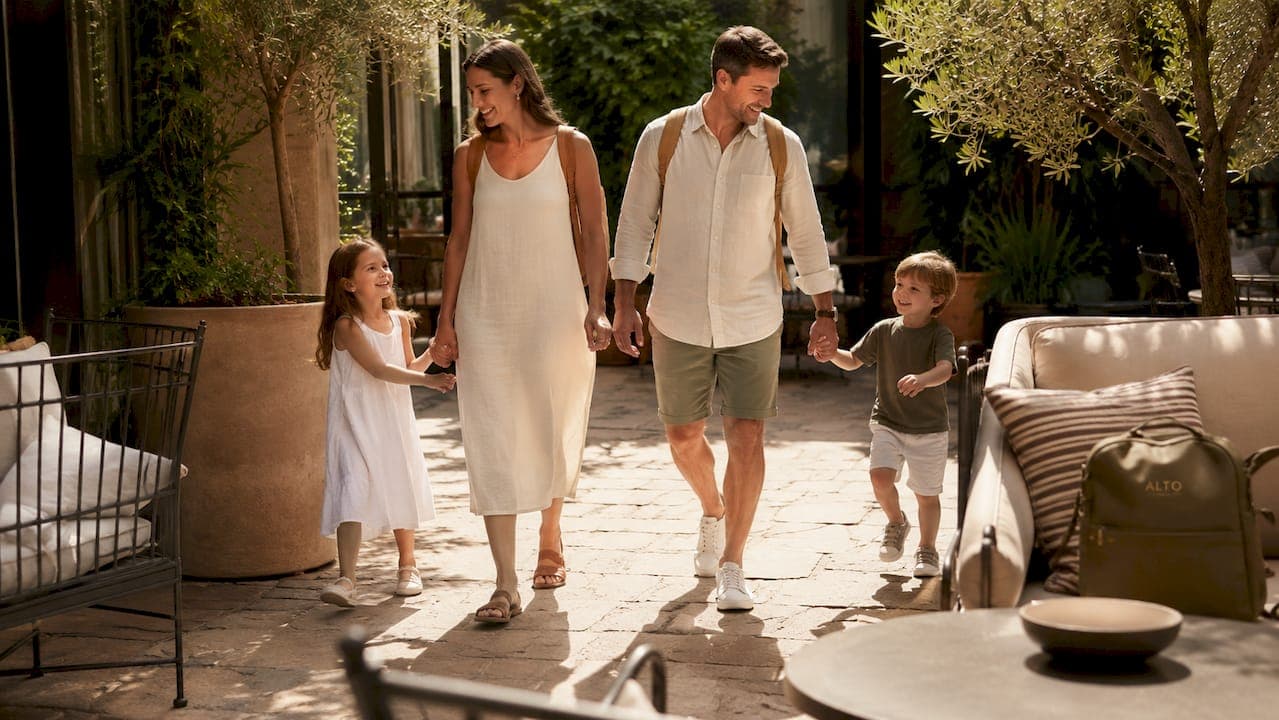
Boutique hotels offer more family space than standard chain properties because their smaller scale, typically 10 to 100 rooms, enables design choices and operational flexibility that large hotels simply cannot replicate. Where a 400-room resort must standardise everything to function, a boutique property can configure multi-bedroom suites, quieter common areas, and personalised service that directly benefit travelling families. The industry term for this category is "independent boutique accommodation," and the spatial advantages it delivers are both architectural and experiential. Families planning a Melbourne stay, for instance, will find that properties like Alto Hotel on Bourke offer apartment-style configurations that feel genuinely liveable rather than merely functional.
Why boutique hotels offer more family space through size and layout
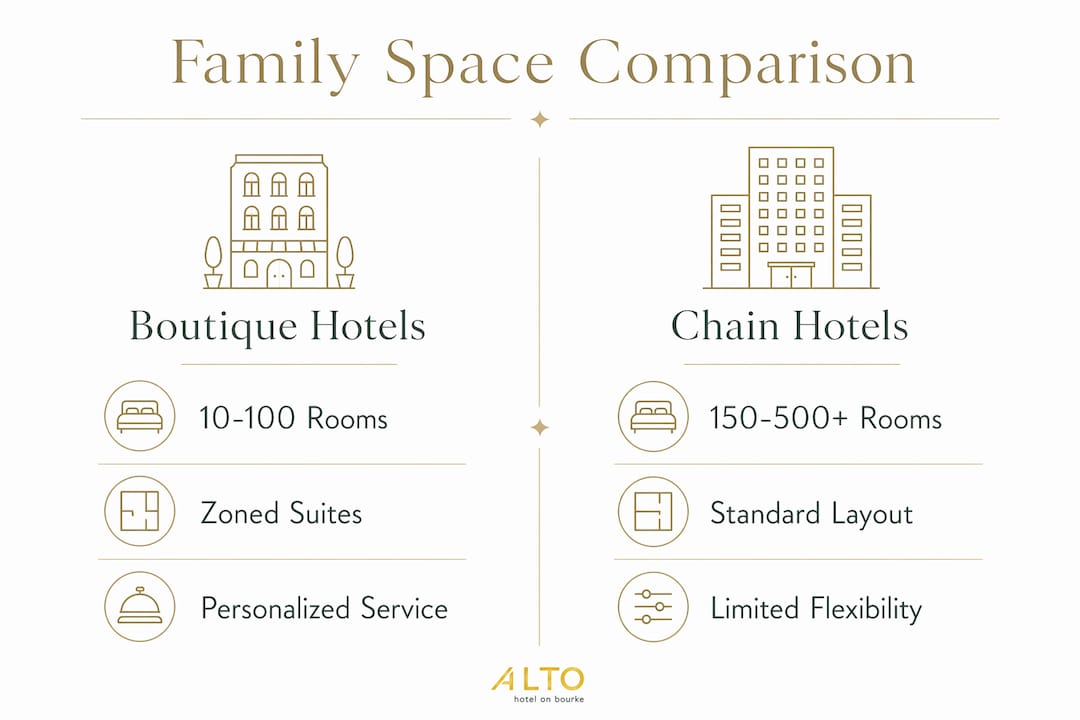
The single biggest reason boutique hotels deliver more usable family space is their room count. With fewer rooms to fill, boutique operators can allocate floor area to suite configurations rather than stacking identical standard rooms. The result is layouts that include two separate bedrooms, multiple bathrooms, and dedicated living zones within a single booking.
Consider the difference in practice. The Mövenpick Myth Hotel Patong offers a two-bedroom family suite totalling 62 square metres with two bathrooms, while Nobu Hotel Marrakech's Deluxe One Bedroom Family Suite reaches 126 square metres. These configurations exist because boutique operators have the design freedom to build them. A 350-room chain hotel optimises for revenue per square metre across identical rooms, not for the spatial needs of a family of four.
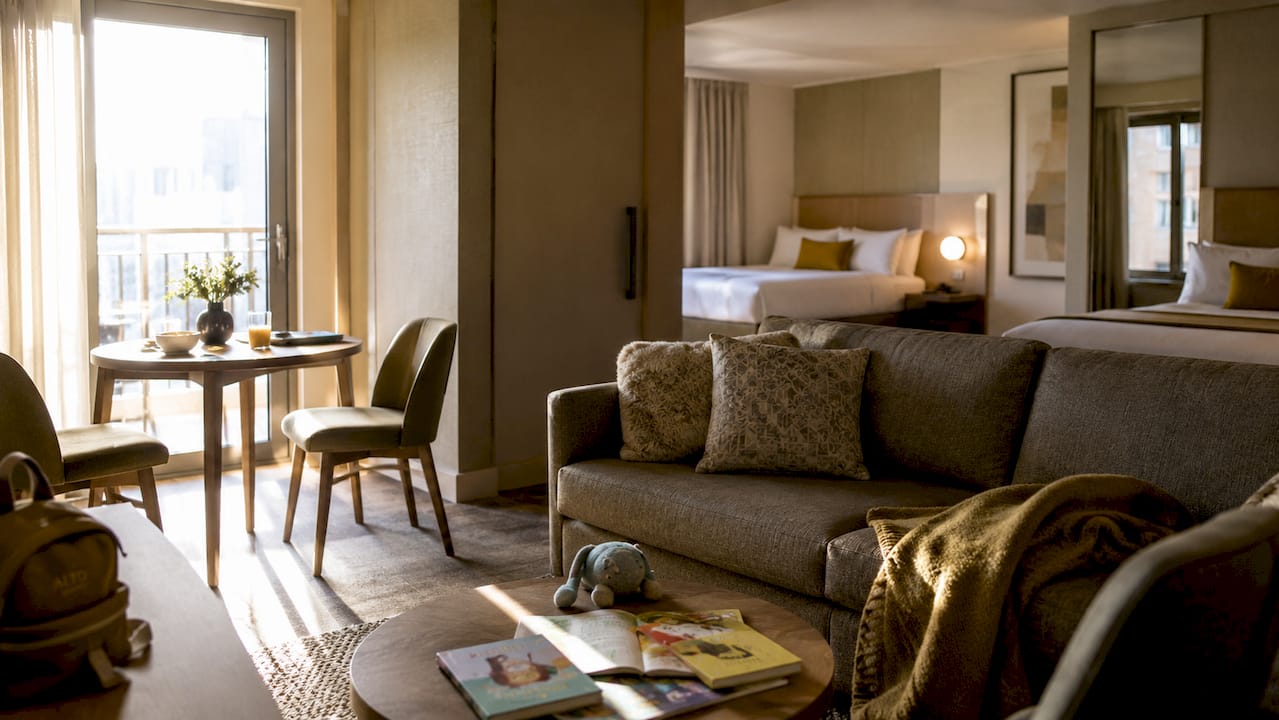
The contrast becomes even clearer when you look at operational flexibility. Personalised service is easier to deliver to smaller guest groups, which means boutique staff can accommodate requests like adjusting bed configurations, arranging early check-in for families with young children, or setting up a cot before arrival. Chain hotels process these requests through centralised systems that often fail at the last step.
| Feature | Boutique hotel | Standard chain hotel |
|---|---|---|
| Room count | 10 to 100 rooms | 150 to 500+ rooms |
| Suite configuration | Multi-bedroom, separate bathrooms | Mostly standard doubles or kings |
| Operational flexibility | High, staff can customise per request | Low, standardised procedures |
| Common area crowding | Minimal, fewer guests sharing facilities | High, especially at peak times |
| Check-in/out flexibility | Frequently accommodated | Rarely without surcharge |
Pro Tip: When booking a boutique family suite, ask the hotel directly for a floorplan. Suites with separate dining and living zones predict quieter nights and more peaceful meals, because adults and children can occupy different areas of the suite simultaneously without disturbing each other.
How fewer guests make common areas feel larger for families
The spatial advantage of boutique hotels extends well beyond the room itself. Fewer guests sharing common facilities means pools, lounges, and dining areas feel calmer and more navigable, which directly reduces the stress families experience during a stay.
This matters more than most families realise before they book. At a large resort, a pool shared by 300 guests becomes a supervision challenge. At a boutique property with 40 rooms, the same pool might have a dozen people in it at peak time. The practical benefit is that parents can actually relax rather than spending their poolside time counting heads.
Boutique hotels also proportion communal spaces to create residential-feeling environments rather than grand, impersonal lobbies. This design choice benefits families because children are easier to manage in spaces that feel contained and familiar rather than overwhelming. A lounge that seats 20 comfortably is more useful to a family than a lobby designed to impress 200 arriving guests simultaneously.
The psychological dimension is real. Families perceive boutique hotel spaces as more spacious partly because fewer guests reduce noise and competition, improving calm and privacy. Perceived space and actual square footage are different things, and boutique hotels consistently win on both.
"The advantage in family space at boutique hotels is often operational and experiential rather than simply larger in square footage." — EHL Hospitality Insights
The benefits of boutique hotels in this regard are cumulative. Quieter breakfasts, uncrowded lifts, and calm corridors at bedtime all contribute to a family stay that feels genuinely restful rather than logistically exhausting.
How personalised service makes family space more functional
Personalised service is not just a marketing phrase at boutique hotels. It is a structural advantage that makes the space families occupy more functional and less stressful to use. Smaller scale enables attention to individual guest needs and preferences in ways that chain hotel procedures cannot support.
Here is how that plays out for a typical family stay:
- Pre-arrival room setup. Boutique staff can arrange a cot, extra towels, and a specific bed configuration before you arrive, based on a single phone call or email. At a chain hotel, the same request enters a ticketing system and may or may not be actioned.
- Flexible meal times. Smaller dining operations can accommodate early breakfasts for families catching morning activities or late dinners for families returning from day trips. Rigid sittings at large hotels rarely bend.
- Local knowledge and logistics. Boutique staff typically know the neighbourhood in depth and can recommend family-appropriate restaurants, parks, and activities within walking distance. This saves families significant planning time.
- Quiet hour coordination. Boutique properties can communicate with all guests about noise expectations during nap times or early evenings, something operationally impossible at scale.
Behavioural precision in boutique hotel operations benefits families directly because staff remember preferences, anticipate needs, and resolve problems before they escalate. This operational attentiveness is the reason why families who stay at boutique properties consistently report higher satisfaction than those at comparable chain hotels.
Pro Tip: Call the hotel two days before arrival rather than emailing. Boutique hotel staff respond faster to direct conversations, and a two-minute call can lock in room setup requests, parking arrangements, and local recommendations that would take multiple email exchanges to confirm.
The local immersion dimension also adds genuine value. Boutique hotels that partner with local artisans, food producers, and cultural organisations give families access to experiences that feel authentic rather than packaged. For children especially, these encounters are more memorable than anything a resort activity programme can manufacture.
What family suites in boutique hotels actually look like
The architectural features of boutique family suites represent a genuine departure from standard hotel room design. Separate bedrooms with attached bathrooms allow simultaneous use without disturbance, which is the single most practical improvement a family can experience in a hotel stay.
The functional gains are specific and significant:
- No bathroom queue. Two bathrooms mean morning routines run in parallel rather than sequentially. For a family of four, this alone saves 20 to 30 minutes every morning.
- Independent sleep schedules. Children can go to bed in a separate room while adults remain in the living area. This is impossible in a standard double room and transforms the quality of an adult evening.
- Dedicated dining space. Suites with separate dining areas allow families to eat in without the awkward arrangement of balancing plates on a bed or desk.
- Storage separation. Multiple rooms mean luggage, toys, and clothing can be distributed logically rather than piled into a single space.
Family suites with separate living and dining areas add significant functional space beyond raw square footage. A 70 square metre suite with a separate living room is more usable for a family than an 80 square metre open-plan room, because the zoning allows different activities to happen simultaneously without conflict.
Operationally, boutique hotels also offer advantages like flexible check-in and check-out that chain hotels rarely extend without a fee. For families travelling with young children, arriving at 11am or departing at 1pm can make the difference between a smooth travel day and a chaotic one. The benefits of staying boutique accumulate across every touchpoint of a family stay, from arrival to departure.
Key takeaways
Boutique hotels deliver more family space through architectural zoning, smaller guest numbers, and personalised service that chain hotels cannot replicate at scale.
| Point | Details |
|---|---|
| Room count drives design freedom | Boutique hotels with 10 to 100 rooms can build multi-bedroom suites that chain hotels cannot justify. |
| Separate bathrooms are the top functional gain | Two bathrooms eliminate morning queues and allow independent routines for adults and children. |
| Fewer guests improve perceived space | Quieter pools, lounges, and corridors reduce family stress and make common areas genuinely usable. |
| Personalised service amplifies space utility | Staff can configure rooms, adjust schedules, and anticipate needs in ways standardised systems cannot. |
| Zoned suites outperform larger open rooms | A suite with separate living, dining, and sleeping areas is more functional than a bigger undivided room. |
Why I think families underestimate what boutique hotels actually offer
Most families I speak with default to large resorts because they associate size with value. More rooms, more pools, more restaurants. The logic feels sound until you actually spend three nights in a 28 square metre standard room with two children and a shared bathroom.
The boutique hotel argument for families is not about luxury. It is about logistics. Separate bedrooms mean children sleep when they should. Quieter common areas mean parents can have a conversation at breakfast. Staff who remember your name and your children's names mean requests get handled rather than logged. These are not premium extras. They are the baseline conditions for a family holiday that does not leave everyone exhausted.
What I find most underappreciated is the zoning principle. Families do not need more total space. They need organised space. A boutique suite that separates sleeping from living from dining solves the core problem of family travel, which is that four people with different schedules and energy levels need to coexist in a confined area without conflict. How boutique hotels differ from chain hotels in this regard is structural, not cosmetic.
The other factor families consistently underestimate is the value of local immersion. Boutique hotels that connect guests with the neighbourhood, the food culture, and the community create the kind of travel memories that children actually retain. A morning at a local market recommended by a staff member who grew up in the area beats any resort activity programme.
My honest recommendation: look at the floorplan before you look at the price. If the suite has a door between the adult bedroom and the children's room, book it.
— Kamal
Experience genuine family space at Alto Hotel on Bourke
Alto Hotel on Bourke is Melbourne's premier eco-friendly boutique hotel and one of the city's first environmentally rated properties. For families seeking real space rather than a standard room, the 2 Bedroom Sleepover suite offers a genuine two-bedroom configuration with separate sleeping areas, giving adults and children the independence they need for a comfortable stay.
Alto's boutique scale means fewer guests sharing facilities, staff who know your preferences, and a calm environment that large Melbourne hotels cannot match. The hotel's Hall of Fame recognition in the Victorian tourism sector reflects a consistent standard of personalised service that families notice from check-in to departure. For families who want a spacious, well-designed base in Melbourne, explore Alto's accommodation options and find the configuration that fits your family's needs.
FAQ
Why do boutique hotels have more space for families?
Boutique hotels typically have 10 to 100 rooms, which allows them to offer multi-bedroom suites with separate bathrooms and living areas rather than standardised double rooms. This smaller scale also means fewer guests share common facilities, making pools, lounges, and dining areas calmer and more practical for families.
What is a family suite in a boutique hotel?
A family suite in a boutique hotel is a room configuration with at least two separate bedrooms, often with individual bathrooms, plus a shared living or dining area. Examples include the Mövenpick Myth Hotel Patong's 62 square metre two-bedroom suite and Nobu Hotel Marrakech's 126 square metre family suite.
Are boutique hotels better than chain hotels for families?
Boutique hotels offer operational flexibility, personalised service, and zoned suite designs that chain hotels rarely provide at the same price point. The ability to customise room setups, accommodate flexible check-in times, and access local knowledge from staff makes boutique stays more practical for families with young children.
How do I choose the right boutique family suite?
Request a floorplan and confirm that the suite has a physical door separating the children's bedroom from the adult sleeping area. Suites with separate dining and living zones allow different family members to maintain independent schedules without disturbing each other, which is the most reliable predictor of a comfortable family stay.
Do boutique hotels cost more than standard hotels for families?
Boutique family suites are sometimes priced comparably to two standard chain hotel rooms booked separately, making them cost-competitive when you account for the combined space. The family-friendly features of boutique accommodations, including personalised service and quieter environments, add value that does not appear in a direct room rate comparison.