

Award-winning hotels are defined by their capacity to translate a city's cultural identity into physical space, lived experience, and community connection. The best properties do not simply occupy a city. They express it. From Hotel Indigo Singapore Katong's Peranakan motifs to the Soma Riverside Hotel's Khmer weaving patterns in Cambodia, the hotels earning top recognition in 2026 share one quality: they make you feel exactly where you are. Understanding why award-winning hotels reflect city identity matters because it changes how you choose where to stay and what you take home from a trip.
Why award-winning hotels reflect city identity through design
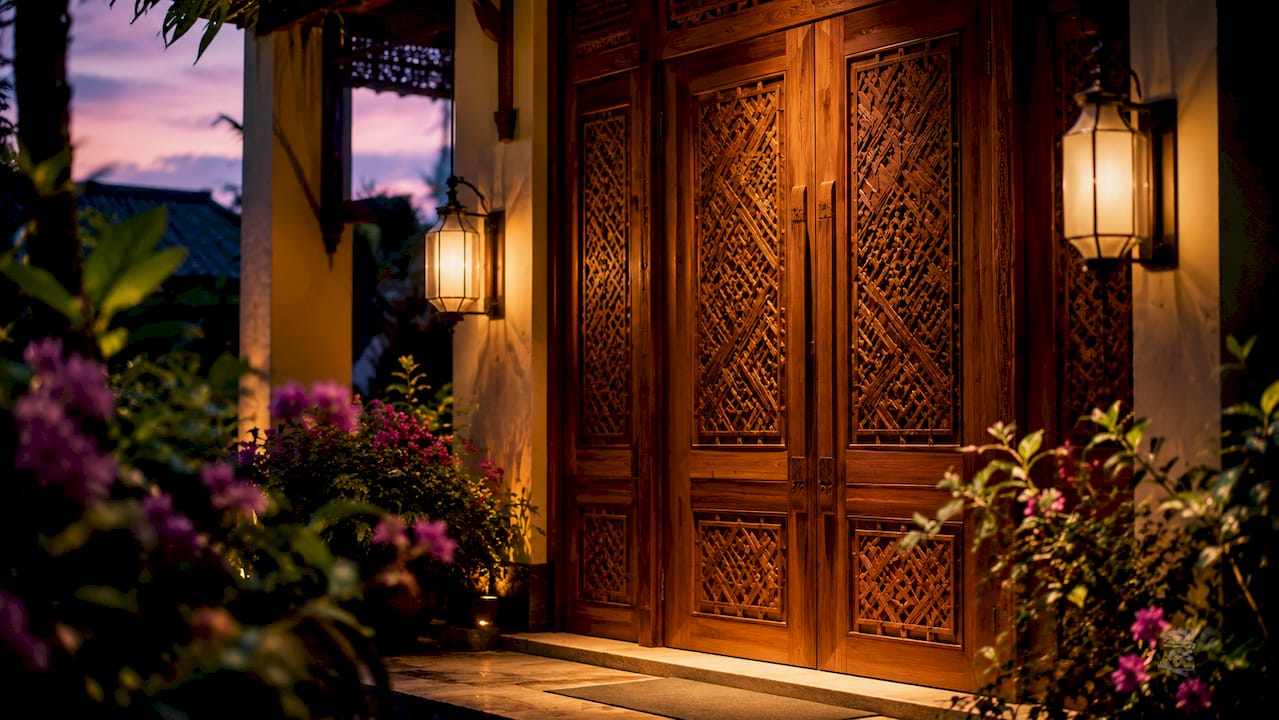
The most direct answer to why award-winning hotels reflect city identity lies in their architecture and materials. These properties treat local heritage as a design brief, not a decorative afterthought.
The Soma Riverside Hotel in Cambodia is a clear example. Its award-winning design uses Khmer weaving patterns and draws structural inspiration from Angkor Wat. Every surface references the region's craft traditions. That is not coincidence. It is a deliberate choice to make the building a living record of Cambodian culture.
In Melbourne, 1 Hotel and Homes took a different approach. The project reused heritage-listed Goods Shed No.5 with over 2,000 salvaged elements, turning an industrial relic into a contemporary urban precinct. Award juries from the Australian Institute of Architects specifically cited measurable evidence of heritage regeneration and integration with public spaces as the basis for recognition. That standard separates genuine cultural expression from surface styling.
Pro Tip: When assessing a hotel's cultural credentials, look past the lobby artwork. Ask whether the building itself was shaped by local craft traditions, reclaimed materials, or adaptive reuse of a heritage structure. That depth is what award juries reward.
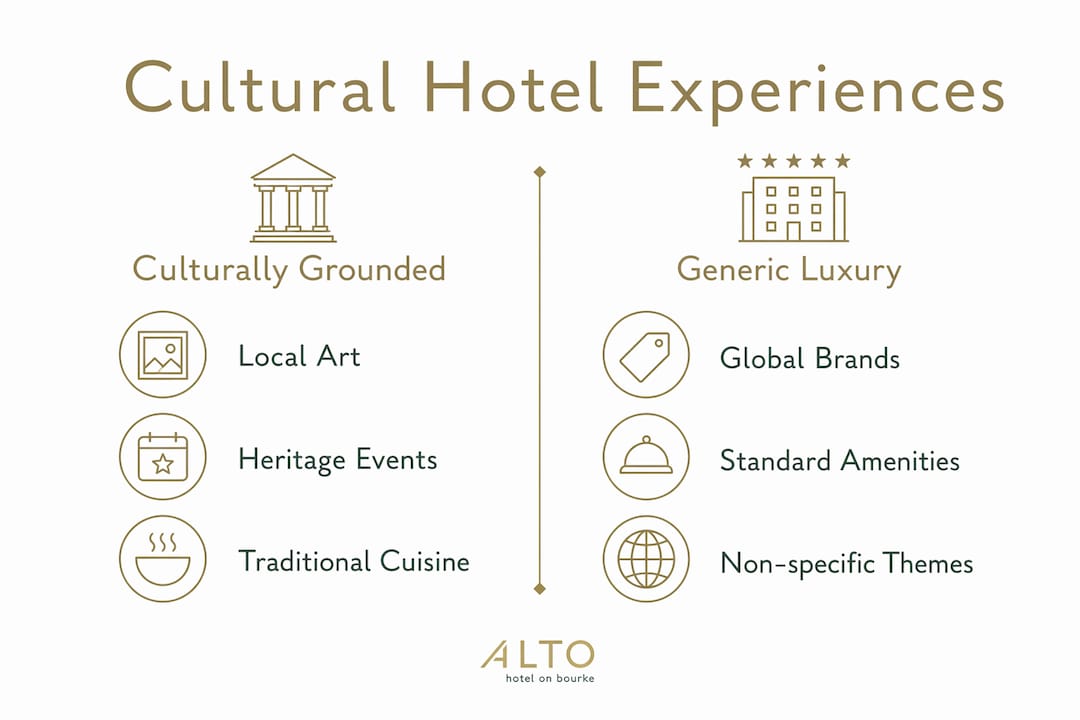
The contrast between culturally grounded design and generic luxury is stark:
| Design Approach | Culturally Grounded Hotel | Generic Luxury Hotel |
|---|---|---|
| Materials | Local stone, reclaimed timber, regional textiles | Imported marble, mass-produced finishes |
| Motifs | Traditional craft patterns, local iconography | Neutral international aesthetics |
| Structure | Adaptive reuse of heritage buildings | New builds with no site-specific reference |
| Community input | Local artisans and craftspeople involved | Centralised design teams with no local brief |
| Award recognition | Heritage regeneration, public integration | Amenity quality, service ratings |
How do hotels translate culture through guest experiences?
Design communicates identity visually. Programming communicates it personally. The most culturally significant hotels combine both.
Hotel Indigo Singapore Katong built its entire guest experience around the Peranakan community's history. Its 'Heritage to Tomorrow' initiative connects guests with local crafts, food traditions, and neighbourhood storytelling. The result is not a themed stay. It is a structured encounter with a living culture. Guests leave with a genuine understanding of Katong's identity, not just a photograph of a colourful shophouse.
Accor's 2026 cultural programming takes this further at a group level. The company has embedded cultural engagement around three operational pillars: heritage stewardship, cultural dialogue, and emerging talent support. This is not a marketing layer. It is governance. Cultural programming is written into how properties are managed, not bolted on for a seasonal campaign.
Community-led models push the concept even further. Ravenna's Albergo del Cuore runs cooperative social initiatives that integrate disabled youth and local farming into the hotel's operations. The property functions as a community hub. Guests participate in a social ecosystem, not just a hospitality transaction.
Programme types that award-winning hotels use to convey cultural identity include:
- Neighbourhood walking tours led by local residents, not tour operators
- Artist residencies that produce work displayed and sold within the property
- Culinary programmes sourcing exclusively from regional producers, which connects to the broader world of culinary tourism
- Language and craft workshops run by community elders or artisan groups
- Rotating exhibitions that document local history and urban change
Pro Tip: A single cultural event does not make a hotel culturally significant. Look for properties with ongoing community partnerships and year-round programming. That consistency is the marker of genuine cultural integration, not a one-off thematic touch.
What role do hotels play in shaping cultural capital?
Cultural capital is the term used in hospitality to describe a hotel's influence on the taste, identity, and social recognition of its city. The Hotel Yearbook identifies cultural capital as luxury's real advantage over traditional amenities like infinity pools or spa facilities. That claim reframes what luxury actually means.
The framework has three pillars. The first is a cultural point of view: the hotel holds a defined position on what its city represents. The second is cultural production: the hotel actively creates or supports art, craft, and narrative. The third is community curation: the hotel shapes which voices and stories are amplified within its walls.
Hotels operating across all three pillars become cultural ambassadors. They influence how visitors perceive a city and how residents feel about their own neighbourhood. The Hotel Yearbook notes that operational stewardship, including local hiring and active shaping of place narratives, is what separates hotels that merely occupy a city from those that genuinely represent it.
This distinction matters for travellers. A hotel with genuine cultural capital gives you access to a city's identity in a way that no guidebook can replicate. You are not observing the culture from outside. You are staying inside an institution that is actively producing it. For a deeper look at how boutique hotels reflect local culture, the connection between scale and authenticity becomes especially clear.
How do award-winning hotels balance identity and overtourism?
The cultural significance of award-winning hotels comes with a real tension. Tourism pressure can erode the very identity that makes a city worth visiting.
The mayor of Athens has warned against treating the city as a "giant hotel," arguing that neighbourhood habitability and authentic local rhythms must be protected from mass tourism. That warning applies directly to the hospitality sector. A hotel that draws thousands of visitors to a fragile neighbourhood without investing in that neighbourhood's wellbeing is extracting identity, not reflecting it.
The positive and negative impacts of hotels on city identity are worth mapping clearly:
| Factor | Positive Impact | Negative Impact |
|---|---|---|
| Local hiring | Builds community economic stake | Ignored in favour of centralised staffing |
| Heritage use | Restores and activates historic buildings | Demolishes heritage for new builds |
| Cultural programming | Amplifies local voices and traditions | Replaces local culture with generic tourism content |
| Tourism volume | Brings economic activity to local businesses | Overwhelms neighbourhood infrastructure and residents |
| Supply chain | Sources from local producers and artisans | Relies on international supply chains with no local benefit |
Hotels that earn awards for cultural contribution tend to sit firmly in the positive column. RISONARE Shimonoseki in Japan demonstrates this by combining cultural geography narratives with a reported 53% reduction in energy use. The property treats environmental stewardship and cultural identity as the same project. That integration is increasingly what award juries expect.
For travellers, the practical guidance is straightforward. Choose properties that hire locally, source locally, and invest in ongoing community partnerships. Avoid hotels that use cultural imagery as decoration while outsourcing everything else. The impact of hotels on city identity is only positive when the hotel is genuinely embedded in the community it claims to represent. You can also explore how local gastronomy connects to this broader picture of authentic place-based hospitality.
Key takeaways
Award-winning hotels reflect city identity through design, operations, and community integration working together, not through aesthetics alone.
| Point | Details |
|---|---|
| Design as cultural record | Local materials, adaptive reuse, and traditional motifs signal genuine heritage integration. |
| Programming over theming | Ongoing cultural partnerships and community-led experiences outperform one-off thematic touches. |
| Cultural capital framework | Hotels build city identity through a cultural point of view, active production, and community curation. |
| Overtourism risk is real | Hotels must invest in local livelihoods and neighbourhood wellbeing to avoid eroding the identity they claim to reflect. |
| Awards validate depth | Juries reward measurable heritage regeneration and public integration, not surface-level styling. |
What i've learned about hotels that actually reflect their cities
Most travel writing treats hotel design as a backdrop. I think that misses the point entirely.
The properties that have stayed with me are the ones where the building itself told me something I could not have learned from a guidebook. Staying in a hotel that used reclaimed materials from the site's industrial past, or one where the staff were all from the surrounding suburb and could name the families who had lived there for generations, changed how I understood those cities. That is not a design achievement. It is a cultural one.
What I have noticed is that the hotels earning serious recognition in 2026 are not winning on amenities. They are winning because they have made a genuine commitment to the communities they sit inside. Accor's cultural programming model is a useful benchmark. When cultural engagement is written into governance rather than left to the marketing team, the result feels completely different to a guest.
My honest advice: stop reading hotel reviews that focus on thread counts and breakfast quality. Read the award citations instead. The Australian Institute of Architects' recognition of 1 Hotel and Homes Melbourne told me more about that property's relationship to the city than any travel review I have read. Award juries ask hard questions about heritage, community, and place. Their answers are worth your attention.
For travellers who want culturally rich stays, the heritage neighbourhood hotel model is worth understanding before you book. The difference between a hotel that occupies a city and one that expresses it is something you feel from the moment you arrive.
— Kamal
Experience melbourne's cultural identity at Altohotel
Altohotel on Bourke is Melbourne's premier eco-friendly boutique hotel and one of the first environmentally rated properties in the city. It holds Hall of Fame recognition in the Victorian tourism sector, earned through genuine commitment to sustainable design, local partnerships, and community-focused hospitality. The hotel's rooms are crafted with eco-conscious materials, and its partnerships with local artisans reflect exactly the kind of cultural integration this article describes. If you want to experience Melbourne's identity from the inside, not just observe it from a tourist trail, Altohotel is the right base. Explore the Petite Queen room or browse the full range of boutique accommodation options to find the stay that suits your travel style.
FAQ
Why do award-winning hotels reflect city identity?
Award-winning hotels reflect city identity by embedding local heritage into their design, operations, and community programmes rather than applying generic luxury aesthetics. Properties like Hotel Indigo Singapore Katong and Soma Riverside Hotel demonstrate this through culturally specific motifs, local craft traditions, and ongoing community partnerships.
How do hotels shape local culture beyond their interiors?
Hotels shape local culture by hiring locally, sourcing from regional producers, supporting emerging artists, and investing in neighbourhood wellbeing. The Hotel Yearbook identifies this operational stewardship as the defining quality of hotels that genuinely influence city identity.
What is cultural capital in a hospitality context?
Cultural capital in hospitality refers to a hotel's influence on city taste, social recognition, and identity, built through a defined cultural point of view, active cultural production, and community curation. The Hotel Yearbook describes it as luxury's real competitive advantage over traditional amenities.
Can tourism damage the city identity that hotels promote?
Yes. The mayor of Athens has warned that unchecked tourism can homogenise neighbourhoods and erode authentic local rhythms. Hotels that extract cultural imagery without investing in local livelihoods contribute to this erosion rather than preventing it.
What should travellers look for in a culturally authentic hotel?
Look for properties with ongoing community partnerships, local hiring practices, heritage-led design, and year-round cultural programming. One-off themed events or imported décor are signs of surface-level theming rather than genuine cultural integration.