
What is a community-connected hotel?
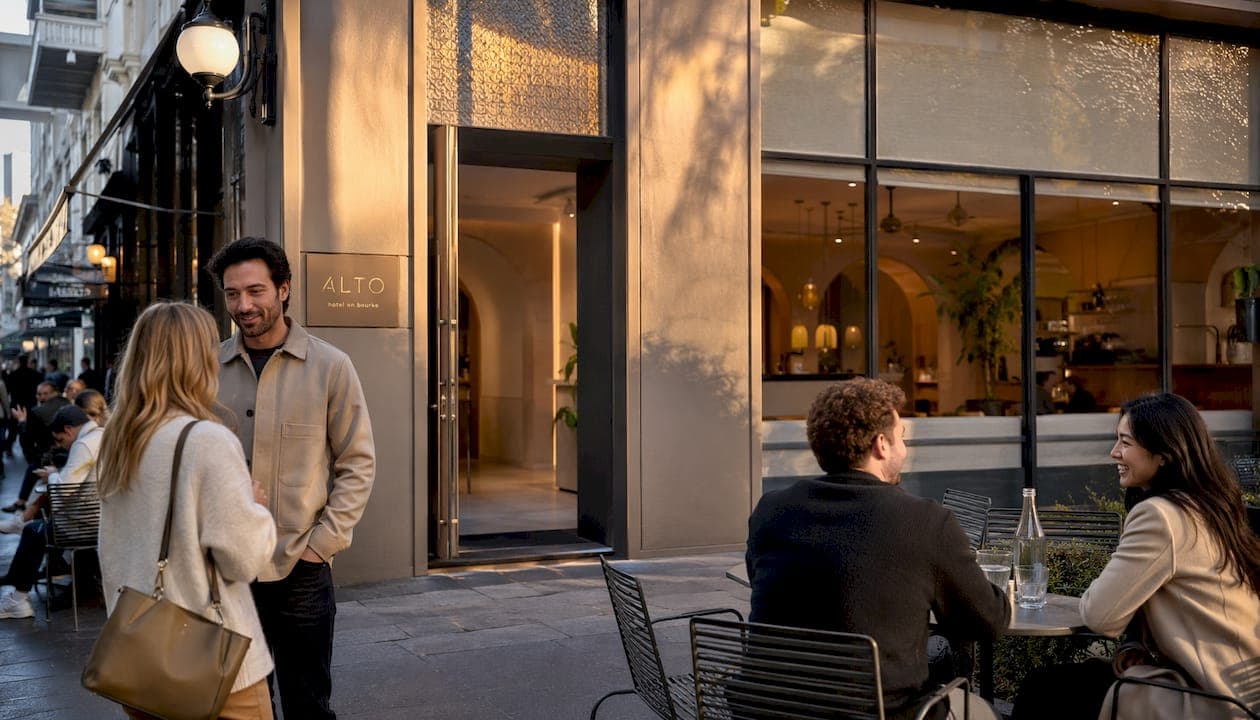
A community-connected hotel is a property that functions as an active, embedded part of its local area rather than a self-contained guest facility. It acts as a steward of its neighbourhood through social impact, local partnerships, and inclusive design, creating a shared hub where guests and residents genuinely mix. The shift is from service delivery to place stewardship: the hotel becomes part of the social fabric, not just a building within it.
This is distinct from a hotel that simply decorates its lobby with local artwork or mentions nearby restaurants in a welcome booklet. Real community connection shows up in operations: who gets hired, where supplies come from, which organisations the hotel supports, and how its spaces are designed to welcome people beyond paying guests.
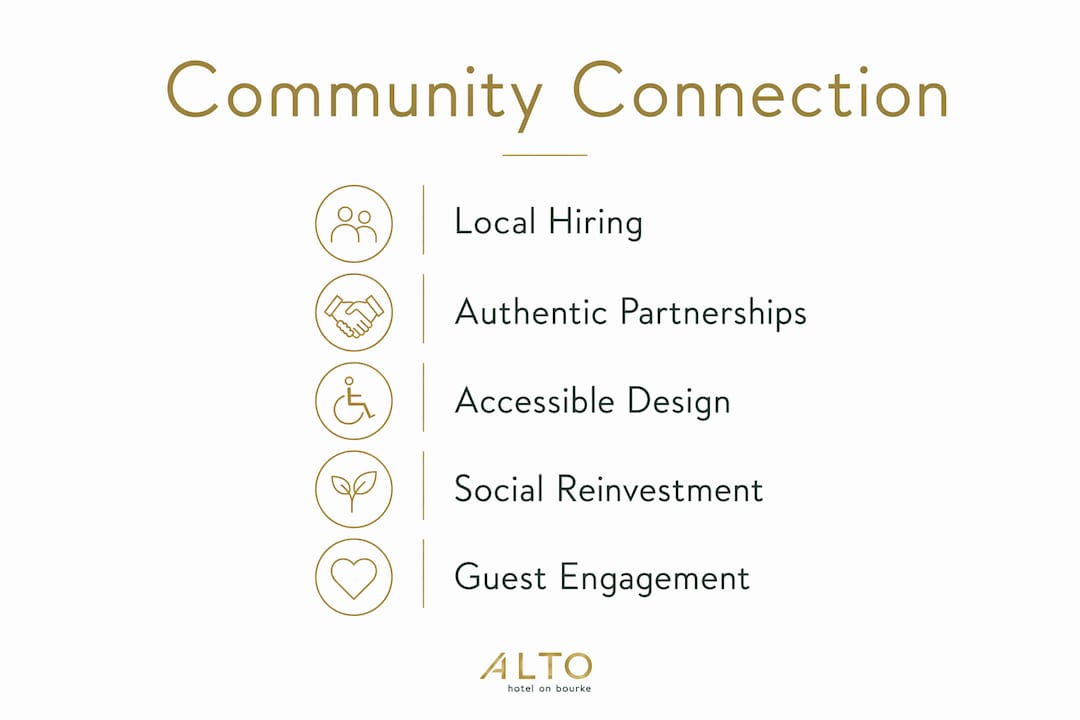
Key features of a community-connected hotel include:
- Local hiring that prioritises neighbourhood residents and builds authentic cultural knowledge into the guest experience
- Partnerships with local artisans, producers, and organisations that shape the hotel's identity and programming
- Publicly accessible spaces such as courtyards, rooftop decks, or lobbies that blur the line between hotel and neighbourhood
- Reinvestment of revenue or profits into community projects, cultural events, or environmental initiatives
- Participatory programming that invites both guests and locals into shared experiences, workshops, and events
- Ongoing dialogue with residents and stakeholders to incorporate community needs into services and design
Why community connection drives hospitality success
The gap between what travellers want and what most hotels deliver is striking. a large majority of people believe hotels have the potential to provide a genuine sense of community, yet only a minority feel they actually belong to one. That disconnect is exactly what community-focused hospitality targets.
Hotels that close this gap see real commercial returns. Properties adopting a community living room model report ROI gains of 6%–12% through social spaces that engage both locals and visitors. The mechanism is straightforward: when a hotel becomes a place people want to spend time regardless of whether they are staying the night, it generates revenue across more hours of the day and builds loyalty that no marketing budget can replicate.
Key benefits for hotels that invest in genuine community connection:
- Guest loyalty that outlasts any single stay, driven by emotional attachment to place rather than points programmes
- Brand differentiation that is hard to copy because it is rooted in specific people, relationships, and local culture
- Reduced seasonal dependency as locals use the hotel's spaces year-round
- Staff retention through a workplace culture that reflects shared community pride
- Word-of-mouth referrals from guests who feel they experienced something real
How hotels build genuine relationships with their communities
The most credible community engagement happens at the operational level, not in a marketing campaign. Local hiring is one of the most direct levers: staff who grew up in the neighbourhood bring cultural familiarity, family ties, and genuine pride that translates into more personal guest experiences. Hotels that invest in training local hires typically see lower turnover and stronger guest satisfaction over time.

Partnerships with local artisans, food producers, and creative businesses go further than sourcing decisions. When a hotel collaborates with local makers to shape its spaces, menus, and programming, it creates something guests cannot find at a chain property: the actual personality of a place. The role of food in hospitality is particularly powerful here, with locally sourced menus acting as a direct, daily expression of community connection.
Design choices matter just as much as procurement. Hotels that open outward to public spaces, offering accessible courtyards, rooftop decks, or street-level bars that double as community gathering points, physically dissolve the boundary between guest and local. The Harmon Guest House in Healdsburg, California, built the town's first public roof deck and integrated a county bus stop directly into its facade. That kind of design commitment signals something a welcome brochure never could.
Social reinvestment rounds out the picture. Hotels that allocate a share of profits to neighbourhood projects, sponsor local events, or provide free space to community organisations build trust that compounds over years. Effective community engagement demands ongoing dialogue with residents, not a one-off consultation.
Pro Tip: Authentic engagement means the community shapes the hotel, not the other way around. Start with listening: informal interviews with local artisans, pilot events open to residents, and feedback loops on programming. Hotels that treat community involvement as a genuine co-creation process rather than a marketing exercise build resilience that outlasts any trend.
| Engagement type | Example | Community benefit |
|---|---|---|
| Local hiring | Recruiting from the surrounding neighbourhood | Employment, cultural authenticity |
| Artisan partnerships | Featuring local makers in hotel design and retail | Income for creatives, place identity |
| Public spaces | Open rooftop decks, accessible lobbies | Social infrastructure for residents |
| Profit reinvestment | Funding youth programmes or cultural festivals | Long-term neighbourhood wellbeing |
| Event programming | Hosting local musicians, markets, or workshops | Cultural vitality, cross-community connection |
How community engagement transforms the guest experience
Guests who stay at a community-connected hotel do not just observe local culture. They participate in it. Cultural co-creation with local artisans transforms guest behaviour in measurable ways: at Dar Ben Gacem in Tunis, the average length of stay rose from just over one night in 2014 to nearly five nights by 2023, driven by expanded experience offerings and deeper guest connection to place.
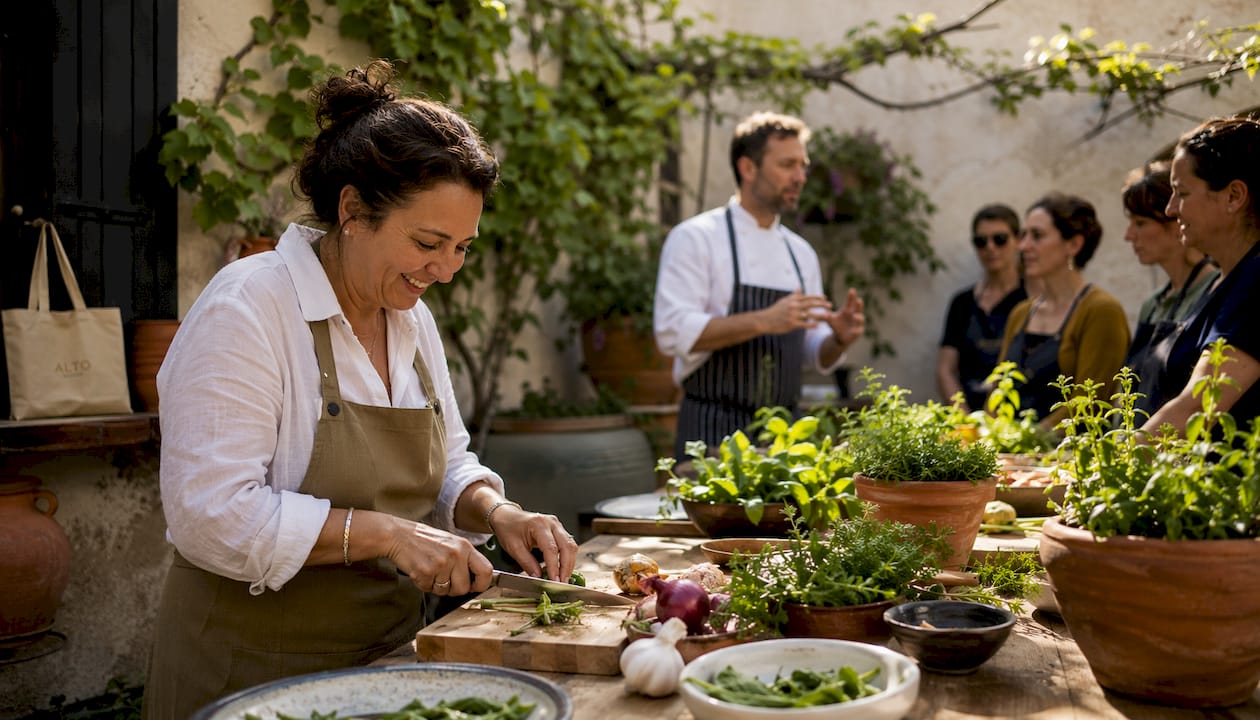
Participatory programming is the engine behind that shift. Cooking classes run by local chefs, craft workshops with neighbourhood artisans, guided market visits, and live performances by local musicians all give guests a reason to stay longer and spend more broadly across the local economy. These are not add-ons; they are the product.
Guest benefits from community-integrated stays include:
- A genuine sense of belonging rather than the anonymity of a standard hotel stay
- Access to local knowledge and relationships that no guidebook provides
- Experiences that feel personal because they are shaped by real people from that place
- Stronger memories and emotional attachment to the destination
- A clearer sense that their spending contributes to something beyond the hotel's bottom line
Hotels that coordinate guest itineraries to spread spending across local businesses also see guests stay longer, with stays extending from a single night to as many as five. The benefits of locally curated experiences reach well beyond the hotel walls.
Altohotel: Melbourne's community-connected boutique hotel
Alto Hotel on Bourke stands as one of Australia's clearest examples of what a community-connected, eco-friendly boutique hotel looks like in practice. Located in Melbourne's CBD, it was among the first environmentally rated hotels in the city, and its approach to community integration has been recognised with Hall of Fame status in the Victorian tourism sector.
Altohotel's community connection shows up in its partnerships with local artisans and organisations, which shape both the guest environment and the hotel's broader identity. Its commitment to local partnerships is not a marketing layer applied over a standard hotel operation; it runs through procurement, design, and guest programming.
The hotel's sustainability credentials reinforce its community role. Eco-conscious materials, responsible sourcing, and environmental stewardship position Altohotel as a property that takes its obligations to Melbourne seriously, not just to its guests.
Key markers of Altohotel's community-connected approach:
- Award-winning recognition including Hall of Fame status in Victorian tourism, validating long-term commitment rather than short-term positioning
- Local artisan partnerships that bring Melbourne's creative community into the guest experience
- Eco-friendly design using sustainable materials that reflect the hotel's responsibility to its urban environment
- Boutique scale that allows genuine responsiveness to community needs, unlike large chain properties
Altohotel's Hall of Fame recognition in the Victorian tourism sector reflects a sustained track record, not a single standout year.
How community-connected hotels support local sustainability and economic wellbeing
A community-connected hotel functions as an economic engine for its neighbourhood, not just a place for visitors to sleep. When hotels source locally, hire locally, and reinvest locally, they redirect tourism spending into the hands of residents rather than distant shareholders.
The economic logic is straightforward. Hotels that distribute guest spending across local businesses create a multiplier effect: money spent at the hotel flows to local food producers, artisans, transport operators, and cultural organisations. Social entrepreneurship in hospitality shows that viewing community investment as a core business strategy rather than a CSR obligation builds brand resilience and creates stories that no advertising budget can manufacture.
Environmental benefits follow the same pattern. Local sourcing reduces supply chain emissions. Sustainable building and operational practices lower the hotel's footprint. Green spaces and urban greening initiatives, funded through profit reinvestment, improve liveability for residents well beyond the hotel's immediate guests.
Positive community impacts from this model include:
- Local employment that builds skills, reduces turnover, and keeps wages circulating in the neighbourhood
- Support for small businesses through procurement, referrals, and collaborative programming
- Cultural preservation by funding festivals, artisan networks, and heritage initiatives
- Environmental stewardship through sustainable sourcing, waste reduction, and green space investment
- Tourism revenue retention that benefits the whole community rather than flowing offshore
Hotels that activate as community social hubs during off-peak hours also bridge revenue gaps while putting otherwise static real estate to work for the neighbourhood. The property earns more; the community gains a gathering place. That is the practical case for community-connected hospitality, stripped of sentiment.
True community connection requires operational anchors: local ownership structures, transparent profit sharing, or sustained reinvestment. Token gestures, a mural here, a local jam on the breakfast menu there, do not constitute a community-driven hotel concept. The types of community partnerships that actually move the needle are structural, not decorative.
Experience community-connected hospitality at Altohotel
Altohotel puts the community-connected hotel concept into practice every day in Melbourne's CBD. Whether you are looking for a 2 Bedroom Deluxe Apartment with space to settle in properly, or a 1 Bedroom Spa Apartment that blends comfort with eco-conscious design, every stay connects you to a hotel that takes its place in Melbourne seriously. Book directly at altohotel.com.au.
Key takeaways
A community-connected hotel embeds itself in its local area through hiring, partnerships, accessible design, and reinvestment, creating shared value for guests and residents alike.
| Point | Details |
|---|---|
| Definition | A community-connected hotel acts as a neighbourhood steward, not just a guest facility, through partnerships, local hiring, and inclusive design. |
| Belonging gap | 84% of travellers believe hotels can provide community, yet only 24% feel they belong to one, showing the scale of the opportunity. |
| Commercial returns | Hotels adopting a community living room model report ROI gains of 6%–12% through social spaces that engage locals and visitors. |
| Guest behaviour | Cultural co-creation with local artisans extended average guest stays from just over one night to nearly five nights at Dar Ben Gacem. |
| Australian example | Altohotel holds Hall of Fame status in Victorian tourism, reflecting sustained community integration and eco-friendly boutique hospitality in Melbourne. |