

A sustainable hotel booking checklist is a structured set of verifiable criteria that helps travellers identify genuinely eco-friendly accommodations beyond marketing claims. Most hotels now use green language in their promotions, but genuine sustainability requires operational transparency, third-party certification, and measurable environmental data. A practical sustainability rubric scores hotels across certification, energy and water performance, waste management, procurement clarity, and guest engagement. Knowing what to look for before you book is the difference between supporting real environmental stewardship and funding greenwash. This guide gives you the exact criteria, questions, and filters to apply.
1. What certifications should you check on your sustainable hotel booking checklist?
Third-party certifications are the first filter on any hotel booking sustainability checklist. Recognised programmes like Green Key, EarthCheck, LEED, and Green Globe each require independent audits covering energy use, water management, waste reduction, and chemical handling. A certification badge on a hotel website is a starting point, not a guarantee.

The critical step is verification. Cross-check certification badges against the certifier's official public directory, confirming the hotel's name, current validity, and applicable property scope. Expired or misapplied badges are more common than travellers expect.
Certifications also have limits. Smaller properties may operate very responsibly but lack the resources for formal audits. In those cases, operational transparency becomes a stronger indicator of genuine commitment than any badge.
- Check Green Key, EarthCheck, LEED, Green Globe, and B Corp directories directly
- Confirm the certificate applies to the specific property, not a parent company
- Note the audit date and renewal cycle
- Treat unverified logos as a red flag, not a green light
Pro Tip: Search the certifier's public directory using the hotel's exact registered name, not its trading name. Discrepancies between the two are a common greenwashing tactic.
2. Operational sustainability practices to verify before booking
Certifications tell you a hotel has been assessed. Operational data tells you what it actually does. A genuinely sustainable accommodation guide focuses on four core systems: energy efficiency, water management, waste reduction, and responsible sourcing.
Hotels that provide quantitative data per guest night, referencing frameworks like the EU Product Environmental Footprint Category Rules (EU PEFCR), are significantly more credible than those offering vague marketing narratives. Metrics like kilowatt-hours per guest night or litres of water consumed per stay give you something concrete to compare.
Energy and water
Look for demand-controlled ventilation, LED lighting throughout, solar panels, and greywater recycling systems. These are technical terms that describe real infrastructure. Vague claims such as "we care about the earth" signal greenwashing. Genuine hotels describe specific systems and can quantify their performance.
Waste and sourcing
Ask whether the hotel operates a linen reuse programme, composts food waste, and separates recyclables. For sourcing, look for documented relationships with local suppliers. Hotels that champion local food producers reduce transport emissions and support community economies simultaneously.
| Operational area | What to look for | Red flag |
|---|---|---|
| Energy | Solar, LED, demand ventilation, published kWh data | "Energy-efficient" with no specifics |
| Water | Greywater recycling, low-flow fixtures, litres per guest night | "We save water" with no metrics |
| Waste | Composting, recycling separation, linen reuse programme | Single-use plastics still in rooms |
| Sourcing | Named local suppliers, seasonal menus, procurement policy | "Locally inspired" with no supplier names |
Pro Tip: Request the hotel's most recent sustainability report before booking. A genuine operator will send it without hesitation. Evasion or a glossy PDF with no numbers is a clear warning sign.
3. Questions to ask hotels before you confirm your booking
Asking targeted questions is the most direct way to separate genuine sustainable accommodation from polished marketing. Hotels offering clear, data-backed answers and guest incentives for sustainable choices demonstrate authenticity. Hotels that respond with vague or generic language almost always lack the operational depth to back their claims.
Send these questions by email before booking. The quality and specificity of the reply tells you everything.
- "Which third-party certification does this property hold, and when was it last audited?"
- "Can you share your energy and water consumption figures per guest night?"
- "What is your waste diversion rate, and how do you handle food waste?"
- "Which local suppliers do you source food and amenities from?"
- "Do you offer guest incentives for skipping daily housekeeping or reducing towel changes?"
- "Is your sustainability page updated with current impact data, or is it a static marketing document?"
- "What community or ecological projects does the hotel directly fund or participate in?"
Evasive or generic email responses are a reliable indicator of greenwashing. Genuine operators provide specific, operational answers and often welcome the questions. Hotels that incentivise guests to skip daily housekeeping in exchange for dining credits, for example, demonstrate a mature sustainability strategy with measurable impact.
4. How to use booking platforms without falling for greenwashing
Booking platforms now offer eco-certified and green-stay filters, which are a useful starting point for narrowing down low-impact hotel choices. The limitation is that platform badges rely on self-reported data or lightweight assessments, not independent operational audits. A green icon on a listing page does not carry the same weight as a verified EarthCheck or Green Key certification.
The most reliable approach is a two-stage vetting process. Use platform filters to build a shortlist, then manually audit each shortlisted property by checking its sustainability page, requesting its report, and verifying any certification badges against official directories.
When reviewing a hotel's own website, look for a dedicated sustainability page that includes current impact metrics, not just a mission statement. Reputable hotels provide transparent sustainability pages with verifiable data rather than displaying certification logos alongside marketing copy.
- Use platform eco-filters to shortlist, not to finalise
- Check the hotel's own sustainability page for current, quantified data
- Verify all certification logos against official certifier directories
- Read recent guest reviews for mentions of actual sustainable practices in rooms
- Confirm the hotel's cancellation policy supports flexible, low-waste travel planning
5. Location and transport as part of your eco-friendly hotel checklist
The hotel itself is only part of the environmental equation. Location proximity to public transport, walkable local amenities, and integration with community services significantly reduces a stay's total carbon footprint compared to isolated properties that require car hire or taxis for every trip.
Effective sustainable booking considers the whole travel logistics picture. A hotel with solar panels and greywater recycling located 30 kilometres from the city centre, requiring a hire car for every outing, may have a higher total trip footprint than a well-located urban property with strong public transport links. Sustainable booking integrates hotel operational checks with location and transport choices to minimise overall environmental impact.
When assessing location, check whether the hotel is within walking distance of a train or tram stop, whether it offers bicycle hire or storage, and whether local restaurants and attractions are accessible on foot. Properties like Altohotel, located in Melbourne's CBD on Bourke Street, score strongly on this criterion. Guests can access the city's tram network, local dining, and cultural precincts without a car.
Pro Tip: Factor in your arrival transport when calculating total trip emissions. Flying into a city and then taking a 40-minute taxi to a "sustainable" resort often negates the hotel's environmental credentials entirely.
6. Sustainable hotel room features to look for on arrival
A sustainable hotel room features checklist gives you a way to verify claims once you arrive. The room itself should reflect the hotel's stated commitments. Refillable amenity dispensers instead of single-use plastic bottles, energy-saving key card systems that cut power when you leave, and natural or recycled materials in furnishings are all physical evidence of genuine practice.
Look for clear in-room information about recycling, linen reuse, and housekeeping options. A hotel that genuinely operates sustainably makes it easy for guests to participate. Obscure or absent instructions suggest sustainability is a marketing position rather than an operational reality.
Check whether the room uses low-flow showerheads and tap aerators. These are inexpensive, effective, and a standard feature of environmentally conscious lodging. Their absence in a hotel claiming green credentials is a meaningful inconsistency. For a deeper look at what separates genuine eco properties from those that simply claim the label, the Altohotel guide on choosing an environmentally rated boutique hotel covers the key distinctions clearly.
7. Local sourcing and community impact as checklist criteria
Local sourcing is one of the most impactful and most misrepresented sustainability claims in hospitality. Genuine local sourcing means documented relationships with named regional producers, seasonal menus that reflect what is actually available locally, and procurement policies that prioritise proximity. "Locally inspired" cuisine with no supplier transparency is a marketing phrase, not a sustainability practice.
Understanding what local sourcing actually involves in hospitality, including its supply chain benefits and real-world challenges, helps you ask better questions and assess hotel claims more accurately. Hotels that publish their supplier relationships and explain their procurement criteria are operating at a different level of transparency than those that use local imagery without substance.
Community impact extends beyond food. Ask whether the hotel employs local staff, supports local artisans, or funds ecological restoration projects in the region. Altohotel's partnerships with local artisans and organisations in Melbourne are a concrete example of how community integration strengthens a hotel's sustainability credentials beyond its operational systems.
Key takeaways
A genuine sustainable hotel booking checklist combines verified third-party certification, quantified operational data, targeted pre-booking questions, and location-based transport assessment to identify truly eco-friendly accommodations.
| Point | Details |
|---|---|
| Verify certifications independently | Cross-check badges against official certifier directories to confirm current validity. |
| Demand operational data | Request energy, water, and waste metrics per guest night, not just mission statements. |
| Ask specific pre-booking questions | Evasive answers to direct questions reliably indicate greenwashing. |
| Use a two-stage booking process | Filter digitally, then manually audit shortlisted properties before confirming. |
| Include location in your assessment | Proximity to public transport significantly reduces a stay's total carbon footprint. |
Greenwashing is the rule, not the exception
I have spent years reviewing hotel sustainability claims, and the honest assessment is this: most of what passes for green travel marketing is noise. The hotels that genuinely operate sustainably are often the quietest about it. They send you a 12-page sustainability report without being asked. They name their suppliers. They tell you their water consumption dropped by a specific figure last year because they installed aerators across all 60 rooms.
The hotels that shout loudest about being eco-friendly are frequently the ones with the least to show for it. I have seen properties with prominent Green Globe logos that could not tell me when their last audit occurred. I have received pre-booking emails from "sustainable resorts" that answered every operational question with a variation of "we are committed to protecting our beautiful environment."
The checklist approach works because it forces specificity. Vague claims collapse under direct questions. When you ask a hotel to name its energy consumption per guest night and it cannot answer, you have your answer. When it sends you a figure, a comparison to the prior year, and an explanation of what changed operationally, you have found something worth booking.
My strongest advice is to weight operational transparency above certification status. A small, independently run property with no formal certification but detailed, honest answers about its systems is a better choice than a certified chain hotel that treats sustainability as a marketing department function. The certificate tells you someone assessed the hotel once. The answers tell you what the hotel actually does every day.
— Kamal
Altohotel: a verified sustainable stay in Melbourne
Eco-conscious travellers visiting Melbourne have a clear benchmark for what genuine sustainable accommodation looks like.
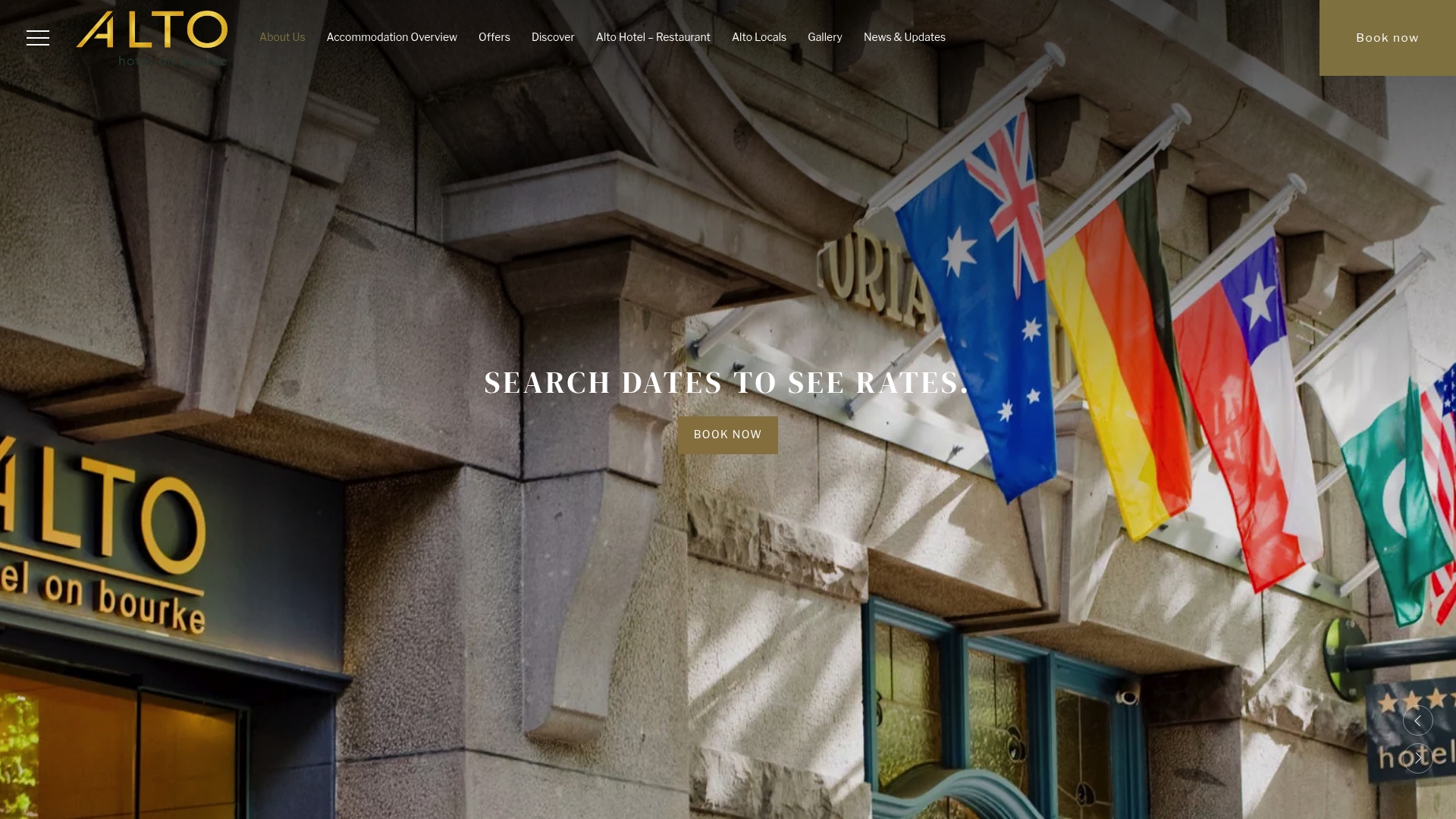
Altohotel on Bourke Street is one of Melbourne's first environmentally rated boutique hotels, recognised with Hall of Fame status in the Victorian tourism sector. The property combines eco-conscious materials, locally sourced partnerships, and transparent environmental practices across its studio and apartment rooms. Guests can book directly at Altohotel and find detailed information about the hotel's sustainability credentials, room features, and community partnerships. For travellers who have done the work of building a checklist, Altohotel is a property that holds up under scrutiny.
FAQ
What is a sustainable hotel booking checklist?
A sustainable hotel booking checklist is a set of verifiable criteria covering certifications, operational data, local sourcing, and transport access that travellers use to confirm a hotel's genuine environmental commitment before booking.
Which certifications are most credible for eco-friendly hotels?
Green Key, EarthCheck, LEED, and Green Globe are among the most credible, as each requires independent audits. Always verify badges against the certifier's official public directory to confirm current validity.
How do I spot greenwashing in hotel marketing?
Greenwashing typically uses vague, qualitative language rather than technical descriptions of actual systems. Genuine sustainable hotels describe specific infrastructure like greywater recycling or demand-controlled ventilation and can provide quantified performance data.
Should I trust eco-filter badges on booking platforms?
Platform eco-filters are a useful starting point for shortlisting, but they rely on self-reported or lightly assessed data. Always follow up with manual verification of certification status and a review of the hotel's own sustainability page.
Does hotel location affect its sustainability credentials?
Yes. Proximity to public transport, walkable amenities, and community services significantly reduces a stay's total carbon footprint. A well-located urban hotel with strong transport links can outperform an isolated "eco-resort" on overall trip emissions.