
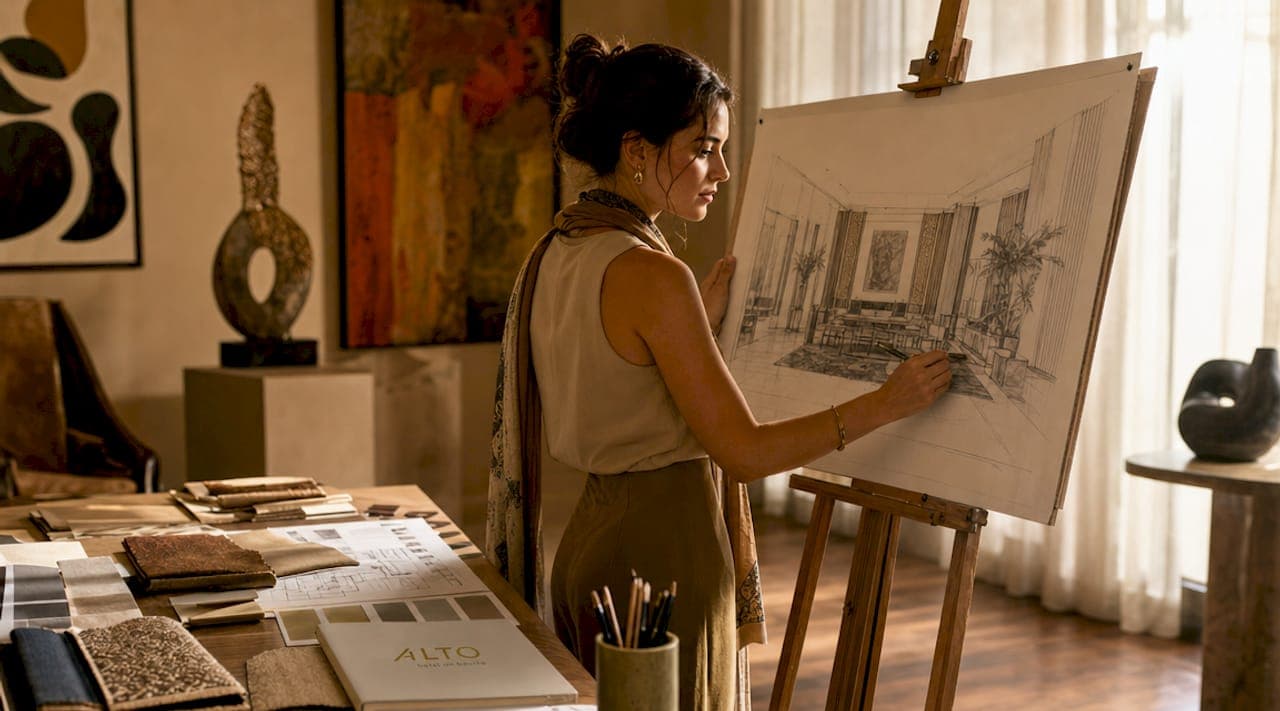
Local art is a foundational design element in boutique hotels, not decorative afterthought. When a property commissions site-specific works from regional artists, it practises what designers now call spatial storytelling: the deliberate use of art to narrate place, culture, and community through every surface a guest encounters. The role of local art in boutique hotel design extends well beyond aesthetics. It shapes brand identity, drives occupancy, and creates the emotional resonance that separates a memorable stay from a forgettable one. Properties like jüSTa Hotels & Resorts and heritage installations across Rajasthan demonstrate that authentic art integration is a measurable competitive advantage.
How does local art enhance guest experience and hotel brand identity?
Local art transforms a hotel from a place to sleep into a place to feel. Spatial storytelling via site-specific art creates brand differentiation and emotional guest connections that generic décor cannot replicate. Curators at Genusspunkt describe art as a strategic stylistic device, not a finishing touch applied after the real design work is done. That distinction matters enormously for how you brief a project from day one.
The commercial evidence is compelling. A heritage property in Rajasthan reported a 23% year-over-year increase in off-season occupancy directly tied to its bespoke art programme. That figure tells you art is not a soft benefit. It is a revenue driver with measurable seasonality impact.
Guest-room art, gallery-style corridors, and multi-sensory installations each serve different functions within a property. Gallery-style rooms signal cultural seriousness to guests willing to pay a premium, while art-integrated economy rooms can start from as little as $80 per night, proving that art programmes scale across every market segment. The key benefits guests experience from thoughtful art integration include:
- A genuine sense of place that chain hotels cannot manufacture
- Emotional connection to local culture and community narratives
- Increased perceived authenticity, which drives positive reviews and repeat visits
- Memorable, shareable moments that translate directly into social media reach
- A richer sensory environment that supports relaxation and well-being
Understanding why boutique hotels reflect local culture is the starting point for any designer or developer who wants art to do real work within a property.
What are effective models for integrating local art in boutique hotels?
The integration model you choose determines how deeply art becomes part of a hotel's identity. There is a significant difference between hanging purchased prints and commissioning a sculptor to respond to a building's history. Both involve art. Only one produces a property guests talk about for years.
jüSTa Hotels & Resorts demonstrates what scale looks like when art integration is taken seriously. Their residency programme hosts 60 artists across properties, with collections ranging from 70 to 200 works per hotel. That density of artistic content transforms the entire property into a cultural institution, not just a place to stay. For developers working at smaller scale, even a focused collection of 15 to 20 site-specific commissions can achieve the same qualitative effect.
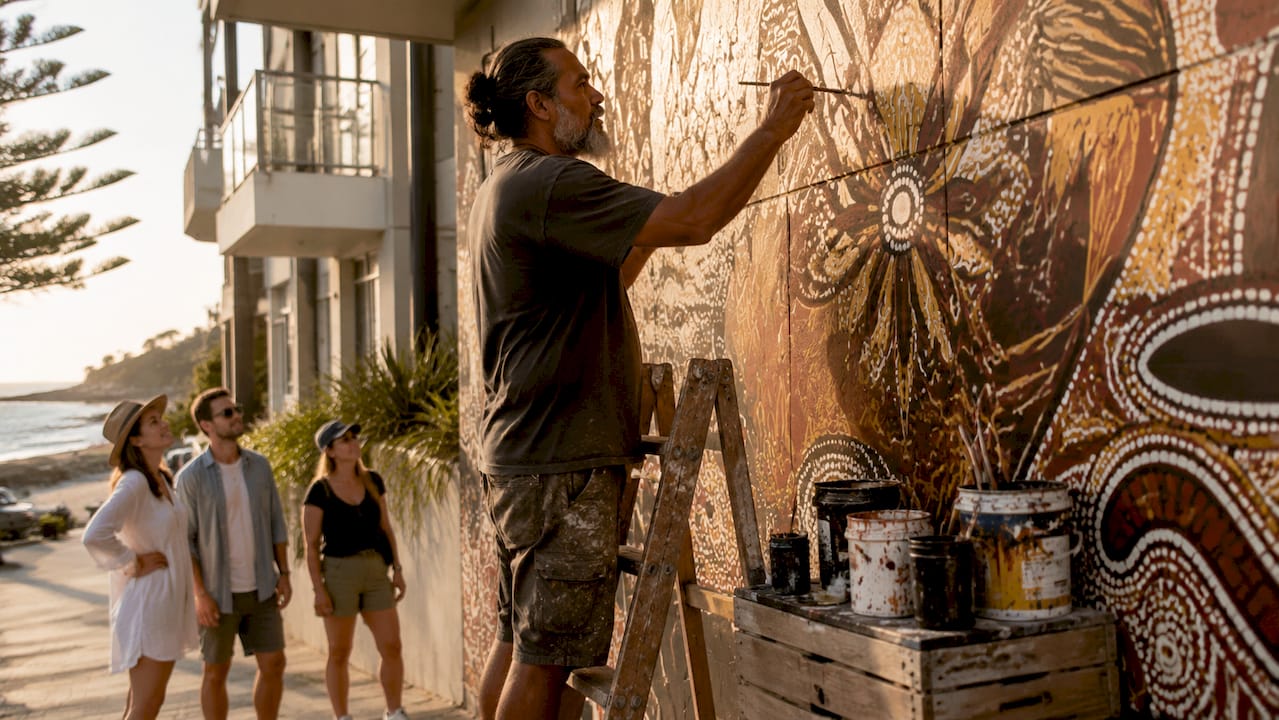
Collaborating with local artists for murals, textiles, and sculptures that narrate neighbourhood identity is now a recognised development strategy. The most forward-thinking operators also activate art beyond display, running guest workshops, rotating exhibitions, and in-room retail sales that convert artworks into direct revenue.
| Integration model | Core benefit | Key challenge |
|---|---|---|
| Curated permanent collection | Consistent brand identity across all spaces | Requires ongoing curation and conservation budget |
| Artist residency programme | Living, evolving cultural narrative | Logistical complexity and artist management |
| Site-specific commissions | Deep architectural and historical coherence | Higher upfront cost and longer lead times |
| Community collaboration | Authentic neighbourhood storytelling | Requires sustained relationship management |
| Rotating exhibition programme | Fresh content that drives repeat visits | Demands gallery-level installation infrastructure |
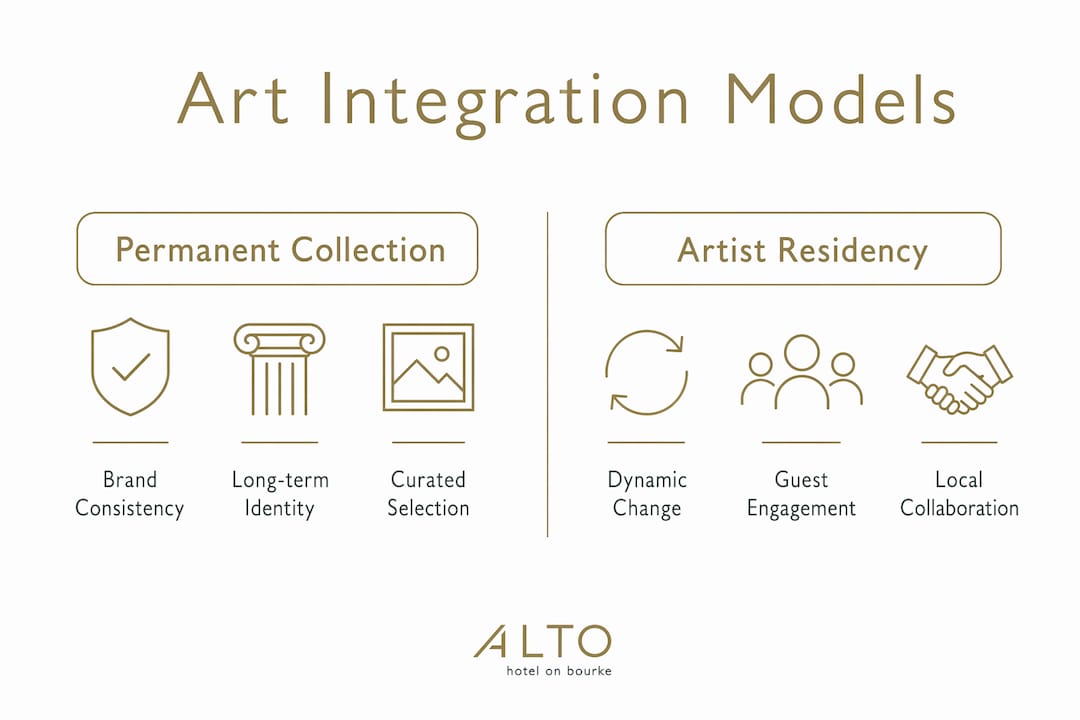
The right model depends on your budget, timeline, and the story you want the property to tell. Most successful boutique hotels combine two or three of these approaches rather than committing exclusively to one.
How can boutique hotels avoid pitfalls in local art integration?
The most common failure in hotel art programmes is what industry practitioners call generic localisation. This is the practice of sourcing regional landscapes or cultural motifs from stock suppliers and calling it local art. Authentic, nuanced art that distinguishes a hotel creates competitive advantage. Generic clichés do the opposite. They signal to guests that the property is performing culture rather than living it.
The second major pitfall is timing. Late-stage art addition leads to pasted-on aesthetics that feel disconnected from the building. When art is briefed after architecture and interiors are locked, it becomes decoration by default. The spatial storytelling that makes boutique hotels extraordinary requires artists to understand light conditions, material palettes, and circulation patterns from the earliest planning phases.
Art integrated with building history and architecture enhances guest well-being and unifies design in ways that post-hoc additions never achieve. The Artiq programme at Six Senses London is a documented example of this principle at work: the art brief responded directly to the building's structure and the brand's sensory philosophy, producing a coherent experience rather than a collection of unrelated objects.
Pro Tip: Commission artists during the schematic design phase, not after construction documents are complete. Provide each artist with the room's dimensions, natural light schedule, material finishes, and a written brief about the building's history. This single process change produces more coherent outcomes than any post-occupancy art consultation.
Pro Tip: Avoid briefing artists with mood boards drawn from other hotels. Give them the neighbourhood, the building's past, and the guest profile. The specificity of the brief determines the specificity of the outcome.
What steps should designers take to commission and activate local art?
Commissioning and activating local art requires a structured process. Without one, even well-intentioned programmes produce inconsistent results that undermine the property's identity.
- Define the narrative brief. Before approaching any artist, write a one-page document describing the building's history, the neighbourhood's character, and the emotional experience you want guests to have. This is the foundation every commission should respond to.
- Identify and shortlist artists. Seek artists whose existing practice aligns with the brief. Local art schools, cultural organisations, and community arts bodies are reliable starting points. Avoid sourcing exclusively through commercial galleries, which tend to prioritise saleable work over site-specific responses.
- Commission with clear contracts. Specify dimensions, materials, installation requirements, intellectual property terms, and maintenance obligations in writing. Ambiguity at this stage creates expensive disputes later.
- Integrate during construction. Coordinate artist site visits with the construction programme so works are designed for their exact location, not retrofitted to it.
- Activate through storytelling assets. Artist bios, QR-coded studio maps, and workshops convert hotel rooms into micro-galleries and generate new revenue streams. In-room art sales, in particular, create cultural and financial value simultaneously.
- Market the programme. Co-market with artists through social media, press releases, and local cultural calendars. Artists have their own audiences, and those audiences become potential guests.
- Measure and iterate. Track guest satisfaction scores, occupancy data, and social media engagement before and after art activation. Use that data to refine the programme annually.
Pro Tip: Build a simple annual review into your art programme from the outset. Compare occupancy and guest satisfaction scores against the baseline you recorded before the programme launched. Properties that measure art's impact can scale what works and replace what does not, rather than guessing.
Exploring how hotels support local creative communities gives designers and developers a practical framework for structuring these partnerships beyond individual commissions.
How does local art shape romantic and intimate boutique hotel rooms?
The role of local art in romantic hotel rooms is specific and often underestimated. Intimacy in a hotel room is not produced by soft lighting alone. It comes from the feeling that a space was designed with intention, that someone thought carefully about every surface a guest would encounter during a private, meaningful stay.
Local textiles, customised artworks, and tactile sensory elements connect guests emotionally to the place they have chosen for a significant experience. A hand-woven textile from a regional maker carries a different weight than a mass-produced throw. A small painting commissioned from a local artist whose biography sits on the bedside table invites curiosity and conversation. These details are the difference between a room that feels curated and one that feels assembled.
Art-driven design also supports the marketing of romantic stays in concrete ways:
- Unique, photographable artworks generate organic social media content from guests
- Narrative details give hotel marketing teams specific, authentic stories to tell
- Tactile and visual richness increases perceived value, supporting premium pricing
- Guests associate the emotional quality of their stay with the property's identity, driving return visits
Generic hotel décor produces none of these outcomes. A room furnished with stock art and standard finishes gives guests nothing to remember, photograph, or return for. The benefits of staying in boutique hotels are most fully realised when art is treated as an active participant in the guest's emotional experience, not a neutral backdrop.
Key takeaways
Local art in boutique hotel design works because it transforms generic accommodation into culturally specific, emotionally resonant experiences that drive occupancy, brand loyalty, and measurable revenue.
| Point | Details |
|---|---|
| Art is a strategic tool | Site-specific commissions create brand differentiation and measurable occupancy gains, not just visual interest. |
| Timing determines quality | Engaging artists during schematic design produces coherent spatial storytelling; late-stage additions produce decoration. |
| Authenticity over cliché | Generic regional motifs undermine credibility; nuanced, place-specific works create genuine competitive advantage. |
| Activation multiplies value | Artist bios, QR codes, workshops, and in-room sales convert art programmes into cultural and financial assets. |
| Scale is not a barrier | Art integration works from economy rooms at $80 per night to luxury residency programmes with 200-piece collections. |
What I have learned from watching art transform boutique hotels
I have watched designers treat art as the last line item on a FF&E schedule, and I have watched them treat it as the first conversation in a design brief. The difference in outcomes is not subtle. It is the difference between a property that photographs well and one that guests genuinely cannot stop talking about.
The most instructive projects I have encountered share one quality: the artist knew the building before the building was finished. When a ceramicist understands that morning light hits a corridor at a particular angle, or a textile artist knows the acoustic character of a lobby, the work they produce responds to those conditions. That responsiveness is what guests feel without being able to name it. They call it atmosphere. Designers know it is integration.
The harder lesson is about brand consistency. Many operators fear that commissioning multiple local artists will produce a chaotic, incoherent property. In practice, the opposite is true when the narrative brief is strong. A well-written brief acts as a curatorial spine. Artists working from the same story produce works that feel related without being repetitive. The variety becomes a strength, not a liability.
My honest recommendation to any designer or developer reading this: stop thinking about art as something you add to a hotel. Start thinking about it as something the hotel grows around. The properties that get this right are not just more beautiful. They are more profitable, more memorable, and more deeply connected to the communities they occupy.
— Kamal
Experience boutique design at Alto Hotel on Bourke
Alto Hotel on Bourke in Melbourne demonstrates how thoughtful design and local creative partnerships produce accommodation that guests remember long after checkout. As one of the city's first environmentally rated boutique hotels and a Victorian tourism Hall of Fame recipient, Alto integrates curated artistic elements with eco-conscious materials throughout its uniquely designed rooms. For designers and developers seeking direct inspiration, the 2 bedroom deluxe apartments offer a first-hand experience of how boutique spatial design and local artistry combine to create something genuinely distinctive. Staying at Alto is research you will actually enjoy.
FAQ
What is the role of local art in boutique hotel design?
Local art functions as a strategic design tool that creates spatial storytelling, emotional guest connections, and brand differentiation. It is most effective when commissioned site-specifically during the planning phase rather than added after construction.
How does local art affect boutique hotel occupancy?
Properties that integrate bespoke art honouring regional heritage have recorded a 23% increase in off-season occupancy, demonstrating that art programmes produce measurable commercial returns beyond aesthetic value.
What is the difference between a curated collection and an artist residency?
A curated collection builds a permanent, consistent brand identity across all spaces, while an artist residency creates a living cultural narrative that evolves over time. Both approaches are viable; the choice depends on budget, timeline, and the story the property wants to tell.
How can hotels avoid generic local art integration?
Avoid sourcing regional clichés from stock suppliers. Commission artists with a specific brief grounded in the building's history, neighbourhood character, and guest profile. Authentic, nuanced works create competitive advantage; generic motifs undermine it.
How do you activate a hotel art programme beyond display?
Use artist biographies, QR-coded studio maps, guest workshops, and in-room retail sales to convert artworks into engagement and revenue opportunities. These storytelling assets transform individual rooms into micro-galleries and give guests a reason to interact with the collection directly.