

A hyperlocal hotel is defined as an accommodation that embeds itself within a very small, walkable geographic area, integrating local culture, sourcing, and community partnerships into every aspect of the guest experience. This is the hospitality industry's answer to a clear shift in traveller priorities: 85% of travellers want to experience local culture, and over 75% prefer stays that genuinely reflect their destination. The hyperlocal hotel concept, sometimes called place-rooted hospitality, goes well beyond hanging local artwork in a lobby. It means the hotel's food, design, programming, and economic relationships are all anchored within the immediate neighbourhood. Models like the Italian Albergo Diffuso have pioneered this approach, and boutique hotels worldwide are now following suit.
What is the hyperlocal hotel concept?
Hyperlocal is defined as relating to a very small geographic community or area, typically one that can be covered on foot. Applied to hospitality, this means a hotel's entire operation draws from and contributes to the streets immediately surrounding it, not a broader city or region.
The concept sits at the intersection of slow travel, community economics, and cultural preservation. A hyperlocal hotel does not simply reference the destination in its décor. It sources its breakfast ingredients from the market two blocks away, commissions its furniture from a local craftsperson, and invites neighbourhood residents to use its common spaces. The guest experience and the local community become genuinely intertwined.

This is distinct from the broader "boutique hotel" category, though the two often overlap. A boutique hotel may focus on aesthetic distinctiveness and personalised service. A hyperlocal hotel adds a layer of operational accountability: it can name its suppliers, its community partners, and the specific local traditions it supports. That specificity is the defining feature.
How do hyperlocal hotels work differently from standard hotels?
Standard hotels, including most chain properties, source centrally. Linen, food, toiletries, and entertainment are procured at scale from national or international suppliers. A hyperlocal hotel reverses this logic entirely.
Sourcing within walking distance
The sourcing radius is the most concrete operational difference. A hyperlocal hotel defines its supply chain by geography, not cost efficiency. Produce comes from nearby urban farms or farmers' markets. Coffee is roasted by a local roaster, not a national brand. Soap and toiletries may come from a nearby maker. This "food metres" approach, as opposed to food miles, keeps economic value circulating within the immediate neighbourhood.
Hyperlocal kitchens rely on preservation techniques like pickling and fermentation to maintain menu variety when seasonal supply is limited. This is not a workaround. It is a sophisticated culinary practice that reflects genuine commitment to local sourcing year-round.
Local partnerships as the operating model
Boutique hotels' smaller scale enables deep local partnerships that large hotel chains structurally cannot replicate. A 30-room boutique property can build a genuine relationship with a local ceramicist, a neighbourhood bakery, or a community arts organisation. A 300-room chain property cannot do this at the same depth without it becoming performative.
These partnerships are not marketing arrangements. They are operational. The local baker supplies the breakfast bread daily. The local artist is commissioned for the guest rooms, not just the lobby. The community organisation runs a weekly event in the hotel's common space. Travellers benefit from connecting with local makers in ways that no curated gift shop can replicate.
Pro Tip: When assessing whether a hotel is genuinely hyperlocal, ask the front desk to name three local suppliers. An authentic property will answer immediately and with specifics.
Design that reflects place, not trend
Hyperlocal design draws from the specific history, materials, and craft traditions of the immediate neighbourhood. This is different from a "local-inspired" aesthetic, which might use generic regional motifs purchased from a wholesale supplier. A genuinely hyperlocal hotel uses materials sourced nearby, commissions work from local artists, and reflects the specific character of its street, not just its city. Local art in hotel design is one of the clearest signals of this commitment.
What are the benefits of hyperlocal hotels?
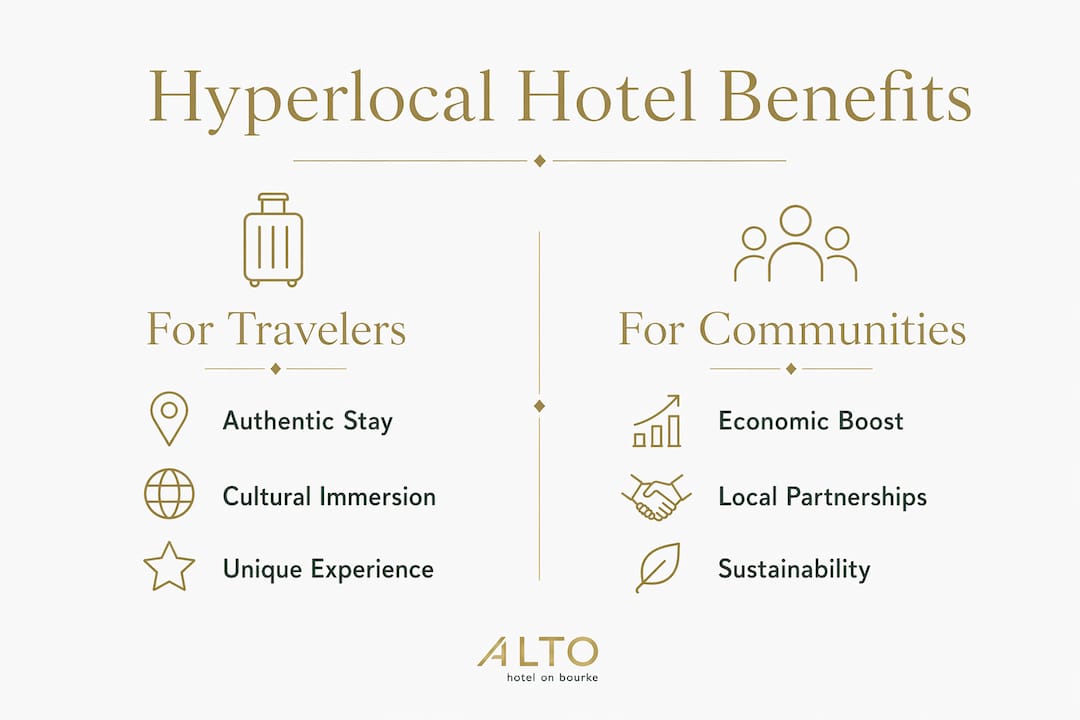
The benefits split clearly between what travellers gain and what local communities gain. Both sides are substantial.
For travellers
Travellers staying in a hyperlocal hotel experience the destination rather than a version of it filtered through a global brand standard. Meals taste like the region. The art on the walls has a story tied to the street outside. The staff can recommend the neighbourhood's best spots because they are part of that neighbourhood. This is what authentic guest experience looks like in practice.
The benefits of boutique stays extend to personal connection. Guests in hyperlocal properties often report feeling like temporary residents rather than tourists. That shift in identity changes how a traveller engages with a place entirely.
For local communities
- Economic circulation: Money spent at the hotel stays in the neighbourhood through supplier payments, wages, and commissions to local makers.
- Trade preservation: Demand from hyperlocal hotels supports traditional crafts and food producers who might otherwise lose their market.
- Community pride: When a hotel treats local culture as genuinely valuable, residents see their own neighbourhood through a different lens.
- Reduced environmental impact: Short supply chains mean lower transport emissions and fresher produce. Local sourcing directly reduces a hotel's carbon footprint.
Pro Tip: Look for hotels that publish their supplier list or feature local partner profiles on their website. Transparency is the clearest sign of genuine community integration.
| Guest benefit | Community benefit |
|---|---|
| Authentic cultural immersion | Local economic circulation |
| Personalised, place-specific service | Support for traditional trades and crafts |
| Access to local makers and producers | Increased neighbourhood pride |
| Reduced environmental guilt | Lower transport emissions from short supply chains |
| Memorable, distinctive experiences | Hotel as a community hub, not a tourist enclave |
Challenges and misconceptions about hyperlocal hotels
The biggest risk facing the hyperlocal hospitality concept is that it becomes a marketing label rather than an operational reality. Hyperlocalism risks becoming a generic aesthetic when hotels use local references decoratively without building genuine economic and social ties to their community. A jar of local honey on the breakfast table does not make a hotel hyperlocal.
How to spot the real thing
Authentic hyperlocal hotels provide transparent local partnerships, naming their partners and the origins of their products. Hotels that make vague claims about "celebrating local culture" without specifics are almost always trading on aesthetics alone.
Travellers can apply a simple test:
- Does the hotel name its food suppliers on the menu or website?
- Are the artworks credited to specific local artists with neighbourhood ties?
- Do hotel staff participate in or facilitate genuine community events?
- Does the hotel invite local residents in, or does it operate as a closed guest-only environment?
Why large chains struggle here
Large hotel chains face a structural barrier to genuine hyperlocal integration. Their procurement systems, brand standards, and operational scale all work against the flexibility required. Community partnerships in boutique hotels depend on personal relationships and operational agility that a 500-room property simply cannot replicate. This is not a criticism of large hotels. It is a recognition that hyperlocal hospitality is a model suited to a particular scale of operation.
The misconception to avoid is assuming that any hotel with local artwork or a farm-to-table menu qualifies. The differentiator is accountability: does the hotel have real, ongoing, reciprocal relationships with the people and businesses immediately around it?
Notable hyperlocal hospitality models and real-world examples
The clearest illustration of the hyperlocal hotel concept at full scale is the Albergo Diffuso model from Italy. Rather than concentrating rooms in a single building, the Albergo Diffuso distributes guest accommodation across multiple buildings within a living, inhabited village. Guests share streets, squares, and daily rhythms with permanent residents. The hotel manager oversees a unified guest experience across this dispersed footprint.
The Albergo Diffuso model achieves a 47% international guest share and operates for an average of 10.6 months per year. That level of sustained international interest in a model built around a single village demonstrates the genuine appeal of place-rooted hospitality.
True hyperlocal hotels blur the line between guest and resident by inviting locals to participate in daily hotel activities. Some properties host weekly community dinners open to neighbourhood residents. Others run cultural workshops where local artisans teach guests directly. The hotel becomes a community institution rather than a tourist facility.
Dining is often the most visible expression of hyperlocal commitment. Kitchens that source within a strict local radius use preservation techniques including pickling, fermenting, and curing to maintain menu depth across seasons. This is not a limitation. It is a culinary discipline that produces menus with genuine regional character. Guests eat food that could not exist anywhere else, because it is made from ingredients that only exist here.
| Hyperlocal model feature | Standard boutique hotel approach |
|---|---|
| Named local suppliers on menu | Generic "locally inspired" menu description |
| Rooms distributed within the community | All rooms in a single building |
| Local residents invited to participate | Guests-only common spaces |
| Artisan commissions with neighbourhood ties | Decorative local motifs from wholesale suppliers |
| Transparent community partnerships | Vague "celebrating local culture" claims |
Travellers who explore city culture from boutique accommodation consistently report that the depth of local connection is what makes a stay memorable, not the thread count.
Key takeaways
The hyperlocal hotel concept is defined by genuine, accountable economic and social ties to the immediate neighbourhood, not by aesthetic references to local culture.
| Point | Details |
|---|---|
| Definition of hyperlocal | Hotels that source, partner, and operate within a walkable neighbourhood radius. |
| Operational difference | Named local suppliers, community partnerships, and resident participation distinguish real hyperlocal hotels. |
| Traveller benefit | Guests experience the destination as temporary residents, not as observers behind a brand filter. |
| Community benefit | Local economic circulation, trade preservation, and reduced environmental impact from short supply chains. |
| How to verify authenticity | Ask for specific supplier names and look for transparent community partnerships, not vague local claims. |
Why hyperlocal hospitality matters more than most hotels admit
I have watched the word "hyperlocal" appear on hotel websites with increasing frequency over the past few years, and I have watched it mean less and less each time. A jar of regional jam does not make a hotel hyperlocal. Neither does a mural painted in a style vaguely associated with the city.
What I find genuinely compelling about the concept, when it is done properly, is the accountability it demands. A hotel that names its suppliers, commissions work from specific local artists, and opens its doors to neighbourhood residents cannot fake that. The community knows. The guests can verify it. That transparency is rare in hospitality, and it is exactly what travellers are increasingly seeking.
The Albergo Diffuso model proved that guests will travel internationally to stay somewhere that feels genuinely embedded in a living community. That is not a niche preference. It is a signal about where travel is heading. Travellers are tired of staying in places that could be anywhere. They want to stay somewhere that could only be here.
Smaller boutique hotels are the natural home of this model. They have the operational flexibility, the community relationships, and the motivation to build something that a chain property cannot replicate. The hotels that understand this now will be the ones that travellers remember and return to. The ones that treat hyperlocal as a marketing label will find that travellers notice the difference faster than they expect.
— Kamal
Altohotel: Melbourne's hyperlocal boutique experience
Altohotel on Bourke puts the hyperlocal hospitality concept into practice in the heart of Melbourne. As one of the city's first environmentally rated boutique hotels, Altohotel has built its guest experience around genuine partnerships with local artisans and community organisations, not generic city references.
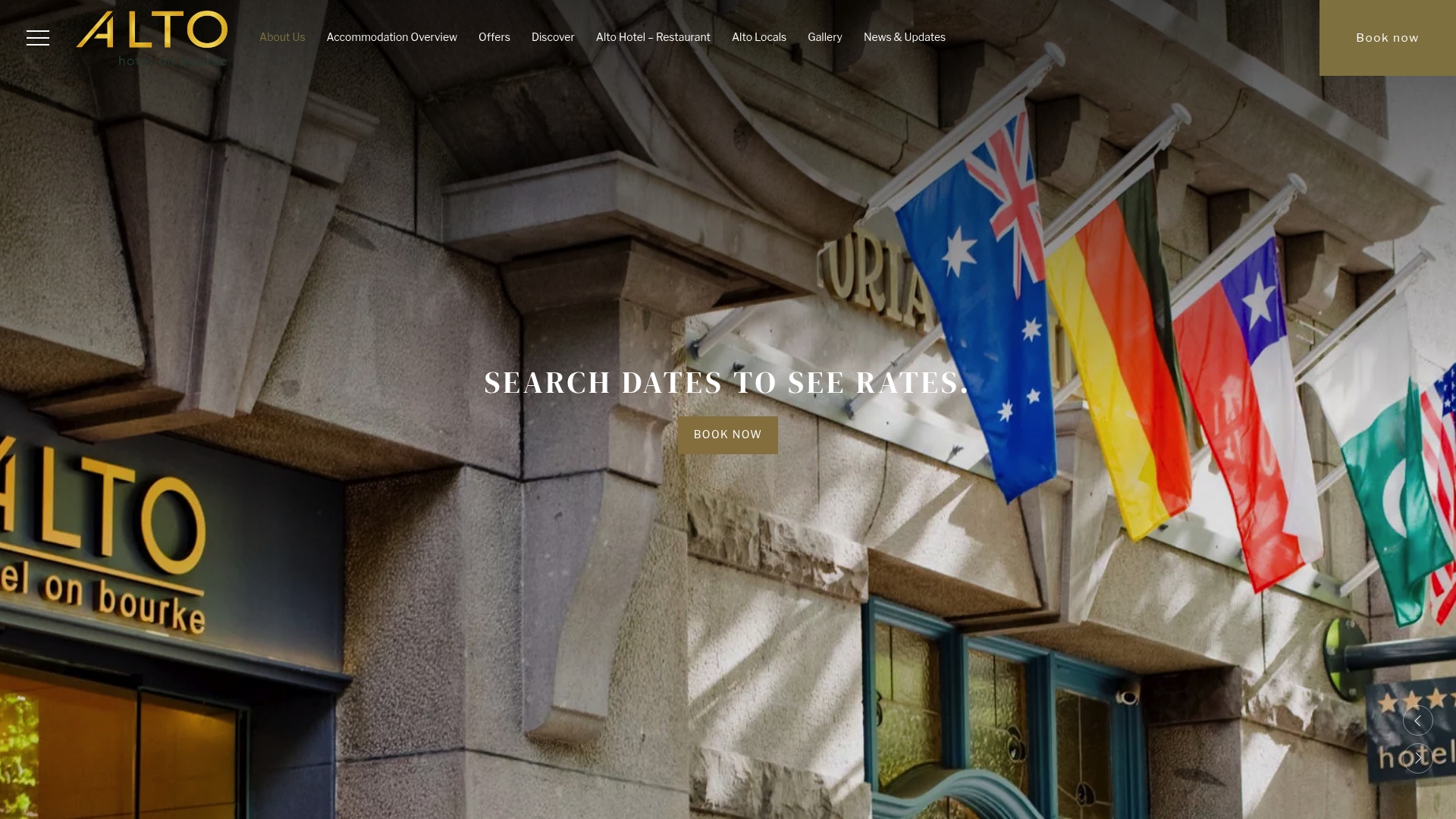
Guests at Altohotel stay in rooms designed with eco-conscious materials and local character, including the Petite Queen, a thoughtfully designed room that reflects the hotel's commitment to place-specific hospitality. Altohotel's Hall of Fame recognition in the Victorian tourism sector reflects years of genuine community integration, not a marketing campaign. For travellers who want a stay that connects them to Melbourne's creative and cultural fabric, Altohotel's boutique experience is the place to start.
FAQ
What does hyperlocal mean in hospitality?
Hyperlocal in hospitality means a hotel integrates its sourcing, design, and guest experiences within a very small, walkable geographic area. The hotel builds genuine economic and social ties to its immediate neighbourhood rather than drawing from regional or national supply chains.
How do I know if a hotel is genuinely hyperlocal?
Ask the hotel to name its local suppliers and community partners. Authentic hyperlocal hotels provide specific names and origins, while hotels using the term as a marketing label give vague answers about "celebrating local culture."
What is the Albergo Diffuso model?
The Albergo Diffuso is an Italian hyperlocal hospitality model that distributes guest rooms across multiple buildings within a living village, with unified management. It achieves a 47% international guest share and operates for an average of 10.6 months per year.
Are hyperlocal hotels more sustainable?
Hyperlocal hotels are generally more sustainable because short supply chains reduce transport emissions and support local food producers. Kitchens that source within a strict local radius also use preservation techniques that reduce food waste across seasons.
Why are boutique hotels better suited to hyperlocal hospitality?
Boutique hotels operate at a scale that allows genuine, ongoing relationships with local suppliers, artisans, and community organisations. Large hotel chains face structural procurement and brand-standard constraints that make deep local integration difficult to sustain authentically.