
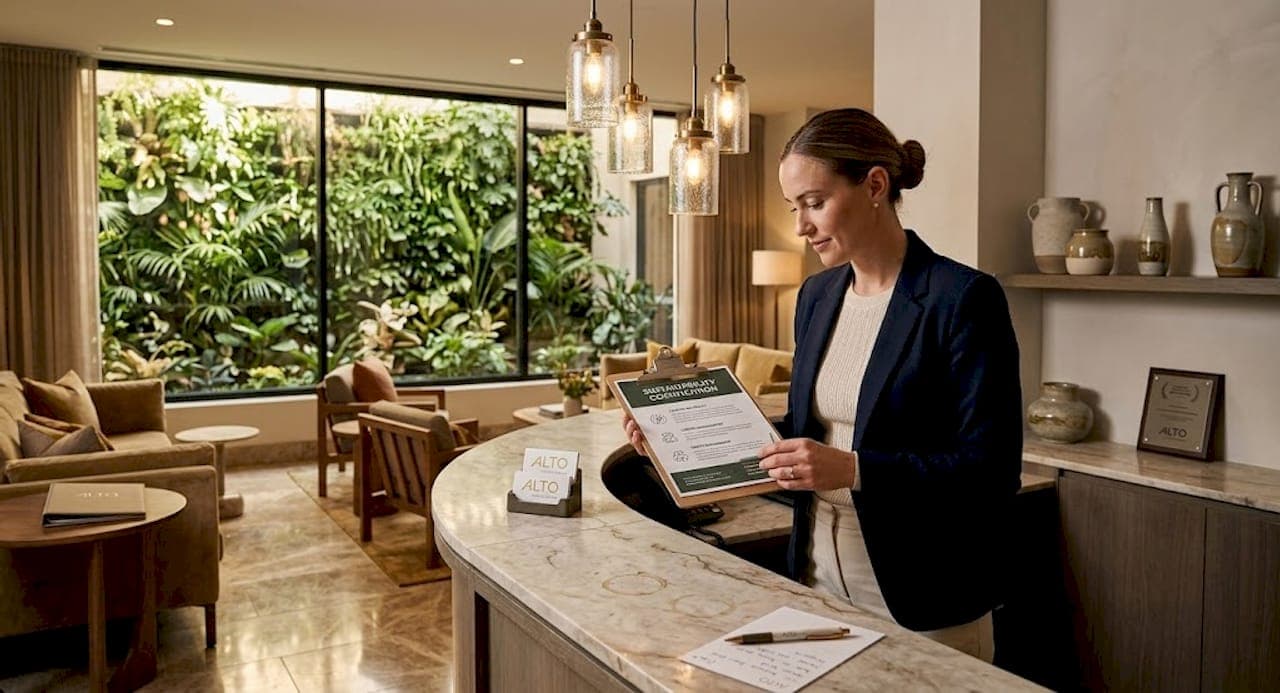
Eco-conscious travellers know the frustration well. You spend an hour reading hotel descriptions full of words like "green" and "nature-inspired," only to discover the property recycles one bin of cardboard and calls it a sustainability programme. Learning how to choose an environmentally rated boutique hotel separates genuine environmental stewardship from clever marketing copy. The difference matters not just for the planet, but for the quality and meaning of your stay. This guide gives you the frameworks, questions, and red-flag detectors to book with genuine confidence.
Table of Contents
- Key takeaways
- What certifications tell you about sustainable boutique hotels
- Questions to ask before you book any eco-friendly hotel
- When luxury and sustainability work together
- A step-by-step booking guide for verified green hotels
- Avoiding greenwashing and deceptive claims
- My honest take on making this choice
- Stay greener in Melbourne with Altohotel
- FAQ
Key takeaways
| Point | Details |
|---|---|
| Certifications beat claims | Look for third-party verified frameworks like REGENERA LUXURY, GSTC or LEED rather than self-declared "eco" labels. |
| Ask for measurable data | Verified sustainable hotels share specific figures on energy use, water savings and waste reduction. |
| Luxury and sustainability align | The best green boutique hotels prove that eco-conscious design actually deepens comfort and cultural richness. |
| Greenwashing is widespread | Vague language without supporting documentation is the single most common red flag to watch for. |
| Your stay can have positive impact | Choosing environmentally conscious accommodations supports local communities and creates real, trackable environmental benefits. |
What certifications tell you about sustainable boutique hotels
Not all green labels are equal, and this is where many travellers lose confidence. The certification landscape has several tiers, and knowing which frameworks carry genuine weight helps you filter properties quickly.
Frameworks worth trusting:
- REGENERA LUXURY (LUSH): Designed specifically for luxury boutique properties, this framework evaluates operational practices, environmental impact and social responsibility. Over 130 certified properties across 18 countries participate, and members typically report 15 to 25% operational cost savings through high-efficiency practices.
- GSTC (Global Sustainable Tourism Council): The international benchmark for sustainability in tourism. Properties must meet criteria across four pillars: sustainable management, socioeconomic impacts, cultural heritage and environmental impacts.
- LEED: Originally an architecture standard, LEED certification now applies to hotel operations and covers energy systems, water efficiency, indoor air quality and materials sourcing.
- B Corp: A broader business certification that scores social and environmental performance. B Corp certified boutique hotel Playa Viva scored 110 on its assessment, significantly above the 80-point threshold required for certification.
The critical distinction between these frameworks and a hotel's self-published "eco pledge" is third-party verification. Any property can write sustainability copy. Certified properties submit to external audits with measurable benchmarks that must be met, maintained and publicly reported.
A useful comparison: LEED focuses heavily on building performance and infrastructure, while GSTC emphasises the broader relationship between the hotel and its surrounding community. REGENERA LUXURY sits squarely in the boutique segment, with criteria built around the smaller-scale, high-touch operations that define genuine boutique hospitality.
Pro Tip: Search for a hotel's certification number directly on the certifying body's website. Legitimate certificates are publicly listed and verifiable within minutes.
When you see a certification displayed, treat it as an invitation to verify. Sustainability transparency backed by measurable progress is what separates market leaders from marketing pretenders. Properties that are genuinely certified welcome scrutiny.
Questions to ask before you book any eco-friendly hotel
Certifications give you a strong starting point, but not every excellent sustainable boutique hotel has completed a formal certification process. Some properties, particularly in regional or emerging destinations, operate to exceptional environmental standards without yet holding a recognised credential. Here is how to evaluate them directly.
-
Ask about energy sources. Does the hotel use renewable electricity? Some properties, like the ʻAlohilani hotel in Oahu, run on 100% renewable electricity and back their commitment with measurable tree-planting programmes. Ask for the percentage, not just a yes or no answer.
-
Request waste and water management details. Genuine eco-friendly hotel options include specifics: rainwater harvesting systems, greywater recycling, composting programmes and single-use plastic elimination policies. Rainwater harvesting and solar installation are among the concrete sustainable practices you should expect to see documented.
-
Investigate local sourcing. Does the kitchen source produce locally or grow its own? Does the hotel purchase from regional artisans and suppliers? This matters both environmentally and culturally.
-
Look for published sustainability reports. Any hotel serious about its environmental credentials publishes measurable data annually. Ask to see figures on energy consumption per room night, water use per guest, and waste diversion rates. If a hotel cannot provide these numbers, treat that as a meaningful signal.
-
Check guest reviews for consistency. Travellers notice when sustainability is performative versus practised throughout operations. Read reviews specifically mentioning sustainability, waste management or environmental practices to confirm the hotel's claims hold up at ground level.
-
Contact the property directly. Sending a short email with two or three specific questions does two things. It tests the hotel's willingness to engage on sustainability specifics, and it often yields information that does not appear on the booking page.
Pro Tip: Use vetted booking platforms that list only certified or independently assessed properties when you want to narrow your research. These platforms do significant pre-screening work so you spend less time verifying from scratch.
The red flags to watch for are consistent: vague language like "we care about the environment," marketing photography featuring plants and timber without operational detail, and the absence of any measurable targets or progress reports. Vague claims without certifications are the most common pitfall eco-conscious travellers encounter.
When luxury and sustainability work together
There is a persistent myth that going green means accepting less comfort, less style, or a more spartan experience. The best sustainable boutique hotels disprove this completely, and often the opposite is true.

True luxury in boutique hotels is increasingly defined by authenticity, environmental responsibility and cultural connection rather than opulence alone. When a hotel sources its bedding from local weavers, serves produce from its own kitchen garden, and decorates with the work of regional artists, the guest experience becomes genuinely irreplaceable. That is something no generic five-star chain can replicate by installing a marble bathroom.
Biophilic design, which integrates natural materials, light and living greenery into the built environment, is a clear example of sustainability and comfort reinforcing each other. Guests sleep better in rooms with natural ventilation, wake up better in spaces with abundant natural light, and eat better when the menu is built around seasonal local produce.
Sustainability in boutique hotels enhances authentic cultural experiences through local art, food and community involvement. When you book a property that actively invests in its surrounding community, you are not just reducing your carbon footprint. You are buying a fundamentally richer travel experience.
Some hotels extend this into direct guest participation. Three-minute sand timers placed at showers and guest donation programmes that fund local conservation initiatives transform a passive stay into an active contribution. This is what genuine environmental stewardship looks like in practice, and it is the kind of experience that makes travellers return.
Learning about regenerative luxury travel helps contextualise why the most forward-thinking boutique properties are moving beyond sustainability into active regeneration of local ecosystems and communities.
A step-by-step booking guide for verified green hotels
This process takes under two hours for most properties and gives you a clear, defensible basis for your choice.
Step 1: Define your priorities before you search. Write down your top three environmental criteria (for example: renewable energy, no single-use plastics, local food sourcing) and your must-have comfort requirements. This stops you from being swayed by beautiful photography when the substance is thin.
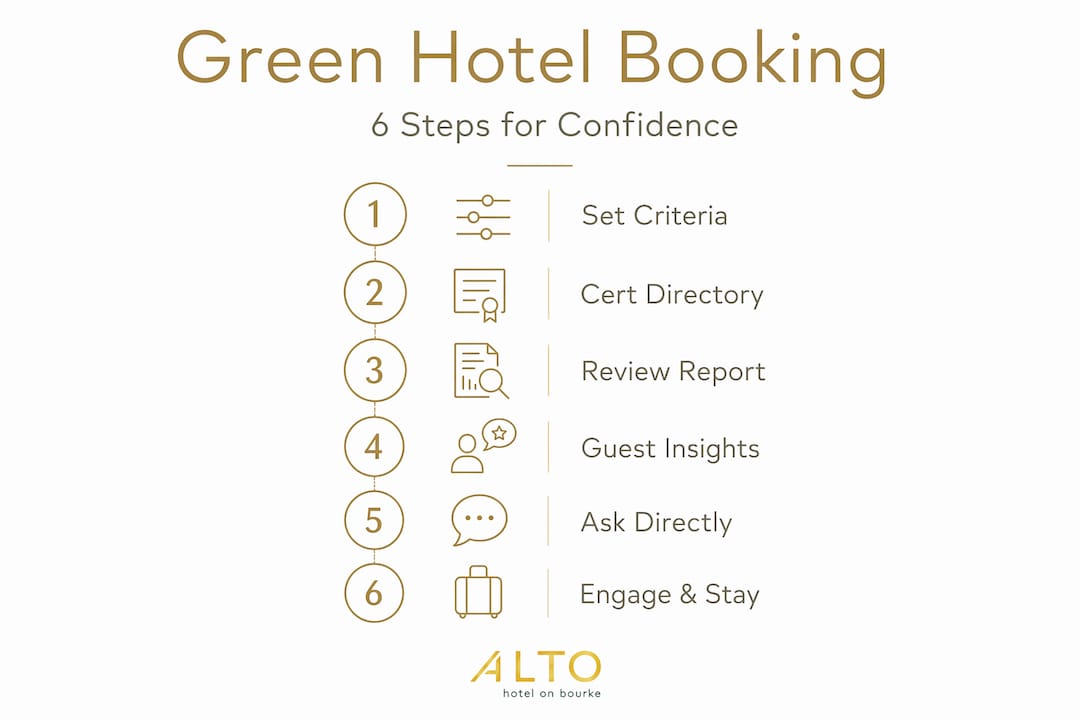
Step 2: Search using certified directories first. The GSTC directory, LUSH member listings and other vetted platforms list only properties that have met defined standards. Start here rather than general booking sites.
Step 3: Review the hotel's own sustainability report. Look for a dedicated sustainability or environmental page on the hotel's website. A table like the one below gives you a quick framework for comparing what you find.
| Criterion | Strong signal | Weak signal |
|---|---|---|
| Energy | Renewable sources with percentage stated | "Energy efficient" without data |
| Water | Harvesting or recycling system described | "Water conscious" without specifics |
| Waste | Diversion rate published | "We minimise waste" |
| Community | Named local partners and programmes | Generic "supporting locals" |
| Certification | Third-party verified with certificate number | Self-declared only |
Step 4: Cross-check with guest reviews. Look for reviews mentioning sustainability in practice, not just in the hotel description. Recent reviews carry more weight.
Step 5: Contact the hotel with one or two specific questions. The speed and quality of the response tells you a great deal. Properties genuinely invested in sustainability treat these questions as an opportunity, not an inconvenience.
Step 6: Book with confidence and engage during your stay. Participate in the hotel's sustainability initiatives. Ask staff about local conservation projects. Choose the hotel's recommended local experiences. Data-driven sustainability management and real-time engagement make the most of your stay for both you and the property.
Avoiding greenwashing and deceptive claims
Greenwashing in hospitality is sophisticated now. It has moved well beyond slapping a leaf logo on a website. Here is what to watch for when you evaluate any property claiming to be among the best green hotels.
The most common tactics include using aspirational future language ("we are working towards zero waste") without any current baseline data, displaying third-party logos that are actually self-assessment tools rather than audited certifications, and emphasising one or two visible practices (cloth bags, refillable dispensers) while ignoring energy, water and supply chain impacts.
Properties that are genuinely committed to environmental stewardship publish numbers. Properties with data-driven approaches to reducing carbon footprints consistently outperform those relying solely on marketing claims, both in guest satisfaction and in actual environmental outcomes.
"Transparency isn't just a nice-to-have in sustainable hospitality. It is the minimum standard for trust."
If a hotel cannot or will not share measurable data when asked directly, you have your answer. The same applies if their sustainability page was last updated three years ago, or if every claim is framed in marketing language without a single specific figure.
Cross-referencing claims across multiple independent sources, the certifying body's directory, recent guest reviews, and any media coverage, builds a picture that is very difficult to fake. Genuine environmentally conscious accommodations welcome this kind of scrutiny because transparency is core to their identity, not a threat to their brand.
My honest take on making this choice
I've worked with and stayed in dozens of boutique properties that claim sustainability credentials, and the pattern I keep coming back to is this: the real ones talk about their community before they talk about their carbon footprint.
When I've asked a hotel manager about their environmental practices and the first answer is a story about the local family supplying their produce, or the indigenous plant restoration project they fund, I know I'm in the right place. That is not performative. That is a property that understands sustainability as a relationship with place, not a marketing category.
Certifications matter enormously for quick filtering, but I've also learned they are a floor, not a ceiling. Some of the most thoughtful environmentally rated properties I've encountered hold multiple certifications and still go significantly further in how they engage their guests, their staff, and their surrounding landscape.
My advice for travellers wanting to leave a positive footprint: look for hotels where sustainability and cultural richness are inseparable. The environmental practices should be the reason the food tastes better, the design feels more considered, and the whole stay feels more real. When those things connect, you've found something genuinely worth booking.
— Kamal
Stay greener in Melbourne with Altohotel
If you are looking for a verified, award-winning example of what it looks like to choose environmentally rated boutique hotel accommodation done properly, Altohotel is worth your attention.
Alto Hotel on Bourke is one of Melbourne's first environmentally rated hotels, recognised with Hall of Fame status in the Victorian tourism sector. The property integrates eco-conscious materials, local partnerships and thoughtful design across studio and apartment-style rooms that prove comfort and environmental responsibility are not in competition. Whether you are planning a short city break or an extended stay, Altohotel offers the kind of verified eco-friendly stay that aligns with every criterion in this guide. Browse room options and sustainability credentials directly on the Altohotel website.
FAQ
What certifications should I look for in an eco-friendly hotel?
Look for third-party verified frameworks such as GSTC, LEED, REGENERA LUXURY or B Corp. These require external audits and publish measurable benchmarks, unlike self-declared sustainability labels.
How do I know if a boutique hotel is genuinely sustainable?
Ask for specific data on energy sources, water use and waste diversion rates. Genuine sustainable properties publish measurable progress and welcome direct questions about their environmental practices.
What are the most common greenwashing red flags?
Vague claims like "we care about the planet" without measurable targets, outdated sustainability pages, and the use of self-assessment logos rather than independently audited certifications are the most reliable warning signs.
Can sustainable boutique hotels match the comfort of conventional luxury hotels?
Yes. Research consistently shows that certified boutique properties achieve higher guest satisfaction by combining environmental practices with authentic local design, food and cultural experiences that conventional hotels cannot replicate.
How do I find verified green hotels without spending hours researching?
Start with GSTC or LUSH member directories, which list only independently assessed properties. You can also use specialised booking platforms that pre-screen for environmental credentials before listing a property.