
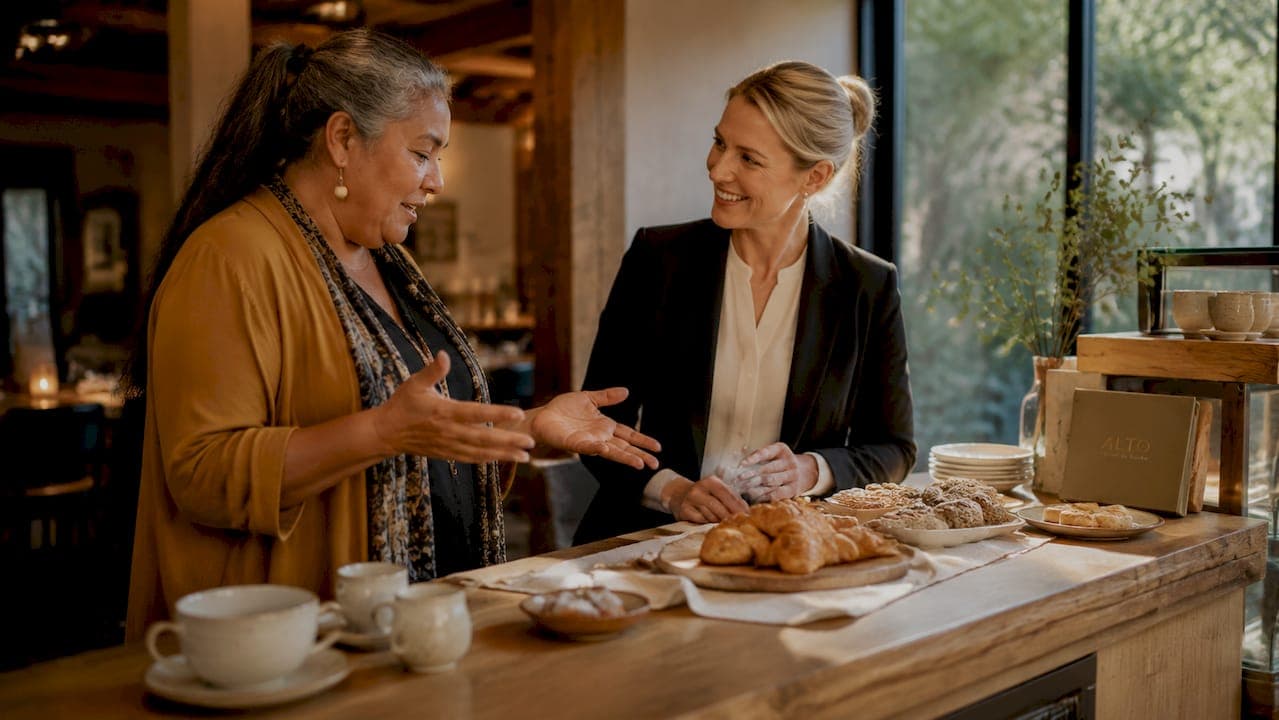
Local partnerships are the primary mechanism through which hotels build a genuine, place-specific identity that no interior designer or marketing campaign can replicate alone. In hospitality, the term "community integration" describes the formal practice of embedding local relationships into a hotel's operations, branding, and guest experience. Understanding how local partnerships shape hotel identity is now a core competency for hotel professionals, not an optional add-on. Destination Management Organisations (DMOs), local artisans, cultural institutions, and community nonprofits each contribute distinct layers of authenticity that define what a property stands for. Altohotel on Bourke in Melbourne demonstrates this through partnerships with local artisans and organisations that have earned it Hall of Fame recognition in the Victorian tourism sector.
How do local partnerships impact hotel branding and guest experience?
Local partnerships shift a hotel's brand from a generic accommodation offer to a culturally specific experience. Guests no longer just sleep in a room. They encounter a place with a point of view.
Cultural engagement moves hospitality beyond amenities into meaningful stewardship of heritage and creative talent. This shift is now a recognised strategic imperative across the industry. Accor, for example, has built long-term partnerships with institutions like the Grand Palais and runs creative programmes for emerging designers, using culture as a structural pillar rather than a seasonal promotion.
The impact on guest experience is direct. When a hotel sources its breakfast produce from a farm 40 kilometres away and tells that story at the table, guests feel connected to the region. That connection drives loyalty in ways that loyalty points programmes cannot. Research on hotel-DMO partnerships confirms that information sharing, benefit distribution, innovation cooperation, and resource integration collectively enhance tourism performance and service innovation across destinations.
The social and economic benefits extend beyond the guest. Hotels that partner with local suppliers stabilise those suppliers' incomes. They create a local economic ecosystem where the hotel's success directly supports the community around it. This mutual dependency builds resilience. When a hotel is seen as a community anchor, locals advocate for it during downturns.
- Authentic storytelling rooted in local partnerships increases repeat visitation and word-of-mouth referrals.
- Cultural programming developed with local institutions differentiates a property from chain alternatives.
- Community engagement builds goodwill that protects brand reputation during operational disruptions.
- Heritage preservation activities position a hotel as a civic contributor, not just a commercial operator.
Pro Tip: Embed partnerships into your hotel's operational calendar, not just its marketing calendar. A quarterly programme with a local artist or a standing weekly market sourcing arrangement signals genuine commitment. One-off collaborations read as tokenism to both guests and community partners.
What forms can local partnerships take and how do they vary?
Partnership types vary widely in depth, duration, and mutual benefit. The distinction between a short-term marketing collaboration and a long-term operational relationship is the difference between a photo opportunity and a structural asset.
The most common forms include:
- Food and beverage sourcing: Agreements with local farms, fisheries, or producers to supply ingredients. These local food sourcing arrangements reduce supply chain emissions and give guests a direct taste of the region.
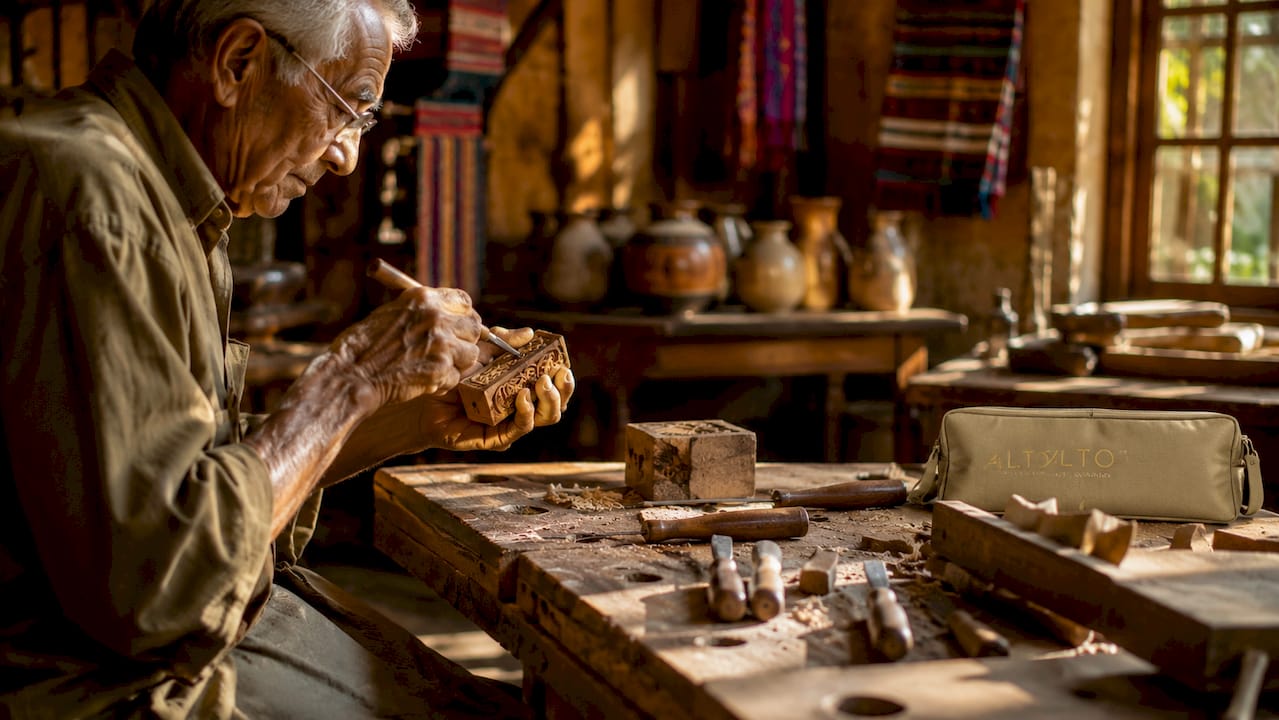
- Artisan and maker partnerships: Hotels display, sell, or commission work from local craftspeople. Guests can purchase what they experience in the room, turning the hotel into a curated marketplace.
- Cultural institution collaborations: Agreements with galleries, theatres, or historical societies to co-programme events, provide exclusive access, or co-brand experiences.
- Community nonprofit relationships: Hotels donate a percentage of revenue, provide in-kind support, or host fundraising events for local causes.
The table below shows how these models differ in commitment level and guest impact.
| Partnership type | Duration | Primary benefit to hotel | Primary benefit to community |
|---|---|---|---|
| Food and beverage sourcing | Long-term, ongoing | Authentic menu narrative | Stable wholesale income for producers |
| Artisan and maker placement | Ongoing or rotating | Distinctive room and retail experience | Consistent sales channel and visibility |
| Cultural institution co-programming | Project-based or annual | Differentiated guest programming | Funding, audience, and profile |
| Nonprofit revenue sharing | Ongoing | Brand purpose and guest loyalty | Direct financial support for local causes |
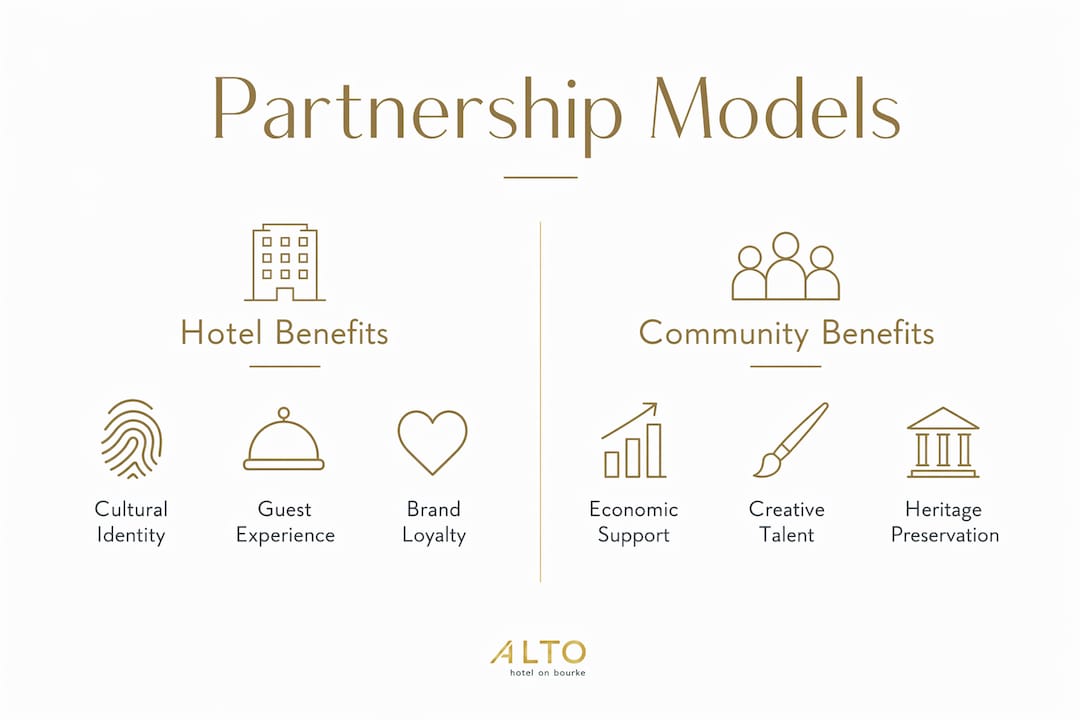
Financial sustainability is the factor most often overlooked when hotels design partnerships. Offering a local maker "exposure" in exchange for product placement is not a partnership. Guaranteed payments, revenue sharing, or consistent wholesale purchasing create the economic stability that makes partnerships last. A partnership that benefits only the hotel will eventually collapse.
Structural, recurring partnerships with local producers and artisans provide consistent demand and economic stability. Permanent product placements or long-term service agreements are the formats that deliver genuine authenticity and mutual business growth.
How can hotels integrate local partnerships into operational and branding strategies?
Integration starts before the hotel opens. Early engagement with local community leaders and historians before hotel design or branding builds goodwill and shapes authentic narratives. This pre-opening consultation also strengthens local support during operational disruptions, which every hotel eventually faces.
The narrative built from genuine community consultation becomes the hotel's most durable brand asset. A hotel that can say "we worked with the Wurundjeri community to inform our design" or "our head chef trained under a local farmer" has a story that no competitor can copy. That specificity is the point.
Operationally, the most effective approach is to assign ownership of partnership relationships to a specific staff member or team. Partnerships managed by the marketing department alone tend to remain superficial. When the food and beverage manager owns the relationship with the local farm, and the front desk team knows the story behind every artwork in the lobby, the partnership becomes part of the guest experience at every touchpoint.
Measurement matters. Hotels that track partnership outcomes, such as guest satisfaction scores linked to local programming, supplier retention rates, and community sentiment, can adapt and improve. Without measurement, partnerships drift. With it, they compound in value over time.
Pro Tip: Before opening or rebranding, spend time with local historians, First Nations community representatives, and long-term residents. Ask what the place means to them, not what the hotel can offer them. The answers will shape a brand narrative that resonates far beyond any focus group finding.
What are some notable examples of hotels shaping identity through local partnerships?
The most instructive examples share one characteristic: the partnership is structural, not decorative.
The Francis Hotel and Suites in Kennett Square operates on a 100% profit-donation model, reinvesting all revenues into housing, trail accessibility, and historical research organisations. This model positions the hotel simultaneously as a luxury lodging option and a social enterprise. Guests choose it partly because staying there is an act of community investment.
A redevelopment case study from Cambria shows how community-integrated hotels can become regional anchors. A project that transformed an abandoned site into the top-rated hotel and restaurant in its county also sparked local retail and infrastructure growth around it. The hotel did not just benefit from the community. It rebuilt part of it.
Boutique hotels are increasingly drawing locals into the hotel space rather than treating the property as a sealed environment for travellers. Community clubhouses, open-to-public dining, and local maker markets held in hotel courtyards create social atmospheres that guests find genuinely authentic. The presence of locals signals to visitors that the hotel belongs to the place.
The outcomes from these models are consistent across contexts:
- Guest review rankings improve when local programming is embedded in the stay.
- Staff retention increases when employees feel the hotel contributes to their community.
- Media coverage of community-connected hotels tends to be more substantive and longer-lasting than coverage driven by marketing campaigns alone.
Connecting guests to local makers through curated in-room products, artisan markets, and maker-led experiences is one of the most replicable models for boutique properties. The investment is modest. The identity impact is significant.
Real sustainability in hospitality starts in practical local partnerships, such as food sourcing and community infrastructure projects, rather than in marketing statements. Solar-powered water projects and local farm supply agreements reduce supply chain emissions and build community stability simultaneously.
Key takeaways
Local partnerships build hotel identity through structural community integration, not symbolic gestures. The most effective models combine cultural engagement, economic collaboration, and authentic storytelling to create competitive advantages that are genuinely difficult to replicate.
| Point | Details |
|---|---|
| Structural beats symbolic | Long-term operational partnerships outperform one-off marketing collaborations in brand impact and community benefit. |
| Financial fairness sustains partnerships | Guaranteed payments or revenue sharing, not exposure alone, keep local suppliers and artisans engaged over time. |
| Pre-opening consultation pays off | Engaging local leaders and historians before opening shapes authentic narratives and builds community goodwill. |
| Measurement drives improvement | Tracking guest satisfaction and supplier retention linked to partnerships allows hotels to adapt and compound value. |
| Community integration anchors identity | Hotels embedded in their local community gain reputational resilience and guest loyalty that marketing cannot manufacture. |
Why I think most hotels are still getting this wrong
After years of observing how hotels approach community engagement, the pattern is clear. Most properties treat local partnerships as a marketing layer applied after the core product is built. A jar of local honey in the room. A framed print from a nearby gallery. These gestures are not wrong, but they are not identity.
The hotels that genuinely differentiate themselves start the conversation before the first brick is laid. They ask the community what the site means, what it has been, and what it could become. That process is uncomfortable because it introduces obligations. It also produces something no design firm can deliver: a hotel that the surrounding community actually wants to exist.
The shift from symbolic to structural is the hardest part. It requires giving local partners real economic stakes, not just visibility. It requires measuring outcomes and being honest when a partnership is not working. It requires staff who understand the stories behind every local product in the building.
The hotels that do this well do not just attract guests who appreciate authenticity. They attract guests who return because the experience cannot be replicated anywhere else. That is the competitive advantage local partnerships actually deliver. Not a point of difference on a brochure. A reason to come back.
— Kamal
Altohotel and the local partnerships that define it
Altohotel on Bourke has built its identity on exactly the kind of structural community integration this article describes. As one of Melbourne's first environmentally rated boutique hotels, Altohotel works with local artisans and organisations to shape every aspect of the guest experience, from the materials in the rooms to the stories guests encounter during their stay.
That commitment shows up in the details. Guests staying in the Petite Queen rooms experience a space designed with eco-conscious materials and local character. The hotel's facilities reflect the same philosophy: every element is considered, locally influenced, and built to support both guest comfort and community wellbeing. For hospitality professionals looking to understand what genuine community integration looks like in practice, Altohotel is a working model worth studying.
FAQ
What is community integration in hotel branding?
Community integration is the practice of embedding local relationships, such as supplier agreements, cultural partnerships, and nonprofit collaborations, into a hotel's core operations and brand identity. It goes beyond marketing to shape the guest experience at every touchpoint.
How do local partnerships improve guest experience?
Local partnerships give guests access to authentic regional stories, products, and experiences that generic hotel programmes cannot provide. Research on hotel-DMO partnerships confirms that resource integration and innovation cooperation directly enhance tourism performance and guest satisfaction.
What makes a local partnership financially sustainable?
A financially sustainable partnership provides guaranteed payments, revenue sharing, or consistent wholesale purchasing to local collaborators. Offering exposure alone does not create the economic stability that keeps suppliers and artisans engaged long-term.
How early should hotels engage local communities?
Hotels benefit most from engaging local leaders, historians, and community representatives before the design or branding phase begins. Pre-opening consultation shapes authentic narratives and builds the goodwill that supports the hotel through operational challenges.
Can small boutique hotels afford meaningful local partnerships?
Boutique hotels are often better positioned than large chains to build genuine local partnerships because their scale allows direct, personal relationships with suppliers and community organisations. Models like local food services and artisan placements require modest investment but deliver significant identity impact.