
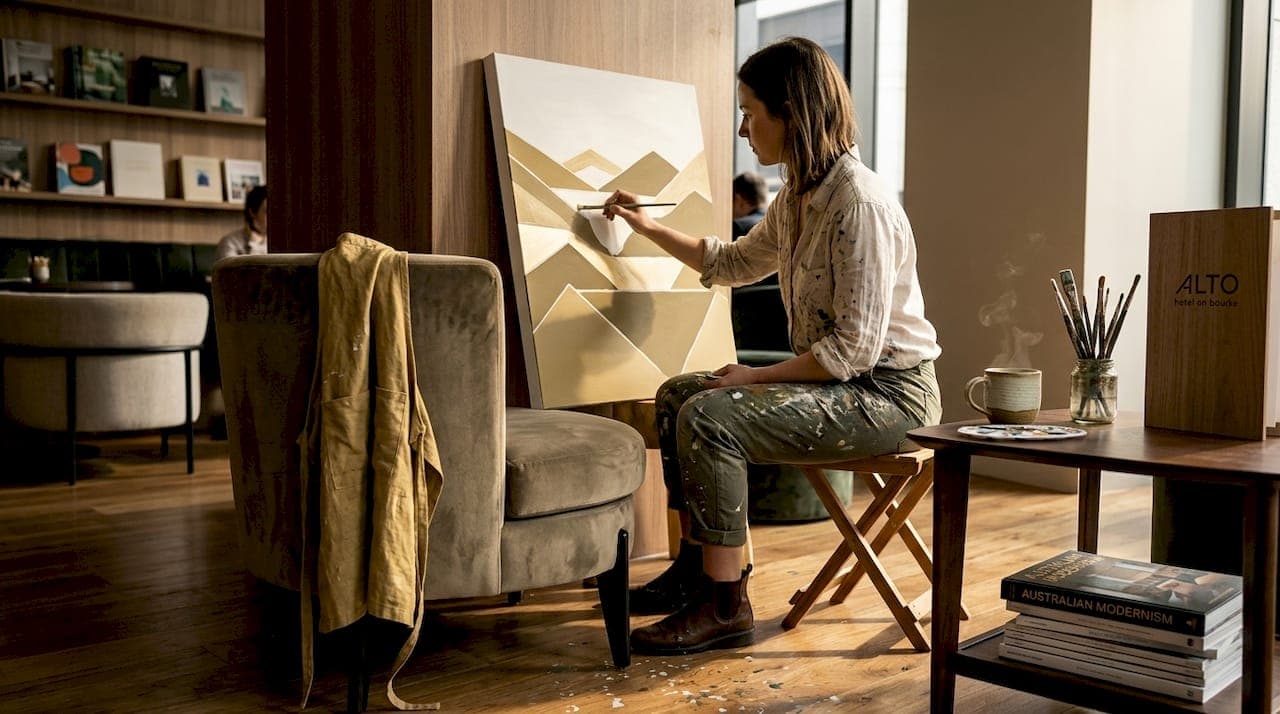
Most travellers know hotels as places to sleep. Fewer realise that the most forward-thinking properties have quietly become the most interesting cultural venues in their cities. How hotels support local creative communities has shifted from a niche curiosity to a genuine travel motivator, with 54% of millennials now selecting destinations specifically for cultural and maker experiences. From artist residencies to rotating pop-up galleries, hotels are redefining their role, and travellers who know where to look get far more than a comfortable bed.
Table of Contents
- Key takeaways
- How hotels support local creative communities
- Community impact of creative hotel partnerships
- Hotels as living creative spaces
- What travellers gain from culturally engaged hotels
- My take on what actually matters here
- Experience Melbourne's creative culture with Alto Hotel
- FAQ
Key takeaways
| Point | Details |
|---|---|
| Hotels are cultural hubs | Forward-thinking hotels run residencies, workshops, and exhibitions that connect guests with local artists. |
| Immersive beats passive | Interactive cultural programmes outperform static art displays, driving 18% higher guest engagement. |
| Local economies benefit | Creative partnerships bring real income to artisans, social enterprises, and community organisations. |
| Travellers gain authentic access | Guests get exclusive entry to art events, hands-on craft sessions, and genuine local connections. |
| Spaces do double duty | Lobbies, ballrooms, and common areas are being repurposed as galleries, studios, and artisan markets. |
How hotels support local creative communities
The phrase "maker stays" has moved from boutique hotel marketing language into mainstream travel conversation, and that shift tells you something real. Art tourism is projected to reach $54.44 billion by 2030, growing at a steady 3.2% annually from $45.22 billion in 2024. Hotels that have read this trend correctly are not just hanging local artwork on their walls. They are building entire programmes around it.
Artist-in-residence programmes are one of the most direct ways hotels support local creatives. A hotel invites a working artist to live and create on-site for a set period, often in exchange for a finished piece, a public workshop, or both. Guests get access to a working studio they would never otherwise enter. The artist gets funded time, a visible platform, and real income. Everyone wins, and the exchange is genuinely mutual rather than decorative.
Maker stays take the concept further. Instead of watching an artist work, guests are placed inside the creative process. A ceramics studio set up in a converted hotel suite. A printmaking session run in the lobby on a Sunday morning. A textile dyeing workshop led by a local craftsperson in the courtyard. These are not token cultural add-ons. They are the reason certain guests book at all.
- Rotating exhibitions give local artists gallery access without gallery overhead costs
- Pop-up markets inside hotel spaces connect artisans directly with paying guests and local foot traffic
- Hands-on workshops in photography, painting, weaving, and cooking build genuine skills guests carry home
- Partnerships with local arts organisations give community groups access to bookable hotel event spaces
Pro Tip: When researching hotels, search specifically for their artist programme or creative residency page. A hotel that publishes detailed information about its artists and their work is far more likely to offer a genuine cultural experience than one with a single decorative mural in the lobby.
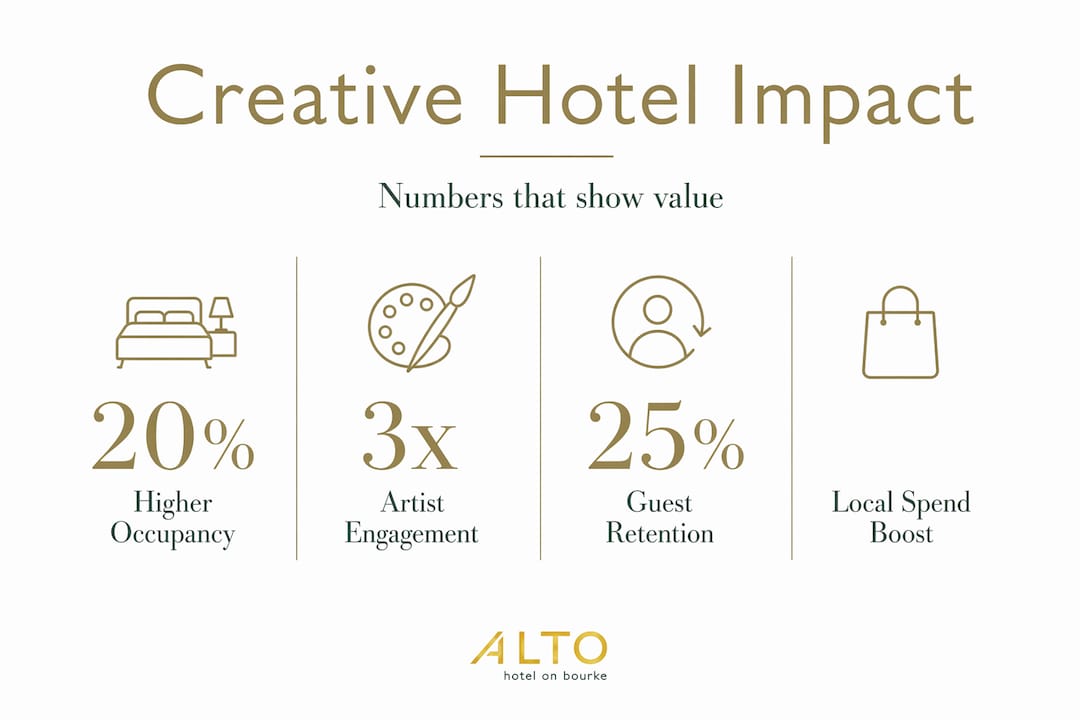
Cultural events inside hotels increase occupancy by up to 20%, which means creative programming is now genuinely good business, not just good optics. Hotels that get this right tend to invest in recurring relationships with artists rather than one-off commissions. That continuity is what creates a real creative community rather than a curated aesthetic.
Community impact of creative hotel partnerships
The effects of creative partnerships in hospitality reach far beyond the hotel walls. When a property sources its artwork, furnishings, and cultural programming from local artisans, those decisions move real money through the community in ways that a generic supply chain never would.
Consider the civic hospitality model practised by Italy's Albergo del Cuore in Ravenna, which employs young people with disabilities, sources food from social farms, and builds active partnerships with local organisations. This is not charity. It is an operational model that treats community engagement as core business infrastructure. The impact shows up in employment, supplier income, and a level of community trust that no marketing budget can manufacture.
The data on community attitudes is striking. A poll in Vermont found that 87% of residents believe arts and cultural participation is vital for thriving communities, with 83% saying it matters directly to the regional economy. Hotels that align their programming with these values are not just appealing to travellers. They are earning genuine goodwill from the communities they operate within.
| Type of impact | What it looks like in practice |
|---|---|
| Direct income for artists | Commissions, residency fees, workshop facilitation payments |
| Supplier relationships | Local food, handmade furnishings, and artisan products sourced through the hotel |
| Vocational opportunity | Training programmes for young or marginalised community members |
| Social inclusion | Events and markets that draw local residents into the hotel as active participants |
| Cultural visibility | Platform exposure for artists who lack access to traditional gallery networks |
"Treating hotel community engagement as an operational ecosystem creates deeper, more meaningful social impact than treating it as a marketing exercise." — Cooperative City, on the Albergo del Cuore model
The impact of hotels on local culture is most powerful when hotels move beyond tokenism. Buying a few prints from a local artist is not a cultural partnership. Giving that artist a six-week residency, running three public workshops, and selling their work through the hotel shop is.
Hotels as living creative spaces
The smartest hotel operators have realised that underused space is both a commercial problem and a community opportunity at the same time. A lobby that sits quiet between breakfast and check-in becomes a pop-up gallery. A ballroom dark on Tuesday nights becomes a venue for a craft market or a figure drawing class.
Converting underused hotel spaces into artist workshops or pop-up galleries drives increased foot traffic and social media visibility in a way that generic hotel decor simply cannot match. People share images of a live ceramics demonstration in a hotel atrium. They do not share photos of a tasteful neutral palette.
Seasonal artisan markets and holiday events that host local vendors actively promote working artists while generating measurable foot traffic and community buzz. The key distinction between hotels that do this well and those that do it poorly comes down to resident engagement.
- Hotels that invite local residents as active participants avoid becoming isolated tourist enclaves
- Markets and events with a genuine neighbourhood audience create the social energy that tourists actually want to experience
- Craft competitions with local judges and prizes build ongoing community relationships rather than one-off transactions
- Photo-friendly installations created in collaboration with local artists generate authentic social content without manufactured moments
Engaging locals as active participants through markets and events is what separates a hotel with a cultural programme from one that has simply decorated differently. The Orozco Gallery in Ithaca offers a useful model here. The gallery attracted over 1,000 visitors annually by running rotating exhibitions alongside workshops and live performances, pulling in both tourists and local community members. Hotels that adopt a similar philosophy stop being backdrops and start being destinations.
What travellers gain from culturally engaged hotels
Staying at a hotel with genuine creative community ties changes the quality of a trip in ways that are hard to describe until you experience it. Access is the clearest benefit. You do not just observe local culture from the outside. You sit in the same room with the person who made the thing you are buying, or you spend an hour learning the technique behind it.
- Direct access to working artists. Meeting a printmaker mid-residency or attending a painter's studio talk gives you a conversation you cannot script or Google.
- Skills you take home. A pottery workshop or natural dye session teaches you something tangible. That knowledge anchors the memory of the trip far more effectively than a photograph.
- Authentic local recommendations. Artists and craftspeople who work with a hotel know the neighbourhood deeply. Their dining, gallery, and music tips come from actual experience, not a concierge database.
- The satisfaction of ethical spending. Buying directly from an artist hosted by your hotel puts your money exactly where you intend it to go.
Well-run creative hotel programmes see 15 to 25% higher bookings and 25% better guest retention compared to hotels without such programmes. The data confirms what experienced travellers already know: the experience of authentic cultural connection is repeatable. People come back.
Pro Tip: Ask your hotel directly before booking whether their cultural or arts programmes are guest-participatory or purely decorative. One specific question saves a lot of disappointment. A hotel with real creative partnerships will have a specific, enthusiastic answer.
Boutique hotels that reflect local culture consistently deliver this kind of access more reliably than large chain properties. The smaller scale makes genuine relationships possible, and the absence of corporate brand constraints means the programming can be genuinely local rather than templated.
My take on what actually matters here
I've watched the language around hotel cultural programmes evolve from "we support local artists" wall text to fully integrated creative ecosystems, and I have seen both done badly. What I've learned is that the difference is almost never about budget. It is about whether the hotel sees the local creative community as a resource to draw from or a community to genuinely belong to.
The hotels that get it right treat their artists the way good editors treat writers. They give real briefs, pay fairly, give visibility, and step back. The ones that get it wrong hang a few canvases, slap a local artist's name on the room card, and call it cultural programming.
What I've found is that travellers can tell the difference within about ten minutes of arriving. You feel it in whether staff can tell you something real and specific about the artist whose work is on your wall. You feel it in whether the workshop is run by someone who actually does the craft, not someone who was hired to facilitate a tourist activity.
The future of creative partnerships in hospitality is genuinely exciting to me. Hotels that commit to it properly are building something that matters to their cities, not just their TripAdvisor ratings. My honest advice: seek out the properties with a genuine track record, ask specific questions, and spend your accommodation budget somewhere that sends real money back into the community you are visiting.
— Kamal
Experience Melbourne's creative culture with Alto Hotel
Altohotel sits at the intersection of sustainable design and authentic Melbourne culture. As one of the city's first environmentally rated boutique hotels, Altohotel has built its identity around genuine local connection, from its partnerships with local artisans to its carefully selected furnishings that reflect the city's creative character. Staying here means waking up in a space shaped by real Melbourne makers.
If you are looking for a base that puts you close to Melbourne's thriving arts and creative scene, explore Alto Hotel on Bourke and see what a culturally rooted boutique stay actually feels like. Whether you prefer a petite queen room for a solo creative escape or a two-bedroom apartment for a longer cultural immersion, Altohotel offers stays that connect you with Melbourne's best. Your accommodation choice is itself a contribution to the local creative economy.
FAQ
What is a maker stay at a hotel?
A maker stay is a hotel programme where guests participate directly in creative activities led by local artists or craftspeople, such as ceramics, printmaking, or textile work. These programmes are distinct from passive art displays because they place the guest inside the creative process.
How do hotels support local artists financially?
Hotels support local artists through paid residencies, commission fees for original works, workshop facilitation payments, and consignment sales of artwork through the hotel. Some properties also source furnishings and decorative items directly from local craftspeople, creating ongoing supplier relationships.
Why do boutique hotels tend to have better creative programmes?
Boutique hotels typically operate without corporate brand constraints, which allows them to build genuine, long-term relationships with local artists and organisations. Their smaller scale makes the creative programming feel personal and place-specific rather than templated across multiple locations.
Do hotel creative programmes benefit the wider community?
Yes. Hotels with active creative community partnerships contribute to local economies through artist income, local sourcing, and event-driven foot traffic. Civic hospitality models like Albergo del Cuore show that hotels can also support social inclusion through vocational training and employment for marginalised community members.
How can I find hotels with genuine creative community ties?
Look for hotels that publish specific information about their resident artists, upcoming workshops, and community partnerships. A hotel with real creative engagement will name its artists, describe its programmes in detail, and show evidence of ongoing relationships rather than one-off decorative gestures.