
How Australian hotels are cutting single-use plastics right now
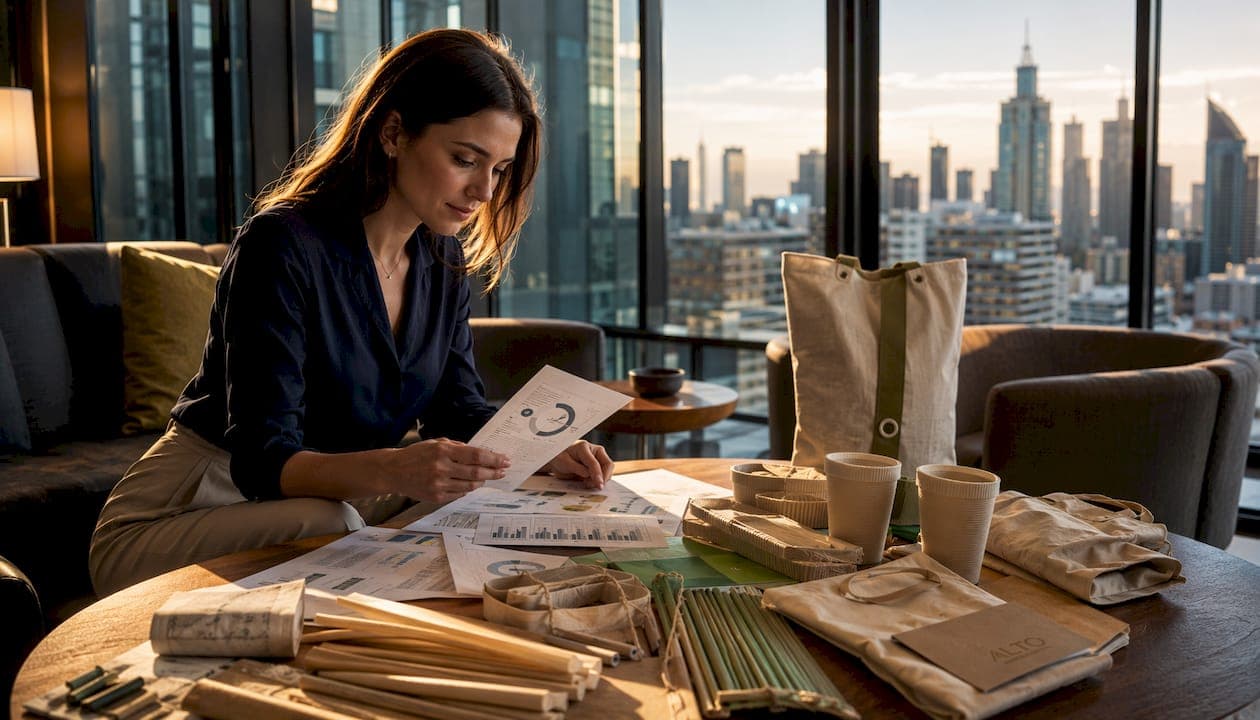
The most effective approach combines a department-level audit, substitution with reusable alternatives, and supplier engagement that targets plastic before it even arrives at the loading dock. Hotels that follow this sequence consistently achieve measurable reductions in both waste volume and operating costs, not just optics.
Here is what the evidence shows works:
- Audit first. Map every plastic touchpoint across guest rooms, kitchens, restaurants, events, and back-of-house before making any changes. Hidden plastics like condiment sachets, plastic wrap, and teabag seals are routinely missed in surface-level reviews.
- Substitute with reusables. Refillable dispensers for toiletries, glass or ceramic water bottles in rooms, and metal or bamboo cutlery in food service replace the highest-volume single-use items.
- Engage suppliers upstream. Ask suppliers to switch to reusable crates, recycled packaging, or bulk delivery formats. Plastic reduction at the source prevents waste from entering the property at all.
- Train staff and communicate with guests. Behaviour change on both sides of the front desk determines whether physical substitutions actually hold.
- Measure and report. Track waste volumes, cost savings, and carbon reductions quarterly. Progress data strengthens the business case internally and builds credibility with guests and investors.
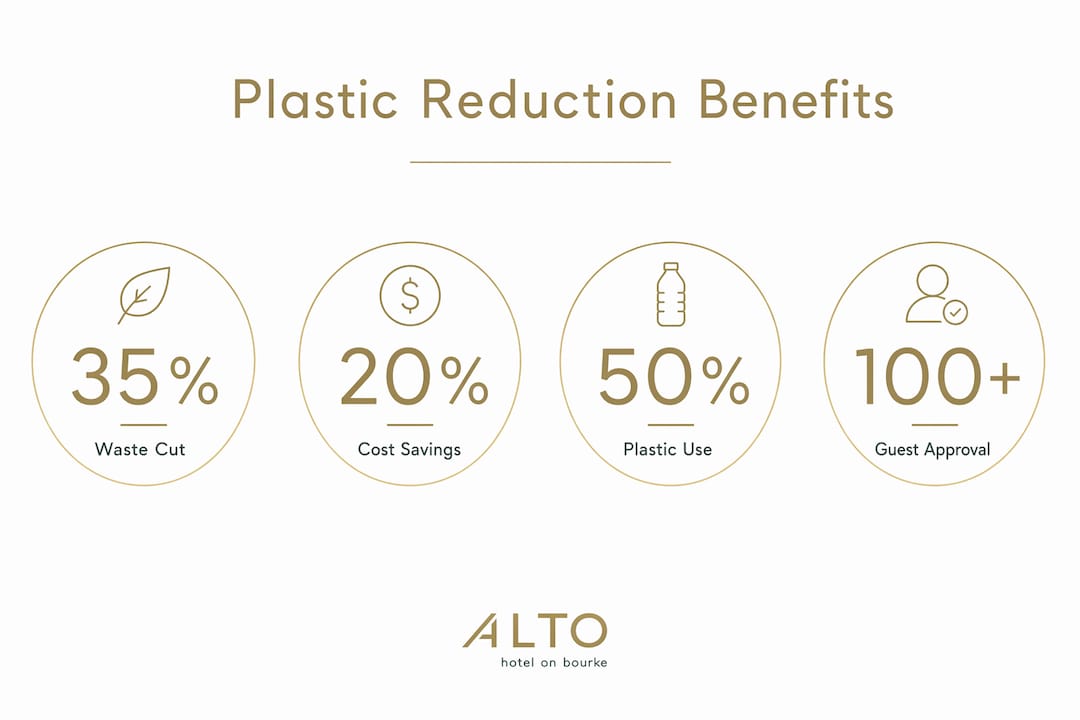
The financial case is real. Switching from single-use bottled water to filtered tap water in refillable glass or ceramic bottles can save approximately €4,475 per year and cut CO2 emissions by 1,497 kg annually. Waste management programmes that include plastic elimination, recycling, and composting can reduce landfill contributions by at least 25%. For sustainability managers building a business case, those figures carry weight in any boardroom conversation.
Where does single-use plastic actually hide in your hotel?
Most hotels start with the obvious: miniature shampoo bottles and plastic-wrapped cups. That is a reasonable first step, but it barely scratches the surface of a property's total plastic footprint.
A thorough audit covers every department, not just housekeeping. In guest rooms, the list extends well beyond toiletries to include plastic-wrapped slippers, shower caps, ear buds, remote control covers, garment bags from laundry, and the individual sachets of tea, coffee, and condiments sitting on the welcome tray. Meeting and events spaces generate their own stream: single-use cups, plastic stirrers, individually wrapped mints, and shrink-wrapped stationery packs.
The kitchen and restaurant are often the largest source by volume. Deliveries arrive in plastic mushroom boxes, banana wrapping, fruit punnets, and shrink-wrapped pallets. Food is stored under cling film, portioned into plastic containers, and sent to tables with plastic-wrapped cutlery rolls. Staff consumables, including disposable gloves, plastic aprons, and individually wrapped condiment sachets, add up across every shift.
Back-of-house areas carry plastics that rarely appear on any checklist: plastic liners in ice buckets, single-use bags for linen and dry cleaning, plastic packaging on cleaning products, and the wrap around bulk supply deliveries. A department-by-department audit is the only reliable way to surface these items, because token changes to visible guest-facing plastics can leave the bulk of a hotel's plastic footprint completely untouched.
Practical audit approach:
- Assign a checklist to each department head covering all consumable items, packaging, and disposables used in a standard week.
- Photograph and weigh plastic waste streams separately from general waste for two to four weeks to establish a baseline.
- Flag items used in high volume or high frequency as priority targets.
- Identify which plastics arrive with supplier deliveries versus which are purchased directly, since the reduction strategy differs for each.
- Review hidden plastics in products that appear sustainable, such as teabags with plastic mesh, biodegradable bags with plastic liners, and paper cups with plastic coatings.
The audit output gives you a ranked list of plastic sources by volume and replaceability. That ranking is what drives a credible action plan rather than a series of disconnected swaps.
Practical substitutions that actually work in hotel operations
Switching from single-use to reusable is straightforward in theory. In practice, the substitution needs to work operationally, endure commercial laundry and dishwashing cycles, and not create other environmental problems.
Toiletries and bathroom amenities
Bulk dispensers fixed to shower walls replace individual shampoo, conditioner, and body wash bottles with a single refillable unit per room. The operational saving is real: housekeeping spends less time restocking, and the volume of plastic leaving each room drops to near zero. The WTTC's Hotel Sustainability Basics framework lists bulk amenity dispensers as a baseline expectation for any property with sustainability credentials. For properties that prefer not to mount dispensers, larger refillable bottles in a format guests can use across their stay are a workable middle ground.
Water and beverages
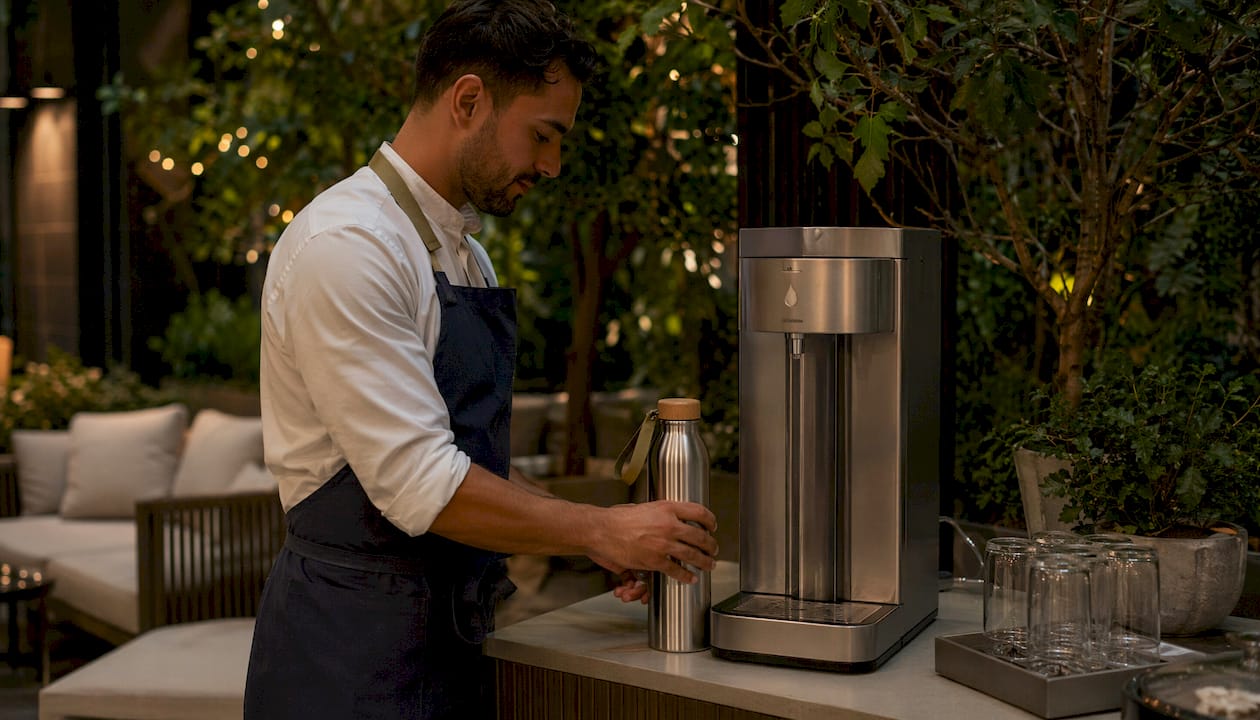
Glass or ceramic refillable bottles in guest rooms, paired with a filtered water station on each floor or in the lobby, eliminate the need for single-use PET bottles entirely. The same logic applies to meeting rooms: a jug and glasses on the table costs less per head than a row of individual plastic bottles and produces no waste at all.
Food service and events
Metal or bamboo cutlery, ceramic cups, and glass tumblers replace their disposable equivalents in restaurants and at events. For takeaway and room service, the substitution is harder but not impossible: compostable containers are one option, though they require the right composting infrastructure to actually break down. Reusable containers with a return system work well for in-house dining.
Key substitutions by area:
- Guest rooms: bulk dispensers, refillable water bottles, unwrapped or paper-wrapped soap bars, plastic-free packaging on slippers and robes.
- Restaurants: reusable cutlery, glassware, ceramic cups, metal straws, cloth napkins.
- Events: glass water jugs, reusable name badge holders, unwrapped stationery, bulk condiments in ceramic pots.
- Back-of-house: reusable staff drink containers, cloth laundry bags, plastic-free cleaning product packaging.
- Kitchens: reusable food storage containers, supplier deliveries in reusable crates, elimination of cling film where possible.
Pro Tip: Before committing to a compostable alternative, request a life-cycle assessment from the supplier. Compostable substitutes can carry a higher environmental burden than the plastic items they replace if they are not composted under the right industrial conditions. Elimination or reuse almost always outperforms substitution on a full life-cycle basis.
Guest communication matters as much as the physical change. Clear signage in rooms explaining why the dispenser is there, and what the hotel is doing more broadly, converts a potential guest complaint into a moment of genuine engagement. Properties that frame plastic reduction as part of a wider sustainability story, rather than a cost-cutting measure, tend to see better guest acceptance and stronger online reviews.
How to work with suppliers to reduce plastic before it arrives
Supplier engagement is where most hotel plastic reduction programmes stall. A property can eliminate every visible single-use plastic from its guest rooms and still receive deliveries wrapped in layers of plastic film, packed in single-use crates, and padded with plastic bubble wrap. The plastic footprint of a hotel's supply chain often exceeds what guests ever see.
The starting point is a supplier audit. Ask each key supplier to document the plastic packaging used in their deliveries and to identify where reusable or reduced-packaging options exist. This conversation is more productive than a blanket demand to "go plastic-free," because it surfaces what is actually feasible given shelf-life requirements, food safety standards, and logistics constraints.
Practical requests to make of suppliers:
- Switch mushroom boxes, banana wrapping, and fruit punnets to recycled or sustainable materials.
- Use reusable crates for local deliveries, with a return and credit system built into the contract.
- Deliver bulk dry goods in larger formats rather than individually wrapped portions.
- Remove plastic packaging from soap bars and other amenity products at the manufacturing stage.
- Provide cleaning products in concentrate form with reusable dilution bottles.
Small and medium hotels face a real disadvantage here: they lack the purchasing volume to compel supplier behaviour change the way a large chain can. The practical solution is to focus on upstream prevention within your own procurement decisions, choosing suppliers who already offer low-plastic options, and consolidating orders to reduce the frequency and therefore the packaging volume of deliveries.
One critical caution: switching food packaging without consulting the supplier on shelf-life implications can create food waste that is as damaging as the plastic it replaced. The Sustainable Hospitality Alliance is explicit on this point. Communication with suppliers about the best alternative, not just the most plastic-free option, is what produces a genuine net reduction.
Embedding plastic reduction requirements in supplier contracts and request-for-proposal documents is the most durable mechanism. A clause requiring suppliers to report on packaging materials annually, and to work toward reusable or recycled alternatives within an agreed timeframe, creates accountability without requiring constant renegotiation. For Australian hotels working with sustainable food service suppliers, this kind of contractual alignment is increasingly standard practice.
What does plastic reduction actually save hotels?
The business case for reducing plastic waste in hotels is stronger than most sustainability managers realise, and it goes well beyond the cost of the items themselves.
The most cited figure in hospitality sustainability research comes from an IGES analysis of hotels switching from single-use bottled water to filtered tap water served in refillable glass or ceramic bottles: approximately €4,475 saved per year, with a corresponding reduction of 1,497 kg of CO2 emissions annually. For a mid-size Australian property, that saving compounds across multiple plastic categories once the programme extends beyond water bottles.
Waste management costs fall as plastic volumes drop. Hotels that implement plastic elimination alongside recycling and composting programmes can reduce landfill waste by at least 25%, which translates directly to lower waste collection fees. In Australian capital cities, commercial waste disposal costs have risen steadily, so the saving from reduced volume is not trivial.
| Benefit area | What changes | Outcome |
|---|---|---|
| Bottled water elimination | Filtered tap water in refillable glass bottles | Significant annual savings; notable CO2 reduction |
| Waste volume reduction | Plastic elimination + recycling + composting | Landfill contribution significantly reduced |
| Toiletry costs | Bulk dispensers replacing individual bottles | Lower per-use cost; reduced housekeeping time |
| Brand reputation | Verified sustainability credentials | Higher guest satisfaction; stronger review scores |
| Regulatory compliance | Proactive plastic phase-out | Avoids penalties as Australian regulations tighten |
Brand reputation is harder to quantify but increasingly consequential. Travellers and investors are both demanding transparency on plastic reduction. The WTTC's Hotel Sustainability Basics framework and the Sustainable Hospitality Alliance both treat plastic reduction as a baseline industry expectation, not a differentiator. Properties that cannot demonstrate measurable progress are starting to face questions from institutional travel buyers and corporate clients with their own supply chain sustainability requirements.
The regulatory environment in Australia is also tightening. State-level bans on single-use plastics are already in force across most jurisdictions, and the trajectory is toward broader restrictions on hospitality-specific items. Hotels that have already built the operational infrastructure to run without single-use plastics are better positioned to absorb future regulatory changes without disruption.
How Altohotel leads plastic reduction in Melbourne
Altohotel, trading as Alto Hotel on Bourke, holds the distinction of being one of Melbourne's first environmentally rated boutique hotels, and its approach to reducing single-use plastics reflects the depth of that commitment rather than a surface-level response to industry trends.
The hotel's plastic reduction programme began with a property-wide audit that identified the full scope of single-use plastic use across guest rooms, food service, housekeeping, and back-of-house operations. That audit revealed the usual suspects, miniature toiletry bottles and single-use cups, but also the less visible items: plastic-wrapped amenities, individually packaged condiments, and plastic-heavy supplier deliveries.
From that baseline, Altohotel implemented a series of targeted changes:
- Bulk amenity dispensers replaced individual shampoo, conditioner, and body wash bottles across all guest rooms, eliminating one of the highest-volume plastic streams in any hotel.
- Refillable water vessels replaced single-use plastic bottles in rooms and common areas, supported by filtered water access throughout the property.
- Plastic-free amenity packaging was adopted for slippers, robes, and other room accessories, with paper or no packaging replacing plastic wrapping.
- Supplier engagement focused on reducing plastic in deliveries, with preference given to suppliers offering reusable crates or minimal-packaging formats.
- Staff training was embedded into onboarding and ongoing operations, covering the hotel's plastic reduction goals, the reasoning behind each change, and how staff can reinforce the message with guests.
- Guest communication was built into the room experience through clear, well-designed signage and in-room information that explains the hotel's environmental commitments without being preachy.
The outcomes have been recognised at the highest level of the Victorian tourism sector, with Altohotel earning Hall of Fame status, an acknowledgement that reflects sustained performance rather than a one-off achievement. For guests seeking a guilt-free luxury stay in Melbourne, the hotel's verified environmental credentials are part of what distinguishes it from properties that treat sustainability as a marketing claim.
| Altohotel plastic reduction initiative | Approach | Outcome |
|---|---|---|
| Toiletry amenities | Wall-mounted bulk dispensers | Eliminated individual plastic bottles across all rooms |
| In-room water | Refillable vessels + filtered water access | Single-use PET bottles removed from guest rooms |
| Amenity packaging | Paper or no packaging on slippers, robes, accessories | Plastic wrapping eliminated from room setup |
| Supplier deliveries | Preference for reusable crates and minimal packaging | Reduced plastic entering the property at the source |
| Staff programme | Onboarding and ongoing training on plastic reduction goals | Consistent operational behaviour across all departments |
| Guest communication | In-room signage and information | Guest understanding and support for sustainability changes |
Key lessons from Altohotel's experience:
- Start with the audit. Without a clear baseline, it is impossible to prioritise or measure progress.
- Physical changes only hold when staff understand why they matter and how to explain them to guests.
- Supplier relationships take time to shift. Start the conversation early and build requirements into contracts progressively.
- Certification and recognition, such as environmental ratings and tourism awards, create external accountability that sustains internal momentum.
- Guest communication framed around shared values, rather than rules or restrictions, generates support rather than friction.
For hospitality professionals looking at environmentally rated boutique hotels as a model, Altohotel's programme demonstrates that plastic reduction at a boutique scale is operationally achievable and commercially sound.
Key takeaways
Hotels that commit to a structured plastic reduction programme achieve measurable environmental and financial outcomes, with the most effective results coming from auditing first, substituting with reusables, and engaging suppliers before plastic enters the property.
| Point | Details |
|---|---|
| Audit before acting | A department-level audit reveals hidden plastics that surface-level changes consistently miss. |
| Refillable water delivers clear savings | Switching to filtered tap water in refillable glass bottles can save approximately €4,475 per year and reduce CO2 by 1,497 kg annually. |
| Waste programmes cut landfill by 25% | Plastic elimination combined with recycling and composting can reduce a hotel's landfill contribution by at least 25%. |
| Supplier engagement is upstream prevention | Requiring reusable crates and reduced packaging in contracts stops plastic from entering the property at the source. |
| Altohotel shows boutique-scale results | Alto Hotel on Bourke's programme, from bulk dispensers to supplier engagement, earned Hall of Fame recognition in Victorian tourism. |