
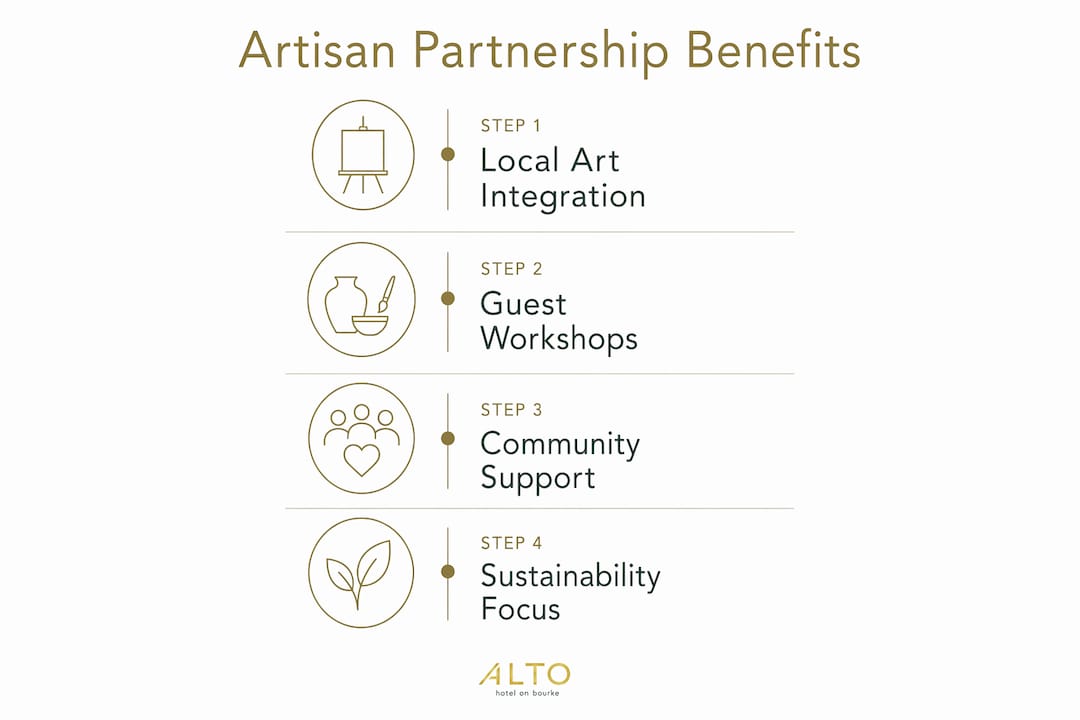
Hotels connect guests to local makers through active partnerships that embed artisan culture directly into the guest experience, from room design and retail to hands-on workshops and community events. This practice, known in the hospitality industry as cultural immersion programming, has moved well beyond decorative gestures. Art tourism is growing at a CAGR of 3.2%, projected to reach $54.44 billion by 2030. That growth signals a clear shift: travellers want to participate in local culture, not just observe it. Hotels that understand how hotels connect guests to local makers are turning that demand into a genuine competitive advantage, and into real support for the communities they operate within.
How do hotels collaborate with local artisans and craftspeople?
Hotels use several concrete methods to build meaningful relationships with local makers. The most effective approaches go well beyond hanging a painting in the lobby.
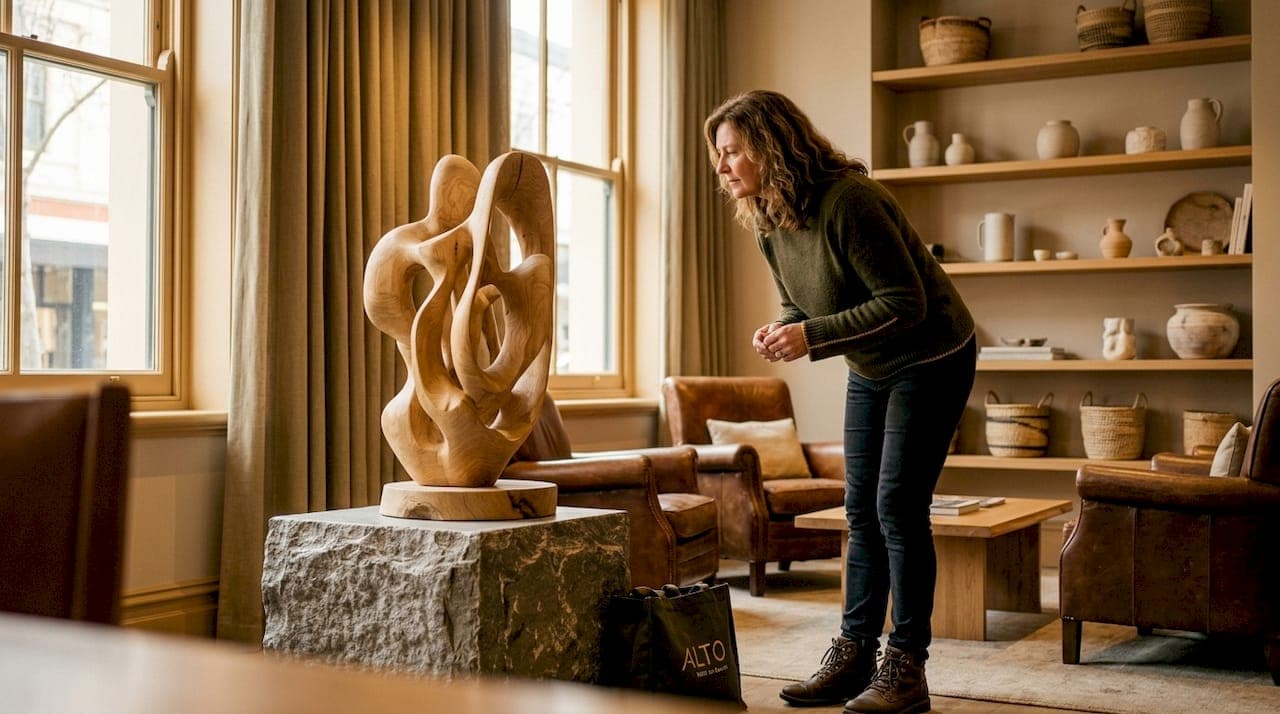
The first method is integrating local art and handcrafted furniture directly into hotel design. Rather than sourcing generic furnishings, hotels commission pieces from nearby makers, giving guests something to look at, touch, and ask about. Local art in boutique hotel design has become a defining feature of properties that want to reflect their location authentically. Every object in the room becomes a conversation starter.
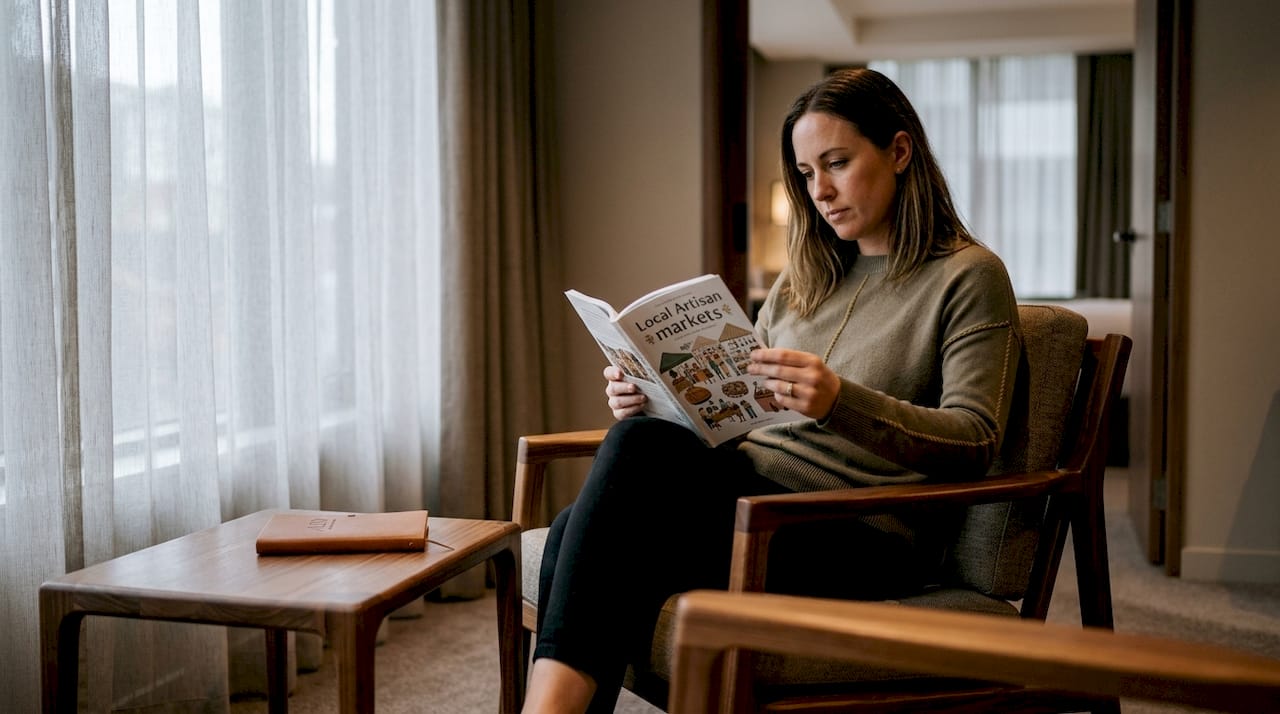
The second method is hosting maker-led workshops and artisan demonstrations on site. These sessions give guests direct access to the creative process, whether that is weaving, ceramics, printmaking, or traditional food craft. Anantara Jewel Bagh Jaipur, for example, partners with Jaipur Rugs Foundation to offer guests immersive weaving experiences alongside literacy and cultural programmes for the women artisans involved.
The third method is operating boutique retail spaces within the hotel that stock locally made goods. This gives makers a sales channel and gives guests a curated way to take something genuine home. Some hotels go further, creating themed suites that celebrate a specific craft tradition. The Casa Selma Suite at Ascott Makati is built entirely around Filipino craftsmanship and community-led design, turning the room itself into an exhibit.
- Curated local art and furniture commissions
- Maker-led workshops and live demonstrations
- In-hotel boutique retail for locally made goods
- Themed suites celebrating specific craft traditions
- Cultural events that invite both guests and local residents
Pro Tip: When evaluating a hotel's artisan partnerships, look for visible maker credits: name plaques, QR codes linking to the artisan's story, or staff who can speak knowledgeably about the work. Genuine programmes invest in storytelling, not just aesthetics.
How do artisan connections improve the guest experience?
The guest experience improves most when participation replaces passive observation. Participatory artisan workshops and living studio concepts create what hospitality researchers call experiential stickiness. Guests remember what they made, not just what they saw.
Workshops vary in format and price point. High-quality private sessions typically run for 60–90 minutes and cost around £538 for a small exclusive group, with more accessible group workshop options available at lower price points. The Wabunka Wagashi experience in Kyoto is a well-documented example: guests make traditional Japanese sweets alongside a practitioner, leaving with both the product and the knowledge behind it.
The emotional impact of these sessions is distinct from standard tourism. When a guest sits across from a weaver in Jaipur or a ceramicist in Melbourne and learns the history behind a technique, the connection is personal. That personal connection is what drives positive reviews, repeat visits, and word-of-mouth referrals. Hotels that offer culturally immersive stays consistently report stronger guest loyalty than those that rely on amenities alone.
The most forward-thinking hotels also flip the traditional logic of hospitality by inviting local residents into the hotel space, not just guests out into the city. This creates authentic social bonds that no tour operator can replicate.
"Flipping traditional hospitality logic by inviting locals into hotel spaces creates authentic social bonds, enriching guest experiences beyond typical visitor interactions." — Platform Magazine, 2026
Here is what a well-structured artisan programme typically offers guests:
- A pre-session introduction to the maker's background and cultural context
- Hands-on participation in the craft process with guided instruction
- A finished piece to keep or purchase
- Access to the maker's story through digital features such as QR codes or printed cards
- An optional follow-up, such as a community market visit or studio tour
What sustainability and community impacts do hotel-artisan partnerships create?
The economic case for hotel-artisan partnerships is strong. For every $1 invested in local arts, surrounding businesses gain $5. That multiplier effect means a hotel's commitment to local makers ripples through the broader community economy.
Responsible hotels go beyond economic contribution. The Casa Selma Suite at Ascott Makati donates 5% of profits to sustainable coastal fishing projects in the Philippines. Anantara Jewel Bagh Jaipur funds literacy programmes for the women weavers it works with. These are not token gestures. They reflect a model where the hotel's commercial success is directly tied to the wellbeing of its artisan partners.
| Impact area | What it looks like in practice |
|---|---|
| Economic multiplier | $1 hotel investment generates $5 for surrounding local businesses |
| Profit sharing | 5% of artisan-related revenue directed to community livelihood projects |
| Skills development | Literacy, financial inclusion, and business training for artisan partners |
| Cultural preservation | Ongoing commissions keep traditional craft techniques alive and practised |
| Guest occupancy | Hotels with maker programmes report 20% higher occupancy during cultural events |
Operational risk is real, though. 20–25% of cultural initiatives fail due to mismatches between hotel timelines and artisan workflow pacing. The fix is straightforward: start with low-risk pilots such as artist residencies or pop-up markets, and use transparent contracts that respect both parties' expectations.
Pro Tip: Hotels should identify local makers within a 30-minute radius to keep logistics manageable. Proximity makes it easier to maintain consistent supply, build genuine relationships, and respond quickly when programmes need adjusting.
Sustainable hotel-artisan partnerships also protect cultural heritage. When a hotel commissions work from a traditional maker year after year, it creates a reliable income stream that allows that maker to keep practising rather than abandoning the craft for more stable work. The local sourcing model that underpins these partnerships is one of the most direct ways hotels can support community businesses.
How can travellers find authentic local maker experiences at hotels?
Travellers who want genuine maker connections need to look beyond marketing language. A hotel that genuinely supports local creative communities will show it through specific, named partnerships rather than vague claims about "celebrating local culture."
The clearest signals of an authentic programme include:
- Named artisan partners listed on the hotel's website or in-room materials
- A dedicated events calendar with scheduled workshops open to guests
- In-hotel retail that credits individual makers, not just a generic "local craft" label
- Staff who can describe the artisan's background and the story behind specific pieces
- Community events that welcome local residents alongside hotel guests
Formats vary widely. Private workshops suit travellers who want focused, personal instruction. Group sessions work well for those who enjoy a social atmosphere and a lower price point. Some hotels offer drop-in demonstrations where guests can watch without committing to a full session. Destinations like Jaipur, Makati, and Kyoto have particularly well-developed hotel-artisan ecosystems, but Melbourne's boutique hotel scene is building comparable depth.
Language support is worth checking in advance. Many artisan workshops are conducted through a translator or with bilingual materials, particularly in Japan and Southeast Asia. In Australia, language is rarely a barrier, but cultural context still benefits from a knowledgeable guide.
Respectful participation matters. Travellers should treat workshops as genuine cultural exchanges, not photo opportunities. Asking questions, learning the history behind a technique, and purchasing directly from the maker are all ways to make the experience meaningful for both sides.
Key takeaways
Hotels that build genuine artisan partnerships create measurable value for guests, makers, and the broader community, making cultural immersion the defining feature of sustainable boutique travel.
| Point | Details |
|---|---|
| Participation beats observation | Hands-on workshops create stronger guest memories and loyalty than static displays. |
| Economic multiplier is significant | Every $1 invested in local arts generates $5 for surrounding community businesses. |
| Pilot programmes reduce risk | Starting with artist residencies or pop-up markets cuts the 20–25% failure rate for cultural initiatives. |
| Proximity matters for logistics | Sourcing makers within a 30-minute radius keeps supply consistent and relationships genuine. |
| Storytelling builds trust | Visible maker credits, QR codes, and knowledgeable staff signal an authentic programme. |
Why I think most hotels still get this wrong
Most hotels treat artisan partnerships as a marketing layer rather than a structural commitment. I have seen properties spend heavily on branded "local art" campaigns while the maker receives a one-off payment and no ongoing relationship. That is procurement, not partnership.
The hotels that get it right, like Anantara Jewel Bagh Jaipur with the Jaipur Rugs Foundation, treat the artisan's identity and livelihood as central to the hotel's own identity. That shift in thinking changes everything: the programming, the profit-sharing, the staff training, and the guest experience. Travellers can feel the difference immediately.
The future of this space is genuinely exciting. Microfactories embedded in hotels, where guests can watch goods being made and purchase them directly, are already appearing in boutique properties in Europe and Asia. Digital storytelling through QR codes and short-form video is making it possible for guests to follow a maker's journey long after checkout. These are not gimmicks. They are the logical extension of what happens when a hotel decides that community partnerships are core business, not a side project.
My advice to travellers is simple: ask the hotel directly who made the art on the walls. If the answer is a name and a story, you are in the right place. If the answer is a shrug, keep looking.
— Kamal
Altohotel: where Melbourne's makers meet your stay
Altohotel on Bourke is Melbourne's first environmentally rated boutique hotel and one of the city's most awarded properties, including Hall of Fame recognition in the Victorian tourism sector. Its commitment to local artisan partnerships and eco-conscious design makes it a natural base for travellers who want their stay to mean something beyond a comfortable bed.
Altohotel's rooms range from the intimate Petite Queen to the spacious 2 Bedroom Sleepover, all designed with locally sourced materials and an eye for authentic Melbourne character. Whether you are travelling solo or with family, the hotel's boutique Melbourne experience puts you within reach of the city's most vibrant creative communities. Book directly to secure the best available rate and start your Melbourne stay with intention.
FAQ
How do hotels connect guests to local makers?
Hotels connect guests to local makers through artisan-led workshops, locally commissioned art and furniture, in-hotel retail spaces, and cultural events that bring makers and guests together in the same space.
What should I look for in a hotel with genuine artisan partnerships?
Look for named artisan partners, a scheduled workshop programme, individual maker credits on retail items, and staff who can speak knowledgeably about the work on display.
Are hotel artisan workshops expensive?
Private artisan workshops typically cost around £538 for a small group and run for 60–90 minutes. Group sessions are available at significantly lower price points and suit travellers who prefer a social setting.
How do hotel-artisan partnerships benefit local communities?
For every $1 a hotel invests in local arts, surrounding businesses gain $5. Many hotels also direct a percentage of artisan-related profits, typically around 5%, to community livelihood projects such as education or sustainable fishing.
Which destinations have the strongest hotel-artisan programmes?
Jaipur, Kyoto, and Makati have well-established hotel-artisan ecosystems. Melbourne's boutique hotel scene, anchored by properties like Altohotel on Bourke, is building comparable depth with a focus on eco-conscious and community-driven experiences.