
Not all hotels are created equal, and the gap between boutique and chain hotels goes far deeper than room size or price. Understanding how boutique hotels differ from chain hotels can completely change how you approach your next trip. Whether you are planning a city break in Melbourne, a weekend away, or a longer stay, the type of hotel you choose shapes everything from the moment you walk through the door. This article cuts through the noise and gives you a clear, practical picture of what separates these two very different accommodation experiences.
Table of Contents
- Key takeaways
- How boutique hotels differ from chain hotels in size and ambiance
- Design and character: uniqueness versus uniformity
- Service and guest experience
- Amenities and curated experiences
- Choosing between boutique and chain hotels
- My honest take on the boutique versus chain debate
- Experience Melbourne differently with Altohotel
- FAQ
Key takeaways
| Point | Details |
|---|---|
| Scale shapes experience | Boutique hotels typically have fewer than 100 rooms, creating a more intimate atmosphere than large chain properties. |
| Design tells a story | Boutique hotels reflect local culture and history through their décor, while chains prioritise uniform branding across locations. |
| Service feels different | Boutique staff adapt intuitively to each guest; chain hotels deliver recognition through loyalty programmes and standardised procedures. |
| Amenities are curated vs consistent | Boutique hotels source locally and personalise offerings; chains replicate the same amenities reliably across every property. |
| Neither is universally better | Your travel purpose, budget, and appetite for predictability determine which hotel type genuinely suits you. |
How boutique hotels differ from chain hotels in size and ambiance
The most immediate difference you notice is scale. Boutique hotels are typically under 100 rooms, which is a deliberate choice rather than a limitation. Fewer rooms mean fewer guests, and fewer guests mean staff actually have time to notice you.
Chain hotels operate on an entirely different model. A single property might have 300 to 800 rooms, with entire floors dedicated to conference facilities, multiple restaurants, and a lobby that functions more like an airport terminal than a place to relax. That scale is not accidental. It is how chains achieve the operational efficiency that keeps prices consistent and loyalty programmes viable.
What smaller scale produces in a boutique setting is something harder to manufacture at volume: genuine atmosphere. Think about the difference between a local café and a fast food outlet. Both serve coffee, but the experience of sitting in one versus the other is incomparable. Boutique hotels work the same way.
A few things that boutique scale makes possible:
- Staff who recognise you by name after one interaction
- Common areas that feel curated rather than functional
- A building that has actual history or architectural character
- Quiet that you can rely on, rather than hope for
It is worth noting that some branded boutique hotels operate at larger scales, with global chains launching "lifestyle" sub-brands that mimic boutique aesthetics while running 200-plus rooms. If an authentic boutique experience matters to you, check the room count and ownership structure before you book.
Design and character: uniqueness versus uniformity
Walk into any major chain hotel in Sydney, Singapore, or San Francisco and the lobby will feel familiar. That is entirely intentional. Chain hotels use uniform, replicable designs to reinforce brand identity and reduce the cognitive load for frequent business travellers who simply want to know where the lift is.
Boutique hotels take the opposite approach. Their design is typically rooted in the specific location, history, or cultural identity of where they sit. A boutique hotel in Melbourne's CBD might draw on the city's laneway art culture, its industrial heritage, or its relationship with the natural environment. The result is a space that could not exist anywhere else.
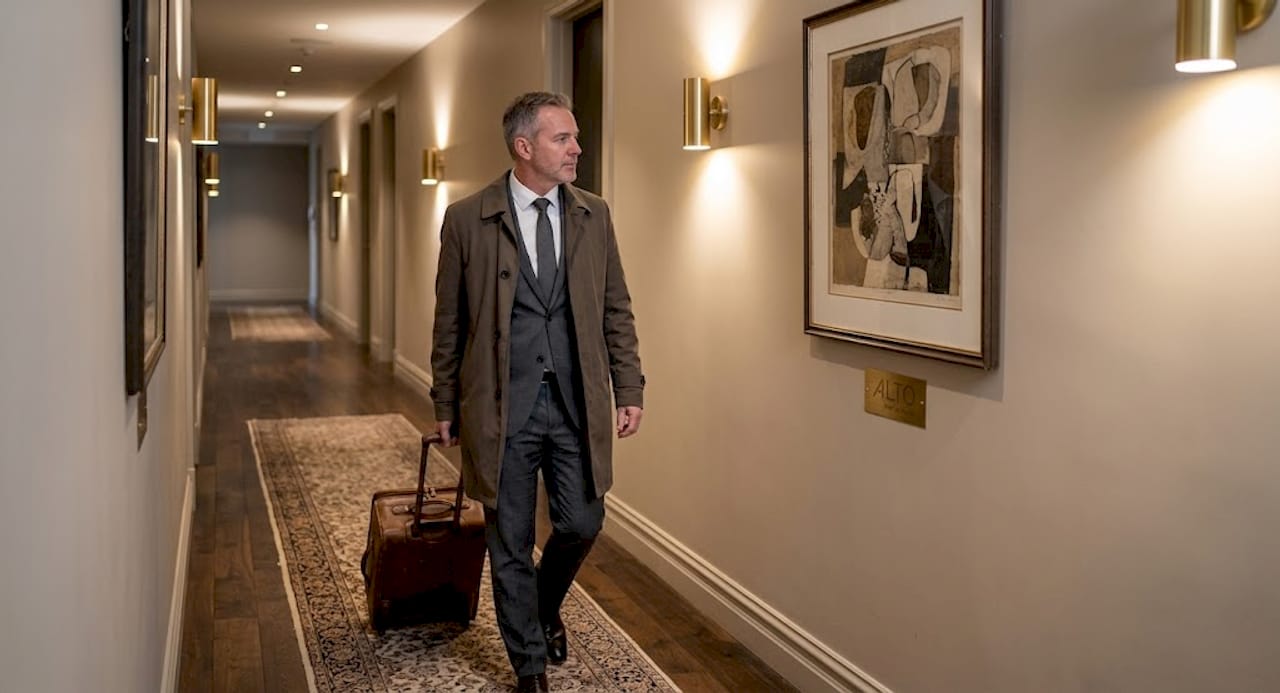
| Feature | Boutique hotel | Chain hotel |
|---|---|---|
| Design philosophy | Locally inspired, thematic, original | Uniform, brand-consistent, replicable |
| Décor | Curated, often with local artisan pieces | Standardised across properties |
| Architecture | Often heritage or purpose-designed | Frequently purpose-built for efficiency |
| Atmosphere | Distinctive, place-specific | Familiar, predictable |
| Cultural connection | Strong, embedded in local identity | Minimal or superficial |
This design difference matters more than it might seem. Travellers seeking a sense of place respond primarily to scale and design philosophy, not marketing language. If you want to feel like you are actually in Melbourne rather than in a generic city hotel, the design of your accommodation is one of the most direct ways that feeling gets delivered.
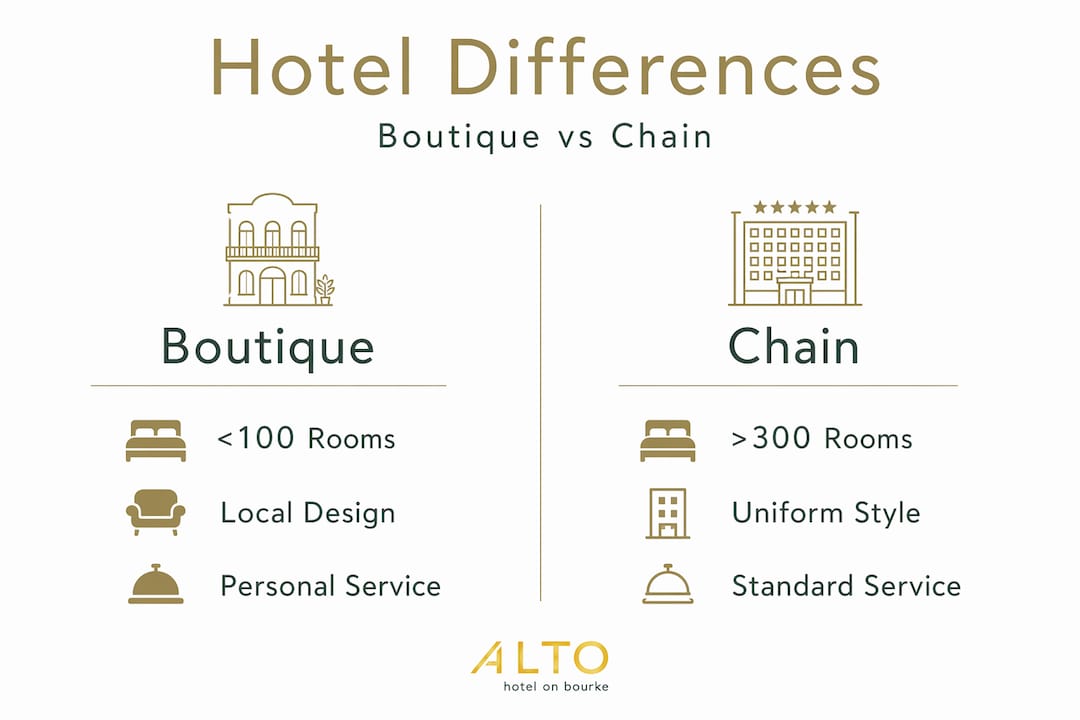
Pro Tip: When researching boutique hotels, look at photos of the common areas and corridors, not just the rooms. The hallways and lobby reveal whether the design is genuinely considered or just a coat of paint over a chain hotel formula.
Custom textiles and locally sourced materials are one of the clearest signals of a boutique hotel's commitment to design integrity. When a hotel invests in bespoke bedding, locally woven cushions, or handcrafted furniture, it signals that the guest experience has been thought through at every level.
Service and guest experience
This is where the boutique hotel advantages become most tangible for most travellers. The personalisation difference is fundamentally an operating model distinction: chains deliver recognition at scale, boutiques offer hands-on, adaptable service.
In a chain hotel, personalisation typically means your loyalty profile is loaded before you arrive. The system knows you prefer a high floor, that you are a platinum member, and that you once complained about a noisy room. That recognition is genuinely useful, and for frequent business travellers it can feel like being known. But it is recognition delivered through a database, not through a person.
In a boutique hotel, the staff member who checks you in is often the same person who recommends a restaurant, remembers that you mentioned a dietary requirement at breakfast, and has your preferred coffee order noted by day two. Boutique staff can adapt service intuitively without strict scripts, which means they can respond to what you actually need rather than what a procedure says you probably need.
The benefits of staying at boutique hotels in terms of service come down to a few practical realities:
- Smaller teams mean less staff turnover and more consistent faces
- Fewer guests mean requests get handled faster and with more attention
- Staff are often empowered to make decisions without escalating to a manager
- The hotel's reputation depends on each individual stay in a way that does not apply to a chain with thousands of properties
"The best boutique hotel stays feel less like a transaction and more like staying with someone who genuinely cares whether you had a good day." This is the standard boutique properties aim for, and the best ones consistently hit it.
Amenities and curated experiences
Chain hotels have amenities down to a science. You know exactly what you are getting: a gym with a certain standard of equipment, a pool of a certain size, a breakfast buffet with a predictable range of options, and toiletries from a brand the chain has a supply agreement with. That consistency is genuinely valuable when you are travelling for work and need to know what to expect.
Boutique hotels feature curated, locally sourced amenities that chains simply cannot replicate at volume. Here is what that typically looks like in practice:
- Toiletries from a local artisan producer rather than a global brand
- A breakfast menu built around produce from nearby suppliers
- A curated list of local restaurant and experience recommendations from staff who actually use them
- Art on the walls sourced from local artists, often for sale
- Partnerships with nearby cultural institutions, markets, or tour operators
The local culture embedded in boutique hotels extends beyond décor into the daily experience of staying there. When your morning coffee comes from a roaster two streets away and your room's artwork was made by someone who lives in the neighbourhood, the hotel becomes a genuine entry point into the city rather than a bubble within it.
| Amenity type | Boutique hotel approach | Chain hotel approach |
|---|---|---|
| Toiletries | Local or artisan brands | Global supply chain brands |
| Food and beverage | Locally sourced, seasonally varied | Standardised menus, consistent quality |
| Concierge recommendations | Personal, staff-tested | Curated lists, often partner-driven |
| In-room touches | Handpicked, place-specific | Brand-standard across all properties |
Choosing between boutique and chain hotels
Understanding the differences is one thing. Knowing which type suits your specific trip is another. The honest answer is that neither boutique nor chain hotels are categorically better. They serve different travellers in different situations.
The core trade-off is between consistency and distinctiveness. If you are travelling for a conference, need reliable Wi-Fi, want your loyalty points, and will spend most of your time outside the hotel anyway, a chain hotel is a perfectly rational choice. If you are travelling to experience a city, celebrate something, or simply want the accommodation itself to be part of the trip, a boutique hotel delivers something a chain cannot.
A few factors worth weighing before you book:
- Travel purpose: Business travel often favours chain reliability; leisure travel often benefits from boutique character
- Group type: Why families choose boutique over chain hotels often comes down to the personalised attention children receive and the more relaxed, non-corporate atmosphere
- Budget: Boutique hotels are not always more expensive, but they rarely compete on volume discounts the way chains do through loyalty programmes
- Location sensitivity: If being in a specific neighbourhood matters to you, boutique hotels are almost always more deeply embedded in their surroundings
- Booking flexibility: Boutique hotels often offer more direct booking incentives and flexible cancellation terms than chain properties
Pro Tip: If you are considering a boutique hotel for the first time, book directly with the property rather than through a third-party platform. You are more likely to get a room upgrade, a personalised welcome, and better cancellation terms when the hotel knows you came to them directly.
My honest take on the boutique versus chain debate
I have stayed in both, and I have thought about this question more than most. My honest view is that the boutique versus chain debate gets muddled because people conflate price with quality and size with character.
What I have found is that the best boutique hotels deliver something no chain can replicate at scale: the feeling that the place was made for people, not for a brand manual. When a staff member remembers how you take your coffee without being prompted, or points you to a laneway bar that is not in any guidebook, that is not a luxury. It is just good hospitality, made possible by a model that does not require every interaction to be scripted.
That said, I would caution against assuming that "boutique" on a hotel's website guarantees anything. Some properties use the label loosely. Checking room counts and chain affiliation before booking is the most reliable way to verify whether a property is genuinely independent and small-scale.
For business travellers, I understand the pull of chain loyalty programmes. Points have real value, and knowing exactly what you are walking into at 11pm after a delayed flight has genuine appeal. But for any trip where the destination itself matters, I consistently find that boutique properties make the stay more memorable. Not because they are fancier, but because they are more present.
— Kamal
Experience Melbourne differently with Altohotel
If this comparison has you reconsidering your next Melbourne stay, Altohotel is worth a serious look.
Alto Hotel on Bourke is one of Melbourne's most awarded boutique properties and one of the city's first environmentally rated hotels. Every detail reflects a genuine commitment to place: locally sourced materials, partnerships with Melbourne artisans, and a team that treats personalised service as a standard rather than a selling point. Whether you are after a compact, well-designed room or a spacious two-bedroom apartment for a longer stay, Altohotel offers accommodation that puts you inside Melbourne's character rather than beside it. Book directly for the best rates and a genuinely personal welcome.
FAQ
What makes boutique hotels different from chain hotels?
Boutique hotels are typically smaller, under 100 rooms, with locally inspired design, personalised service, and curated amenities. Chain hotels prioritise consistency, scale, and standardised experiences across all their properties.
Are boutique hotels more expensive than chain hotels?
Not necessarily. Boutique hotels vary widely in price and do not always cost more than chain hotels. However, they rarely offer the volume-based discounts or loyalty programme perks that large chains provide to frequent guests.
Why do families choose boutique hotels over chain hotels?
Families often prefer boutique hotels for the personalised attention, relaxed atmosphere, and locally embedded experiences that chain hotels cannot replicate. Staff at boutique properties tend to be more flexible in accommodating specific family needs.
How do I know if a hotel is genuinely boutique?
Check the room count (under 100 is the standard benchmark), look for independent ownership, and read reviews that mention staff by name. Properties that use "boutique" as a marketing label but are affiliated with major chains often lack the authentic characteristics of true boutique hotels.
What are the main benefits of staying at a boutique hotel?
The main benefits include personalised service, distinctive design rooted in local culture, curated amenities from local suppliers, and an atmosphere that reflects the specific place you are visiting rather than a global brand standard.