
A tracked, SOP-based linen reuse program cuts laundry loads, trims utility and replacement costs, and produces the paper trail auditors want. Vendor case data suggests properties running a properly managed program can see load reductions in the order of 17%, with savings compounding across water, energy, detergent, and linen replacement. The number that matters most on day one isn't participation rate. It's laundry loads per occupied room night, because everything else, cost, water use, linen lifespan, gets calculated from that baseline.
Before you touch guest-facing signage, do three things:
- Pull three to six months of laundry and PMS data to establish your baseline
- Run a small pilot on one or two floors with a simple SOP change
- Track loads per occupied room night weekly, not monthly, during the pilot
Skip the audit and you're just guessing at savings you can't defend to ownership or a certifier.
TL;DR:
- Establish a three- to six-month baseline by tracking laundry loads per occupied room night before implementing changes.
- Use targeted guest messaging such as monetary incentives or specific environmental benefits, which outperform generic appeals.
- Enforce clear SOP rules: hang towels with visible cards to leave linen, floor or stripped beds mean replacement, and guest requests override all.
- Pilot the program on two floors for four to six weeks with weekly data collection before scaling across the property.
- Maintain owner ownership of key metrics like participation rate and utility per load, and report these monthly or quarterly to keep the program on track.
Table of Contents
- How do you audit current laundry and linen practices?
- What targets should a linen reuse program set?
- What guest messaging actually increases participation?
- How do you train housekeeping to follow the SOP consistently?
- How do you pilot and scale a reuse program?
- What KPIs prove the program is working?
- What does a working reuse program look like in practice?
- How does linen reuse fit certification requirements?
- Key Takeaways
- Sources
How do you audit current laundry and linen practices?
Most hotels have never actually measured this. They assume housekeeping follows the "hang means reuse" rule and never check. Start by pulling laundry vendor invoices or in-house laundry logs alongside your PMS occupancy reports for the last three to six months, that overlap is what lets you calculate loads per occupied room night rather than a meaningless raw total.
The audit has four parts:
- Extract volume data. Get total loads processed, split by linen type (sheets, towels, pillowcases) if your laundry system supports it.
- Calculate the baseline ratio. Divide loads by occupied room nights for the same period. This is your single most important number.
- Interview housekeeping staff. Ask directly whether they replace linen regardless of guest signals. Most will admit habit overrides policy more often than anyone wants to admit.
- Tag and audit inventory. Note purchase dates, current stock levels, and estimate remaining wash cycles for each linen category based on manufacturer guidance and visible wear.
Guest feedback matters here too. A quick review of comment cards or post-stay survey responses often reveals whether guests even notice the current reuse cards, or whether they're being ignored entirely.
Pro Tip: Run the audit before you touch any guest messaging. Hotels that redesign bathroom cards before establishing a baseline can't tell whether a lift in participation came from the new wording or from seasonal occupancy shifts.
What targets should a linen reuse program set?
Vague goals like "increase sustainability" don't survive contact with a general manager asking for numbers. Convert your baseline into SMART targets instead, specific, measurable, achievable, relevant, time-bound, so you can report progress in figures rather than intentions.
Reasonable starting targets, drawn from what a mid-sized property can typically achieve in its first two quarters:
- Participation rate: 40 to 60% of eligible room nights opting into reuse within three months
- Wash-load reduction: A measurable drop against your baseline, tracked monthly rather than assumed
- Linen-life extension: Fewer replacement cycles per stock category, checked at each quarterly inventory count
- Reporting cadence: Monthly for operations, quarterly for ownership and any certification body
To build the financial case, multiply your expected load reduction by your average per-load utility and detergent cost, then add estimated deferred replacement spend based on extended linen lifespan. Assign ownership clearly: the executive housekeeper owns the participation and SOP-compliance numbers, while the sustainability lead or general manager owns the cost and certification reporting. Without a named owner for each figure, tracking quietly stops after the first busy month.
What guest messaging actually increases participation?
Most bathroom cards say some version of "help us save the environment." It's the weakest option available. The International Journal of Hospitality Management study on voluntary bedding reuse found that monetary-incentive and clear-expectation messages outperformed generic environmental appeals, guests respond better to being told exactly what happens and what they get, not to an abstract plea.
Four message types worth testing:
- Standard request: "Hang your towel if you'd like to reuse it." Neutral, but weak on its own.
- Normative/social proof: "78% of guests on this floor reused their linen this week." Real-time, room-specific figures beat generic claims, and field evidence on social-proof messaging backs the room-level approach over property-wide averages.
- Non-monetary incentive: "Reuse your towel and receive a coffee voucher at check-out."
- Monetary/clear-expectation: "Every reused towel saves 90 litres of water. Choose reuse and we'll donate $2 to [local partner]."
Avoid any wording that frames the program as cost-cutting. Guests read "we're saving money" as "you're subsidising our margins," and it kills goodwill fast. Frame savings in environmental terms with a concrete number, litres of water, kilowatt hours, not dollars saved by the property.
How do you train housekeeping to follow the SOP consistently?
Signage means nothing if housekeeping ignores it. The gap between a policy and an operational habit is where most reuse programs quietly fail, and closing it comes down to three rules staff can apply without thinking:
- Hung towel or made bed with card visible = leave linen in place. No exceptions unless visibly soiled.
- Floor towel or stripped bed = replace as normal. This is the guest's explicit signal.
- Guest verbal or written request overrides everything else, including the standing SOP.
Build a daily checklist field into the room-attendant report where staff mark linen status per room, changed, left, or guest override. A supervisor spot-checks a sample of rooms each shift against that log. Run a 20-minute training session covering the three rules, then leave a laminated quick-reference card in the linen cupboard, not just in a manual nobody reopens.
Pro Tip: Recognise compliance publicly. A weekly note to housekeeping teams showing their floor's participation number does more for adherence than any memo about environmental targets.
How do you pilot and scale a reuse program?
Don't roll this out property-wide on day one. Pick two floors, ideally with different room types (standard versus suite), and run the pilot for four to six weeks, long enough to smooth out weekday/weekend variance in occupancy.
Steps for the pilot:
- Select pilot floors and note their baseline loads per occupied room night from your audit.
- Choose a tracking method, a simple PMS note field works for smaller properties, while larger portfolios benefit from a housekeeping tablet app or barcode room tags.
- Brief housekeeping and front desk staff together so guest-facing and back-of-house messaging match.
- Run the pilot and log data weekly, not just at the end.
- Compare pilot floor loads against a control floor running old practices.
During rollout, watch for:
- Laundry schedule adjustments, fewer small loads run more efficiently
- A contingency plan for guests who complain about linen not being changed
- Multi-channel messaging, room cards plus a pre-arrival email mention for repeat guests
If the pilot floors show a clear reduction against the control floor, you have a defensible case to scale property-wide.
What KPIs prove the program is working?
Four numbers matter, and each needs a precise definition or your reporting will drift:
- Loads per occupied room night: Total laundry loads divided by occupied room nights for the period.
- Participation rate: Percentage of eligible room nights where linen was reused rather than automatically changed.
- Utility per load: Water and energy consumption per load, tracked from laundry equipment meters or vendor invoices.
- Wash cycles per item: How many washes each linen category undergoes before retirement, used to estimate lifespan extension.
To convert participation into avoided cost, multiply avoided loads (baseline minus actual) by your per-load utility and labour cost. Deferred replacement spend gets calculated separately, by comparing actual wash-cycle counts against your previous baseline replacement schedule. Oxmaint's operational case data frames this well: tracking is what turns a bathroom sign into a measurable saving, not the sign itself.
Report monthly to operations, quarterly to ownership, and keep a running annual figure ready for any certification review. Use each reporting cycle to adjust messaging or SOPs, if participation stalls on a floor, that's your signal to test different card wording there before rolling changes property-wide.
What does a working reuse program look like in practice?
Boutique properties face a specific challenge: smaller housekeeping teams mean less redundancy if one staff member ignores the SOP, and it shows up in the data faster than at a large chain property.
The pattern that separates programs that stick from ones that fade is simple: audit first, pilot small, track weekly, and treat the reporting cycle as non-negotiable, not optional once the novelty wears off. Properties that skip straight to signage without an operational backbone see participation numbers that look good for a month and then quietly disappear.
Alto Hotel on Bourke, one of Melbourne's early environmentally rated boutique hotels, builds sustainability into daily operations rather than treating it as a marketing layer, with eco-conscious materials and local artisan partnerships woven into how the property actually runs.
Common failure points worth planning for in advance:
- Housekeepers reverting to habit and replacing hung towels anyway
- Messaging that unintentionally reads as cost-cutting rather than environmental
- Tracking that starts strong during the pilot and quietly stops afterwards
Present results to ownership as a simple before/after comparison against your original baseline, not as an abstract sustainability claim.
How does linen reuse fit certification requirements?
Linen reuse isn't a standalone initiative, it's a checklist item inside the frameworks auditors already use. The WTTC's Hotel Sustainability Basics lists it as a foundational action expected within a property's first year, alongside water and energy measurement and single-use plastic removal. The GSTC Hotel Standard goes further, requiring documented evidence of waste and water-saving actions, not just a stated policy.
What auditors actually want to see:
- Baseline laundry load data from before the program started
- Participation logs showing sustained tracking, not a single snapshot
- Waste-transfer certificates if linen is retired into a recycling stream rather than landfill
On end-of-life options, mechanically recycled rental textiles have been successfully spun into new terry yarn in project trials, rental linens work well for this because they're uniform in material and usage history. That gives properties documentation-ready evidence for Scope 3 reporting, and format that same evidence for Green Key or brand-level sustainability programs using whatever export template each scheme specifies.
Why operational discipline beats good intentions
Most reuse programs don't fail because guests refuse to participate. They fail because nobody owns the follow-through once the initial signage goes up. A general manager who treats this as a housekeeping discipline, with a named KPI owner and a monthly number to defend, gets further in six months than one who launches a beautifully worded card and never checks the data again.
Buy-in comes faster when you frame early wins honestly: expect incremental movement, not a dramatic first-quarter transformation. Staff trust a manager who reports "we're up three points this month" more than one who oversells and then goes quiet.
— Kamal
See sustainability built into daily hotel operations
Reading the SOPs is one thing. Seeing them embedded in a running property is another. Alto Hotel on Bourke operates as one of Melbourne's early environmentally rated boutique hotels, with eco-conscious materials, in-room kitchen facilities, and local artisan partnerships built into how rooms, studios, and apartments are run day to day rather than bolted on as marketing.
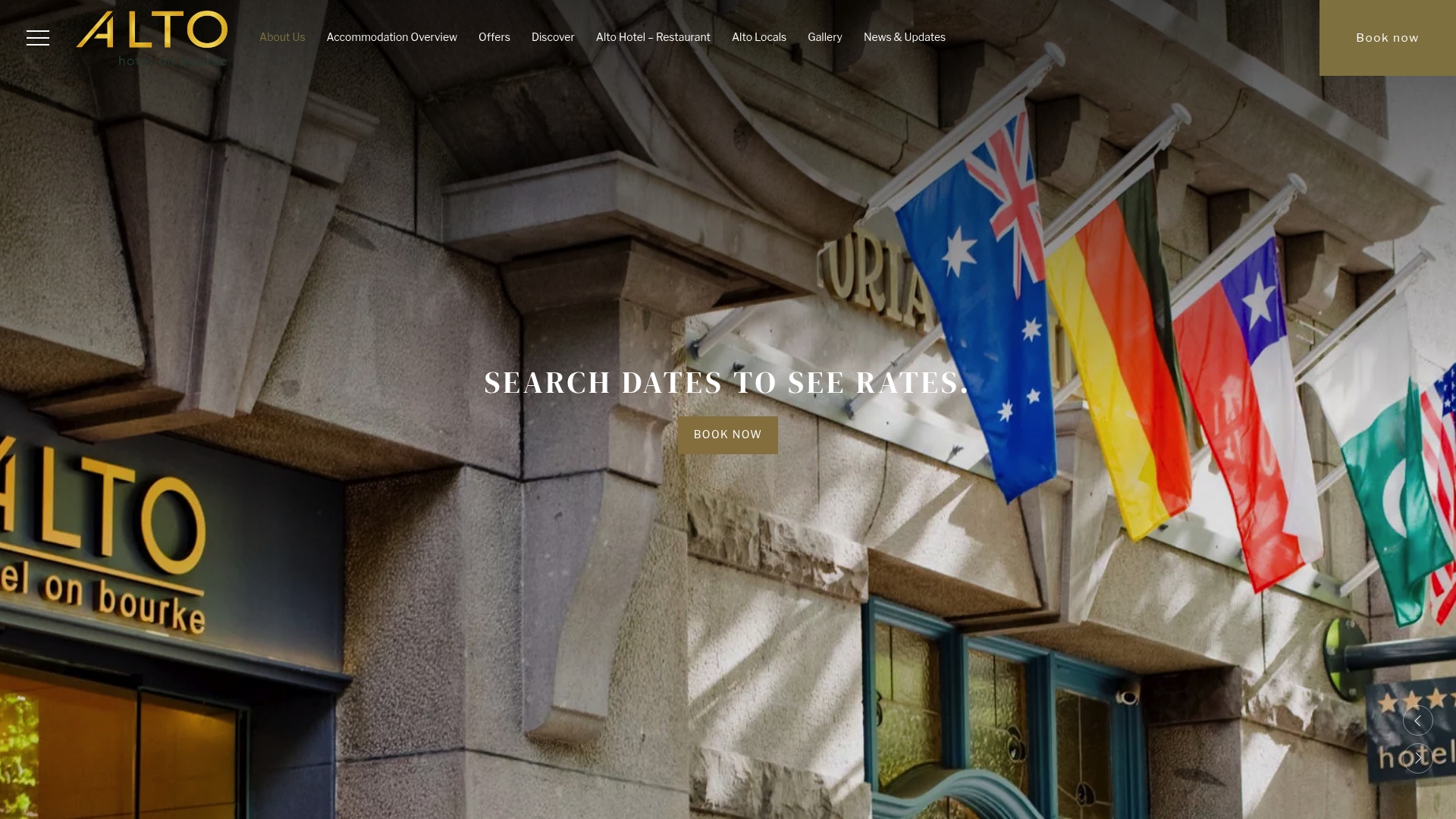
If you manage a property and want to see how sustainability commitments translate into an actual guest stay rather than a policy document, browse rooms and rates at Alto Hotel on Bourke and check current availability for your next Melbourne visit.
Key Takeaways
A tracked, SOP-based linen reuse program works because it converts a guest-facing sign into a measured operational habit that owners and auditors can verify.
| Point | Details |
|---|---|
| Measure baseline first | Track laundry loads per occupied room night for three to six months before changing anything. |
| Use clear-expectation messaging | Monetary or specific-benefit wording outperforms generic environmental appeals in guest studies. |
| Build enforceable SOPs | Hung towel means leave, floor towel means replace, guest request always overrides the rule. |
| Pilot before scaling | Test on two floors for four to six weeks against a control floor before a property-wide rollout. |
| Alto Hotel on Bourke as example | The hotel embeds eco-conscious materials and artisan partnerships into daily operations, viewable on its landing page. |
Primary sources and further reading
For framework alignment, the WTTC Hotel Sustainability Basics sets out which actions, including linen reuse, are expected within a property's first year. The IJHM study supplies the evidence behind message-format effectiveness. The GSTC Hotel Standard details certification-grade documentation requirements. For circularity options at end-of-life, the Eco Yarn recycling project shows mechanically recycled rental textiles being spun into new yarn.
Sources
- Effective approaches for encouraging hotel guests’ voluntary bedding linen reuse behavior (International Journal of Hospitality Management, 2022)
- Hotel Sustainability Basics (World Travel & Tourism Council)
- Hotel linen and towel reuse programme: Balancing sustainability and guest satisfaction (Oxmaint, 2026)
- Success for Eco Yarn project (Innovation in Textiles, 2026)