
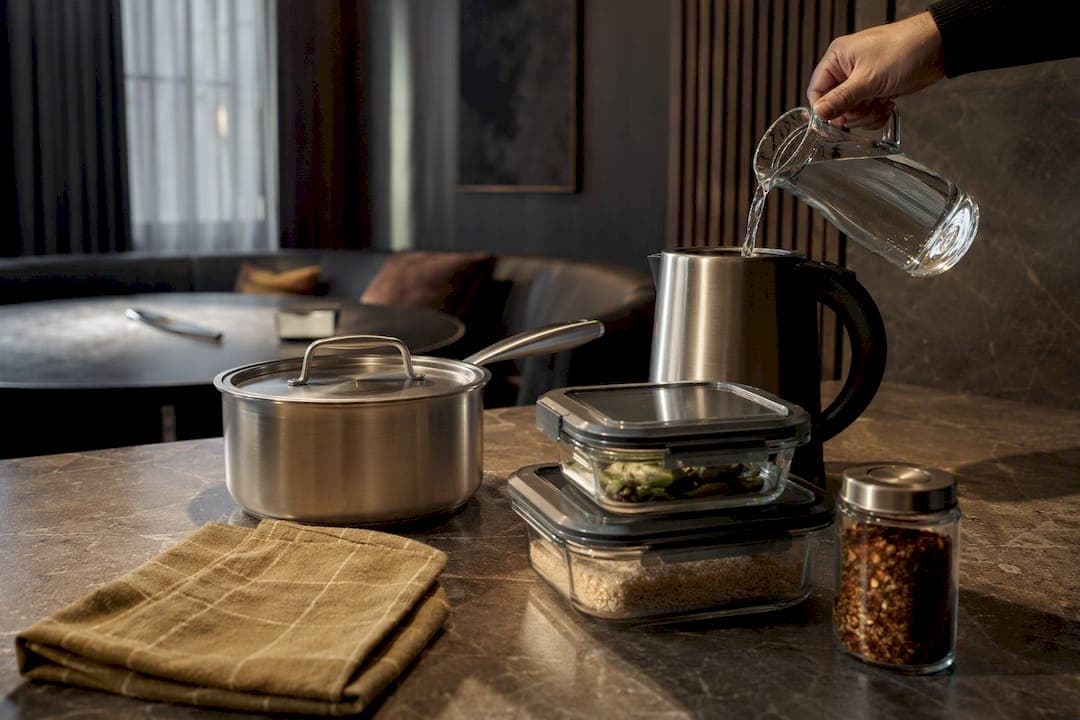
Most hotel kitchenettes give you a kettle, microwave, mini-fridge and basic cutlery, but rarely much else. Pack a small sharp knife, a compact cutting board and a couple of reusable containers, and you have covered the three gaps that trip up almost every self-catering guest. Add one habit: bring your own reusables instead of relying on single-use plastic, which helps keep your room-cooking experience workable and low-waste.
TL;DR:
- Most hotel kitchenettes lack essential items like oil, spices, and adequate storage containers, so bring your own for proper self-catering.
- Packing lightweight essentials such as a small sharp knife, a foldable cutting board, reusable containers, and a thermometer ensures you can cook common simple meals in most room setups.
- Confirm with the hotel ahead of time whether your room has sufficient kitchen amenities, consumables, and any restrictions on appliances to avoid surprises.
- Use energy-efficient practices like covering pots, matching pan size to burners, and reheating in microwaves to save water and electricity during your stay.
- Opt for reusable swaps and ask about recycling programs to minimize plastic waste, and ask hotels for extra kitchen gear if you plan to cook more extensively.
Table of Contents
- Hotel kitchen essentials: what's actually in the room
- Your hotel kitchen packing checklist
- What to confirm with the hotel before you arrive
- Safe and hygienic use of hotel kitchen items
- Sustainable swaps that cut single-use waste
- Cutting energy and water use while you cook
- Disposing of food waste and recyclables properly
- Packing differently for solo trips, couples, and families
- An eco-conscious hotel's view on in-room kitchens
- Book a Melbourne stay with a proper kitchen
- Sources
- FAQ
Hotel kitchen essentials: what's actually in the room
Not every "kitchenette" means the same thing, and this gap catches travellers out more than anything else on this list. Some rooms give you a bar fridge and a microwave and call it a day. Others hand you a two-burner cooktop, a full-size fridge and enough bench space to actually prep a meal. A handful go further again, with an oven, dishwasher, and cookware that would not embarrass a share house.
A basic kitchenette commonly includes a refrigerator, a microwave, and at least a two-burner cooktop, but cookware and consumables vary enormously between properties. Here is roughly what each tier gets you:
- Token kitchenette (mini-fridge, microwave, kettle): reheating, instant meals, tea and coffee. No real cooking.
- Two-burner setup (adds a stovetop, small pot and pan): simple stovetop meals like pasta, stir-fries, eggs.
- Full apartment kitchen (oven, full fridge, dishwasher, proper cookware set): near-normal home cooking, batch meals, baking.
What almost none of these tiers supply, regardless of grade, is oil, spices, condiments, or enough storage containers to manage leftovers. Hotels leave out opened food items for hygiene and liability reasons, which means the seasoning and the storage solution are on you. Plan a short grocery stop for cooking basics, and bring the containers so you are not stuck rewrapping half an onion in a hotel towel.
Your hotel kitchen packing checklist
You do not need a full chef's kit to cook well in a hotel room. You need a handful of items that punch above their weight, packed with a bit of thought about airline rules and suitcase space.
- A small sharp knife. Hotel-supplied knives are almost universally blunt butter knives dressed up as cutlery. Pack a compact paring or utility knife in checked luggage, never in carry-on, since airport security will confiscate it from hand luggage every time.
- A foldable or thin cutting board. Look for a flexible silicone mat or a thin bamboo board that slides into a suitcase without eating your packing space.
- Reusable food containers. Travel writers consistently flag reusable storage containers as the single most forgotten item, and the one guests wish they had packed once leftovers pile up.
- Dish soap and a compact sponge or cloth. Hotel bathroom soap does not cut through cooking grease, and you will want something that dries between uses.
- A microplane or small grater. Barely takes up room and turns garlic, citrus zest, or parmesan into a proper meal upgrade.
- An instant-read thermometer. Worth the tiny bit of luggage space if you are cooking meat or poultry on an unfamiliar stovetop.
A compact travel kit built around a knife, board, grater and thermometer covers most of what a self-catering stay actually demands, without turning your suitcase into a chef's roll.
Pro Tip: Decant a small jar of olive oil and a pinch of your favourite spices into leak-proof travel containers before you leave home. It saves buying full-size bottles you will only use once and then bin.
What to confirm with the hotel before you arrive
A two-minute phone call or email beats guessing every time. Hotels list room categories generically, and "kitchenette" can mean wildly different things between properties, sometimes even between floors of the same building.
Before booking, or as soon as you have confirmed your dates, ask for:
- A room inventory list or photos of the exact room category you are booking, not a generic marketing shot.
- Which consumables are actually provided (oil, salt, coffee, dish soap) versus what you need to bring or buy.
- Whether the hotel can lend or supply extras like a sharper knife, a baking tray, or additional storage containers.
- Nearby grocery stores, markets, or delivery services, and whether the building has any restriction on appliances like slow cookers or air fryers.
Contacting the property directly to confirm exact kitchen amenities and request photos of your specific room category heads off almost every disappointment on this list. It costs you nothing and takes less time than reading one more listing description.
Safe and hygienic use of hotel kitchen items
Room kitchens see a rotation of different guests, which means the appliances need a check before you trust them and a wipe down before you use them.
- Wipe the kettle, microwave interior, and any shared cookware before your first use, even if the room looks freshly cleaned.
- Give benchtop appliances proper landing space and ventilation. Do not run a kettle or hotplate directly under a smoke detector or in a space with no airflow.
- Use trivets or the supplied heatproof mats rather than resting hot pans on laminate benches; scorch marks are one of the most common damage charges hotels report.
- Store leftovers in sealed, labelled containers in the fridge, and take rubbish out promptly rather than leaving food scraps in the room overnight.
- Check the room guide for rules on portable cooking devices. Many properties ban open-flame cooking or certain plug-in appliances outright, for fire safety reasons that apply just as strictly to a two-burner cooktop as to any hire-in device.
Pro Tip: If a room lacks proper cookware, a rice cooker or Instant Pot-style appliance can steam vegetables, cook rice, or even simmer a simple stew, provided the hotel allows it. Always check with the front desk first.
Sustainable swaps that cut single-use waste
Self-catering in a hotel room generates a surprising amount of plastic if you let it default that way, cling wrap, disposable cutlery, single-serve condiment packets. None of it is necessary.
- Swap cling wrap for reusable silicone food bags or a couple of small glass jars with lids.
- Bring proper metal cutlery instead of relying on disposable sets, and pack a cloth napkin or tea towel rather than paper towel.
- Buy loose, unpackaged produce from a local market instead of pre-wrapped supermarket portions where you can.
- Ask reception whether the hotel runs a recycling or composting program for guest kitchens, some do, most just never mention it unless you ask.
- Check if the property has a lending service for kitchen extras before buying single-use versions of the same thing.
Cutting energy and water use while you cook
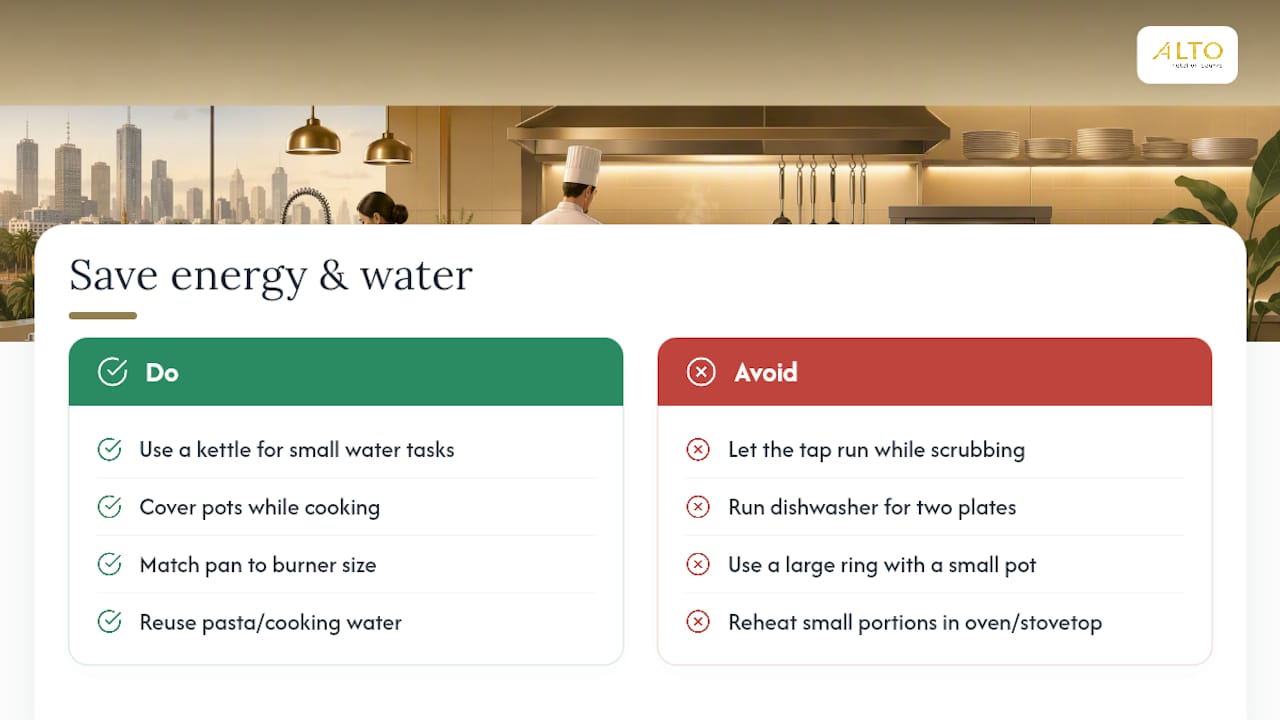
Cooking in a hotel room is smaller-scale by nature, and that works in your favour if you use it deliberately. A kettle boils faster than a stovetop pot for small amounts of water, so use it for pasta water or blanching vegetables rather than firing up a burner you will only run for two minutes.
Cover pots with a lid whenever you can. It cuts cooking time and energy use noticeably, since heat escapes far faster from an open pot than a covered one. Match pan size to burner size too. A small pot on a large ring wastes most of the heat around its edges instead of into the food.
For water, run the tap only while actively rinsing rather than letting it stream while you scrub, and reuse cooking water where sensible, pasta water makes a decent base for a quick sauce instead of going straight down the drain. If your room has a dishwasher, wait until you have a reasonable load rather than running it for two plates.
Microwaves are worth defaulting to for reheating and small jobs. They use meaningfully less energy than a stovetop or oven for the same task, precisely because they heat the food directly rather than warming a whole appliance and the air around it. For a short stay, that is often the single easiest energy-saving switch available to you.
Disposing of food waste and recyclables properly
Hotel rooms are not set up like a home kitchen with separate bins for everything, so a bit of forward planning stops food scraps turning into a pest problem or a housekeeping headache.
Check your room or floor for recycling bins first. Some properties provide separate bins for recyclables even in guest rooms; many do not, in which case ask housekeeping or the front desk directly rather than assuming there is no system at all. Bag food scraps separately from general rubbish and take them to a bin regularly rather than letting them sit, especially in warmer months when a forgotten container turns unpleasant within a day.
Rinse recyclables like glass jars, cans, and plastic containers before binning them if a recycling stream is available. A sticky, unrinsed container is far more likely to get treated as general waste, even where recycling exists.
If you are staying somewhere with a compost or food-waste collection option, ask about it specifically. It is one of the least advertised amenities in hospitality, and most guests never know to ask. Where no formal system exists, minimising food waste in the first place, buying only what you will actually cook, does more for your footprint than any bin ever will.
Packing differently for solo trips, couples, and families
The right kitchen kit changes with who you are travelling with, not just how long you are staying.
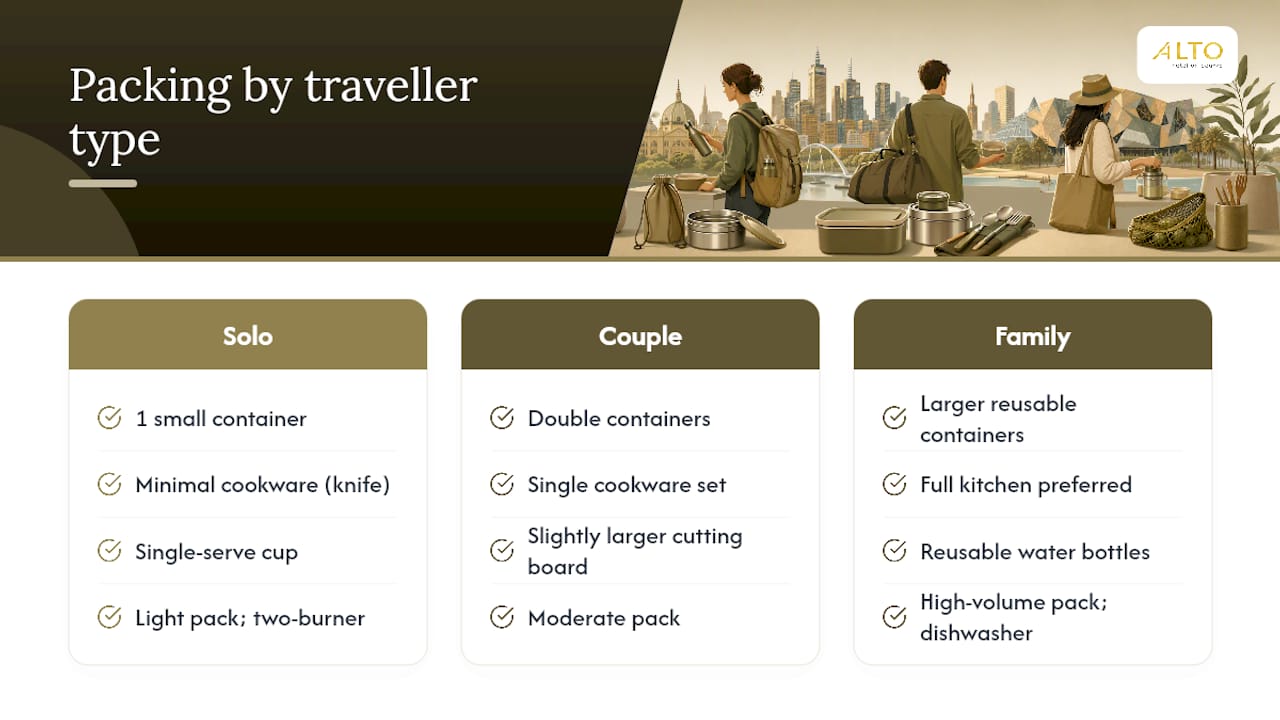
Solo travellers can pack the lightest kit of all: one knife, one small container, a single-serve reusable coffee cup, and a tea towel. Cooking for one means the two-burner tier of kitchenette is almost always enough, and there is little reason to carry more than the core checklist covers.
Couples benefit from doubling up on containers rather than cookware, since two people generate roughly double the leftovers but rarely need two of everything else. A slightly larger cutting board earns its space here, since prepping for two on a tiny board gets frustrating fast.
Families need to think about volume more than variety: bigger reusable containers for batch-cooked meals, a set of reusable water bottles for kids to cut down on bought bottled water, and reusable snack bags for day trips. A room with a full kitchen and dishwasher stops being a nice-to-have for a family of four and starts being close to essential, since hand-washing a stack of kids' plates every night gets old within two days.
Across all three, the same principle holds: pack for the meals you will actually cook, not the ones you imagine you might.
An eco-conscious hotel's view on in-room kitchens
Fresh food and opened condiments cannot safely sit between guest turnovers, which is exactly why hotels leave them out rather than being stingy.
What a thoughtfully run property can do instead is offer lending services for extra kitchen items, partner with local providers for pantry basics, and make it easy for guests to ask for what they need rather than guess. Melbourne's local grocers and markets fill the rest of the gap nicely for anyone staying in a boutique studio or apartment room with real cooking intent.
— Kamal
Book a Melbourne stay with a proper kitchen
Some boutique hotel studio and apartment rooms come with genuine in-room kitchen facilities, not just a microwave shelf, often built using sustainable materials and designed for guests who intend to cook rather than just reheat.

If you know exactly what you will need, a specific pan, extra containers, or details on what consumables are stocked, email or call the hotel ahead of your stay and ask for a rundown of your room category before you arrive. It takes the guesswork out of packing and means your eco-conscious cooking plan works from the first night. Check the accommodation options for studios and apartments with kitchen facilities, and book direct for the best available rate on your Melbourne CBD stay.
Sources
- 8 kitchen items you should always pack for a trip | The Kitchn
- What makes a great extended-stay kitchen: the details that separate living from staying
- What amenities do extended stay hotels offer? | EatHealthy365
- Hotel cooking essentials: what to pack – Just Gone Wandering
- The complete beginner's guide to cooking in a hotel room | Points With a Crew
FAQ
Are knives allowed in hotel rooms?
Yes, a small kitchen knife is fine to bring and use in your room, but pack it in checked luggage, never carry-on, or airport security will confiscate it.
What should I pack for a longer, extended-stay booking?
Prioritise reusable containers, a knife and board, and basics like oil and spices in travel-sized containers, since roughly 40% of extended-stay properties now advertise full kitchens worth cooking in properly.
Can hotels supply extra kitchen items on request?
Many properties can lend or provide extras like a sharper knife or additional containers if you ask ahead. Guests can request specifics on their room's kitchen setup before arrival.
What items do hotels almost never provide?
Oil, spices, condiments, and enough storage containers for leftovers are the most commonly missing items, largely for hygiene reasons rather than oversight.
Is it worth calling the hotel before booking a kitchenette room?
Yes. A quick call to confirm the exact kitchen inventory for your specific room category prevents most self-catering disappointments before they happen.