
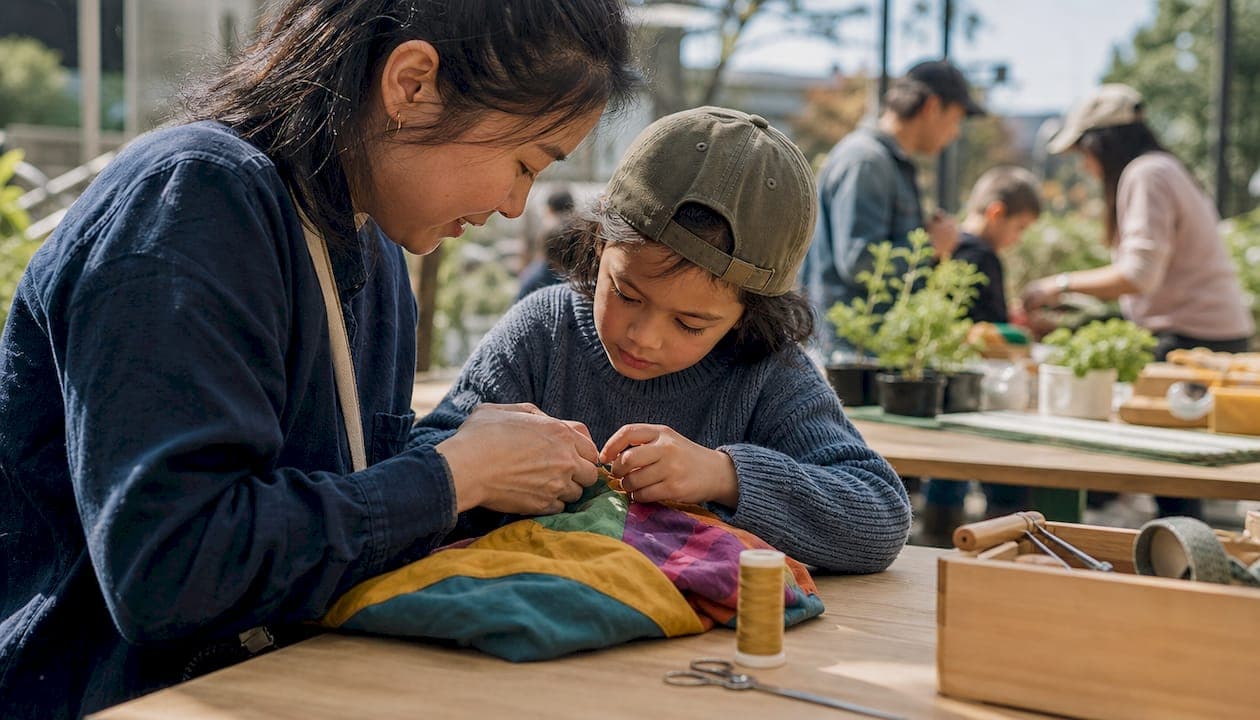
The best family eco activities in Melbourne combine seasonal festivals, forest-school style programmes and simple at-home projects, all built around learning by doing rather than watching. Try RESET at Fed Square for free spring workshops, Eco Explorers for bush skills sessions, and a toy swap or seed-planting afternoon at home. Each teaches a different skill, costs little or nothing, and works for kids from toddlers through to teens.
TL;DR:
- Reset at Fed Square is a free, family-friendly event with repair workshops plus toy and seed swaps that typically require no pre-booking.
- Spring offers the best opportunities for outdoor family eco activities, with festivals like RESET, Little Food Festival, and Wildplace providing hands-on learning experiences.
- Eco explorers runs rain-or-shine bush and wetland programmes that emphasize learning through doing, with bookings recommended two weeks in advance during school holidays.
- Small at-home projects like seed planting, compost bins, and terrariums can reinforce outdoor learning and are quick, affordable, and suitable for rainy days.
- Staying at a central hotel like Alto on Bourke makes attending multiple festivals easier and reduces travel time, especially when balancing young children’s needs.
Table of Contents
- Family eco activities Melbourne parents can book this season
- Seasonal festivals worth building a weekend around
- Forest school and bush programmes that teach by doing
- Simple eco projects to try without leaving home
- Getting the day right: what to pack and what to expect
- Why hands-on eco learning matters more than we admit
- A family-friendly eco stay: Alto Hotel on Bourke
- Authoritative pages to check for dates and bookings
- Sources
- FAQ
Family eco activities Melbourne parents can book this season
You do not need a packed calendar to raise a kid who understands compost, repair and native plants. You need a handful of good options and a plan for the weather. Here are six worth prioritising, roughly in order of ease.
- Fed Square's RESET festival family programme (ages 3 to 12). Spring dates, free entry, drop into repair workshops and the Big Toy Swap without pre booking most stalls.
- Little Food Festival kids workshops (ages 4 to 10). Usually staged in April, often free, and built entirely around growing and cooking food.
- Melbourne International Flower & Garden Show's Wildplace (ages 2 to 12). Runs in autumn, ticketed for adults but previously free for children under 16.
- Eco Explorers ReWild family sessions (ages 3 to 12). Paid, school-holiday and weekend bookings, held at bush and wetland sites across Melbourne's outer suburbs.
- Community clean-ups with Yarra Riverkeeper Association (most ages, younger kids with an adult). Free, run periodically along the Yarra, and a genuinely useful eco volunteer option for families.
- Big Toy Swap and repair workshops (any age). Usually folded into RESET, free, and one of the fastest ways to teach kids that broken does not mean bin it.
Book Eco Explorers and festival workshops ahead. Clean-ups and toy swaps are typically walk up, and most events waive fees for kids under a certain age, which makes them an easy first outing for families new to this kind of day out.
Seasonal festivals worth building a weekend around
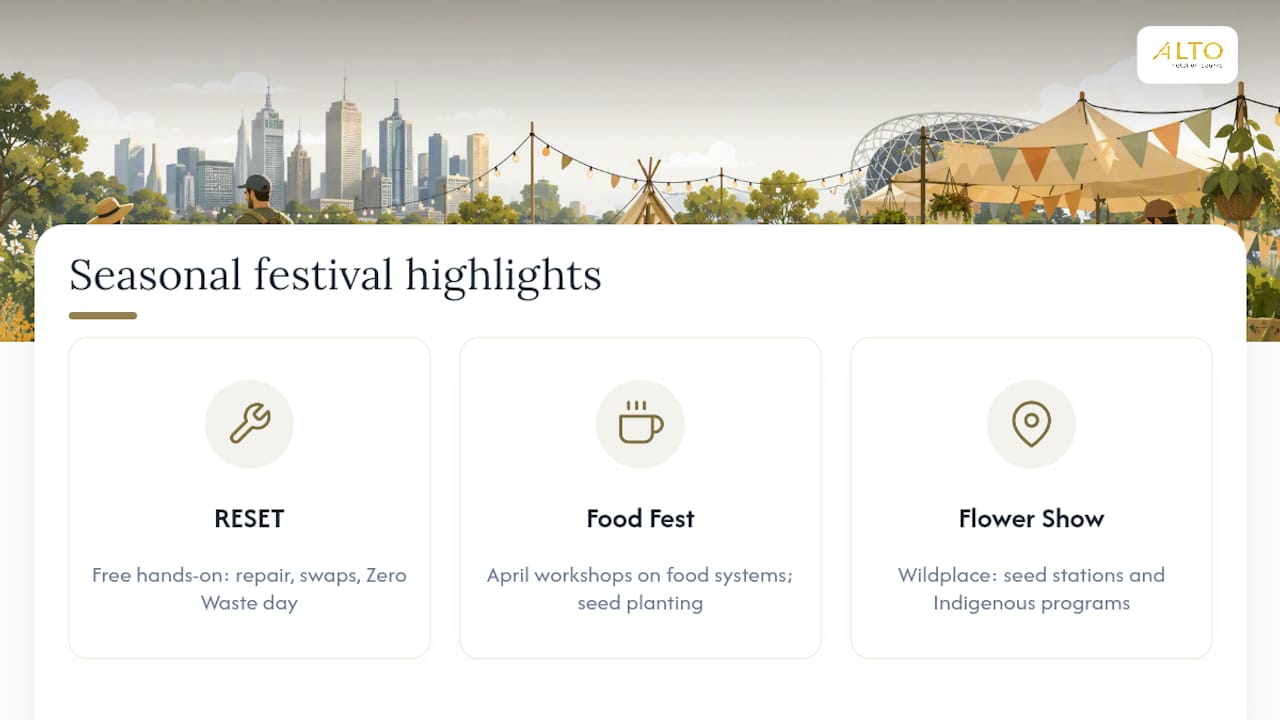
Spring is the standout season for sustainable family fun in Melbourne, mostly because RESET at Fed Square turns the entire precinct into a free, hands-on sustainability playground. Expect repair and mending stations where kids watch (and sometimes help) fix broken items, a Planting Party, the Big Toy Swap, an outdoor cinema screening environmental films, and school-holiday workshops timed to line up with the Victorian calendar. The 2026 RESET programme also runs a Zero Waste day with book and fabric swaps and sustainable cooking demos, all designed to be free and accessible rather than ticketed extras.
Pro Tip: Screenshot the RESET schedule the week before you go. Workshop slots fill fast, and the timetable often shifts closer to the date.
The Little Food Festival takes a narrower but deeper approach, usually landing in April with workshops built entirely around food systems. Kids plant seeds, learn where ingredients actually come from, and often walk away with something they grew themselves. Educators point to early hands-on food and garden experiences as one of the more reliable ways to build lasting sustainable habits, more effective than a classroom lesson on the same topic.
The Melbourne International Flower & Garden Show rounds out the trio with its Wildplace area, seed-planting stations and Indigenous garden programs. Check the current year's ticketing page before you go. Family features and free entry for under 16s have applied in past years, but festival programmes shift annually, so treat the official page as the only reliable source for this year's rules.
Combine a festival visit with a family-friendly meal stop nearby. Wild Foodz has practical tips on eating well while travelling or out for the day, useful if you are turning a festival morning into a full day out.
Forest school and bush programmes that teach by doing
Forest-school style programmes work on one simple idea: kids learn faster and remember longer when they are doing something with their hands rather than being told about it. That is the whole logic behind Eco Explorers, which runs family and school-holiday sessions at several Melbourne sites.
- Warrandyte ReWild Your Family — bushcraft, campfire cooking and shelter building, suited to ages 3 to 12.
- Braeside Park Bush Survival Challenge — problem-solving activities in bushland, aimed at slightly older kids who enjoy a challenge.
- Keilor East boats session — water-based nature play, good for families with a mix of ages.
- Yan Yean Nature Families — reservoir-side sessions focused on wildlife spotting and quiet observation.
Most sessions run rain, hail or shine, with cancellations reserved for genuinely extreme weather. Parents are usually expected to join in rather than watch from the sidelines. Providers explicitly encourage adults to take part in campfire cooking and basic tool use, because kids pick up the skill faster when a parent models it alongside them.
Pro Tip: Book Eco Explorers sessions at least two weeks out during school holidays. Popular Warrandyte and Braeside dates sell out fast once term ends.
Simple eco projects to try without leaving home
Not every eco activity needs a booking or a drive. A few low-cost projects reinforce exactly what festivals and forest school teach, minus the logistics.
- Seed planting: take home seeds from a festival stall and plant them the same weekend, while the excitement is fresh.
- Mini compost bins: even apartment dwellers can run a small bench-top compost using a sealed container and shredded newspaper.
- Terrariums: a jam jar, some pebbles, soil and a small plant teaches the water cycle better than any diagram.
- Junk journalling: turn festival flyers, ticket stubs and pressed leaves into a scrapbook that doubles as a memory keeper.
- Family toy swap checklist: sort outgrown toys into "swap", "repair" and "donate" piles before your next council clean-up or RESET visit.
Each project takes under an hour and works well on a rainy afternoon when the outdoor plan falls through. Ask one simple question before you start, like "what do worms actually eat?", and the whole activity becomes a lesson instead of just a craft.
Getting the day right: what to pack and what to expect
Outdoor eco programmes in Melbourne run in most weather, so pack for mud and sun on the same day. A few basics make the difference between a great outing and a miserable one.
- Layers, a light waterproof and sturdy closed shoes — bush sites get muddy fast, and most sessions only cancel for extreme weather, not drizzle.
- Sun protection, even in cooler months. Victorian UV can catch families out at outdoor festivals that run all day.
- Snacks, water and an allergy plan if you are heading to a food-based event like the Little Food Festival.
- A first-aid basics check: plasters and antiseptic wipes cover most scrapes from bush play.
- Toilet and transport logistics sorted before you leave, particularly for events at Fed Square or bush reserves where facilities can be a walk from parking.
Pro Tip: Let your child carry small risks themselves, like using a blunt knife under supervision or crossing a log. Outdoor educators consistently note that supervised risk builds genuine confidence, more than a parent stepping in at every wobble.
Why hands-on eco learning matters more than we admit
Kids do not remember lectures about sustainability. They remember the day they fixed a broken toy at a Big Toy Swap, or the smell of a campfire at an Eco Explorers session. That stickiness is the entire argument for choosing activities over information. Melbourne is unusually well set up for this, with free festivals and bookable bush programmes doing more heavy lifting than any classroom unit could. Alto Hotel's own guide to eco-friendly activities around Melbourne is worth bookmarking if you want more day plans built the same way. Treat this season's festivals as a starting habit, not a one-off outing.
— Kamal
A family-friendly eco stay: Alto Hotel on Bourke
Alto Hotel on Bourke gives Melbourne families a genuine base for exactly this kind of eco-focused weekend, without adding to the footprint of the trip. Alto offers apartment-style rooms with in-room kitchens, allowing families to prepare meals during their stay. The hotel's location in the CBD provides convenient access to key venues, helping reduce travel times and simplify packing.

Staying central also means less time in the car between events and more time actually at them, which matters when you are juggling a toddler's nap schedule around a festival timetable. If you are weighing up where to stay for a family eco weekend, Alto Hotel's apartment-style rooms are worth checking for dates around RESET or the Flower & Garden Show.
Authoritative pages to check for dates and bookings
Festival and programme schedules shift year to year, so treat these pages as the final word, not this article:
- RESET festival page (Fed Square) for spring dates and workshop registration
- Little Food Festival for April workshop bookings
- Melbourne International Flower & Garden Show family activities for ticketing and Wildplace details
- Eco Explorers ReWild Your Family Forest School for session locations and age groups
Sources
FAQ
What Age Groups Suit Melbourne's Eco Festivals?
Most programmes, including RESET and Eco Explorers, are designed for children aged 3 to 12, though toddlers can usually join with an adult close by.
Are These Family Eco Activities Free?
RESET, community clean-ups and the Big Toy Swap are typically free, while Eco Explorers sessions and Flower & Garden Show entry for adults are ticketed.
Do Forest School Sessions Run in Bad Weather?
Most Eco Explorers sessions run rain or shine, with cancellations reserved for genuinely extreme weather, so pack layers and a waterproof rather than expecting a rain date.
Where Can Families Eco Volunteer in Melbourne?
Community clean-ups run periodically with groups like the Yarra Riverkeeper Association, and they are one of the more accessible eco volunteer options for families with kids of most ages.
Is There a Family-Friendly Hotel Near These Activities?
Alto Hotel on Bourke sits centrally in the CBD with apartment-style rooms and kitchen facilities, making it a practical base for families attending Fed Square festivals or day trips to bush programmes.