
Six types of sustainable hotel business packages consistently deliver measurable revenue uplift, operating cost savings, and genuine local impact. Here are eight ready-to-adapt templates Australian operators can price and pilot today, with Alto Hotel on Bourke as the local benchmark and NABERS and Ecotourism Australia as the credibility anchors.
The eight packages at a glance:
- Green Stay Package — opt-out housekeeping plus carbon offset; targets a modest ADR uplift
- Local Harvest F&B Package — seasonal menus from regional growers; drives incremental dining spend
- Eco Meetings & Events Package — zero-single-use conferencing with offset add-on; unlocks corporate procurement
- Bedding & Textile Stewardship Package — end-of-life asset recovery with an Indigenous-owned partner; reduces landfill and builds brand story
- Renewable Energy Experience Package — solar tour plus offset certificate; low cost, high storytelling value
- Indigenous Culture & Community Package — guided cultural experiences with revenue share to community partners
- Wellness & Nature Immersion Package — onsite garden, biophilic design, and local wellness providers
- Sustainable Business Traveller Package — NABERS-verified room, paperless workflow, and corporate ESG reporting kit
Immediate next step: run a 90-day pilot on whichever package aligns with your current supplier relationships and guest mix. Measure ADR, spend per guest, and one operational metric (energy or waste) before scaling.
Table of Contents
- Why sustainability packages are a profit centre, not a PR exercise
- Eight sustainable hotel package templates you can adapt and price
- How do you design, cost, and price a sustainable package?
- Which Australian certification schemes actually matter for hotels?
- Alto Hotel on Bourke: what a working eco-boutique package looks like
- Practical Australian resources and partner types to get started
- Key takeaways
- Why incremental packages win with owners
- Altohotel: Melbourne's working model for sustainable hotel packages
- Further reading and sources for due diligence
Why sustainability packages are a profit centre, not a PR exercise
Owners and shareholders are the primary internal drivers of hotel sustainability policy because these measures directly affect asset value and risk profile. Guests matter, but the board room is where the decision gets made. Framing packages in financial terms is what gets them approved.

The financial logic is straightforward. Energy and water savings reduce operating costs. Verified sustainability credentials unlock corporate procurement contracts and government tenders that standard hotels cannot bid for. And premium packaging supports higher average daily rates without proportional cost increases.

A portfolio-level case study published by the AEECenter illustrates the scale possible: detailed energy modelling forecast annual savings of $980,000 from a capital investment of $1.92 million across a hotel portfolio, a payback period well within typical owner thresholds. The same study found that a rooftop solar array left inactive due to a turned-off isolation switch was costing one property roughly $15,000 per year in foregone savings — the kind of low-hanging fix that a structured audit surfaces immediately.
Corporate travel managers increasingly require third-party environmental ratings before approving preferred supplier agreements. A NABERS rating gives your property independent, government-backed verification of energy, water, and waste performance. That single credential can be the difference between appearing on a corporate shortlist and being excluded from it.
Pro Tip: Before pitching a package to your board, commission a NABERS pre-assessment and an energy audit in the same quarter. Presenting both together — operational savings forecast alongside a credible rating pathway — converts sustainability from a cost line into a bankable investment.
Eight sustainable hotel package templates you can adapt and price
1. Green Stay Package
What's included: Opt-out daily housekeeping (linen and towel reuse), in-room refillable amenity dispensers, a verified carbon offset certificate on checkout, and a digital welcome card explaining the environmental impact of the guest's stay.
Operational levers: Housekeeping labour savings (typically one to two fewer room services per stay), reduced chemical and water use, and offset procurement from an Australian carbon services provider.
Pricing shape: Flat fee add-on of $15–$25 per night, or bundled into a "Green Rate" with a modest ADR premium. Implementation effort: low.
Expected outcome: 8–12% ADR uplift on the green rate tier; measurable reduction in water and chemical costs per occupied room.
2. Local Harvest F&B Package
What's included: Breakfast or dinner menu built entirely from regional producers within a defined radius, with provenance cards naming each farm or grower. Pair with a local sourcing story on the menu and a small-batch local beverage selection.
Operational levers: Direct supplier relationships with local growers, seasonal menu rotation, and reduced cold-chain logistics costs.
Pricing shape: Per-person premium of $12–$20 above standard breakfast rate, or packaged as a two-night "Harvest Stay" with one included dinner. Implementation effort: medium (supplier onboarding required).
Expected outcome: Incremental F&B revenue per guest; stronger review scores tied to food quality and authenticity. Hotels that champion local food producers consistently report higher guest satisfaction scores in this category.
3. Eco Meetings & Events Package
What's included: Zero-single-use conference setup (glass water stations, compostable catering, digital delegate packs), energy-efficient AV, a per-delegate carbon offset, and a post-event sustainability report the organiser can use in their own ESG reporting.
Operational levers: Supplier switch from single-use plastics to reusables, waste diversion tracking, and offset procurement.
Pricing shape: Per-delegate add-on of $8–$15, or a flat "Green Day Delegate Rate" at a 10–15% premium to standard DDR. Implementation effort: medium.
Expected outcome: Access to corporate and government event procurement; measurable waste diversion data for the client's own reporting.
4. Bedding & Textile Stewardship Package
What's included: A guest-facing story about the hotel's end-of-life bedding programme, with a portion of the room rate directed to an Indigenous-owned asset recovery partner. The Calile Hotel in Brisbane demonstrated this model concretely: their programme diverted 16,151 kg of bedding waste from landfill through an Indigenous-owned enterprise while funding charitable initiatives.
Operational levers: Scheduled de-fit cycles routed through a certified recovery firm rather than general waste, with documented diversion metrics.
Pricing shape: No direct guest charge required — the story is the differentiator. Embed the metric in your sustainability report and marketing copy. Implementation effort: low to medium (partner sourcing is the main task).
Expected outcome: Measurable landfill diversion figure for marketing; Indigenous procurement credential for corporate and government clients.
5. Renewable Energy Experience Package
What's included: A guided "behind the scenes" solar and energy tour for guests, a personalised energy generation certificate showing the kWh produced during their stay, and an optional offset top-up.
Operational levers: Existing rooftop solar or planned installation; NABERS energy rating as the verification backbone.
Pricing shape: Low-cost add-on ($10–$20) or included in a premium room tier. Implementation effort: low once solar is installed.
Expected outcome: High storytelling value at minimal incremental cost; supports NABERS energy rating claims in marketing.
6. Indigenous Culture & Community Package
What's included: A guided cultural experience delivered by an Indigenous-owned operator (on-country tour, welcome ceremony, or artisan workshop), with a transparent revenue-share arrangement disclosed to guests.
Operational levers: Formal partnership agreement with an Indigenous enterprise; social procurement credentials for corporate clients.
Pricing shape: Per-person experience fee of $60–$120 with a defined percentage to the community partner. Implementation effort: medium to high (relationship and agreement development).
Expected outcome: Premium positioning; strong media and review narrative; social procurement credentials that support government tender eligibility. The community partnership model also deepens guest connection to place in ways that standard amenities cannot replicate.
7. Wellness & Nature Immersion Package
What's included: Onsite herb or kitchen garden tour, a seasonal botanical amenity (locally made soap, tea blend), access to a local wellness provider (yoga, meditation, or naturopathy), and a nature-based activity guide curated for the destination.
Operational levers: Onsite garden (even a small rooftop planting), local wellness supplier partnerships, and refillable amenity dispensers.
Pricing shape: Two-night package with one wellness session included; 15–20% premium to standard room rate. Implementation effort: medium.
Expected outcome: Higher length-of-stay metrics; strong appeal to the growing eco-conscious traveller segment seeking restorative experiences.
8. Sustainable Business Traveller Package
What's included: A NABERS-verified room with verified energy and water performance data, paperless check-in and checkout, a digital ESG reporting kit the guest can forward to their travel manager, EV charging access, and a carbon offset certificate.
Operational levers: NABERS rating, digital guest journey, offset procurement, and EV infrastructure.
Pricing shape: Corporate rate with a 5–10% green premium, or included in a preferred supplier agreement. Implementation effort: medium (NABERS rating is the prerequisite).
Expected outcome: Preferred supplier status with corporate clients; measurable occupancy uplift from corporate accounts with sustainability procurement requirements.
How do you design, cost, and price a sustainable package?
The process has six steps. Get through all six before you commit capital, and the pilot almost runs itself.
Step 1 — Idea and intent: Define the guest segment and the sustainability lever. A corporate traveller package centres on NABERS verification and ESG reporting. A leisure package centres on experience and story. Mixing the two dilutes both.
Step 2 — Partner sourcing: Identify two or three supplier candidates per package element. For F&B, that means local growers within a defined radius. For offsets, that means an Australian carbon services provider with a verified methodology. For cultural experiences, that means an Indigenous-owned operator with the capacity and interest to partner formally.
Step 3 — Costing: Map every cost line: incremental CapEx (dispensers, solar, garden infrastructure), incremental Opex (partner fees, offset procurement, marketing), and any certification or audit fees. Use the Sustainable Hospitality Alliance's business case framework as a costing reference for energy and water measures.
Step 4 — Pricing: Set a floor at full cost recovery plus a target margin of 20–30%. Apply a market test: check what comparable properties charge for premium packages in your segment. A green rate premium is achievable in most Australian urban and regional markets without resistance, provided the story is credible and the credentials are verified.
Step 5 — Pilot: Run a 90-day pilot with a defined guest cohort (one room category, one event type, or one corporate account). Keep the scope tight so you can measure cleanly.
Step 6 — Measure and report: Track ADR uplift, spend per guest, repeat booking rate, and at least one operational metric (energy kWh, water litres, or waste kg diverted). Present results in a one-page summary for your owner or board.
| Cost line | Typical input | Margin target |
|---|---|---|
| Offset procurement | $8–$15 per guest | Pass-through plus 10% |
| Partner experience fee | — | 20–30% markup |
| Certification/audit (NABERS) | — | Amortised over 3 years |
| Refillable amenity dispensers | $200–$400 per room | Recovered within 12 months |
| Marketing and collateral | — | Included in package margin |
Pro Tip: Tie your energy audit outputs directly to your financial model. Include a sensitivity analysis on forward energy pricing so the board can see the savings range under different tariff scenarios. Linking professional fees to a performance guarantee — where the auditor's fee is partly contingent on verified savings — removes the "what if it doesn't work" objection before it's raised.
Which Australian certification schemes actually matter for hotels?
Three schemes matter most: NABERS, Ecotourism Australia's Sustainable Tourism Certification, and Green Star. Each verifies something different, and each unlocks a different market.
NABERS rates energy, water, waste, and indoor environment performance against verified benchmarks. It is government-backed, widely recognised by corporate procurement teams, and can support carbon-neutral claims through the Australian Government's Climate Active programme. Engaging an accredited NABERS assessor early sets credible targets and gives you a verified score to present in RFPs.
Ecotourism Australia's Sustainable Tourism Certification assesses more than 200 indicators across four pillars and can take up to twelve months including independent audits. The depth is the point: a certified property can demonstrate socio-economic, environmental, and cultural performance in a single credential. Large groups like Accor have used it to unlock corporate bookings at scale.
Green Star (administered by the Green Building Council of Australia) applies primarily to building design and fitout. For a hotel undergoing refurbishment or new development, a Green Star rating signals asset quality to investors and lenders, and can support green finance arrangements.
| Scheme | What it verifies | Typical timeline | Key business benefit |
|---|---|---|---|
| NABERS | Energy, water, waste, indoor environment | 3–6 months | Corporate procurement, carbon-neutral claims |
| Ecotourism Australia | 200+ indicators across 4 pillars | Up to 12 months | Government tenders, premium positioning |
| Green Star | Building design and fitout | 6–18 months | Green finance, asset value |
Place your verified scores in package marketing copy, corporate rate proposals, and your property's sustainability report. A score without a distribution channel does not convert.
Alto Hotel on Bourke: what a working eco-boutique package looks like
Alto Hotel on Bourke in Melbourne is one of the first environmentally rated hotels in the city and holds Hall of Fame recognition in the Victorian tourism sector. That history is not just a badge. It reflects a deliberate decision to build sustainability into the property's commercial identity from the outset, not retrofit it as a marketing layer.
The hotel's approach combines onsite eco-conscious design, partnerships with local artisans and organisations, and a guest experience built around the idea that comfort and environmental responsibility are not in tension. Studio and apartment room configurations cater to both leisure and extended-stay corporate guests, giving the property flexibility to package sustainability across multiple segments.
Alto Hotel on Bourke demonstrates that a boutique property can compete on sustainability credentials without sacrificing the warmth and design quality that drive repeat bookings. The combination of third-party environmental ratings, local partnerships, and a curated guest experience is the model other Australian operators should study.
The property's community partnerships extend the package story beyond the room. Local artisan collaborations give guests a connection to Melbourne's creative community that a chain hotel cannot replicate. For corporate clients, the verified environmental credentials and Melbourne's sustainability context make Alto a credible preferred supplier candidate.
Pro Tip: If you are building a case study for your own property, document every partnership with a measurable outcome: kilograms diverted, local spend as a percentage of F&B cost, or community revenue share as a dollar figure. Concrete numbers prevent greenwash accusations and give your sales team something specific to say.
Practical Australian resources and partner types to get started
Government and industry programmes:
- NABERS (nabers.gov.au): Access fee waivers and assessor contribution programmes that reduce the cost of a first rating. Contact an accredited assessor for a pre-assessment before committing to a full rating.
- Ecotourism Australia (ecotourism.org.au): Apply for Sustainable Tourism Certification; the programme includes pre-certification support and a network of certified operators to benchmark against.
- Australian Renewable Energy Agency (ARENA): Grants and co-investment for renewable energy installations in commercial buildings, including hotels.
- State government sustainability grants: Most state governments offer small business energy efficiency grants; check your state's business support portal for current rounds.
- Australian Bedding Stewardship Council: The framework used by The Calile for its diversion programme; contact them to establish an end-of-life textile recovery arrangement.
Partner categories to engage:
- Indigenous-owned asset recovery firms: For bedding, textile, and FF&E diversion; provides social procurement credentials and a measurable diversion metric.
- Local food growers and producers: Within a 150–200 km radius for F&B packages; combining lodging and gastronomy is one of the strongest drivers of guest satisfaction in the premium segment.
- Australian carbon services providers: For offset procurement with a verified methodology (look for providers using ACCUs — Australian Carbon Credit Units).
- Solar installers with commercial hotel experience: Specify M&V (measurement and verification) as a contract requirement so savings are independently confirmed.
- Waste recyclers and circular economy operators: For food waste, packaging, and FF&E; measurable diversion data supports both NABERS ratings and marketing claims.
Partner selection criteria: geographic coverage, demonstrated M&V capability, social procurement credentials (Indigenous ownership or certified social enterprise), and a track record with comparable hospitality clients.
Key takeaways
Sustainable hotel packages work as profit centres when they are priced on verified cost savings, structured around third-party credentials, and piloted with clear KPIs before scaling.
| Point | Details |
|---|---|
| Packages are revenue-capable | An ADR premium is achievable on green rate tiers when credentials are verified and the story is specific. |
| Quantify savings before pitching | Use a NABERS pre-assessment and energy audit together to build a bankable financial case for your board. |
| Pilot before scaling | A 90-day pilot on one package type with defined KPIs (ADR, spend per guest, one operational metric) reduces implementation risk. |
| Third-party ratings unlock markets | NABERS and Ecotourism Australia certification open corporate procurement and government tender opportunities standard hotels cannot access. |
| Altohotel as the local benchmark | Alto Hotel on Bourke combines verified environmental ratings, local artisan partnerships, and multi-segment packaging — a model to adapt for your own property. |
Why incremental packages win with owners
The conventional wisdom in sustainability circles is that hotels need a bold, property-wide commitment to make a real difference. Owners hear that and see a capital programme with a five-year payback and no clear revenue line. The packages that actually get approved are the ones that start small, measure everything, and prove the financial case before asking for more.
A single opt-out housekeeping package costs almost nothing to implement and produces a measurable labour and resource saving within weeks. A bedding stewardship arrangement with an Indigenous-owned recovery firm requires one supplier agreement and delivers a diversion metric you can put in every corporate proposal. These are not compromises. They are proof-of-concept steps that build owner confidence and create the financial track record that funds the next, larger initiative.
The risk with broad sustainability pledges is that they are impossible to verify and easy to dismiss. A package with a NABERS score, a diversion figure, and a guest satisfaction uplift is not a pledge. It is evidence. Owners and investors respond to evidence.
Altohotel: Melbourne's working model for sustainable hotel packages
Alto Hotel on Bourke is not a concept. It is a functioning boutique hotel in Melbourne that has been building its sustainability credentials since it became one of the city's first environmentally rated properties. For hotel investors and operators looking for a business-ready eco boutique reference point in Australia, it is the clearest local example of what the packages described in this article look like in practice.
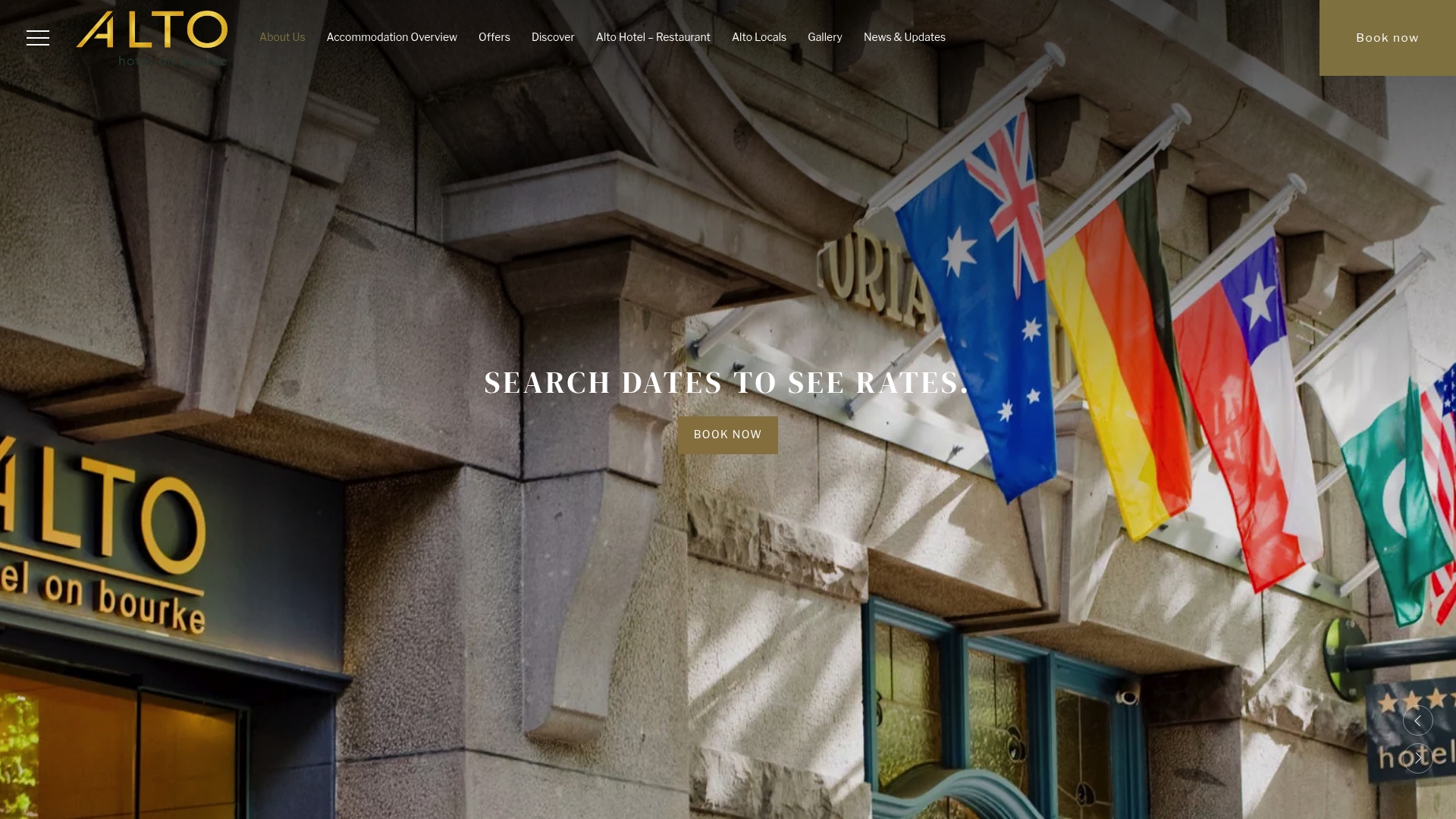
The property offers studio and apartment configurations suited to both leisure and corporate guests, verified environmental credentials, and a guest experience built around local partnerships and eco-conscious design. If you are developing a sustainable package programme for your own property and want to see how the pieces fit together, Alto Hotel on Bourke is the place to start. Visit altohotel.com.au to explore the property and its approach.
Further reading and sources for due diligence
Use these sources when building proposals, pitching to owners, or preparing certification applications.
The Sustainable Hospitality Alliance's Business Case for Sustainable Hotels remains the most useful single document for framing sustainability as a financial investment to a hotel owner or lender. It covers retrofit ROI periods, green finance structures, and case studies across multiple markets.
| Source | Best used for | Link |
|---|---|---|
| NABERS — hotels | Certification pathway, assessor contacts, pre-assessment | nabers.gov.au |
| NABERS case study: green is good for hotels | Incentive programmes, fee waivers, uptake data | NABERS case study |
| Sustainable Hospitality Alliance — Business Case | Finance proposals, retrofit ROI, green loan structures | sustainablehospitalityalliance.org |
| AEECenter — Portfolio Investment Strategies | Engineering-finance alignment, M&V, $980K savings case | aeecenter.org |
| The Calile bedding stewardship (KarryOn) | Partnership storytelling, diversion metrics, Indigenous procurement | karryon.com.au |
| Ecotourism Australia — Accor certification | Certification scope, timeline, corporate booking case | ecotourism.org.au |
| MDPI — drivers of hotel sustainability | Owner/investor framing, decision-maker research | mdpi-res.com |
This article is general information for hotel owners, operators, and investors. Certification timelines, grant availability, and procurement requirements change. Confirm current details directly with NABERS, Ecotourism Australia, and your state government's business support office before committing to a programme.