

Here are ten real examples of carbon-neutral or highly sustainable places to stay, from certified Australian properties to internationally recognised projects. A carbon-neutral accommodation eliminates or reduces its greenhouse gas emissions as far as possible, then neutralises unavoidable residuals through certified offsets or removals. The hierarchy is always: avoid first, reduce second, offset last.
A typical hotel night produces around 25 kg CO₂ from heating, electricity, laundry and food service — understanding this footprint is the starting point for any credible carbon-neutral claim.},{
- Alto Hotel on Bourke, Melbourne — one of the first environmentally rated hotels in Melbourne, with eco-conscious materials, local partnerships and Victorian tourism Hall of Fame recognition.
- Quincy Melbourne — holds Climate Active Carbon Neutral Buildings certification, one of the most rigorous Australian standards for built-environment carbon claims.
- Kora Green City, Vitoria (Spain) — the largest Passivhaus accommodation in Europe, running entirely on geothermal and solar energy with no fossil fuel heating or cooling.
- Populus, Denver (USA) — opened October 2024 as the first carbon-positive hotel in the United States, designed by Studio Gang using low-carbon materials and an active tree-planting programme.
- XuanAo Hotel, Chongming Island (China) — certified carbon neutral for its 2023 operations under PAS 2060:2014, with a full ISO 14064-1 greenhouse gas inventory.
- Irota EcoLodge (Hungary) — publishes a live carbon dashboard and life-cycle assessment for its holiday homes, a strong transparency benchmark.
- Whitepod Eco-Luxury Hotel (Switzerland) — geodesic pod accommodation powered by renewable energy with a documented low-impact operational model.
- Chumbe Island Coral Park (Tanzania) — solar-powered eco-lodge with rainwater harvesting and a certified marine protected area.
- Longitude 131°, Uluru (Australia) — luxury eco-camp with solar power, waste management systems and a strong commitment to local Indigenous partnerships.
- Bambu Indah (Bali, Indonesia) — bamboo-construction boutique resort with documented low-embodied-carbon materials and organic waste systems.
Table of Contents
- What does 'carbon neutral' actually mean for a hotel?
- Australian examples worth knowing about
- How accommodations actually achieve carbon neutrality
- How to verify a hotel's carbon-neutral claim in Australia
- Your quick checklist for choosing genuinely low-carbon accommodation
- What the research says — and where to be sceptical
- Key takeaways
- Why transparency matters more than the badge
- Stay somewhere that can show you the evidence
- Useful sources for verifying claims
What does 'carbon neutral' actually mean for a hotel?
Carbon neutral, in the accommodation context, means the property's net greenhouse gas emissions equal zero. That sounds simple, but the path to get there matters enormously. The credible approach follows a strict hierarchy: first, avoid emissions by design (building orientation, passive heating, no gas appliances); second, reduce what remains through energy efficiency, renewables and low-carbon procurement; third, offset only the residuals that genuinely cannot be cut further.
The GHG Protocol breaks hotel emissions into three scopes. Scope 1 covers direct combustion on site (gas boilers, kitchen equipment). Scope 2 covers purchased electricity. Scope 3 covers everything upstream and downstream: guest travel to the property, supply-chain food and beverage, staff commuting, and waste disposal. Many hotels claim carbon neutrality while only counting Scopes 1 and 2, which can represent less than half the real footprint. A claim that ignores Scope 3 is incomplete by definition.
Two related terms are worth distinguishing. Net zero is more demanding: under the Science Based Targets initiative (SBTi) framework, it requires at least a 90% absolute reduction across all three scopes before any residuals are neutralised. Carbon positive (or climate positive) goes further still, actively removing more carbon than the property emits. Populus Denver, which opened in late 2024, is the first US hotel to claim that status.
Pro Tip: When a hotel says "carbon neutral," ask which scopes are covered. A claim limited to Scope 1 and 2 leaves out supply-chain and guest-travel emissions, which often account for the majority of a property's real footprint.
Australian examples worth knowing about
Alto Hotel on Bourke, Melbourne
Altohotel sits in Melbourne's CBD and has operated as one of the city's first environmentally rated boutique hotels. The property features rooms, studios, and one- and two-bedroom apartments fitted with eco-conscious materials and in-room kitchen facilities that reduce reliance on energy-intensive hotel dining. Local artisan partnerships run through the guest experience, from furnishings to amenity sourcing, cutting supply-chain kilometres. The hotel holds Hall of Fame recognition in the Victorian tourism awards, a credential that reflects sustained performance rather than a single-year result. For travellers wanting to book carbon neutral urban accommodation in Melbourne, Altohotel is the most established local reference point.
Quincy Melbourne
Quincy Melbourne is notable for holding Climate Active Carbon Neutral Buildings certification, the Australian Government's own standard for verified carbon-neutral built environments. Climate Active requires a documented carbon footprint, a reduction plan, and third-party assurance before certification is granted. For Australian travellers, a Climate Active logo on a property is one of the clearest signals that the claim has been independently checked.
Longitude 131°, Uluru
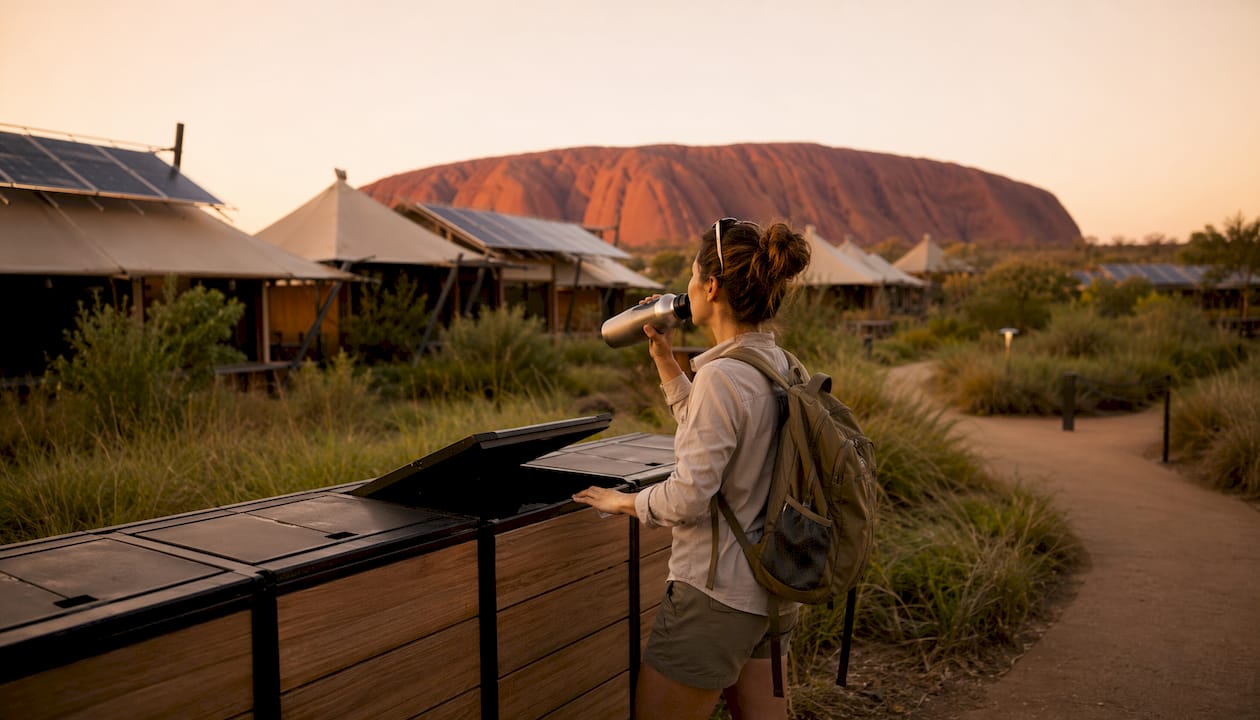
This luxury eco-camp in the Northern Territory runs on solar power and has documented waste management systems. Its location adjacent to Uluru-Kata Tjuta National Park means its environmental obligations are unusually high, and its Indigenous partnership model integrates community benefit into the sustainability proposition. It is a strong example of how remote Australian properties can achieve low-carbon operations without sacrificing guest comfort.
Other Australia-relevant options
Regional eco-lodges across Queensland, Victoria and Western Australia are increasingly pursuing NABERS ratings, the National Australian Built Environment Rating System, which measures actual operational energy and water performance rather than design intent. A NABERS Energy rating of 4 stars or above is a reasonable baseline signal for a well-managed property.
Pro Tip: Check whether an Australian property lists its NABERS rating publicly. Properties that display their rating are more likely to have genuine operational data behind their sustainability claims, rather than aspirational targets.
Availability at certified properties like Altohotel can fill quickly during Melbourne's peak seasons. Check dates early and book direct for the best rates.
How accommodations actually achieve carbon neutrality
The operational levers fall into three broad categories: construction and materials, day-to-day operations, and supply chain.
Construction and materials set the baseline. Low-embodied-carbon choices — timber frames over concrete, recycled insulation, natural finishes — reduce the carbon locked into the building before a single guest checks in. Kora Green City's Passivhaus certification means its building envelope is so well insulated that it needs almost no active heating or cooling, which eliminates a major operational emission source from day one.
Day-to-day operations are where most hotels focus their effort:
- On-site solar or wind generation to cover electricity demand
- Heat-pump hot water systems replacing gas boilers
- LED lighting and smart building management systems
- Greywater recycling and rainwater harvesting to cut water-related energy
- Waste diversion programmes targeting landfill elimination
- Single-use plastic reduction across housekeeping and food service
Supply chain is where most claims fall short. Local sourcing for food and beverage cuts transport emissions and supports regional producers. The Sustainable Hospitality Alliance recommends that properties publish specific environmental management actions — greywater recycling, renewable procurement, waste diversion rates — rather than relying on marketing language alone.
Pro Tip: Watch for the 'offset trap': properties that purchase low-quality avoidance credits (e.g. paying someone not to cut down a forest) rather than pursuing genuine operational cuts. The SBTi only accepts durable removals — carbon stored permanently, like biochar or direct air capture — to neutralise final residuals under a net-zero claim.
Red flags to watch for:
- "Carbon neutral" with no named certification or standard
- Offsets described only as "tree planting" with no permanence guarantee
- No mention of Scope 3 emissions
- Sustainability claims on the website but no public report or third-party assurance
How to verify a hotel's carbon-neutral claim in Australia
Ask for third-party verification and check that the claim covers documented scope coverage. That is the short answer. Here is what to look for in practice.
Climate Active is the Australian Government's carbon-neutral certification programme. A property with Climate Active certification has submitted a carbon footprint, had it independently audited, and committed to ongoing reporting. It is the most credible single signal for Australian properties.
NABERS measures actual operational performance in energy, water and waste. A high NABERS Energy rating (4–6 stars) confirms the building is performing well in practice, not just in design. NABERS ratings are publicly searchable at nabers.gov.au.
Published GHG inventory or sustainability report — any property serious about its claims will publish an annual report showing baseline emissions, reduction actions taken, and the offsets or removals used. If a hotel cannot point you to a public document, the claim is unverified.
Third-party assurance means an independent auditor has reviewed the methodology and data. Look for assurance statements from recognised bodies, not just internal sign-off.
Questions worth asking the hotel or booking platform directly:
- Which emission scopes does your carbon-neutral claim cover?
- Who independently verified the claim, and when was it last audited?
- What type of offsets or removals did you use, and are they certified?
- Is your carbon footprint report publicly available?
Pro Tip: Use the environmentally rated boutique hotel guide to cross-check what credentials a property should be able to show you before you book.
Your quick checklist for choosing genuinely low-carbon accommodation
Use this before and during booking.
Before you book:
- Search for the property's Climate Active, NABERS, or equivalent certification on the certifier's public register — not just the hotel's own website.
- Ask for a link to the most recent sustainability or carbon footprint report.
- Check which scopes the carbon-neutral claim covers; if Scope 3 is excluded, factor that into your assessment.
- Confirm what offset or removal type was used and whether it carries third-party certification (e.g. Gold Standard, Verified Carbon Standard, or SBTi-aligned removals).
- Check transport links: a property accessible by public transport reduces your own travel-related Scope 3 emissions significantly.
- Review the sustainable hotel booking checklist for a printable version of these steps.
During the stay:
- Opt out of daily housekeeping to reduce water, energy and chemical use.
- Choose plant-based menu options where available; food-service emissions are a meaningful share of a hotel's Scope 3 footprint.
- Use public transport or the hotel's bike hire rather than taxis or rideshare.
- Participate in any guest sustainability initiatives the property runs (energy dashboards, composting programmes, local conservation activities).
- Ask the front desk where to find the property's public sustainability report if you have not already read it.
What the research says — and where to be sceptical
Experts are clear: 'carbon neutral' can be misleading without Scope 3 coverage and independent assurance. The GHG Protocol warns that many hotels stop at operational emissions and omit supply-chain and guest-related emissions entirely, which can represent the majority of a property's real footprint.
The SBTi sets the most demanding public benchmark: a 90% absolute reduction across all scopes before any residuals are neutralised. Very few hotels have reached that threshold. Most current "carbon neutral" claims sit well below it, relying on offsets to bridge a gap that operational improvements could close.
The Sustainable Hospitality Alliance identifies life-cycle assessments and public operational dashboards as the best indicators of a mature sustainability approach. Irota EcoLodge's live carbon dashboard is a practical example of what that looks like: guests can see real-time data rather than taking a marketing claim on faith.
Pro Tip: Prefer properties that publish life-cycle assessments or operational dashboards over those that only display a certification badge. A badge tells you the claim was verified at a point in time; a dashboard tells you what is happening now.
The WTTC advises travellers to prioritise properties that document specific environmental management actions — greywater recycling, renewable procurement, waste diversion rates — rather than relying on broad sustainability tags. That advice holds whether you are booking in Melbourne or anywhere else.
Key takeaways
Verified carbon-neutral accommodation requires third-party certification, documented scope coverage across Scopes 1, 2 and 3, and durable offsets or removals for residuals — marketing language alone is not enough.
| Point | Details |
|---|---|
| Scope coverage matters | A credible claim covers Scopes 1, 2 and 3; Scope 3 often represents the majority of a hotel's real footprint. |
| SBTi benchmark | The SBTi requires a 90% absolute reduction across all scopes before any residuals are neutralised. |
| Australian verification cues | Climate Active certification and a public NABERS rating are the two strongest signals for Australian properties. |
| Offset quality | Durable removals (biochar, direct air capture) are more credible than avoidance credits; ask what standard the offsets carry. |
| Altohotel | Alto Hotel on Bourke is one of Melbourne's first environmentally rated hotels, with eco-conscious materials, local partnerships and Hall of Fame recognition in Victorian tourism. |
Why transparency matters more than the badge
The uncomfortable truth about carbon-neutral accommodation is that the label has outpaced the standard. Certification programmes like Climate Active and NABERS are genuinely rigorous, but they cover a fraction of the properties that use sustainability language in their marketing. A hotel can describe itself as "eco-friendly" or "green" without submitting to any external audit, and most booking platforms do not distinguish between a verified claim and a self-declared one.
What actually separates credible properties from the rest is not the badge on the website — it is the paper trail behind it. A published carbon footprint report, a named auditor, a clear statement of which scopes are covered, and an honest account of what offsets were used: these are the signals worth looking for. Properties that publish this information are making themselves accountable in a way that a logo alone never does.
Altohotel's position as one of Melbourne's first environmentally rated hotels reflects years of operational commitment, not a single certification moment. The Hall of Fame recognition in Victorian tourism is awarded for sustained performance. For travellers who want a Melbourne stay that holds up to scrutiny, that track record is worth more than a freshly acquired badge. You can read more about sustainability's role in Melbourne tourism and what genuine credentials look like in the local context.
Stay somewhere that can show you the evidence
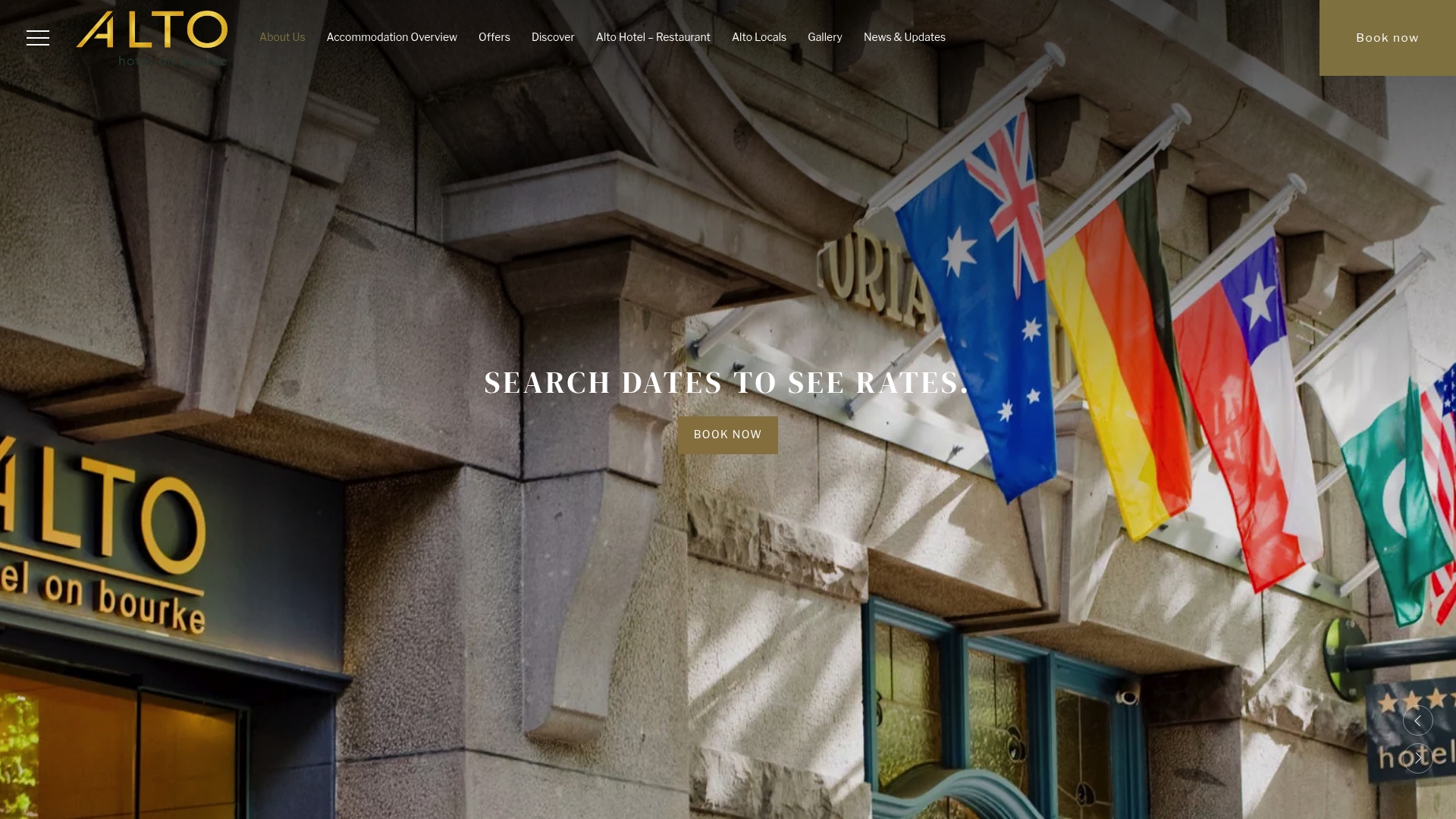
Altohotel is Melbourne's most established eco-rated boutique hotel, with a track record that predates the current wave of green marketing. Rooms, studios, and one- and two-bedroom apartments are fitted with sustainable materials and in-room kitchen facilities, and the property's local artisan partnerships run deeper than a sourcing policy on a website. Direct bookings through altohotel.com.au include exclusive perks not available through third-party platforms, and the hotel's sustainability credentials are available to review before you arrive. If you want a Melbourne stay where the environmental claims are backed by years of recognised performance, check availability and book direct.
Useful sources for verifying claims
- NABERS — Australia's National Built Environment Rating System. Search any registered property's energy, water and waste rating. A 4-star-plus NABERS Energy rating is a reliable operational benchmark.
- Climate Active — the Australian Government's carbon-neutral certification programme. The public register lists every certified property and the standard each was assessed against.
- Science Based Targets initiative (SBTi) — sets the most demanding public standard for net-zero claims, including the 90% reduction requirement. Use it to understand what a credible net-zero commitment actually involves.
- GHG Protocol — the global standard for greenhouse gas accounting. Explains Scopes 1, 2 and 3 in plain language and helps you understand what a hotel's footprint report should cover.
- Sustainable Hospitality Alliance — industry body with practical guidance on life-cycle assessments, operational dashboards and what good sustainability reporting looks like for accommodation providers.
- ESG for Travel — detailed breakdown of what net zero actually means for a hotel, including the offset trap and the operational maths behind a credible claim.
- Wild Foodz — Sustainability in Food Services — practical guidance on sustainable food operations, relevant for evaluating a hotel's kitchen and sourcing practices.
Ask any property you are considering to share their most recent public carbon footprint report and the name of their independent auditor. If they cannot, that tells you something useful before you book.