

Ethical luxury accommodation is defined as high-end lodging that integrates verifiable social and environmental responsibility across its entire value chain, prioritising stewardship and measurable positive impact over extravagance alone. The industry term for the most advanced form of this concept is regenerative luxury, a standard that goes beyond minimising harm to actively improving ecosystems and communities. For travellers exploring what is ethical luxury accommodation defined in practice, the distinction matters enormously. A hotel with bamboo furniture and a recycling bin is not the same as one running on renewable energy, paying living wages, and publishing verified impact data. Knowing the difference protects you from greenwashing and points you toward stays that genuinely mean something.
What key characteristics define ethical luxury accommodation?
Ethical luxury accommodation operates across the full value chain, not just in guest-facing areas. That means sustainable management of materials, labour, and energy throughout every department, from housekeeping to food procurement to construction. A property that sources organic toiletries but pays below-award wages has not met the standard.
The defining characteristics fall into three categories.
Environmental responsibility covers energy, water, waste, and biodiversity. Regenerative properties run on high proportions of renewable energy, reuse grey water for irrigation, and implement closed-loop waste systems. Some now measure and report biodiversity impact on surrounding ecosystems.
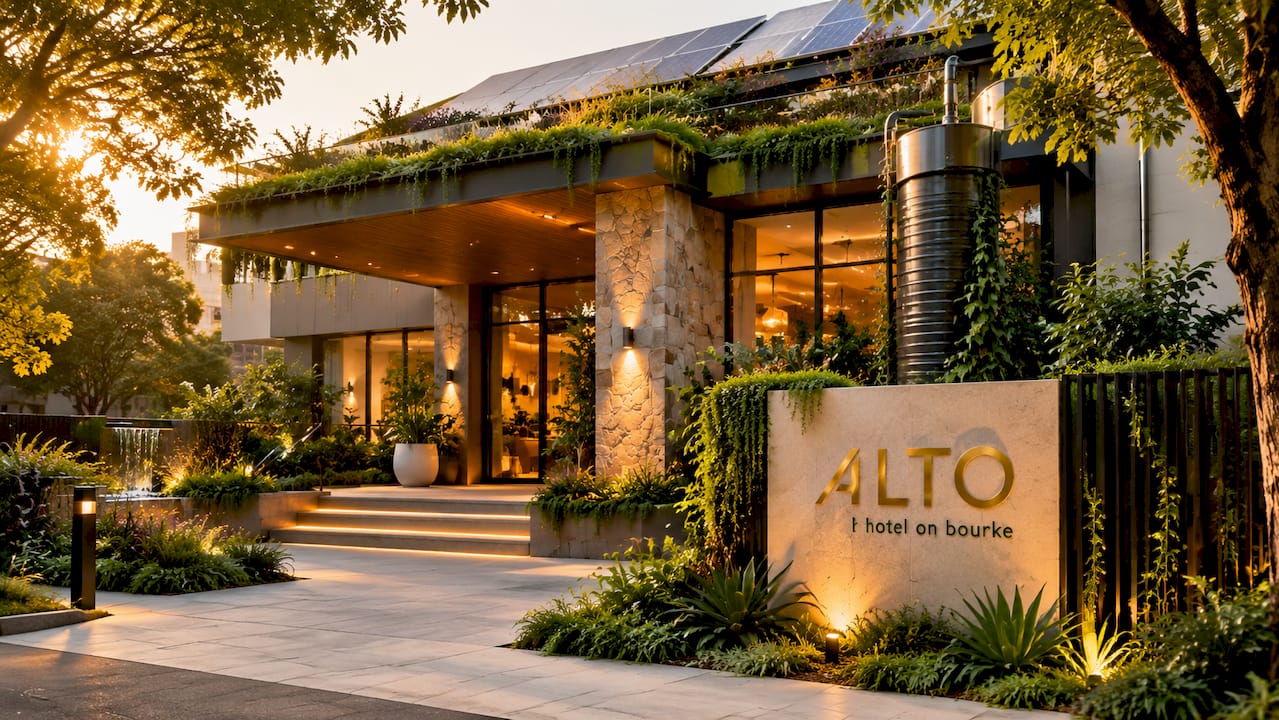
Social and economic responsibility covers labour practices, community investment, and supply chain ethics. Ethical luxury properties pay living wages, hire locally, and partner with nearby artisans and producers. Fair-trade interactions with local artisans and farm-to-plate dining programmes create economic value that stays in the region rather than flowing to distant parent companies.
Transparency and verification is the third pillar. Genuine ethical properties publish public impact data and submit to independent audits. Self-declared sustainability claims without third-party evidence are not sufficient.
- Renewable energy use with measurable targets
- Local hiring and living wage commitments
- Certified waste management and water conservation
- Supply chain transparency from food to furnishings
- Published annual impact or sustainability reports
- Partnerships with local cultural and ecological organisations
Pro Tip: Ask the hotel directly for its most recent sustainability report before booking. A genuine ethical property will share it without hesitation. Vague responses or marketing brochures instead of data are a red flag.
How does ethical luxury differ from traditional and sustainable luxury?
Traditional luxury is built on exclusivity, rare materials, and aesthetic spectacle. The guest experience is the product, and environmental or social considerations are secondary, if present at all. Sustainable luxury takes a step forward by reducing negative impacts, cutting emissions, and managing waste more carefully. Ethical luxury, and its most advanced expression, regenerative luxury, goes further still.
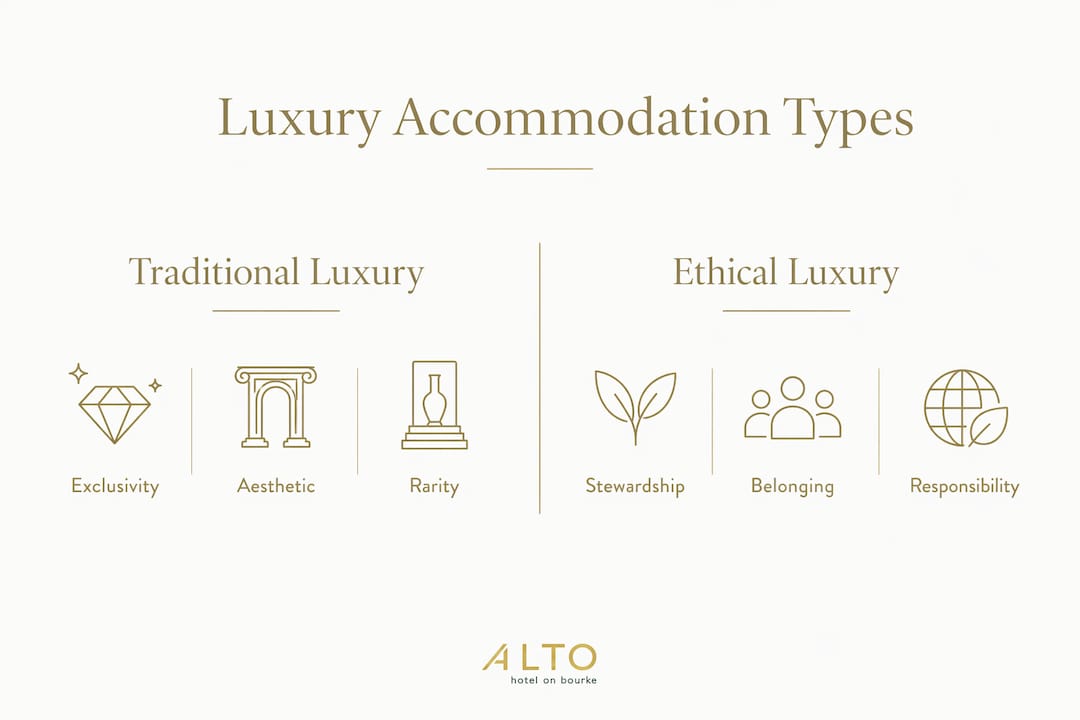
Luxury is being fundamentally redefined from rarity and consumption to stewardship and belonging. The premium you pay is no longer for ornateness. It is a direct investment in local ecology and community vitality.
A common misconception is that a higher price signals stronger ethics. Price is no proxy for ethical luxury. True costs reflect ethical infrastructure such as living wages, conservation programmes, and certified waste systems, not branding or interior design budgets.
| Feature | Traditional luxury | Sustainable luxury | Ethical luxury |
|---|---|---|---|
| Core focus | Exclusivity and aesthetics | Reducing negative impact | Stewardship and positive impact |
| Labour standards | Variable | Improving | Living wages, local hiring |
| Environmental approach | Minimal | Harm reduction | Regenerative, closed-loop |
| Verification | None required | Self-declared common | Third-party certified |
| Community role | Separate from operation | Occasional partnerships | Integrated and central |
| Price premium reflects | Rarity and design | Eco-branding | Ethical infrastructure |
The table shows that ethical luxury is not simply a greener version of traditional luxury. It is a different operating philosophy. Sustainable luxury reduces harm. Ethical luxury aims to leave places better than it found them.
How can travellers identify genuine ethical luxury accommodation?
Greenwashing remains a serious problem in the hospitality industry. Superficial eco-aesthetics without supply chain or labour improvements cannot be trusted without transparency and hard data. Knowing what to look for protects you from paying a premium for nothing more than a green logo on the website.
-
Check for GSTC accreditation. The Global Sustainable Tourism Council sets the international benchmark. GSTC Criteria cover sustainable management, socio-economic impacts, cultural impacts, and environmental impacts, requiring independent audits and verifiable evidence. A hotel displaying GSTC-accredited certification has been assessed by a qualified third party, not just by its own marketing team.
-
Request public impact data. Ask for energy consumption figures, waste diversion rates, and local employment percentages. Genuine ethical properties track and share this information. If a hotel cannot produce it, the sustainability claims are likely surface-level.
-
Examine labour practices. Look for explicit statements about living wages, staff training investment, and local hiring ratios. Check whether the hotel is a member of fair labour organisations or has published a modern slavery statement.
-
Assess supply chain ethics. Does the restaurant source from local farms? Are the toiletries certified organic or fair trade? Are furnishings made by local artisans or mass-produced overseas? These details reveal whether ethics extend beyond the lobby.
-
Look for community integration. Ethical luxury properties function as hubs for deep local immersion, connecting guests with local culture, producers, and ecosystems. A hotel that operates as an island, separate from its surroundings, is not practising integrated authenticity.
Pro Tip: Cross-reference a hotel's claims against independent review platforms and travel journalism before booking. Verified certifications from bodies like EarthCheck, Green Globe, or GSTC-accredited programmes carry far more weight than in-house awards.
Learning how to choose an environmentally rated boutique hotel before you travel saves time and prevents disappointment when the "eco resort" turns out to be a standard property with solar panels on the roof.
What are the benefits of choosing ethical luxury accommodation?
Choosing ethical luxury accommodation delivers benefits that extend well beyond a comfortable bed. The experience is qualitatively different from conventional luxury, and the positive effects reach guests, local communities, and the natural environment.
For travellers, the primary gain is depth. Integrated authenticity means ethical luxury is about connection and community, not isolation. Guests who participate in farm-to-plate dining, meet the artisans whose work decorates their rooms, or join guided ecological walks return home with experiences that outlast any thread-count or minibar. Research consistently shows that meaningful travel generates stronger satisfaction and longer-lasting positive memories than purely transactional luxury.
For local communities, the economic impact is direct and measurable. Fair wages stay in the local economy. Partnerships with nearby producers and cultural organisations build capacity that persists long after guests check out. Properties that act as hubs for local economy and culture create a multiplier effect, supporting artisans, farmers, guides, and small businesses simultaneously.
For the environment, regenerative practices actively restore rather than simply preserve. Closed-loop water systems, renewable energy, and biodiversity monitoring programmes contribute to ecosystem health over time.
- Deeper cultural immersion and authentic local experiences
- Support for fair wages and local employment
- Contribution to ecosystem restoration and biodiversity
- Reduced personal carbon footprint from certified operations
- Greater travel satisfaction and meaningful memories
- Confidence that your spending creates genuine positive impact
Staying at properties that inspire deeper connection with place and community is not a compromise on comfort. The best ethical luxury properties demonstrate that responsibility and genuine indulgence are entirely compatible.
Key takeaways
Ethical luxury accommodation is defined by verifiable social and environmental responsibility across the full value chain, not by price, aesthetics, or self-declared green claims.
| Point | Details |
|---|---|
| Core definition | Ethical luxury integrates high-end comfort with measurable social and environmental responsibility. |
| Regenerative standard | The most advanced properties actively restore ecosystems and communities, going beyond harm reduction. |
| Verification is non-negotiable | GSTC-accredited third-party certification is the only reliable proof of genuine ethical claims. |
| Price does not equal ethics | A premium rate with no operational evidence signals branding, not genuine ethical investment. |
| Community integration matters | Authentic ethical properties connect guests with local culture, artisans, and ecosystems as a core feature. |
Why I think most travellers are asking the wrong question
Most travellers ask "is this hotel sustainable?" when they should be asking "can this hotel prove it?" That shift in question changes everything about how you evaluate a property.
I have watched the ethical travel space grow considerably over the past decade, and the single biggest problem is not a lack of good properties. It is a surplus of convincing language. Hotels have become extraordinarily skilled at deploying the vocabulary of ethics without the substance behind it. Bamboo floors, earthy colour palettes, and a composting programme mentioned in the lobby brochure do not constitute an ethical operation.
The travellers who get this right are the ones who treat a hotel booking like a considered purchase. They read the impact report. They ask about staff wages. They check whether the certification on the website is from an accredited body or a self-assessment tool. That level of scrutiny sounds demanding, but it takes about fifteen minutes and it is the only reliable way to know your money is going where you intend.
The shift from traditional luxury to ethical luxury is not about sacrifice. The best ethical properties I have encountered offer experiences that conventional five-star hotels simply cannot replicate, because they are genuinely embedded in their place. You are not just sleeping in a beautiful room. You are participating in something that has a real relationship with the land and people around it. That is worth paying for, and worth verifying.
— Kamal
Experience ethical luxury in Melbourne with Altohotel
Altohotel is one of Melbourne's first environmentally rated boutique hotels, recognised with Hall of Fame status in the Victorian tourism sector. The property partners with local artisans and organisations, uses eco-conscious materials throughout, and delivers the kind of verified commitment that distinguishes genuine ethical hospitality from marketing language.
Guests can choose from 2 Bedroom Deluxe Apartments for families or groups seeking space and style, through to 1 Bedroom Spa Apartments for travellers who want comfort with a restorative edge. Every room type reflects Altohotel's commitment to sustainability without asking guests to trade away comfort. If you are ready to book accommodation that aligns with your values, Altohotel is the place to start.
FAQ
What is ethical luxury accommodation defined as?
Ethical luxury accommodation is high-end lodging that integrates verifiable social and environmental responsibility across its entire operation, from energy use and labour practices to supply chain ethics and community investment. It is distinguished from conventional luxury by independent certification and measurable positive impact.
How is ethical luxury different from sustainable luxury?
Sustainable luxury focuses on reducing negative environmental impact, while ethical luxury goes further by requiring social responsibility, fair labour, community integration, and third-party verification. Regenerative luxury, the most advanced form, actively restores ecosystems and communities rather than simply preserving them.
What certifications should I look for in an ethical luxury hotel?
GSTC-accredited certification is the international benchmark, covering environmental, social, cultural, and economic criteria assessed by independent auditors. Programmes such as EarthCheck and Green Globe are also credible when independently verified.
Does a higher price mean a hotel is more ethical?
No. Price is not a reliable indicator of ethical practice. A premium rate with no operational evidence of fair wages, certified waste management, or community investment reflects branding rather than genuine ethical infrastructure.
How do I spot greenwashing in luxury accommodation?
Look for vague sustainability language without supporting data, self-declared awards from non-independent bodies, and eco-aesthetics that are not backed by published impact reports or third-party audits. Genuine ethical properties share verifiable data openly and welcome scrutiny.