
Hotels contribute roughly 1% of global carbon emissions, but that headline figure understates the real picture. Energy for heating, cooling and lighting dominates operational impact, while water, food, waste and the supply chain add layers that most hotels have barely started to quantify. The single most effective lever is measurement: hotels that track performance against industry benchmarks using tools like the Hotel Water Measurement Initiative (HWMI), the Hotel Footprinting Tool (HFT) and Australia's NABERS scheme consistently find the biggest savings in the same places.
Priority impact channels:
- Energy: heating, cooling, lighting and kitchen equipment (the dominant operational source)
- Water: guest rooms, laundry, irrigation and pools
- Food and waste: kitchen procurement, food loss, single-use plastics and linen
- Supply chain and Scope 3: food suppliers, outsourced laundry, guest travel
- Construction and embodied carbon: building materials, fit-out and furniture
The verdict is straightforward: measure first, then target energy and water, then address procurement and food. Everything else follows from that sequence.
Key takeaways
Energy, water and supply chain management are the three highest-impact areas for reducing a hotel's environmental footprint, and measurement using HWMI, HCMI and NABERS is what makes any reduction target credible.
| Point | Details |
|---|---|
| Energy dominates operational impact | Electricity and HVAC are the largest sources; LED and heat pump retrofits deliver the fastest carbon reductions. |
| Water benchmarks are specific | Frontrunner fully serviced hotels achieve ≤140 L per guest-night; always separate irrigation from guest-room figures. |
| Scope 3 cannot be ignored | Food, procurement and guest travel often exceed on-site emissions; credible net-zero plans must address the value chain. |
| Use recognised measurement tools | HWMI, HFT/HCMI and NABERS provide consistent, comparable data; self-declared labels without these carry little weight. |
| Construction carries hidden carbon | Life-cycle assessments show building and fit-out can account for 8–69% of a hotel's total carbon over its lifetime. |
Table of Contents
- How does a hotel's environmental impact actually show up?
- What are Scope 1, 2 and 3 emissions for a hotel?
- How do hotels measure and benchmark their environmental performance?
- What can hotels do to reduce their footprint?
- How can guests and travel managers reduce their hotel stay's footprint?
- Which Australian schemes and standards apply to hotels?
- How Altohotel reduces its environmental impact in practice
- Balancing guest experience, cost and real environmental impact
- Sources
How does a hotel's environmental impact actually show up?
Energy is the dominant source of operational emissions in hotels, a finding confirmed by a systematic review and meta-analysis of 28 studies that identified electricity as the primary energy source and documented how physical and operational variables, from building age to occupancy rate, significantly shift that figure. A guest running a hot shower for ten minutes, the HVAC system cycling through an empty room, or a commercial refrigerator running at the wrong temperature all feed into the same energy bill and the same carbon account.
Water
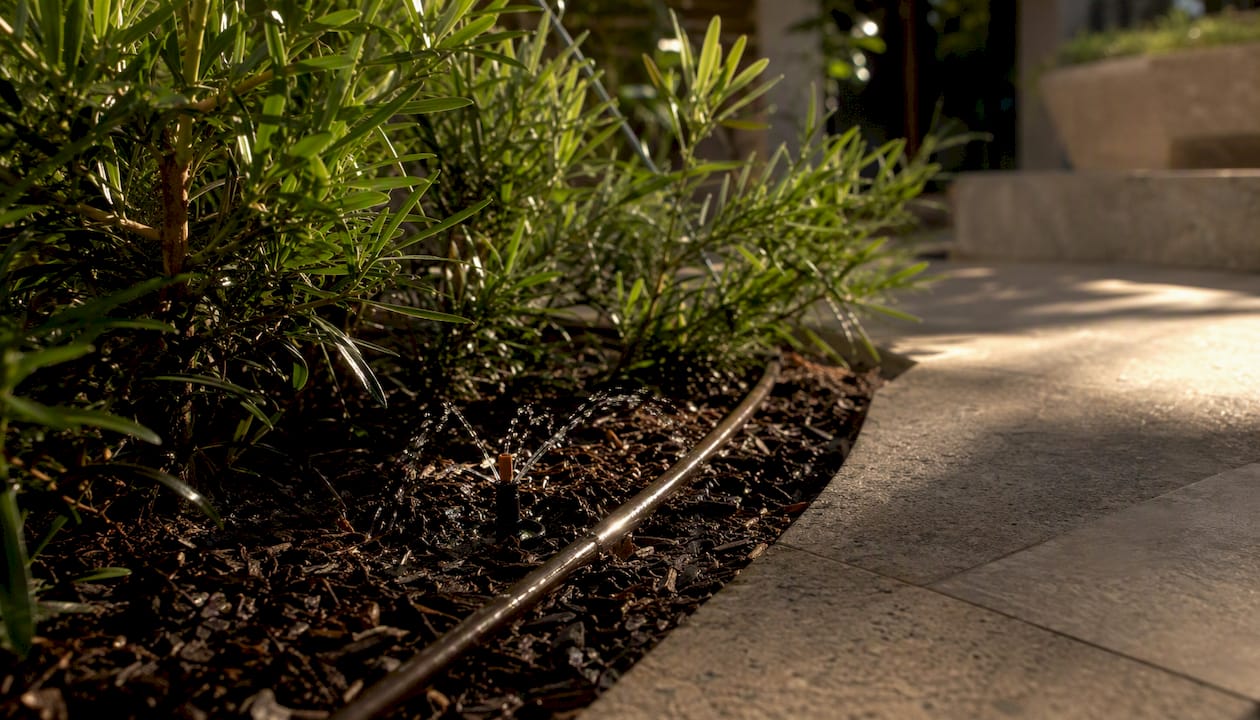
Water use in hotels is substantial and often poorly tracked. Guest rooms, laundry, kitchen operations and landscaping all draw from the same supply, yet most hotels report only a single aggregate figure. Irrigation and garden water alone can represent 30–35% of a hotel's total consumption, which means a hotel reporting "low" water use per guest-night may simply be hiding its garden hose.
Food and catering
Food procurement is one of the most carbon-intensive activities a hotel undertakes, yet it rarely appears in a property's headline sustainability metrics. Emissions from food production, transport and refrigeration sit mostly in Scope 3, making them easy to ignore. Kitchen food waste compounds the problem: food that is purchased, stored, prepared and then discarded carries the full upstream carbon cost with zero benefit delivered.
Solid waste and single-use plastics
Single-use plastics, daily linen changes and high-turnover amenity products generate significant landfill volumes. The Sustainable Hospitality Alliance frames plastics and waste as material challenges for the sector alongside energy and water.
Construction and fit-out
Non-operational impacts are where the numbers get uncomfortable. Life-cycle assessments of hotel accommodation show building construction can account for 8–69% of a hotel's total life-cycle carbon, solid waste 12–61%, and consumer goods 10–25%, depending on hotel type and assessment boundaries. A mid-range hotel that renovates every decade is effectively rebuilding a significant share of its carbon budget each cycle.
What are Scope 1, 2 and 3 emissions for a hotel?
The three scopes map cleanly onto hotel operations once you know where to look.
Scope 1 covers direct on-site combustion: gas boilers, furnaces, backup generators and refrigerant leaks from HVAC systems. These are the emissions a hotel produces itself, on its own premises.
Scope 2 is purchased electricity. For most hotels, this is the largest single line item in a carbon account, and it is also the most tractable: switching to a renewable energy tariff or installing rooftop solar directly reduces it.
Scope 3 is everything else:
- Food and beverage supply chains
- Outsourced laundry services
- Guest travel to and from the property
- Embodied carbon in construction materials and furniture
- Staff commuting and business travel
The practical implication is that a hotel focused only on Scope 1 and 2 is addressing perhaps half its real footprint. Net-zero guidance for hotels is explicit on this point: credible decarbonisation plans must engage the value chain, particularly food procurement and guest travel, or they are incomplete by design. Higher-star hotels face a compounding version of this problem because amenity levels correlate with higher per-bed resource intensity, meaning a five-star property's Scope 3 food and goods footprint can dwarf a budget hotel's entire carbon account.
How do hotels measure and benchmark their environmental performance?
Measurement is the first high-leverage action, and the industry has built several tools to make it consistent.
Key industry tools:
- HWMI (Hotel Water Measurement Initiative): A free, hotel-tailored methodology used by over 18,000 hotels globally to calculate, benchmark and report water use. Developed by the Sustainable Hospitality Alliance.
- HFT (Hotel Footprinting Tool): Provides market-level carbon coefficients for hotel stays and meeting spaces, derived from the Cornell Centre for Hospitality Research (CHSB) index and aligned to HCMI methodology. Useful for estimating Scope 3 accommodation emissions.
- HCMI (Hotel Carbon Measurement Initiative): The companion carbon methodology to HWMI, enabling consistent carbon reporting across properties and portfolios.
- LCA (Life Cycle Assessment): A broader analytical method that captures embodied carbon from construction and fit-out alongside operational impacts. More resource-intensive but necessary for whole-of-life comparisons.
Core KPIs and benchmark ranges
Standardised allocation methods and area-weighting remove subjectivity from hotel measurement and reveal which departments actually drive waste and emissions. The table below shows the core KPIs hotels should track and indicative benchmark ranges drawn from industry sources.
The ≤140 L per guest-night water benchmark for frontrunner fully serviced hotels is a useful starting point for Australian properties, though local climate and pool or spa facilities will shift the baseline.
Pro Tip: When setting up water tracking, always separate irrigation and outdoor water from guest-room and laundry figures. Bundling them inflates your per-guest-night figure and obscures where savings are actually possible. The same logic applies to outsourced laundry: if it is off-site, it belongs in Scope 3, not your operational water total.
What can hotels do to reduce their footprint?
The priority order matters. Energy decarbonisation delivers the largest carbon reductions fastest; water and procurement changes follow. Industry reviews consistently recommend moving from subjective policies to data-driven benchmarking before committing capital to specific measures.
-
Audit and benchmark first. Before spending on equipment, establish baseline kWh/room-night, L/guest-night and kgCO2e/room-night figures using HWMI and HCMI. This reveals which departments are driving the numbers.
-
Switch to LED lighting and optimise HVAC controls. LED retrofits typically pay back within two to four years and reduce lighting energy by 60–75%. HVAC optimisation, including occupancy-linked setback controls, often delivers comparable savings with minimal capital outlay.
-
Install rooftop solar where feasible. For Australian hotels with suitable roof space, solar PV directly reduces Scope 2 emissions and operating costs. State and federal incentives can reduce payback periods significantly.
-
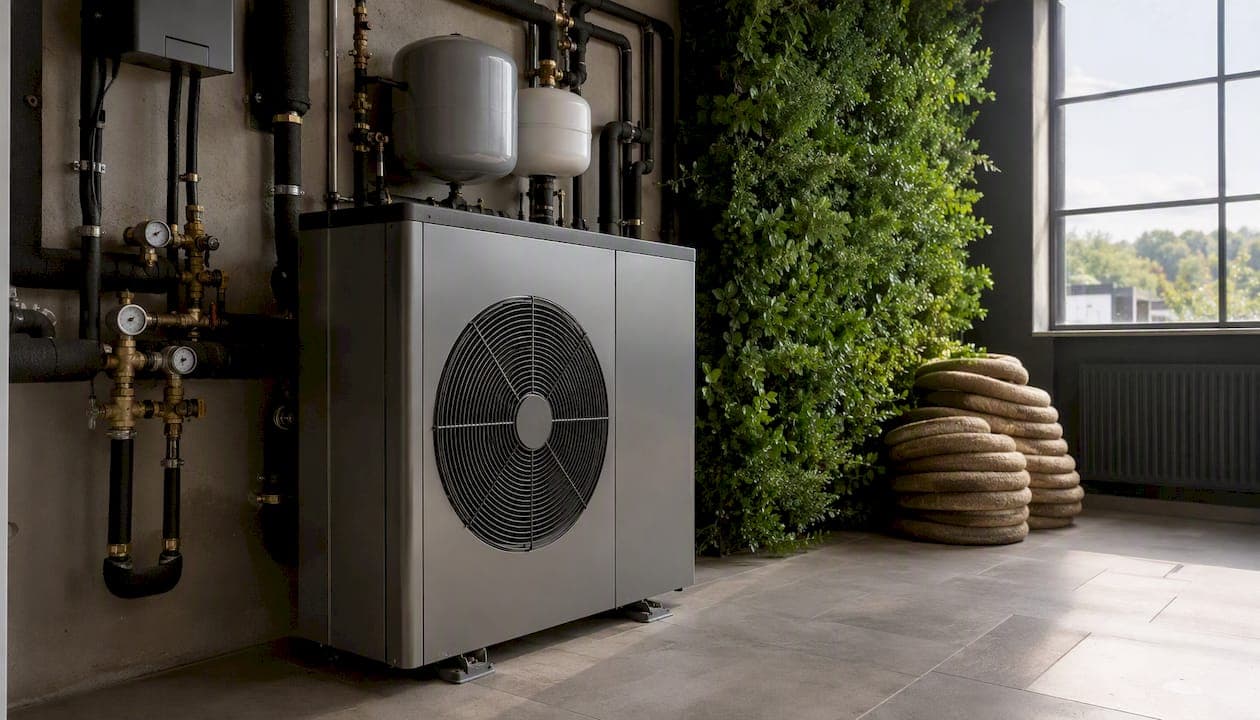
Move to heat pump hot water systems. Gas boilers are the primary Scope 1 source for most hotels. Heat pump systems cut that footprint by two-thirds or more and are increasingly cost-competitive in the Australian market.
-
Revise linen and towel policies. Offering guests the option to reuse towels and linen reduces laundry energy, water and chemical use. Properties that make opt-out the default (rather than opt-in) see higher participation rates.
-
Reduce kitchen food waste. Pre-consumer food waste tracking, right-sized purchasing and menu engineering can cut kitchen waste volumes substantially. For hotels with restaurants, this is often the fastest procurement win.
-
Shift procurement toward local and lower-carbon suppliers. Local sourcing reduces transport emissions and supports regional supply chains, while plant-forward menus cut the carbon intensity of food served. Neither requires a full menu overhaul to make a meaningful difference.
-
Address single-use plastics systematically. Replacing single-use amenity bottles with refillable dispensers, eliminating plastic straws and packaging, and switching to compostable alternatives where needed are now baseline expectations in the Australian market.
Capital versus operational cost shape: Energy efficiency measures (LED, HVAC controls, solar) carry upfront capital costs but generate ongoing savings. Procurement and behaviour changes (linen policy, food waste tracking, local sourcing) are largely operational and often cost-neutral or cost-positive within months. Hotels with limited capital budgets should prioritise the operational changes first and build the business case for capital works from the savings data.
How can guests and travel managers reduce their hotel stay's footprint?
Guest choices shift a stay's Scope 3 footprint more than most travellers realise, and travel managers have additional levers through booking policy.
When booking, look for properties that publish verified HWMI, HFT or NABERS ratings rather than self-declared "eco" labels. A sustainable hotel booking checklist can help you ask the right questions before confirming a reservation. Properties with in-room kitchen facilities let guests prepare some meals themselves, cutting food-service emissions for longer stays.
During a stay, opting out of daily linen and towel changes is the single highest-impact guest action. Reusing towels for three days instead of one roughly halves the laundry water and energy associated with your room. Choosing local food options from the hotel's menu, declining unnecessary single-use items and using public transport rather than taxis for local trips all add up across a multi-night stay.
Travel managers can embed these preferences into corporate sustainable travel policies by requiring hotels to provide verified carbon data (via HFT or HCMI), including hotel-stay emissions in the company's Scope 3 reporting, and weighting sustainability credentials alongside price and location in booking tools. The sustainable food practices guidance for hospitality operators is worth sharing with procurement teams that manage event catering alongside accommodation.
Which Australian schemes and standards apply to hotels?
Australia has recognised national frameworks that hotels should use alongside global industry tools. The four schemes below cover most of what a hotel needs for credible local disclosure.
- NABERS (National Australian Built Environment Rating System): Rates building energy and water performance on a 1–6 star scale using actual metered data. A NABERS Energy rating is the most credible operational energy benchmark available to Australian hotels and is increasingly requested by corporate bookers.
- Green Star (Green Building Council of Australia): Covers building design, construction and fit-out. Relevant for new builds and major refurbishments; a Green Star rating signals that sustainability was designed in, not retrofitted.
- Climate Active: The Australian Government's carbon neutrality certification programme. Hotels that achieve net-zero and offset residual emissions can carry the Climate Active badge, which is independently verified.
- Ecotourism Australia: Provides ECO Certification for nature-based and responsible tourism operators. More relevant for regional and nature-adjacent properties than city hotels, but the certification framework includes strong environmental management criteria applicable to any accommodation type.
These schemes complement rather than replace HWMI, HFT and HCMI. NABERS data feeds directly into HCMI carbon calculations; HWMI water figures align with NABERS Water inputs. Hotels pursuing Climate Active certification will need HCMI-compliant carbon accounts as part of their evidence base.
Pro Tip: Contact your state tourism body (Tourism Victoria, Destination NSW, Tourism WA and so on) or local council sustainability officer before committing to a retrofit programme. State and federal grant programmes for energy efficiency and water saving are updated regularly, and a single conversation can identify co-funding that materially changes the economics of a heat pump or solar installation.
How Altohotel reduces its environmental impact in practice
Alto Hotel on Bourke has operated as one of Melbourne's first environmentally rated boutique hotels, with environmental performance embedded in its operations rather than bolted on as a marketing layer.
What this looks like in practice: Altohotel tracks energy and water use against industry benchmarks, applies a linen and towel reuse programme as the default guest experience, and sources materials and partnerships from local artisans and suppliers to keep its Scope 3 procurement footprint as short as possible. Studio and apartment rooms with in-room kitchen facilities let guests reduce their reliance on food-service operations for longer stays, which cuts both food waste and catering emissions per guest-night. The hotel's Hall of Fame recognition in the Victorian tourism sector reflects sustained, measured commitment rather than a single-year effort.
Three things other Australian hotels can replicate from this approach:
- Make linen reuse the default, not the opt-in. Guests who have to actively request daily changes are far less likely to reuse than guests who have to actively request a change.
- Use in-room kitchen facilities as a sustainability feature, not just a convenience. They reduce food-service load and give guests agency over their consumption.
- Anchor local supplier partnerships to measurable Scope 3 outcomes, not just brand storytelling. Knowing which suppliers are within 100 km and what their own environmental credentials are turns a narrative into a number.
For travellers choosing environmentally rated boutique hotels in Melbourne, Altohotel's verified credentials offer a meaningful alternative to self-declared green claims.
Balancing guest experience, cost and real environmental impact
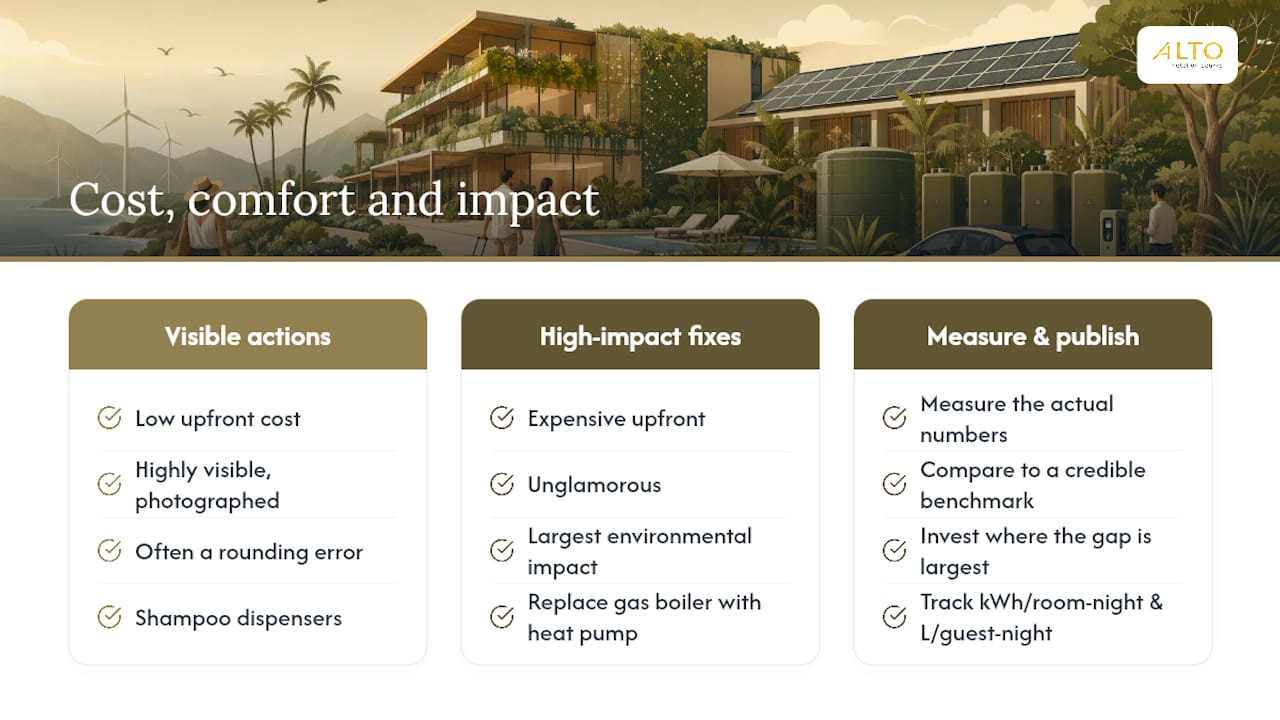
The honest tension in hotel sustainability is that the actions with the largest environmental impact are rarely the ones that get the most marketing attention. Replacing a gas boiler with a heat pump system is unglamorous and expensive upfront. Switching from single-use shampoo bottles to dispensers is visible, cheap and gets photographed. Hotels under commercial pressure naturally gravitate toward the visible, cheap actions and call it a sustainability programme.
That is not greenwashing in the cynical sense, but it is a misallocation of effort. If a hotel's energy bill is still driven by an ageing HVAC system running on gas, the refillable dispensers are a rounding error. The antidote is the same thing that works in every other operational domain: measure the actual numbers, compare them to a credible benchmark, and invest where the gap is largest.
Guest expectations complicate this. Travellers increasingly want sustainability credentials, but they also want hot showers, fresh linen and well-lit rooms. The good news is that energy efficiency and guest comfort are not in conflict: a well-maintained HVAC system with occupancy controls delivers a more consistent room temperature than an oversized, poorly calibrated one. The friction is almost always financial and organisational, not technical.
The most credible hotel sustainability programmes share one characteristic: they publish the numbers. Not a list of initiatives, not a pledge, but actual kWh/room-night and L/guest-night figures tracked over time against a recognised benchmark. That transparency is what separates a genuine commitment from a checklist.
Sources
The sources below are the primary references for the benchmarks, tools and frameworks discussed in this article.
- Energy use and its contributors in hotel buildings: A systematic review and meta-analysis - PMC
- Environmental and carbon footprint of tourist accommodation: A comparative study of popular hotel categories in Brazil and Peru - University of Surrey
- Benchmarking water use in hospitality enterprises — technical paper (Tourism Management)
- Only one Earth – what can hospitality do to protect it? - Sustainable Hospitality Alliance