
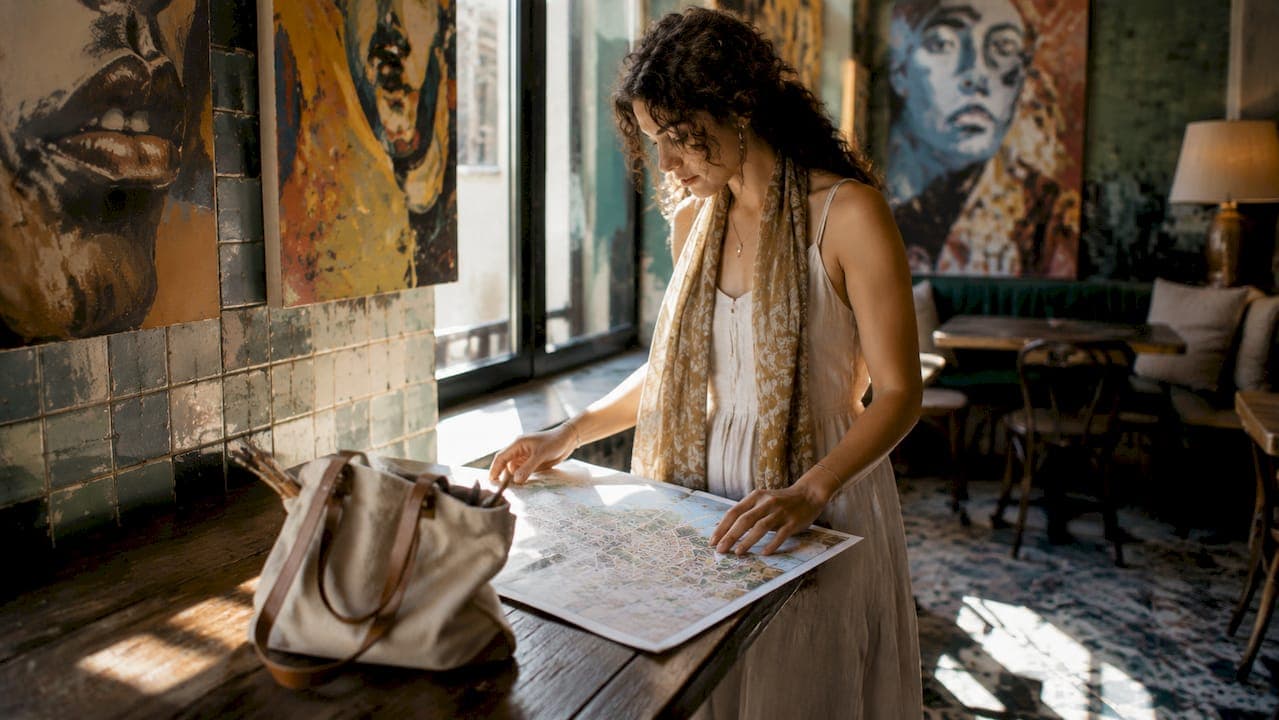
The best boutique hotels are cultural portals, not just places to sleep. When you choose accommodation that actively supports local artists, you gain direct access to urban art scenes that most tourists never find. Street art tourism, the practice of travelling specifically to engage with public murals, graffiti, and installation art, is now a recognised form of cultural travel. Boutique hotels sit at the centre of this movement. They connect guests to curated art walks, artist talks, and neighbourhood routes that transform a standard city break into a genuine creative experience. Altohotel in Melbourne exemplifies this model, weaving local artisan partnerships into its eco-conscious hospitality ethos.
How do you discover street art culture from a boutique hotel?
The most direct way to discover street art culture from a boutique hotel is to choose accommodation that functions as a creative ecosystem, not just a gallery backdrop. Boutique hotels with named curators and active artist relationships channel part of the guest rate back into supporting local murals, vernissages, and community art projects. That economic loop matters. Your nightly rate becomes a contribution to the art scene you came to see.
The difference between a hotel that hangs prints and one that genuinely supports artists is measurable. Hotels in the second category host live painting sessions, maintain curatorial calendars, and partner with neighbourhood galleries. The Henry Jones Art Hotel in Hobart runs daily expert-led tours at 4 PM, giving guests access to over 400 local artworks with curator commentary. That level of access is impossible to replicate through a generic city tour.
Local art in boutique hotel design also signals authenticity. When a hotel's physical spaces reflect the neighbourhood's visual language, the art inside and the art outside become part of the same story. That coherence is what separates an immersive stay from a decorative one.
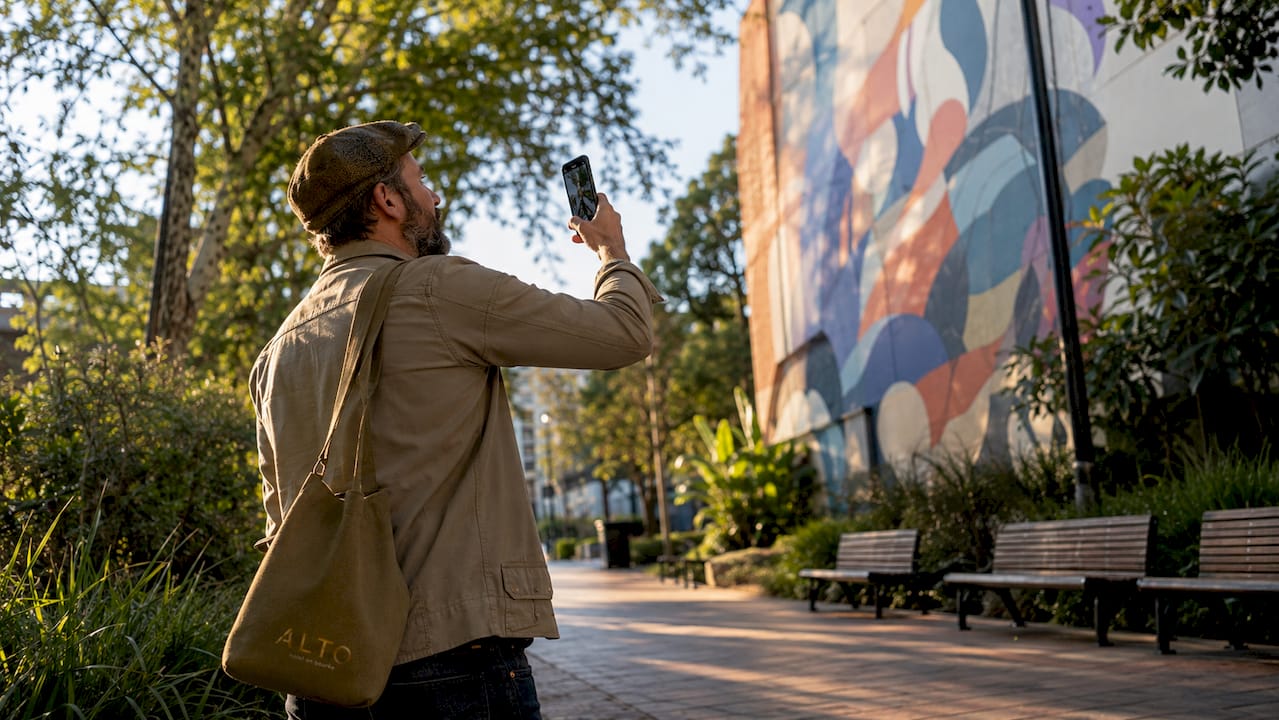
What should you look for when choosing a boutique hotel for street art?
Not every boutique hotel that displays art actually supports it. The distinction matters enormously for travellers who want a genuine local street art experience rather than a curated aesthetic.
Start with these criteria:
- Permanent versus rotating collections. Hotels with rotating exhibitions reward repeat visits and signal an active curatorial programme. Permanent collections can be exceptional, but they rarely reflect the living, changing nature of street art culture.
- Named artist relationships. Ask whether the hotel works with specific local artists or employs a curator. A hotel that can name the artists on its walls is one that pays them.
- Community-focused practices. Hotels that partner with neighbourhood organisations, fund local events, or host public art programming contribute to the ecosystem rather than extracting from it.
- Location within or adjacent to art districts. Proximity to mural corridors, creative precincts, or historically industrial neighbourhoods puts you inside the culture rather than commuting to it.
- Sustainable hospitality credentials. Eco-conscious hotels tend to prioritise community relationships over mass-market appeal. Altohotel, recognised in the Victorian Tourism Hall of Fame, demonstrates that sustainability and cultural engagement reinforce each other.
Pro Tip: Before booking, email the hotel and ask which local artists they currently work with. A hotel that can answer that question immediately is one worth staying at.
How to plan your urban street art exploration from boutique accommodation
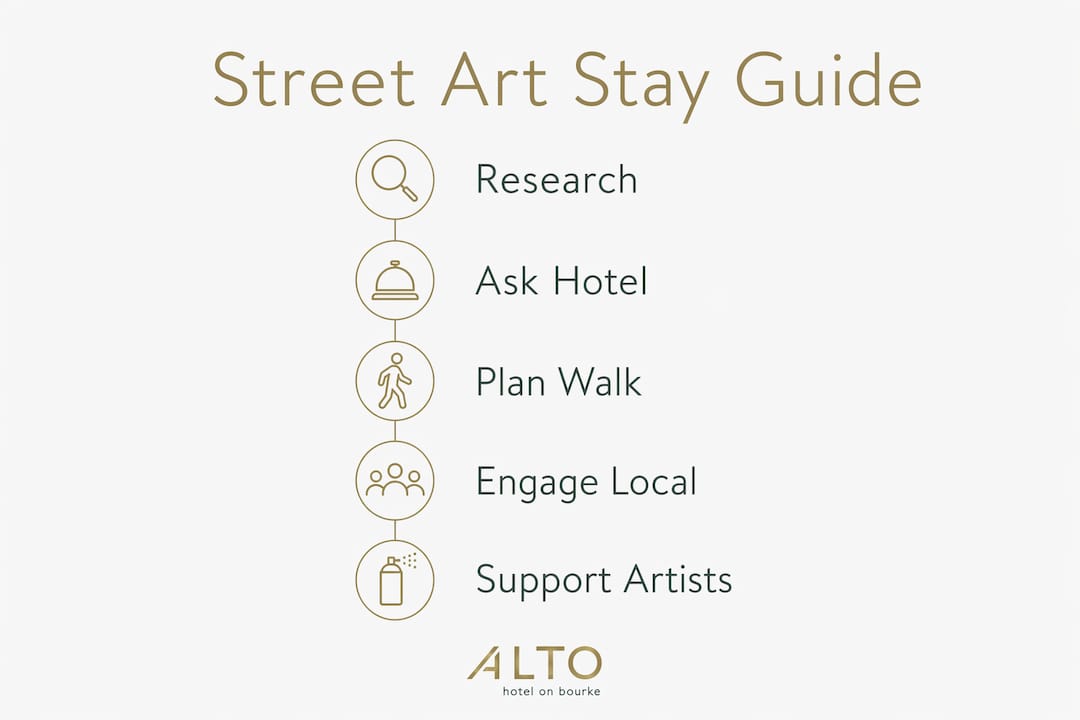
Planning a street art walk from your hotel requires more than downloading a map. The most rewarding local street art experiences come from combining hotel-sourced insider knowledge with deliberate route planning.
Follow this sequence for the best results:
- Ask your hotel for a curated route, not a tourist map. Staff at art-focused boutique hotels know which alleys, laneways, and backstreets contain the densest and most recent work. Generic tourist maps prioritise famous murals, not quality.
- Build time into your itinerary. Covering a dense street art district properly takes time. Exploring a trail like George Town's mural and iron-rod art circuit requires 2.5 to 3 hours for full coverage. Most tourists spend under 30 minutes at the main spots and miss the best work entirely.
- Go early. Arriving before 10 AM means better light for photography, fewer crowds, and the ability to stand in front of a piece without interruption. Secondary alleys near main murals contain denser, higher-quality work that crowds never reach.
- Use hotel-affiliated art tours for context. A guided tour from your accommodation provides the social and political history behind the art. Without that context, a mural is just a picture on a wall.
- Research the neighbourhood's history before you go. Oslo's Grünerløkka district, for example, reveals street art culture beneath a polished city surface rooted in industrial history dating back to 1926. Knowing that history changes what you see.
Pro Tip: Ask your hotel concierge which streets were painted in the last six months. Fresh work is always more interesting than the pieces that appear on every travel blog.
Urban art walks now function as community-led cultural corridors, presenting a city's social history through murals and installations rather than plaques and monuments. Hotels that connect guests to these routes offer something no guidebook can replicate.
How can you engage with local street art communities through your hotel stay?
Boutique hotels that genuinely support the arts function as community hubs, not just accommodation providers. Choosing these hotels directly funds exhibitions, artist events, and creative projects that would not exist otherwise. That is a meaningful form of cultural participation.
Practical ways to engage during your stay include:
- Attend artist talks or live painting sessions hosted by or affiliated with your hotel. These events give you direct access to the people making the work, which changes how you read it on the street.
- Visit vernissages and opening nights. Hotels with active gallery programmes often have relationships with nearby exhibition spaces. Ask the front desk which openings are on during your stay.
- Participate in workshops. Some boutique hotels offer short workshops in printmaking, stencilling, or urban sketching. These sessions build genuine skill and cultural understanding in a few hours.
- Spend money locally and deliberately. Buy prints directly from artists at markets or studios your hotel recommends. That purchase supports the creative ecosystem far more than a souvenir from a chain store.
- Document respectfully. Photograph art without obscuring it with your presence, and credit artists when you share images online. Many street artists are identifiable and appreciate acknowledgement.
How hotels support local creative communities is increasingly a factor in how culturally aware travellers choose accommodation. The guest who attends a vernissage, buys a print, and shares the artist's name online creates a ripple effect that benefits the whole neighbourhood.
How does technology enhance boutique hotel street art experiences?
Digital tools are changing how art-focused boutique hotels operate, and the best of them use technology to deepen the art experience rather than replace human connection.
| Digital feature | How it enhances the art experience |
|---|---|
| Phone-based check-in and keyless entry | Removes front-desk friction so guests move directly into the art environment |
| In-room digital art displays | Rotates curated local works and provides artist context on demand |
| Hotel-curated digital maps | Plots verified art routes with real-time updates on new murals |
| Direct artist booking platforms | Connects guests with local guides, studio visits, or private tours |
| Digital reservation tools | Allows guests to pre-select art experiences as part of the booking process |
Next-generation boutique hotels are already operating on this model. A new mural hotel in York, Pennsylvania runs entirely on phone-based guest operations with no front desk or key cards, positioning the hotel design itself as an immersive artwork. That approach signals where the sector is heading. The technology fades into the background so the art stays in the foreground.
Common pitfalls when exploring street art from boutique hotels
The most common mistake is treating street art tourism like a checklist. Ticking off famous murals without understanding their context produces a shallow experience and misses the point of the culture entirely.
Avoid these errors:
- Booking without checking curatorial calendars. If you want to see a specific exhibition or rotating installation, confirm the dates before you book. Arriving a week after a show closes is a frustrating and avoidable mistake.
- Staying in accommodation outside the art district. Distance from the creative precinct means you miss the spontaneous discoveries that define genuine street art exploration. Location is not a luxury consideration here. It is a cultural one.
- Photographing private property or restricted areas. Not all street art is on public walls. Check before you shoot, and never enter private spaces for a better angle.
- Ignoring neighbourhood etiquette. Street art districts are lived-in communities. Keep noise down in residential streets, do not block traffic for photographs, and treat local residents with the same respect you would want in your own neighbourhood.
Pro Tip: If a mural has a QR code or artist tag, scan or note it. Many artists maintain Instagram accounts or websites where you can learn the story behind the work and follow their future projects.
Key takeaways
Boutique hotels that actively support local artists are the most effective base for discovering authentic street art culture in any city.
| Point | Details |
|---|---|
| Choose hotels with active artist relationships | Hotels that name their artists and run curatorial programmes deliver genuine cultural access, not decoration. |
| Plan routes beyond the famous murals | Secondary alleys and backstreets contain denser, higher-quality work that most travellers never find. |
| Arrive early for the best experience | Visiting before 10 AM reduces crowds and improves both viewing and photography conditions. |
| Engage with hotel-hosted events | Artist talks, vernissages, and workshops provide context that transforms how you read street art. |
| Use digital tools to personalise your stay | Hotel-curated digital maps and pre-booked art experiences maximise time in the right neighbourhoods. |
Street art and boutique hotels: what I have learned from staying in both
I have stayed in hotels that call themselves art hotels because they hung a few prints in the lobby. I have also stayed in places where the art was so embedded in the building's identity that leaving felt like leaving a gallery mid-exhibition. The difference is not about budget. It is about intention.
The hotels that genuinely transform how you experience a city's street art are the ones where the staff can tell you who painted the piece in room 12 and why. They are the ones where the concierge knows which laneway got a new mural last Tuesday. That level of local knowledge does not happen by accident. It comes from hotels that have built real relationships with their creative communities over years.
What surprises most travellers is how much their spending matters. Staying at community-focused boutique hotels directly subsidises the art events and artist incomes that keep a neighbourhood's creative culture alive. You are not just a spectator. You are a patron. That shift in perspective changes everything about how you move through a city and what you take away from it.
— Kamal
Altohotel: a base for Melbourne's urban art culture
Altohotel on Bourke sits at the intersection of sustainable hospitality and genuine community engagement. As one of Melbourne's first environmentally rated boutique hotels and a Victorian Tourism Hall of Fame recipient, Altohotel partners with local artisans and organisations to give guests real access to the city's creative culture.
Melbourne's laneway art scene is one of the most celebrated in the world, and Altohotel's central location puts you inside it from the moment you arrive. Whether you want a curated city art experience or a quiet base from which to plan your own route, Altohotel provides the connections, the location, and the ethos to make it count. Guests can also explore hotel and gastronomy pairings that complement Melbourne's art walk culture with its equally celebrated food scene.
FAQ
What makes a boutique hotel good for street art exploration?
A boutique hotel supports street art exploration when it has active artist relationships, a curatorial programme, and a location within or adjacent to a creative district. Hotels that host events and provide curated routes offer far more than standard accommodation.
How long does it take to properly explore a street art district?
Covering a dense mural district thoroughly takes 2.5 to 3 hours. Most travellers spend under 30 minutes at the main spots and miss the layered work found in secondary alleys and backstreets.
Should I book a guided art tour or explore independently?
Both approaches work best in combination. A guided tour from your hotel provides historical and social context. Independent exploration, especially in backstreets and early in the morning, reveals work that guided tours rarely include.
How does staying at a boutique hotel support local street artists?
Boutique hotels with named artist relationships and active curatorial programmes channel part of the guest rate into supporting exhibitions, artist fees, and community art events. Your accommodation choice directly funds the culture you came to see.
What is the best time of day to view street art?
Early morning, before 10 AM, produces the best conditions. Crowds are thin, light is even, and you can spend time in front of individual pieces without interruption. Secondary alleys are particularly rewarding at this hour.