
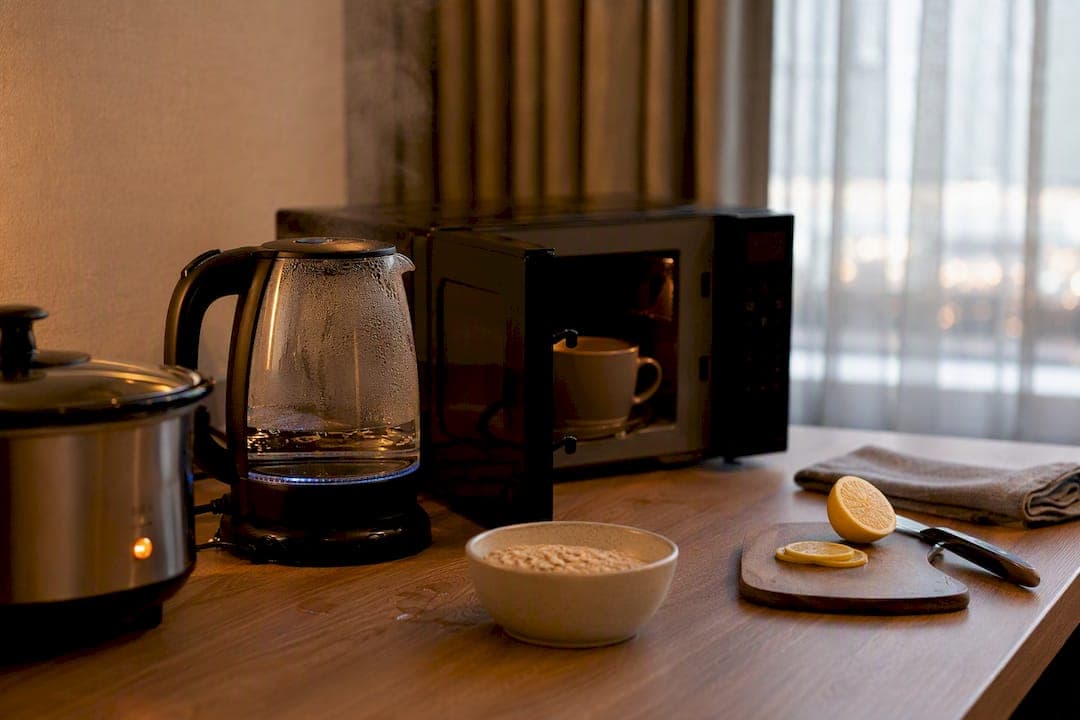
Use the kettle, microwave or a room with a proper kitchenette. Those three options give you the best mix of safety, low odour and hotel-policy compliance when cooking in a hotel room, and most guests already have at least one of them available. No-cook combinations round out the list for nights when you don't want to use any appliance at all.
Here's how they stack up:
- Electric kettle — near-universal in hotel rooms, fine for oats, couscous and noodle cups, but limited to anything you can rehydrate or boil.
- Microwave — reheats fast, handles rice pouches and mug eggs, but can scorch or splatter if you rush it.
- No-cook meals — zero risk, zero cleanup, but limited to wraps, salads and deli-style plates.
- Kitchenette — the only option that lets you pan-fry or simmer properly, and the one with the fewest restrictions.
Before you plug anything in, check your hotel's guest agreement or call the front desk. Rules vary a lot between properties, and assuming yours allows it is how cleaning fees happen.
Key Takeaways
The safest, most reliable way to cook in a hotel room is to combine a kettle or microwave for quick meals with a genuine kitchenette when you're staying multiple nights or cooking daily.
| Point | Details |
|---|---|
| Confirm appliance rules first | Ask the front desk or check the guest agreement before using any appliance beyond the kettle. |
| Match the appliance to the meal | Kettles suit rehydrated meals, microwaves suit reheating and eggs, kitchenettes suit anything pan-fried. |
| Store perishables at the fridge's rear | Mini-fridges cool unevenly, so keep dairy and leftovers away from the door shelf. |
| Ventilate to avoid odour complaints | Run the bathroom fan, plate your food, and clean spills immediately to avoid cleaning fees. |
| Book a kitchenette for longer stays | A room with a proper kitchenette removes most of the fire, odour and circuit-load risks entirely. |
Table of Contents
- Check hotel rules and scan your room before you start cooking
- What can you actually cook with a kettle, microwave, coffee maker or slow cooker?
- Simple meal ideas for every hotel room appliance
- How long can you safely keep food in a hotel mini-fridge?
- What to pack for easy hotel room cooking
- How do you avoid smells and cleaning fees when cooking in a hotel room?
- When does a purpose-built kitchenette beat improvised cooking?
- Why hotel-room cooking advice usually misses the point
- Sources
Check hotel rules and scan your room before you start cooking
Booking confirmations and guest agreements usually spell out what's allowed, but the wording is often buried under cancellation terms. If you're not sure, ask the front desk directly when you check in. It takes thirty seconds and saves you a much longer conversation later, because many hotels prohibit portable burners and high-wattage appliances specifically due to fire risk and electrical load, not because they dislike guests cooking.
Once you're in the room, run this two-minute scan:
- Locate the smoke detector and note how close it sits to any bench or table space.
- Count your power outlets and check whether any are already loaded with the TV, lamp or fridge.
- Check for a bathroom exhaust fan, since it's your best tool for venting steam.
- Confirm what's already provided: mini-fridge, microwave, kettle, coffee maker.
Breaching house rules on appliances can mean a cleaning surcharge or, in repeat cases, an early checkout request. Circuits matter more than people think.
Pro Tip: Photograph the amenities list on the in-room compendium before you unpack groceries. If a dispute comes up later, you've got proof of what the hotel said you could use.
What can you actually cook with a kettle, microwave, coffee maker or slow cooker?
Each appliance has a real ceiling on what it can do well, and knowing that ceiling saves you from a soggy, disappointing dinner.
An electric kettle is arguably the single most useful tool for cooking in a hotel room. It boils water fast, doesn't need supervision, and rarely triggers hotel objections. Use it for instant oats, couscous, dehydrated soup cups, or freeze-dried meal pouches that just need hot water and five minutes. Rinse it after starchy meals so the next cup of tea doesn't taste like noodles, and never use it for anything with oil or fat residue.
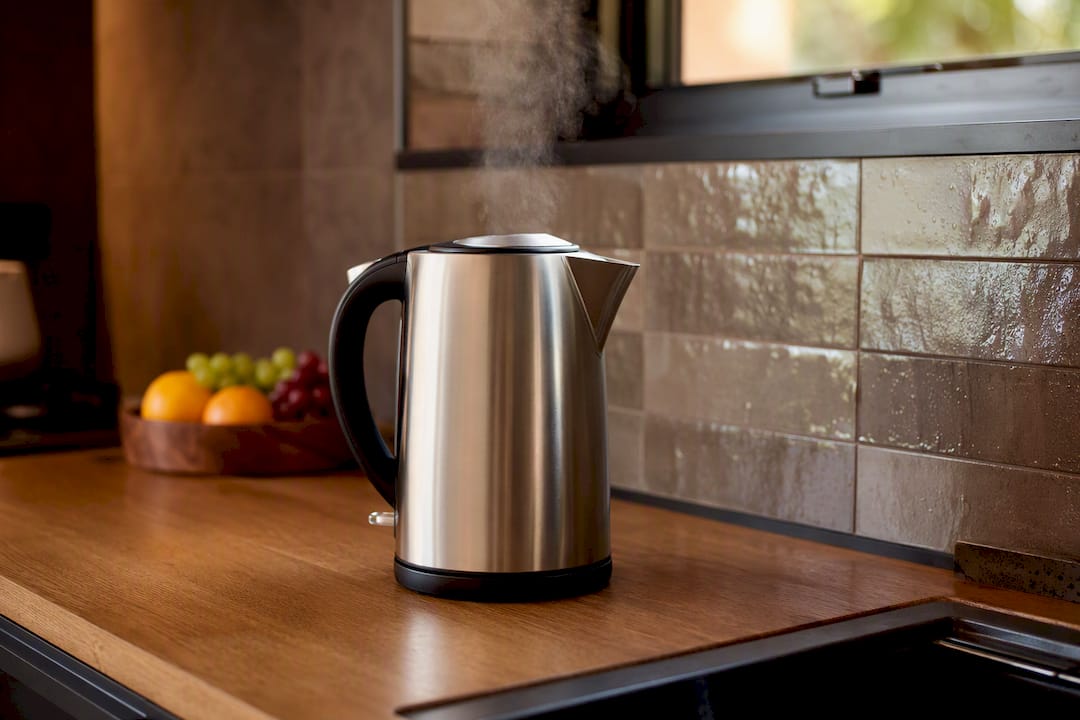
A coffee maker can double as a hot-water source in a pinch, and some travellers use the hot plate for warming oatmeal or noodles. Hygiene experts warn against running sauces or greasy food through the brewer, and the temperature is too inconsistent to trust with meat. Stick to hot water only if you can.
A microwave is the workhorse. It reheats leftovers evenly if you cover the dish, handles a mug egg in under two minutes, and can produce a genuinely good baked potato if you pierce the skin first and rotate it halfway through. Watch for hotspots, and always use short bursts rather than one long blast.
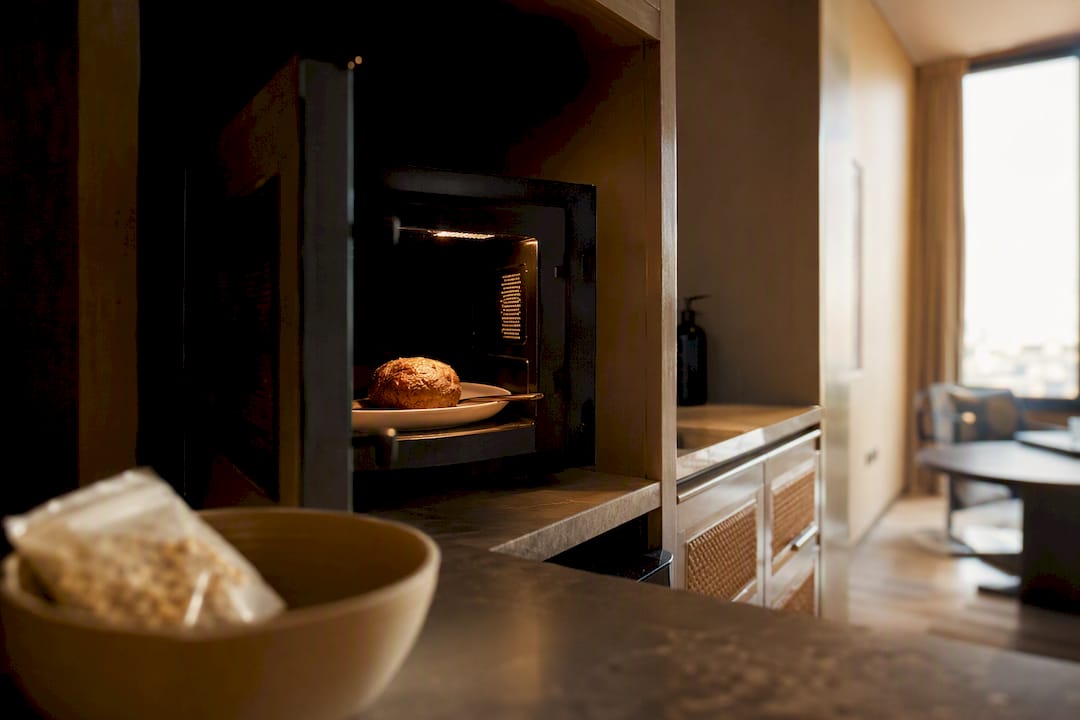
A slow cooker or rice cooker only belongs in your room with the hotel's explicit permission, since these draw steady power over hours and some fire codes treat them the same as hot plates. If it's allowed, low-odour dishes like plain rice or a simple lentil stew work better than anything involving fish or curry paste.
A kitchenette outclasses all of the above because it lets you brown, pan-fry and run a proper one-pot meal, with ventilation and bench space designed for exactly that.
Simple meal ideas for every hotel room appliance
Shopping smart matters as much as the appliance itself. Buy small, buy shelf-stable where you can, and lean on combinations rather than complicated recipes.
Kettle-based meals:
- Instant oats with a spoon of peanut butter stirred through while hot.
- Couscous bowl: pour boiling water over couscous, cover for five minutes, add canned tuna and a sachet of dressing.
- Freeze-dried meal pouches, rehydrated straight in the packet.
- Instant miso or noodle cup with a soft-boiled egg dropped in for extra protein.
Coffee-maker options work the same way as the kettle, with one firm rule: avoid running anything greasy through the brewer, and where possible, use the carafe for water only and heat food in a separate mug.
Microwave meals:
- Mug egg: crack two eggs into a mug, whisk, microwave in 30-second bursts, stirring between each.
- Loaded baked potato with cheese, canned beans and a dollop of sour cream.
- Microwave rice pouch plus canned protein and a squeeze of lime, assembled in under five minutes.
- Pasta cooked directly in a microwave-safe bowl with just enough water to cover, checked every two minutes.
No-cook combinations: wraps with hummus and shredded carrot, a pre-made salad kit with grilled chicken strips, or a tuna and chickpea plate dressed with olive oil and lemon.
Kitchenette one-pan meals: a simple one-pot pasta with jarred sauce, or thin-cut chicken or fish pan-fried with a squeeze of lemon, plated straight from the pan.
How long can you safely keep food in a hotel mini-fridge?
Mini-fridges run colder at the back and warmer near the door, so perishables belong at the rear, not in the door shelf where the temperature swings most. That uneven cooling is the main reason food safety problems crop up in hotel rooms more than home kitchens.
As a rule of thumb, cooked leftovers and dairy are safest eaten within two days of purchase or preparation, and reheated food should be steaming hot all the way through, not just warm on the surface. If you're not certain it's hot enough, give it another minute.
A few habits keep you well clear of trouble:
- Store leftovers in shallow containers so they cool and reheat evenly.
- Buy single-meal portions rather than family packs you won't finish.
- Skip raw seafood and raw poultry entirely unless you've got a proper kitchenette and a meat thermometer.
- Keep the fridge door closed as much as possible. Every open cools it down and lets warm air in.
None of this needs to be complicated. It's the same logic as a camping trip, just with less room to move.
What to pack for easy hotel room cooking
A compact kit beats an overstuffed suitcase every time. Bring a mug or bowl, a microwave-safe container, basic cutlery, a small collapsible chopping board, a handful of zip-lock bags and a travel-size dish soap with a small sponge.
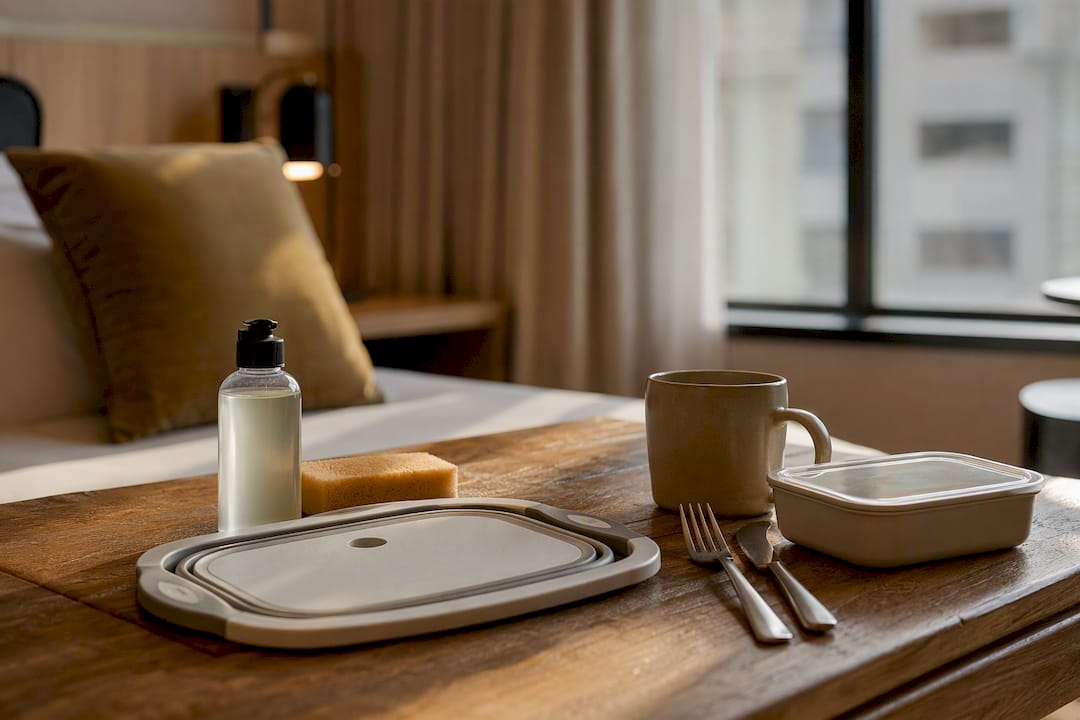
For pantry staples, pack instant oats, a microwave rice pouch, a couple of canned proteins, tortillas, a piece of fresh fruit and a few single-serve sauce sachets.
Pro Tip: Use the "1-1-2-2" heuristic when you're shopping: one base (rice, couscous, tortillas), one protein (canned tuna, chicken, chickpeas), two vegetables (carrot sticks, a salad kit), and two sauces or flavour boosters (hot sauce, dressing packets). That's enough variety for several different meals from one small grocery haul.
How do you avoid smells and cleaning fees when cooking in a hotel room?
Smell is what gets you flagged, not the act of cooking itself. Stick to low-odour foods and skip anything fried or oil-heavy in a standard room, since that's what lingers in carpet and curtains long after you've checked out.
- Run the bathroom exhaust fan and crack a window if the room has one.
- Cook and eat on a plate or tray, never directly on the desk or bench.
- Wipe up spills the moment they happen. Dried food is far harder to shift.
- Bag food waste tightly and take it to a bin outside the room before checkout, not just into the room bin.
- If a smoke alarm sounds or you spill something, stop, ventilate the room and call the front desk straight away rather than trying to hide it.
Housekeeping notices far more than guests expect, and being upfront costs you nothing compared to a surprise charge on your final bill.
When does a purpose-built kitchenette beat improvised cooking?
Every workaround in this article is a compromise. A kettle can't brown onions, and a microwave can't replace a stovetop. A proper kitchenette solves that in one move, because it's built with the ventilation, heat-resistant surfaces and electrical capacity that a standard room simply wasn't designed for.
That's the gap Alto Hotel on Bourke's studio and apartment rooms are built to close. Guests staying multiple nights, travelling with family, or just tired of takeaway get a real cooktop, bench space and fridge capacity, in eco-conscious rooms designed around sustainable materials rather than bolted-on extras.
If you're cooking more than one meal a day on the road, the maths favours a kitchenette every time: less appliance juggling, no smell management, and none of the circuit-load guesswork that comes with running a kettle and a hairdryer off the same double socket.
- No odour risk from improvised appliance use.
- Full-size fridge and freezer capacity instead of a mini-fridge squeeze.
- Bench space for prep, not just a nightstand and a towel.
Why hotel-room cooking advice usually misses the point
Most guides treat hotel-room cooking as a hack to maximise, as though the goal is squeezing a roast dinner out of a kettle. It isn't. The goal is eating well without triggering a smoke alarm, annoying housekeeping, or breaching a guest agreement you didn't read closely enough.
Where the conventional advice falls short is in treating every hotel room as identical. A room with a bar fridge and a kettle is a different cooking environment to a studio with a two-burner cooktop, and pretending otherwise leads travellers to either underuse what they've got or overreach into appliances the hotel never approved.
My honest take: check the room first, then shop for what it can actually support. And if you know you'll be cooking most nights of a trip, book the kitchenette from the start. It's cheaper than takeaway most weeks, and it's the only setup here with no real downside.
— Kamal