
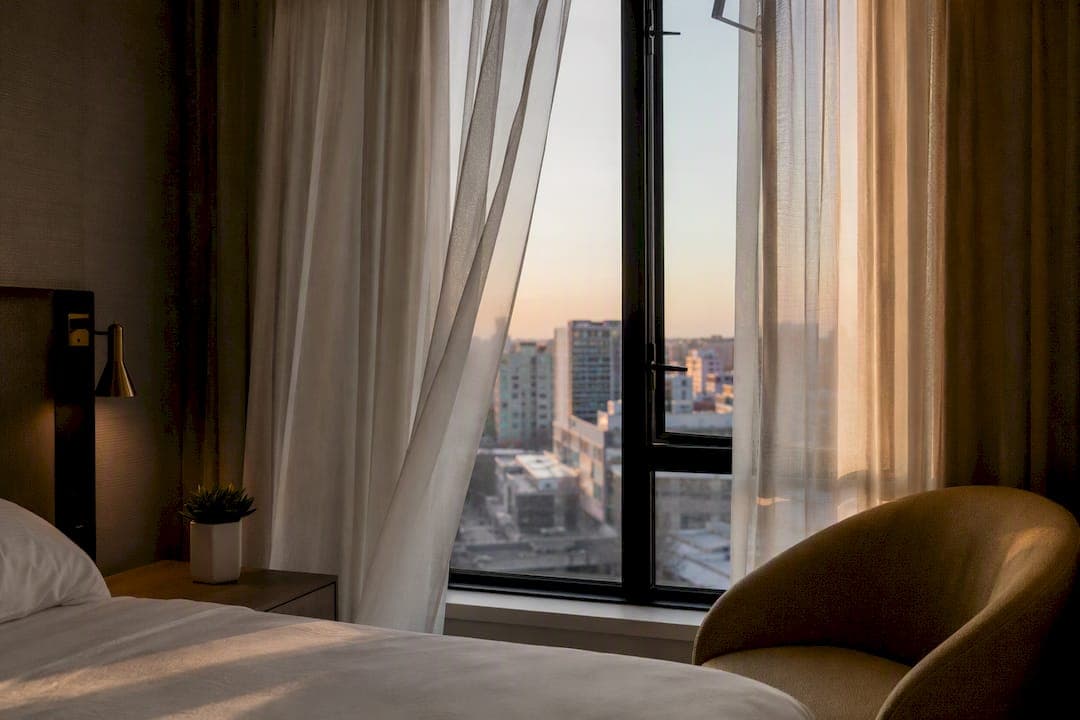
To get a quiet night in a busy city hotel, book an interior or courtyard-facing room, away from lifts, ice machines and service areas. Request a high floor, but not directly under rooftop plant or bar terraces, and ask for no connecting door. Say this in writing before you arrive, and again at check-in.
That single request does more for your sleep than any gadget you pack. Hotel interior layout, not star rating or suburb, is the biggest predictor of a noisy night, according to Roomza's guest research. Before you book, run through this:
- Choose interior or courtyard-facing over street-view, even if it costs a little more.
- Request a high floor that sits above the ground-level noise but below rooftop HVAC or bar plant.
- Ask specifically for no room next to lifts, ice machines, stairwells or housekeeping stores.
- Confirm there's no connecting door to an adjoining room.
- Favour hotels that advertise acoustic glazing, sealed doors or a stated quiet-room policy.
Key Takeaways
Securing a quiet city hotel room depends far more on interior room placement and a specific pre-arrival request than on any earplug or app you pack.
| Point | Details |
|---|---|
| Room placement beats location | Choose interior or courtyard-facing rooms away from lifts, ice machines and service areas. |
| Be specific, not vague | Request "high floor, no connecting door, away from elevator" in writing before arrival. |
| Escalate on arrival, not checkout | Flag noise issues the first evening so staff can offer a room move or sound machine. |
| Glazing and seals do the heavy lifting | Secondary glazing can cut external noise by up to 54 decibels when properly installed. |
| Sustainable design often means quieter rooms | Altohotel pairs eco-conscious materials with interior layouts built for a calmer stay. |
Table of Contents
- What actually causes city hotel noise, and why room choice matters
- What to say to get the quietest room at check-in
- Quick in-room fixes if your room still isn't quiet
- The hotel design features that genuinely cut noise
- What most noise advice gets backwards
- Book a quieter room at Alto Hotel on Bourke
- Sources
What actually causes city hotel noise, and why room choice matters
Street traffic is the obvious offender, but it's rarely the only one. Rooftop HVAC units cycle on and off through the night. Bar and restaurant crowds spill onto footpaths at closing time. Lifts groan in their shafts, ice machines rattle on service floors, and housekeeping trolleys start rolling before most guests are awake. Connecting doors between rooms are often the worst offenders of all, since they're rarely built to the same acoustic standard as an external wall.
This is why interior layout beats location almost every time. A hotel two blocks from a nightclub strip can still deliver a silent night if your room faces an internal courtyard. A "quiet neighbourhood" hotel can ruin your sleep if your room backs onto the lift bank. Roomza's research backs this up directly: proximity to elevators, ice machines and event spaces predicts a bad night far more reliably than the suburb the hotel sits in.
How to check before you book
- Look at the map, not just the address. Check what sits directly opposite and beside the building: live music venues, 24-hour transport interchanges, loading docks, or a rooftop bar on a neighbouring tower.
- Read reviews for room-specific clues. Search reviews for phrases like "asked for a quieter room," "street noise," or "could hear the lift." Guests who mention room numbers or floor levels are gold.
- Pick the courtyard room over the view room. A city-view upgrade often means street-facing glass. The plainer courtyard room is frequently the quieter booking, even in the same category.
- Ask directly about acoustic features. Email or call and ask if rooms have secondary or triple glazing, sealed doors, or a quiet-hours policy. Properties that answer this confidently and specifically tend to have actually thought about it, according to Reader's Digest's hotel research.
Pro Tip: If a hotel's website or booking confirmation mentions "acoustic glazing" or "soundproofed rooms" anywhere, treat that as a genuine signal, not marketing filler. Most hotels that haven't invested in it simply don't mention noise at all.
What to say to get the quietest room at check-in
Getting allocated a quiet room usually comes down to how specific your request is, both before you arrive and at the desk. Vague requests get vague results.
Send a short pre-arrival email or note in your booking, ideally 24 to 48 hours out:
That phrasing works because it mirrors the language hotel allocation staff actually use internally, according to background reporting on how check-in workflows assign rooms. Front desk teams are working from a floor plan and a list of constraints; giving them constraints in their own terms gets you prioritised over a guest who just wrote "quiet room please."
At the desk, repeat the request and ask what's available:
- "I asked for a courtyard-facing room away from the lift. Is that what's been assigned?"
- "If there's an alternative room further from the lift shaft or ice machine, I'd take that instead."
- "Is this floor near any bar, restaurant or event space upstairs or below?"
If the room turns out noisy anyway, say so on arrival rather than after a bad night's sleep. Hotels are far more likely to offer a same-day room move, earplugs or a portable sound machine if you flag it early, per Reader's Digest's reporting on hotel remedies. Waiting until checkout to complain gets you an apology; raising it at 6pm gets you a different room.
Pro Tip: Politely mentioning you're a light sleeper and asking "what's your quietest available room on this floor" often prompts staff to check alternatives they wouldn't otherwise offer. It signals you know rooms vary within the same category, and most front desk staff respect that.
Quick in-room fixes if your room still isn't quiet
Sometimes the room you're given still isn't right, and you don't want to wait on a move. A few low-effort fixes handle most of it.
- Foam earplugs, fitted properly, remain the fastest fix. Roll them thin, insert, and hold for a few seconds while they expand. Cheap ones fail because people skip this step.
- A phone app running pink or white noise smooths sudden noise spikes, like a lift ding or a door slam, far better than silence does. Sound masking works by lowering the contrast between background hum and sharp noises, not by creating true silence.
- A rolled towel under the door cuts corridor noise and light more than most guests expect, and every hotel allows it.
- Ask for heavier curtains or a bed reposition away from a shared wall if the room layout allows it. Reception can usually action both in minutes.
- Call the desk for a door seal check or a room move if the noise is structural, like traffic bleeding through a window frame. That's a hotel maintenance issue, not something a towel fixes.
The hotel design features that genuinely cut noise
Most noise problems trace back to three things: glazing, doors, and what's inside the walls. Get those right and everything else is a minor tweak.
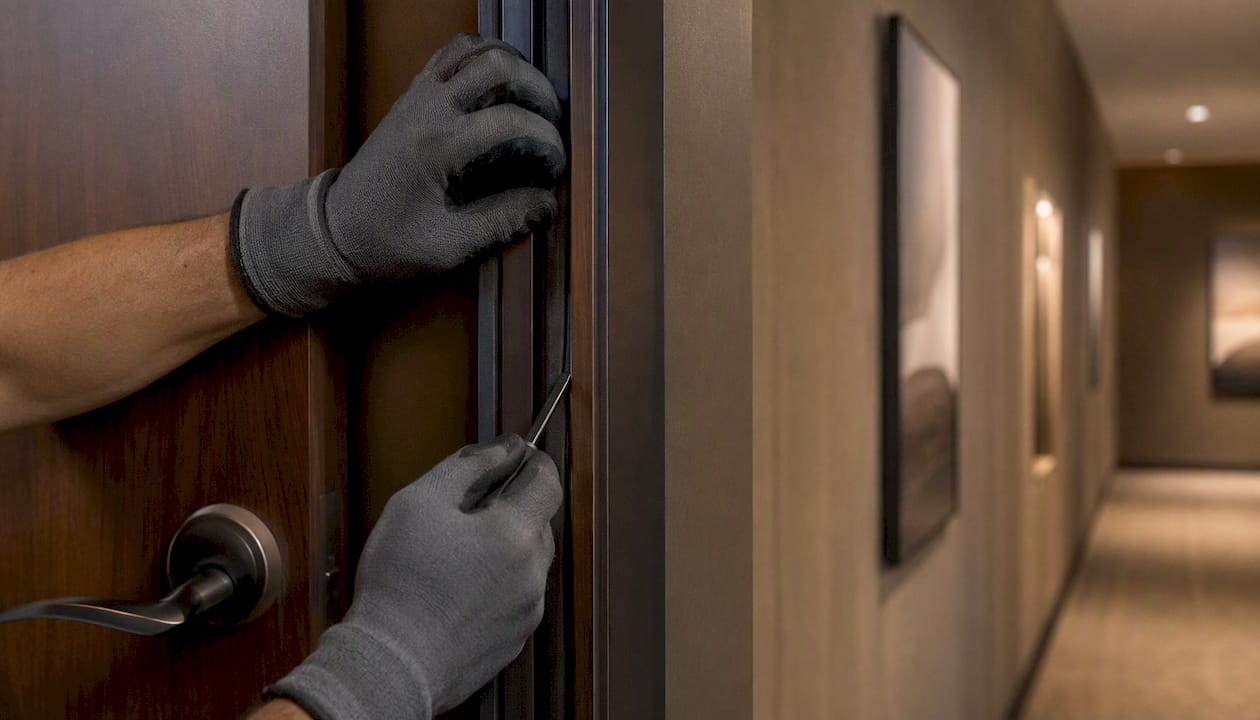
Secondary or triple glazing is the single biggest lever a hotel can pull. It works by adding a second pane and an air gap outside the existing window, rather than replacing it, and case studies show this can cut external noise by up to 54 decibels when installed correctly, according to a Granada case study on hotel glazing retrofits. That's the difference between hearing every passing tram and barely noticing the street exists.
Door seals and drop-seals matter more than most travellers realise. A standard hotel door gap under the frame is often the loudest single noise path into a room, louder than the window in many buildings, because corridor noise, lift chimes and trolley wheels travel straight through it.
Effective soundproofing starts with diagnosing exactly where sound gets in, whether that's a window gap, a weak partition or an HVAC duct, then matching the fix to the problem rather than layering on generic insulation, according to SONO's hotel soundproofing analysis. Wall build-ups using mass-loaded vinyl and absorptive layers, combined with decoupling between rooms, limit how much sound travels sideways between neighbours, a technique detailed in hospitality acoustic panel research.
Sustainable materials often double as acoustic ones. Dense insulation and cork flooring absorb impact noise and reduce sound reflection, the same properties that make them good thermal performers.
Altohotel's boutique design leans on exactly this overlap between sustainability and quiet. The hotel's sustainable material choices and interior-facing layouts reflect the same principle: build for one goal, and you often solve the other. That approach has contributed to Alto Hotel on Bourke's Hall of Fame recognition in Victorian tourism, a rare distinction for a boutique property of its size.
What most noise advice gets backwards
Most guides on this topic obsess over gadgets: earplugs, white-noise apps, foam wedges. All useful, none of them fix a bad room assignment. The research is clear that interior layout, not the item in your suitcase, decides most of your outcome before you've unpacked, and the data on room proximity to lifts and service areas backs that up more strongly than any product review does.
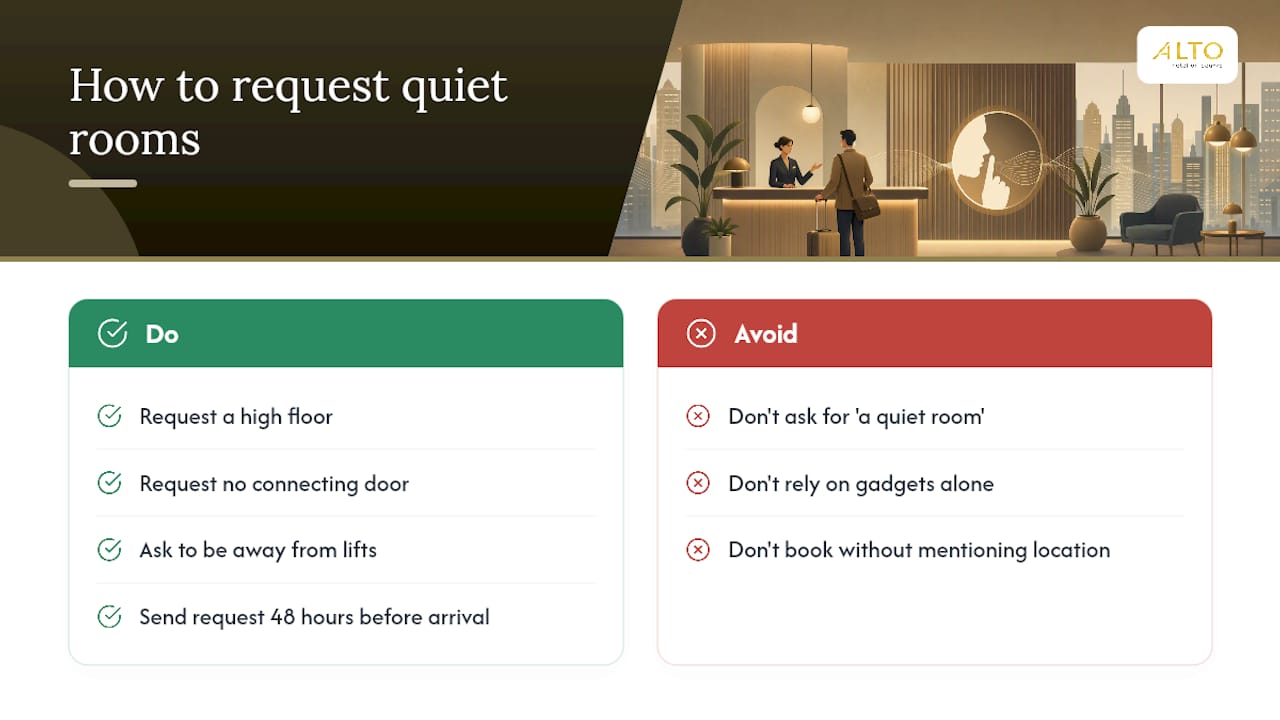
The conventional advice to "ask for a quiet room" is close to useless. It gives front desk staff nothing to act on. Specific constraints, high floor, no connecting door, away from the lift, courtyard side, work because they match the language hotels already use to allocate rooms internally.
If you take one thing from this guide, prioritise the pre-arrival email over the packing list. A well-worded request sent 48 hours out beats a bag full of earplugs booked into the wrong room. Design matters too: hotels that build quiet in from the start, through glazing, seals and wall construction, remove the problem before you ever need a workaround.
— Kamal
Book a quieter room at Alto Hotel on Bourke
If you'd rather not gamble on room allocation at all, Altohotel is built around the same principles this guide just walked through. As one of Melbourne's first environmentally rated hotels, sustainable material choices like dense insulation and considered interior layouts sit alongside the eco credentials that earned its Hall of Fame recognition in Victorian tourism.

Light sleepers do best in the Petite Queen or Studio Queen, both compact rooms suited to interior positioning rather than street frontage. Travelling as a group or family and want distance from shared walls altogether? The 2 Bedroom Sleepover gives you an apartment-style layout with more separation from corridor and lift noise than a standard room configuration allows. Check availability and book directly through the Alto Hotel on Bourke website for current rates and room options.
Sources
- The Quietest Hotel Room: How to Find One Before Booking | Reader's Digest
- Secondary Glazing Creates Quieter Hotel Rooms | Granada
- Hotel soundproofing services and solutions | SONO