
The single most reliable first check when you want to choose sustainable accommodation is this: look for a GSTC-recognised certification or a public sustainability page that lists actual performance figures. Not a logo. Not a tagline. A named third-party scheme or measurable numbers you can verify yourself.
Two signals predict genuine sustainability more reliably than anything else: a certification from a scheme the Global Sustainable Tourism Council recognises (such as EarthCheck, Green Key, or Travelife), and a dedicated sustainability page that publishes energy intensity, water use, or waste diversion figures rather than aspirational statements. If a property has neither, that doesn't automatically disqualify it — but you'll need to dig harder.
Key takeaways
Choosing genuinely sustainable accommodation comes down to verifying third-party certification, reading measurable operational data, and asking specific questions — not trusting marketing language.
| Point | Details |
|---|---|
| Verify certification first | Check GSTC-recognised schemes (EarthCheck, Green Key, Ecotourism Australia) via the certifier's own database. |
| Read the sustainability page critically | Look for named figures, dates, and improvement targets — not aspirational statements. |
| Use the copy-and-paste questions | Ask about energy source, waste diversion, local suppliers, and staff practices before you book. |
| Book direct where possible | Direct bookings keep more revenue with the operator and support reinvestment in sustainability. |
| Altohotel as a local benchmark | Alto Hotel on Bourke is one of Melbourne's first environmentally rated hotels, with local partnerships and verified sustainability credentials. |
Table of Contents
- How to choose sustainable accommodation: nine criteria to check before you book
- Which certifications can you actually trust in Australia?
- Where to find sustainably rated properties and book with local impact in mind
- How to spot greenwashing before it wastes your time
- Exactly what to ask a property before you book
- What a genuinely sustainable boutique hotel looks like: Alto Hotel on Bourke
- How your accommodation choice affects local ecosystems and communities
- Sustainable accommodation features suited to Australia's climate
- Balancing sustainability, comfort, and budget when you book
- The case for pragmatic sustainability over perfect scores
- Alto Hotel on Bourke: a Melbourne eco-stay worth booking directly
- Sources
How to choose sustainable accommodation: nine criteria to check before you book
The Good Tourism Institute's nine-point framework is the most practical structure available for evaluating any property, from a city boutique hotel to a remote eco-lodge. Here's how to apply it before you book.
-
Management commitment. Look for a written sustainability policy with named targets, not a paragraph of vague intent. Red flag: "We care about the environment" with nothing else behind it.
-
Energy use. Check whether the property uses renewable energy (solar, green power tariff) or publishes energy intensity figures. Red flag: no mention of energy source at all.
-
Water management. Genuine properties describe rainwater harvesting, low-flow fixtures, or water recycling. Red flag: a single line about "reusing towels" with no further detail.
-
Waste reduction. Look for composting, waste diversion rates, or a single-use plastics policy. Red flag: a recycling bin photo and nothing more.
-
Local sourcing. Named local suppliers or a seasonal menu policy signals real commitment. Red flag: "locally inspired" with no supplier names or origin details.
-
Community benefits. Does the property employ local staff, support local charities, or partner with community organisations? Red flag: a generic "we support the community" claim.
-
Employee practices. Fair wages, training programmes, and local hiring are concrete signals. Red flag: no mention of staff conditions anywhere on the site.
-
Transparency and reporting. Published annual sustainability reports or improvement plans beat aspirational statements every time. Red flag: a sustainability page last updated three years ago.
-
Nature conservation and responsible experiences. For properties near sensitive ecosystems, look for wildlife interaction policies, habitat restoration work, or partnerships with conservation bodies. Red flag: wildlife encounters marketed without any welfare or distancing guidelines.
Pro Tip: For an urban break, weight criteria 1–4 (energy, water, waste, management commitment) most heavily — they're easiest to verify online. For a remote nature stay, shift your focus to criteria 9 and 6, since local community benefit and conservation practices matter most where ecosystems are fragile.
Which certifications can you actually trust in Australia?
Certification is the fastest shortcut to a credible answer, but not all badges carry equal weight. The Global Sustainable Tourism Council sets the international baseline: any scheme it recognises has been assessed against a rigorous standard covering environmental, social, and management criteria. Schemes it recognises include EarthCheck, Green Key, and Travelife, among others.
For Australian properties specifically, Ecotourism Australia is the most relevant national body. Its ECO Certification programme covers nature-based tourism operators and accommodation, with tiered levels (Eco Certified, Advanced Eco Certified, and the highest, Eco Certified with Respecting Our Culture). You can verify any claim directly on the Ecotourism Australia website.
EarthCheck is widely used by hotels across Australia and internationally. It benchmarks properties against industry averages for energy, water, waste, and greenhouse gas emissions, then provides third-party assessment. Many larger Australian hotels and resorts carry EarthCheck certification, and you can search its directory to confirm a property's current status.
For international stays, the EU Ecolabel applies measurable resource-efficiency standards to accommodation across Europe. It's worth checking for European trips.
| Scheme | What it assesses | How to verify |
|---|---|---|
| EarthCheck | Energy, water, waste, GHG, social practices | Search earthcheck.org certified directory |
| Ecotourism Australia ECO Certification | Nature-based tourism, cultural respect, environmental management | Check ecotourism.org.au certified operators list |
| Green Key | Energy, water, waste, indoor climate, food, CSR | Search greenkey.global for certified properties |
| Travelife | Supply chain, environmental management, community | Check travelife.eu partner/certified list |
| EU Ecolabel | Resource efficiency, waste, chemicals (European stays) | Search ec.europa.eu/ecolabel database |
One important caveat: many small, genuinely sustainable properties — family-run guesthouses, boutique urban hotels, farm stays — may not hold formal certification simply because the cost and administrative load is prohibitive. For these, look for concrete operational evidence: a named renewable energy supplier, refillable bathroom amenities, published water and energy figures, or a sustainable food sourcing policy with named local producers.
Where to find sustainably rated properties and book with local impact in mind
Specialist platforms narrow the field before you start comparing. Green Pearls curates properties against defined sustainability criteria and is a useful starting point for international searches. EcoBnB focuses on smaller, independently owned eco-stays. Both are worth browsing, but treat their listings as a shortlist rather than a guarantee — verify the property's claims independently using the certification checks above.
Mainstream platforms (Booking.com, Expedia) have added eco-filters and sustainability badges, but the criteria behind them vary. A badge on a mainstream platform is a prompt to investigate further, not a final answer.
- Book direct when you can. Booking directly with a property means more revenue stays with the operator and can fund sustainability initiatives rather than platform commissions. Many properties also offer direct booking rates or extras not available through third parties.
- Use platform eco-filters as a discovery tool, not a verdict. Cross-reference any platform badge against the certifier's own database.
- Check recent guest reviews on TripAdvisor or Google for operational details: reviewers often mention whether recycling is actually available, whether the breakfast is locally sourced, or whether staff seem engaged and well-treated.
- For regional Australian stays, look at Tourism Australia's sustainable tourism listings, state tourism bodies (Visit Victoria, Tourism NSW), and niche networks like farm-stay directories for properties with genuine local-economy ties.
- For boutique urban stays, properties that combine lodging with local gastronomy often signal stronger local sourcing and community connection than large chain hotels.
How to spot greenwashing before it wastes your time
The ACCC warns businesses that environmental claims must be specific and verifiable — vague language is a regulatory red flag as much as a consumer one. The same standard applies when you're reading a hotel's website.
Common red flags to watch for:
- Vague language with no metrics: "eco-friendly", "green", "sustainable" used as adjectives with no supporting data.
- Single-issue claims: "We recycle" or "We use LED lighting" presented as the whole sustainability story.
- No sustainability page, or a shallow one: A paragraph buried in the About section is not a sustainability programme.
- Claims without third-party evidence: Self-awarded badges, invented logos, or "certified eco" with no named certifier.
- Outdated content: A sustainability page with no dates, or one that hasn't been updated in years.
Five-minute verification routine:
- Search the property name on the certifier's database (EarthCheck, Ecotourism Australia, Green Key).
- Open the property's sustainability page and look for a year, a figure, or a named partner.
- Read the 10 most recent guest reviews and search for words like "recycling", "solar", "local", or "organic".
- Check whether the property's social media mentions sustainability in operational terms, not just aesthetics.
- If the property claims certification, email them and ask for the certificate number.
Exactly what to ask a property before you book
Send these questions by email or booking message. A property that answers specifically and promptly is a strong signal. One that replies with marketing language, or doesn't reply at all, tells you something too.
Q: What is your primary energy source, and do you use any renewable energy?
Red flag: "We're committed to reducing our energy use."
Q: How do you manage waste, and do you have a composting or food waste programme?
Red flag: "We encourage guests to recycle."
Q: Do you source food and amenities locally, and can you name any suppliers? Good answer: "Our breakfast menu uses produce from [named farm], and our bathroom amenities are supplied by [named local brand]." Red flag: "We use locally inspired ingredients."
Q: How do you support the local community — through employment, purchasing, or partnerships?
Red flag: "We love supporting our local community."
Q: What do you ask of guests to minimise their environmental impact during their stay? Good answer: "We provide a guest impact guide on arrival, offer opt-in linen changes, and have removed all single-use items from rooms." Red flag: "We ask guests to be mindful of their impact."
What a genuinely sustainable boutique hotel looks like: Alto Hotel on Bourke
Alto Hotel on Bourke in Melbourne's CBD is one of the most useful local examples to inspect when you want to see how the checklist plays out in practice. It was among the first environmentally rated hotels in Melbourne, which means its sustainability credentials predate the current wave of green marketing rather than responding to it.
The hotel's commitment shows up in concrete ways: partnerships with local artisans and organisations, eco-conscious materials throughout the property, and a track record that includes Hall of Fame recognition in the Victorian tourism sector. That kind of award doesn't come from a sustainability page alone — it reflects operational consistency over time.

For guests evaluating the property, the signals to look for are the same ones the checklist identifies: named local partnerships, published environmental commitments, and staff who can speak to the hotel's practices directly. The Alto Hotel sustainability approach and its locally curated guest experiences are documented on the hotel's blog for anyone who wants to verify before booking.
Pro Tip: When inspecting a boutique urban hotel's sustainability claims, look for the specifics that can't be faked: named local suppliers, a certifier's database entry, and staff who know the answers without checking a script.
How your accommodation choice affects local ecosystems and communities
The impact of where you sleep extends well beyond your own carbon footprint. Accommodation that sources food and materials locally keeps money circulating within the regional economy rather than flowing to distant suppliers or international chains. In areas near sensitive ecosystems — the Great Barrier Reef, the Daintree, the Kimberley — properties that fund habitat restoration or enforce wildlife interaction guidelines actively reduce the pressure that tourism places on those environments.
Community benefit is equally concrete. Properties that hire locally, pay fair wages, and partner with Indigenous-owned businesses or community organisations create economic resilience that outlasts any single tourist season. Homestays, repurposed buildings, and small boutique hotels typically deliver stronger local economic benefit and lower embodied construction impact than new large resorts, simply because the money and the building already exist in the community.
The reverse is also true. A property that imports most of its food, employs few locals, and sits on cleared habitat may carry a green logo while delivering minimal benefit to the place it occupies. The checklist criteria around local sourcing, community partnerships, and nature conservation exist precisely to surface that gap.
Sustainable accommodation features suited to Australia's climate
Australia's climate and environment shape what genuine sustainability looks like in practice here, and it's worth knowing what to expect from well-run properties across different regions.
Solar energy is the most common feature in Australian eco-properties, given the country's solar resource. A property in Queensland or Western Australia that doesn't use solar at all is worth questioning. Rainwater harvesting and greywater recycling are standard in regional and rural properties where mains water is expensive or scarce. In coastal areas, native landscaping that reduces irrigation and supports local biodiversity is a meaningful signal.
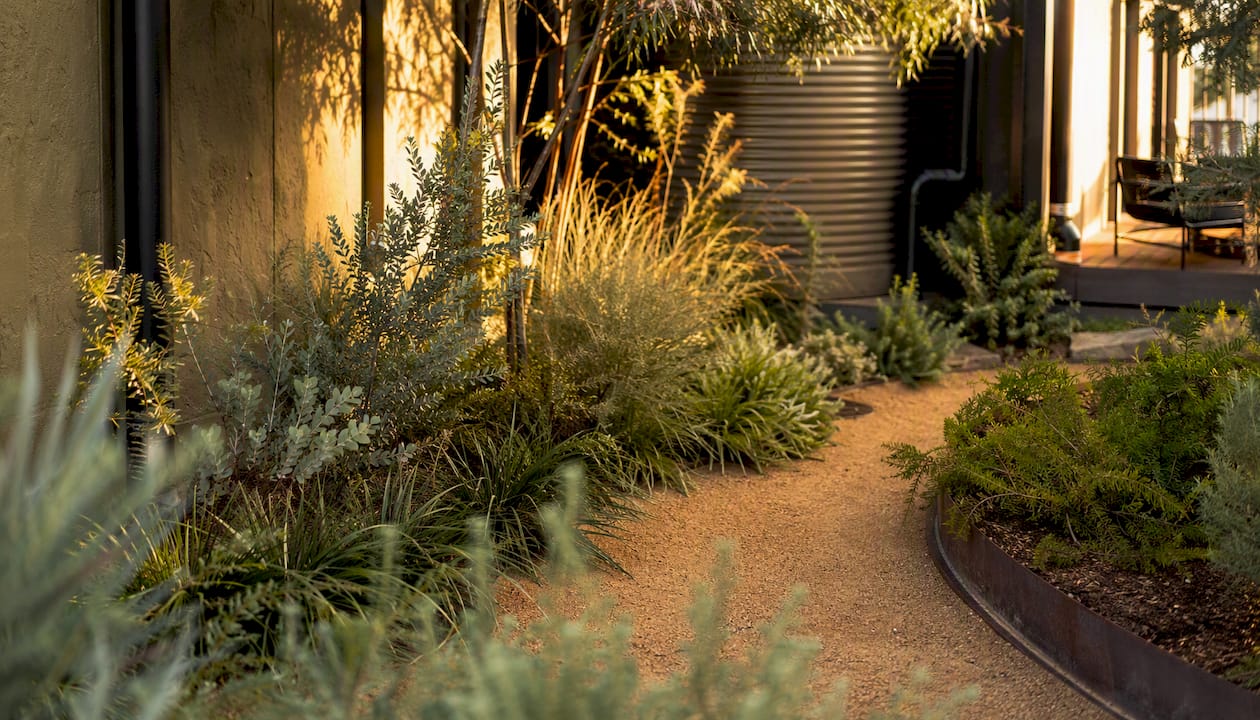
Urban properties face different constraints. In Melbourne and Sydney, green power tariffs, energy-efficient building ratings (NatHERS or NABERS), and waste diversion programmes are the most practical sustainability measures. A city hotel that publishes its NABERS Energy rating is giving you a verified, independently assessed figure rather than a self-reported claim.
In areas near the Reef or other marine environments, chemical-free or reef-safe amenities matter. Properties near national parks should have documented wildlife interaction policies. And across the country, properties that embed sustainability in their food service operations — seasonal menus, reduced food waste, local procurement — are demonstrating commitment across the whole operation, not just the energy bill.
Balancing sustainability, comfort, and budget when you book
Sustainable accommodation doesn't have to mean sacrifice, but it does mean being deliberate about trade-offs.
The most impactful decision you can make is often not the hotel at all — it's the flight. National Geographic's sustainable travel guidance makes clear that transport dominates holiday emissions. A longer stay at a well-run eco-property beats a series of short trips to certified hotels, every time. If you're flying to reach a destination, staying longer and choosing accommodation carefully is the most effective combination.
On budget: certified eco-properties are not always more expensive than conventional alternatives. EarthCheck-certified hotels and Ecotourism Australia operators span a wide price range. The premium, where it exists, often reflects genuine operational costs — renewable energy, local sourcing, fair wages — rather than marketing. A useful heuristic: if a property is significantly cheaper than comparable options and claims strong sustainability credentials, ask why.
Comfort and sustainability are genuinely compatible in well-designed properties. In-room kitchen facilities reduce reliance on single-use takeaway packaging. Refillable amenities are a better guest experience than miniature plastic bottles. Properties that invest in quality eco-conscious materials often produce quieter, more comfortable rooms than those that don't. The benefits of staying in boutique hotels — personalised service, local character, smaller footprint — align naturally with sustainability goals.
The case for pragmatic sustainability over perfect scores
Most travellers who care about sustainability get stuck trying to find the perfect property — the one with every certification, a zero-waste kitchen, and a solar array on the roof. That search often ends in frustration or, worse, paralysis.
The more useful frame is this: sustainability is a direction, not a destination. A property that publishes honest improvement targets and shows measurable progress year-on-year is more credible than one that claims perfection. Transparency about what hasn't been achieved yet is itself a signal of genuine commitment.
When you're making real booking decisions, prioritise the criteria that match your trip type and the destination's specific pressures. In a city, energy and waste matter most. Near a reef or rainforest, conservation practices and community benefit carry more weight. You don't need a property to score perfectly on all nine criteria — you need it to score honestly on the ones that matter for where you're going.
The checklist in this article, the certification databases, and the copy-and-paste questions are tools for making a confident, informed choice — not a standard to hold properties to with rigid perfectionism. Use them to find properties that are genuinely trying, and book with them.
Alto Hotel on Bourke: a Melbourne eco-stay worth booking directly
If you want a working example of the checklist in action, Alto Hotel on Bourke is Melbourne's answer to genuinely sustainable urban accommodation. As one of the city's first environmentally rated hotels, it offers rooms, studios, and one- and two-bedroom apartments built around eco-conscious materials and local partnerships — without trading away the comfort or style that makes a city stay worth it.
Booking directly through Alto Hotel's website gives you access to exclusive direct rates and means more of your spend supports the property's sustainability work rather than a third-party platform. The in-room kitchen facilities in studio and apartment options reduce reliance on single-use packaging and external food delivery. For eco-conscious travellers who want a Melbourne base that reflects their values, the Studio Queen and two-bedroom apartment options are worth checking for your dates. Browse the full range and book directly at Alto Hotel on Bourke.
Sources
- Global Sustainable Tourism Council (GSTC)
- EarthCheck
- Good Tourism Institute — How to check and select sustainable accommodations
- National Geographic — How to travel better (sustainable travel primer)