
The simplest route to a carbon-neutral Melbourne trip is this: reduce flights where you can, get around the city by tram, train or hired bike, stay at accommodation with credible sustainability credentials, and offset whatever emissions you cannot eliminate. You can act on all four today.
Three things to do right now:
- Book a longer stay. Fewer trips means fewer flights. A week in Melbourne beats two long weekends for your footprint.
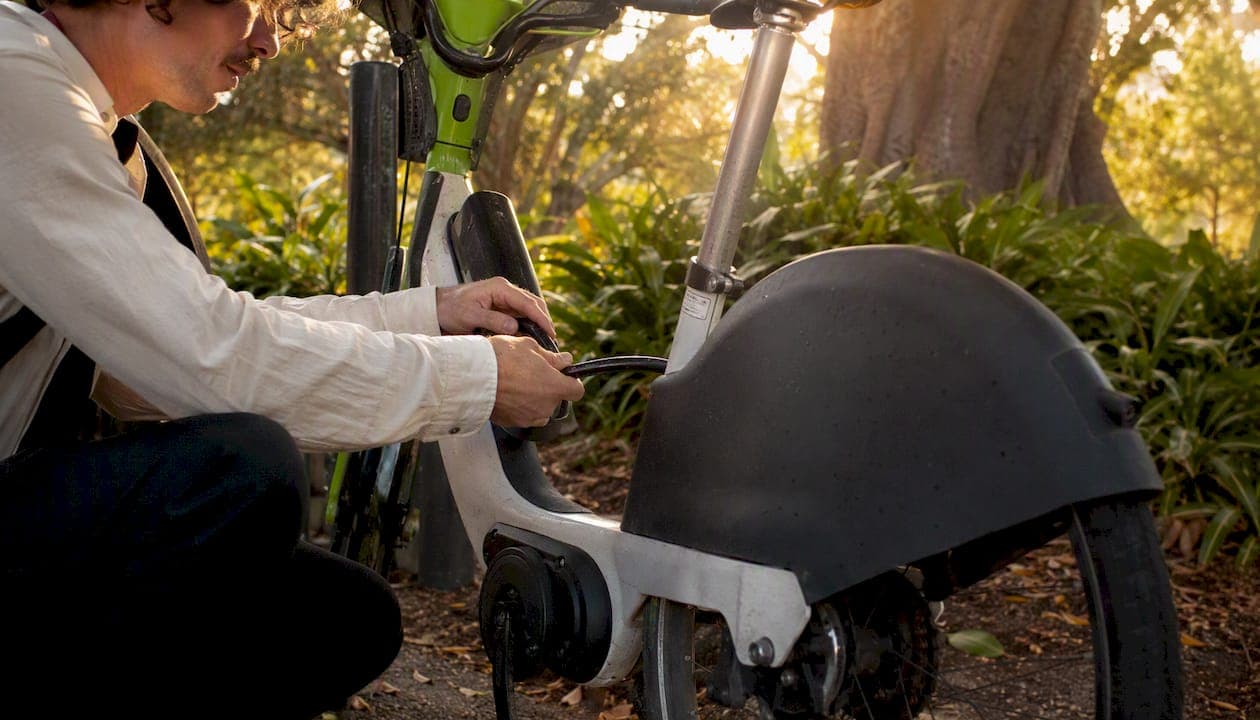
- Choose public transport or a hire bike from the moment you arrive. Melbourne's tram network is free in the CBD, and Lime e-bikes are bookable via app across the inner suburbs.
- Pick certified accommodation. Alto Hotel on Bourke is one of Melbourne's earliest environmentally rated boutique hotels, built around sustainable materials, local partnerships, and apartment-style rooms that let you self-cater and cut per-guest emissions.
Pro Tip: Before you book anything, write down your rough itinerary and flag every flight leg. Those are the emissions you need to reduce or offset first. Everything else is secondary.
Key takeaways
Carbon-neutral travel in Melbourne is achievable now: reduce flights, use public transport and hire bikes, choose certified accommodation, and offset only what remains.
| Point | Details |
|---|---|
| Flights first | Air travel dominates trip emissions; switching to rail cuts a very large proportion of emissions for comparable journeys. |
| Local transport | Melbourne's trams (free in CBD), trains, and Lime e-bikes cover almost every city itinerary at near-zero emissions. |
| Certified accommodation | Look for Climate Active certification, a NABERS rating, and transparent waste and water reporting before booking. |
| Offsets as a last step | Use Australian Carbon Credit Units or Gold Standard projects only after reducing what you can; calculate residual emissions with a tool that accounts for radiative forcing. |
| Altohotel | Alto Hotel on Bourke offers certified eco-friendly stays in the Melbourne CBD with apartment options that lower per-guest emissions. |
Table of Contents
- Why do flights dominate your trip's carbon footprint?
- How do you get around Melbourne with the lowest carbon impact?
- How do you choose genuinely low-impact accommodation in Melbourne?
- How do carbon offsets work in Australia, and when should you use them?
- Practical tips to reduce your Melbourne trip's carbon footprint
- What are Melbourne's leading carbon-neutral programmes and initiatives?
- Why sustainability is not optional for a Melbourne hotel
- Stay at Altohotel and make your Melbourne trip count
- Sources
Why do flights dominate your trip's carbon footprint?
Flights are almost always the single largest source of emissions on any trip that involves air travel. The gap between flying and other modes is not marginal. According to Our World in Data, switching from a flight to a train for a comparable journey can cut emissions by a very large amount, and trains emit substantially less than cars for moderate distances. Walking and cycling sit at the bottom of the emissions scale for any mode of travel.
| Transport mode | Typical CO2e per passenger-km |
|---|---|
| Short-haul flight | ~255 g |
| Long-haul flight | ~195 g |
| Average car (petrol) | ~170 g |
| Coach/bus | ~27 g |
| Train (electric) | ~41 g |
| Cycling | ~0 g |
| Walking | ~0 g |
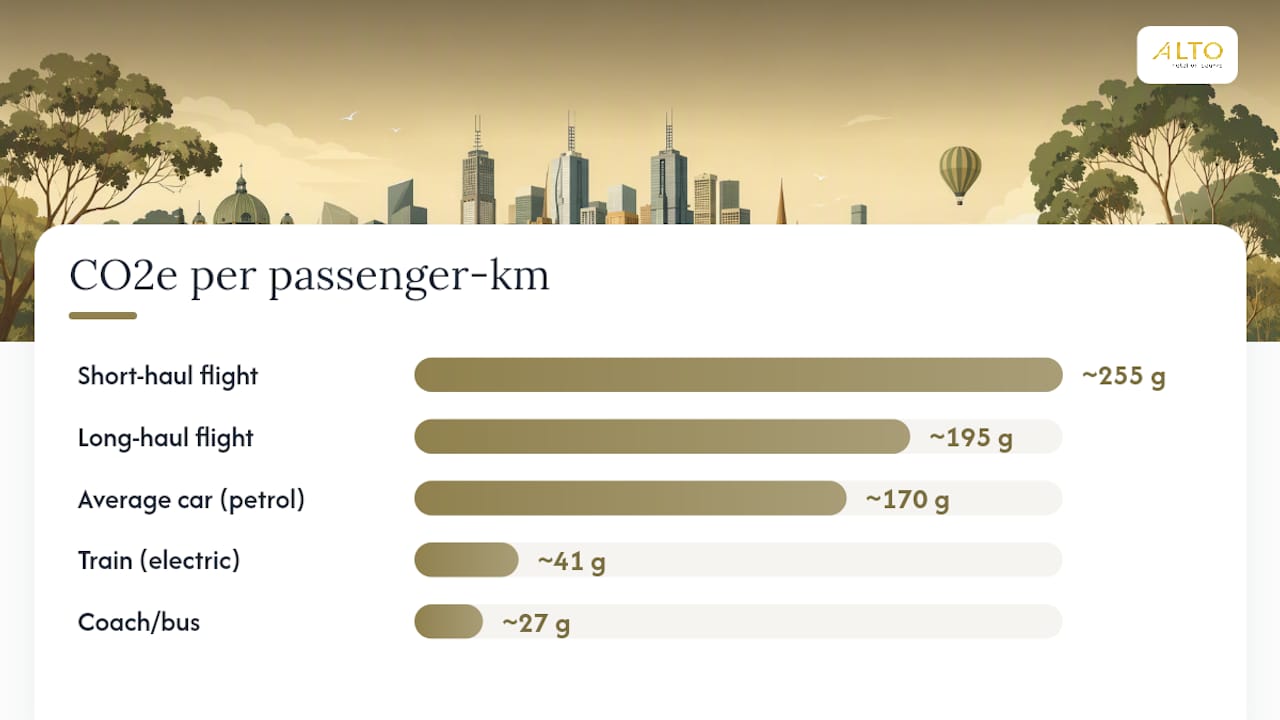
Source: Our World in Data travel emissions data. Figures are approximate averages and vary by aircraft type, load factor, and grid mix.
The practical takeaways from those numbers:
- Fly direct. Takeoff and landing burn the most fuel per kilometre. A connecting flight adds a full extra cycle of that.
- Fly economy. Business class occupies more cabin space per passenger, which means a larger share of the aircraft's total emissions attributed to each seat.
- Use rail for interstate legs where practical. Sydney to Melbourne by train is a genuine option for travellers with flexible schedules.
- Combine trips. One longer Melbourne stay produces far fewer flight emissions than three short visits across a year.
- Offset only what you cannot reduce. Offsets are a last step, not a licence to fly more. More on choosing credible Australian offset schemes below.
Pro Tip: Use a calculator that accounts for radiative forcing when estimating your flight emissions. Aviation's warming effect at altitude is roughly two to four times higher than the CO2 figure alone, and most basic calculators miss it. Sustainable Travel International's footprint calculator applies recognised emission factors and is a solid starting point.
How do you get around Melbourne with the lowest carbon impact?
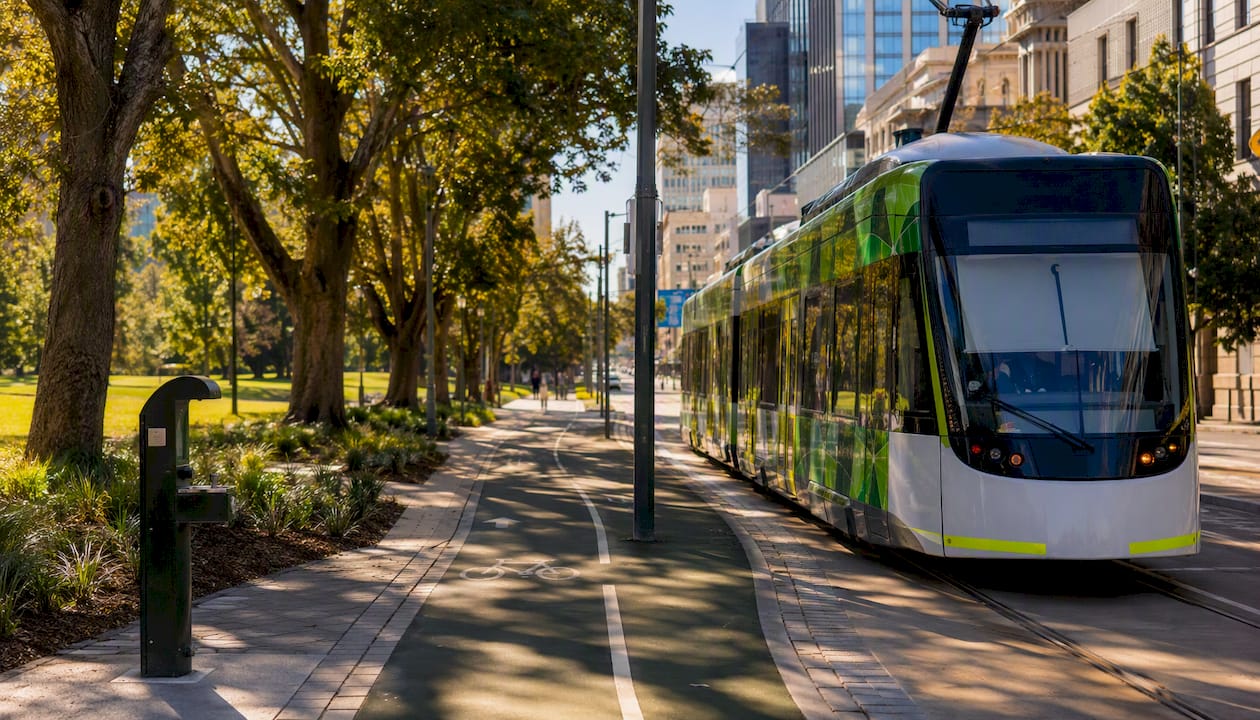
Walk, cycle, or catch a tram or train for almost every city trip. That is the short answer, and the Our World in Data modal comparison backs it up clearly: cycling and walking produce near-zero emissions, and Melbourne's electric tram network is one of the most extensive in the world.
Melbourne's lowest-carbon transport options
- Walking: Zero emissions, free, and the CBD is compact enough that most major attractions are within 20 minutes on foot.
- Trams: Free within the CBD tram zone. Load a Myki card for travel beyond the free zone. Top up at 7-Eleven stores, train stations, or online at ptv.vic.gov.au.
- Trains and buses: Melbourne's metropolitan rail network connects the CBD to most inner and middle suburbs. A Myki card covers all three modes.
- Lime e-bikes: The City of Melbourne has an MOU with Lime for a trial e-bike share covering the City of Melbourne, City of Yarra, and City of Port Phillip. Book via the Lime app, observe the 25 km/h speed limit, and check the geofence map before you ride. The trial is designed specifically to reduce transport emissions in the inner city.
- Hire bikes: Melbourne by Bike and Velo Cycles both offer standard bike hire in the CBD for riders who prefer a traditional pedal. Helmets are legally required in Victoria.
Low-carbon choices for common Melbourne itineraries
- CBD sightseeing: Tram (free zone) or walk. No Myki needed.
- Yarra River day trip: Hire a bike from the CBD and ride the Main Yarra Trail. Flat, well-signed, and car-free for most of its length.
- Airport transfer: The SkyBus connects Melbourne Airport to Southern Cross Station. It is not zero-emission, but it is significantly lower per passenger than a private taxi or rideshare.
- Day trips beyond the inner suburbs: Metro train to the end of the line, then a hire bike or local bus for the last leg.
For longer regional excursions, a shared EV hire can make sense when public transport does not reach your destination. Check Aussie Loop for locally curated slow-travel day tours that are designed around low-impact transport from the outset.
How do you choose genuinely low-impact accommodation in Melbourne?
Choose accommodation with credible certification or clear, verifiable operational practices. Marketing language like "eco-friendly" or "green" without supporting evidence means very little. Ecotourism Australia CEO Elissa Keenan advises travellers to book operators listed on greentravelguide.org and to prioritise accommodations that embed energy efficiency, waste reduction, and water conservation in their actual operations.
What to check before you book
- Climate Active certification: Australia's national carbon-neutral certification programme. A property carrying this badge has had its emissions independently verified.
- NABERS rating: The National Australian Built Environment Rating System measures a building's energy and water efficiency. A higher star rating means lower operational emissions.
- Waste diversion: Ask what percentage of waste is diverted from landfill and whether the property composts food waste.
- Water savings: Low-flow fixtures and rainwater harvesting are basic minimums for a credible claim.
- Local sourcing: Amenities, food, and furnishings sourced from local producers cut supply-chain emissions and support the community.
- Transport links: A hotel within walking distance of trams and trains removes the need for car hire entirely.
- Transparent reporting: Does the property publish an annual sustainability report or at least a clear sustainability page? Opacity is a red flag.
Pro Tip: Before booking, email the property and ask two questions: "What is your current NABERS energy rating?" and "Do you hold any third-party sustainability certification?" A property that cannot answer both questions in one sentence probably does not have either.
Alto Hotel on Bourke
Alto Hotel on Bourke is one of Melbourne's earliest environmentally rated hotels. The property uses sustainable materials throughout, partners with local artisans to furnish and supply the rooms, and offers studio and one- and two-bedroom apartment options. The apartment configuration matters for sustainability: guests who self-cater reduce the energy and waste load of restaurant meals, and the per-person energy intensity of a two-bedroom apartment is lower than two separate hotel rooms. Alto has received Hall of Fame recognition in the Victorian tourism sector for its sustained commitment to environmental practice.

For a deeper look at what to check before you book, the sustainable hotel booking checklist on the Alto blog walks through every verification point in plain language. If you want to understand why apartment-style eco stays can cut per-guest emissions, the eco apartment hotel guide is worth a read before you decide.
How do carbon offsets work in Australia, and when should you use them?
Offsets compensate for residual emissions you cannot eliminate. They are a last step, not a first one. The logic is straightforward: you reduce what you can, then pay to fund a verified project that removes or avoids an equivalent amount of CO2 elsewhere.
In Australia, the credible framework is built around Australian Carbon Credit Units (ACCUs), administered by the Clean Energy Regulator. Climate Active, the federal government's carbon-neutral certification programme, requires that offsets used for certification meet strict eligibility criteria, including third-party verification.
What to do and what to avoid when buying offsets
Do:
- Choose projects that generate ACCUs or are verified under internationally recognised standards (Gold Standard, Verra VCS).
- Look for co-benefits: biodiversity protection, First Nations employment, or community water access alongside carbon abatement.
- Use a calculator that accounts for radiative forcing if your residual emissions include flights.
- Consider a portfolio approach: mixing reforestation, renewable energy, and blue carbon projects spreads risk and delivers broader environmental benefit.
- Check that the provider publishes independent verification reports.
Don't:
- Buy offsets from providers who cannot name the specific project or its verification standard.
- Treat offsets as permission to fly more. The hierarchy is reduce first, then offset.
- Assume a "carbon neutral" label on a product or experience means the underlying activity has low emissions. A carbon-neutral helicopter ride, for example, still carries very high per-passenger emissions that are simply offset after the fact. For urban Melbourne travel, a tram or hire bike will always outperform any offset-based novelty experience on actual emissions.
To calculate your trip's residual CO2e, Sustainable Travel International's calculator applies DESNZ/DEFRA emission factors and covers flights, accommodation, and ground transport. Greentripper uses Bilan Carbone and DEFRA/DESNZ methodologies and accounts for aviation's radiative forcing effect, which most basic tools miss.
Practical tips to reduce your Melbourne trip's carbon footprint
Plan for fewer flights and longer stays. That single decision does more for your carbon footprint than any combination of in-trip choices. A two-week Melbourne stay produces roughly the same flight emissions as a three-day visit, so the longer you stay, the lower your per-day footprint from air travel.
Beyond the flight decision, here is what makes a real difference:
- Pack light. Every kilogram on a flight adds to fuel burn. A carry-on-only approach is a genuine emissions reduction, not just a convenience.
- Use a Myki card from day one. Load it at the airport or Southern Cross Station and use it for every tram, train, and bus trip. It removes any temptation to default to rideshare.
- Concentrate your itinerary geographically. Plan morning, midday, and afternoon activities in the same neighbourhood where possible. The Yarra precinct, Fitzroy, and the CBD are all walkable or bikeable from each other.
- Eat local. Melbourne has outstanding local food markets, including the Queen Victoria Market, where produce is sourced from Victorian farms. Choosing local over imported food cuts supply-chain emissions and supports local growers. For ideas on combining your stay with local food experiences, the lodging and gastronomy guide has practical suggestions.
- Carry a refillable water bottle and reusable bags. Melbourne tap water is excellent. Single-use plastic is an unnecessary addition to your trip's waste footprint.
- Support conservation-linked experiences. Tours that contribute directly to habitat restoration or First Nations land management deliver environmental co-benefits beyond just low transport emissions.
A low-carbon day in Melbourne
- Morning: Walk or tram from your accommodation to the CBD or Fitzroy Gardens.
- Midday: Lunch at a local café or Queen Victoria Market stall using produce from Victorian suppliers.
- Afternoon: Hire a bike or Lime e-bike for the Yarra River trail or a ride through Carlton.
- Evening: Tram or train back. No rideshare needed.
What are Melbourne's leading carbon-neutral programmes and initiatives?
Melbourne's city government and its universities run published, independently verified carbon-neutral and emissions-reduction programmes. These are not aspirational targets. They are operational commitments with public reporting that travellers can read and reference.
City of Melbourne
The City of Melbourne has held Climate Active carbon-neutral certification for its operations since 2012, making it one of the longest-running certified municipal carbon-neutral programmes in Australia. The city publishes ongoing emissions-reduction activity, covering energy, waste, water, and transport. Melbourne is also a member of the Carbon Neutral Cities Alliance, a network of cities committed to deep decarbonisation. For travellers, this matters because it signals genuine infrastructure investment in low-carbon transport, green buildings, and public space, not just marketing.
University of Melbourne
The University of Melbourne runs a dedicated air travel emissions reduction programme as part of its broader sustainability framework. The programme targets one of the university's largest emission sources and publishes its methodology and progress publicly. For travellers, this kind of institutional transparency sets a useful benchmark for what credible emissions reporting looks like.
What these programmes mean for travellers
| Institution | Programme | What it means for travellers |
|---|---|---|
| City of Melbourne | Climate Active certified since 2012 | Verified low-carbon city operations; public reporting available |
| University of Melbourne | Air travel emissions reduction programme | Published methodology; institutional transparency benchmark |
| Carbon Neutral Cities Alliance | City-level network membership | Melbourne's decarbonisation commitments are internationally peer-reviewed |
For a fuller picture of how sustainability is shaping Melbourne tourism policy, the sustainability in Melbourne tourism guide on the Alto blog covers the policy context in detail.
Why sustainability is not optional for a Melbourne hotel
Genuine sustainability in a hotel is not a marketing layer. It is a set of operational decisions that either exist or they do not. At Altohotel, the commitment started before "eco-friendly" became a travel trend. The sustainable materials, the local artisan partnerships, the apartment configurations that let guests self-cater and reduce waste — these were design choices, not retrofits. The Hall of Fame recognition from Victorian tourism reflects years of consistent practice, not a single campaign.
What I find most telling about the Melbourne accommodation market is how few properties can answer basic questions about their NABERS rating or waste diversion rates. The gap between a property that holds credible certification and one that uses green language without evidence is wide. Travellers who ask those two questions before booking will quickly find out which side of that gap their shortlisted hotel sits on.
Stay at Altohotel and make your Melbourne trip count
Altohotel is the practical choice for eco-conscious travellers who want their accommodation to match the rest of their low-carbon trip. The hotel's studio and apartment rooms are built with sustainable materials, supplied by local artisans, and designed so guests can self-cater — which cuts both food-related emissions and cost. It sits in the Melbourne CBD, within walking distance of the free tram zone, so you will not need a car from the moment you check in.
Book a studio or apartment directly at Altohotel for the best available rate and to access exclusive direct-booking offers. Booking an apartment for two or more guests is the single most efficient way to lower your per-person accommodation footprint without sacrificing comfort.