

The fastest way to book an extended stay eco apartment in Australia is to contact the property directly and ask for a 30+ night long-stay rate. That single step unlocks pricing tiers that most online travel agencies never display. Industry convention treats 30 nights as the threshold that triggers long-stay pricing, so use that number as your opening ask. In Melbourne, Alto Hotel on Bourke is one of the city's first environmentally rated hotels, with studio and one- and two-bedroom apartment options built for exactly this kind of stay.
Here is what to do right now:
- Contact Alto Hotel on Bourke directly and request a 30+ night rate with utilities and cleaning cadence confirmed in writing.
- Ask for documentation of the property's environmental rating, energy source, and ventilation standard before paying a deposit.
- Confirm the Passive House Institute standard or equivalent if building performance is claimed.
- Save every written reply as part of your booking record.
Pro Tip: Call or email the property rather than booking through an OTA. Private long-stay rates for one to three months often exist only in the reservations team's system, not on any public portal.
Table of Contents
- What counts as an extended stay, and what will it cost?
- What amenities do you actually need for a 30+ night eco stay?
- Which sustainability features actually cut carbon over a long stay?
- How do you secure the best long-stay rate and verify eco credentials?
- What should you ask every host, and what are the red flags?
- Does the neighbourhood matter as much as the building?
- Key takeaways
- The part most eco travellers get wrong
- Alto Hotel on Bourke: eco-friendly extended stays in Melbourne
- Useful sources and verification checklist
What counts as an extended stay, and what will it cost?
Thirty nights or more is the standard industry threshold for extended stay accommodation. Once you cross that line, most properties shift from nightly to weekly or monthly pricing, and the savings are real.
Typical pricing shapes for 30+ night bookings:
- Monthly flat rate: a single figure covering the room, often with utilities included or capped.
- Discounted weekly rate: a percentage off the standard nightly rate, compounding over the stay.
- Deposit and bond: expect one to four weeks upfront, refundable on checkout in good condition.
- Cleaning cadence: daily housekeeping is common in hotels but weekly or on-demand is standard in eco aparthotels, which reduces both cost and chemical waste.
Negotiation levers worth using: ask whether utilities are included, whether cleaning can be weekly rather than daily, and whether a longer commitment (60 or 90 nights) unlocks a further reduction. Properties that genuinely cater to long-stay guests will have answers ready. Those that do not are probably optimised for short breaks.
Understanding why eco hotel rooms cost more helps frame these conversations. High-performance buildings carry higher construction costs, but lower energy bills often offset the premium over a multi-month stay.
What amenities do you actually need for a 30+ night eco stay?
A week in a hotel with a mini-bar fridge is fine. A month in the same room is not. The amenities that matter most for long, low-impact stays are different from what short-stay guests prioritise.
Practical non-negotiables:
- Fully equipped kitchen with a full-size fridge, cooktop, and oven — cooking in reduces food packaging waste and restaurant spend.
- On-site laundry (in-room or shared) to avoid single-use dry-cleaning bags and external trips.
- High-speed Wi-Fi with a dedicated workspace, not just a desk wedged beside the bed.
- Adequate storage: wardrobe, drawers, and luggage space for a month's worth of belongings.
Energy and comfort features:
- Energy-efficient climate control (reverse-cycle or heat-pump systems, not resistive electric heaters).
- Good building insulation and double-glazed windows to reduce heating and cooling load.
- Mechanical ventilation with HEPA-level filtration for continuous fresh air, which matters enormously for sleep quality across long stays.
Pro Tip: Before booking, ask for a spec sheet or floor plan. A property confident in its amenities will send one. If the response is "just check the photos," that tells you something.
Which sustainability features actually cut carbon over a long stay?
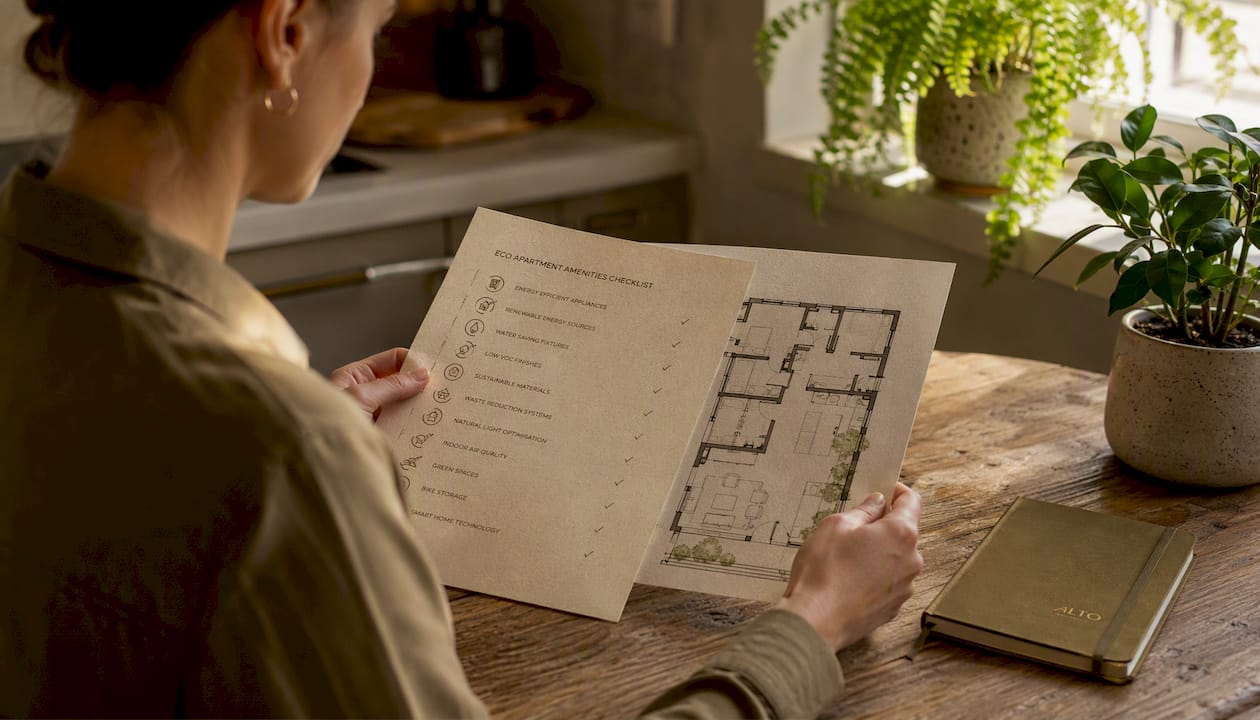
Not all eco claims are equal. A bamboo soap dish is not a sustainability credential. The features below deliver measurable benefits over a 30+ night stay.
Building performance is the foundation. Properties built to the Passive House standard can reduce energy use by up to 80% compared with conventional buildings. That translates directly to lower bills if utilities are billed separately, and to a quieter, more thermally stable interior year-round. Superior insulation and airtightness also mean less mechanical heating and cooling, which reduces noise and improves air quality.
Energy sourcing is the next layer. Ask whether the property runs on 100% renewable electricity via an onsite solar array or a verified renewable energy contract. The distinction matters: onsite generation reduces grid dependence, while a renewable contract still reduces net emissions but relies on the grid's physical infrastructure.
Water and waste systems round out the picture:
- Low-flow fixtures and water-efficient appliances reduce consumption without affecting comfort.
- Onsite composting or a verified food-waste programme.
- A clear recycling and waste-reduction policy, not just a recycling bin in the corridor.
Wellness features that also reduce carbon:
- Fossil-fuel-free heating and cooling (no gas boiler, no oil heating).
- HEPA-filtered continuous fresh air, which improves sleep and cognitive performance across long stays.
- Non-toxic, low-VOC materials in furnishings and finishes.
Statistic: Passive House construction can reduce energy use by up to 80% compared with conventional buildings, according to the Passive House Institute.
How do you secure the best long-stay rate and verify eco credentials?
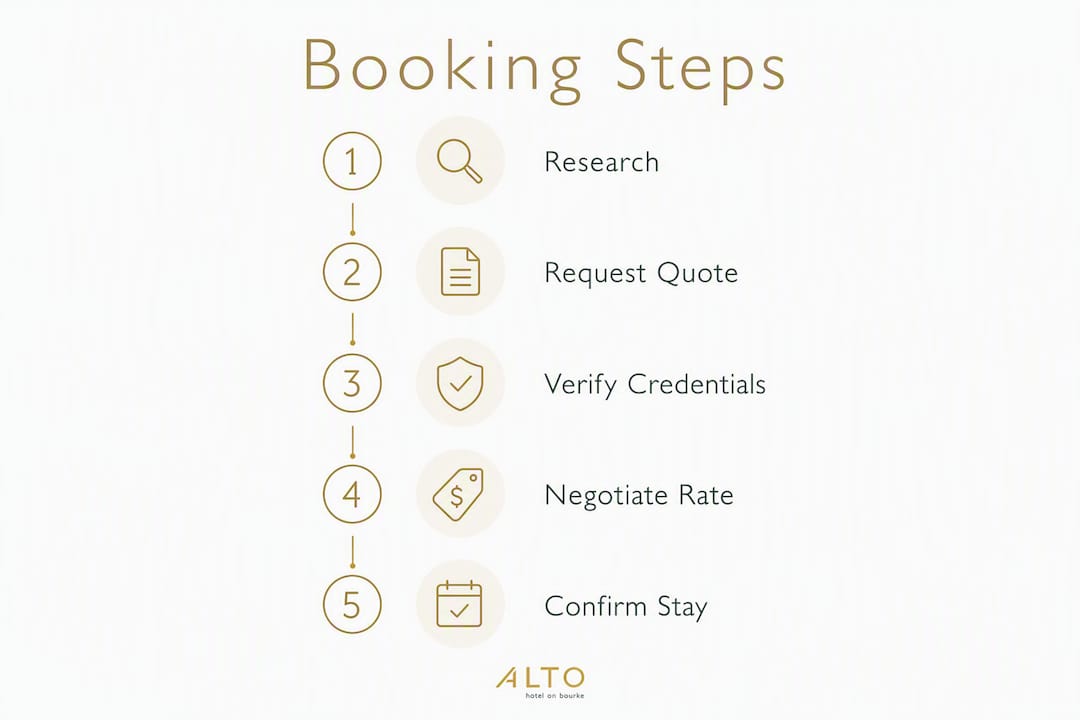
The booking process for a sustainable extended stay has a few more steps than a standard hotel night. Here is a practical sequence:
- Shortlist properties by sustainability claims and amenities. Cross-reference environmental ratings, award mentions, and any published building performance data.
- Contact the property directly by phone or email. Ask specifically for a 30+ night rate and confirm what is included (utilities, cleaning, parking, Wi-Fi).
- Request documentation. Ask for an energy performance certificate, evidence of the renewable energy contract or onsite generation, and the ventilation spec.
- Compare total cost. Add the nightly or monthly rate, utilities if billed separately, cleaning fees, deposit, and any parking or amenity charges.
- Confirm in writing. Get the rate, inclusions, and cleaning cadence confirmed by email before paying.
Channel comparison:
| Channel | Best for | Watch out for |
|---|---|---|
| Direct booking (phone/email) | Private long-stay rates, negotiation, documentation requests | Requires more effort upfront |
| Property website | Published rates, direct-book discounts | May not show 30+ night pricing |
| OTAs (e.g. Booking.com) | Comparison and availability overview | Rarely surface private monthly rates |
| Long-stay platforms | Mid-term rental inventory | Variable sustainability verification |
A simple email to the reservations team: "We are looking for a 30+ night stay from [date]. Could you share your long-stay rate, confirm what utilities and cleaning are included, and provide documentation of your environmental rating or building standard?" That covers the essentials without overcomplicating the ask.
What should you ask every host, and what are the red flags?
Questions to ask before committing:
- What is included in the long-stay rate (utilities, Wi-Fi, parking, cleaning)?
- How often is housekeeping provided, and can the frequency be adjusted?
- What is the property's energy source, and can you provide documentation?
- Is the building certified to any performance standard (Passive House, Green Star, NABERS)?
- What waste and recycling programmes are in place?
- What type of air filtration or ventilation system does the property use?
Red flags that warrant walking away:
- Vague "eco-friendly" claims with no certificates, ratings, or third-party verification.
- Mandatory daily housekeeping billed as an unavoidable extra fee.
- Utilities billed on an unpredictable or estimated basis with no sample invoice available.
- No walkable amenities nearby and no public transport within reasonable distance.
- Reluctance to provide written confirmation of inclusions before a deposit is paid.
Ask for a sample invoice or sample lease terms for a 30+ night stay. A property that handles long stays regularly will have these ready. One that hesitates probably does not.
For a deeper look at how to choose an environmentally rated boutique hotel, the verification checklist there applies directly to extended stay decisions.
Does the neighbourhood matter as much as the building?
Yes, and most travellers underestimate it. A Passive House apartment in a car-dependent suburb still generates significant transport emissions if you drive everywhere. Location is part of the sustainability equation.
What to check before booking:
- Tram, train, or bus stops within 10 minutes' walk, with frequent services.
- Grocery stores, pharmacies, and daily services within walking distance.
- Secure bike storage onsite or nearby, and access to cycling infrastructure.
- EV charging onsite or at a nearby public station if you are driving an electric vehicle.
- A walkability score from your local council's transport or planning maps.
Melbourne's inner suburbs score well on most of these measures. Alto Hotel on Bourke sits in Melbourne's CBD, with tram access directly outside and most daily services within a short walk. For long-stay guests working remotely or exploring the city, that removes the need for a car entirely.
For business travellers, the guide to business-ready eco boutique hotels covers neighbourhood considerations in more detail.
Key takeaways
Booking a sustainable extended stay in Australia means treating 30+ nights as the trigger for long-stay negotiation, contacting the property directly, and verifying sustainability claims with documentation before paying a deposit.
| Point | Details |
|---|---|
| 30-night threshold | Use 30+ nights as your opening ask to unlock long-stay pricing not visible on OTAs. |
| Direct contact wins | Phone or email the property to access private monthly rates and negotiate inclusions. |
| Verify, don't assume | Request an energy certificate, ventilation spec, and written cleaning policy before committing. |
| Location is sustainability | Prioritise walkable, transit-connected neighbourhoods to reduce total travel carbon. |
| Altohotel for Melbourne | Alto Hotel on Bourke offers studio and apartment options with a published environmental rating and direct long-stay booking enquiries available via the official site. |
The part most eco travellers get wrong
The conversation about sustainable extended stays tends to fixate on building certifications, and rightly so. But the single biggest gap is what happens after the booking is made.
Most guests never ask for written confirmation of what "eco-friendly" actually means at that property. They see a green leaf logo, read a line about renewable energy, and assume the rest. Then they arrive to find daily housekeeping they cannot opt out of, utilities billed at a flat rate that incentivises waste, and a neighbourhood where every errand requires a rideshare.
The properties that take long-stay sustainability seriously have documentation ready. They can tell you the ventilation spec, the energy contract, and the cleaning cadence without hesitation. Alto Hotel on Bourke's environmental credentials and Hall of Fame recognition in the Victorian tourism sector reflect exactly that kind of institutional commitment, not a marketing afterthought.
For couples considering a longer stay, the eco apartment hotel guide for couples is worth reading before you finalise room type and inclusions.
Alto Hotel on Bourke: eco-friendly extended stays in Melbourne
Alto Hotel on Bourke is one of Melbourne's first environmentally rated hotels, with studio and one- and two-bedroom apartment options designed for guests who want more than a standard hotel room for a month.
The hotel's studio and apartment configurations include in-room kitchen facilities, on-site amenities, and free Wi-Fi, with direct booking offering the clearest path to long-stay rates and confirmed inclusions. The Hall of Fame recognition in the Victorian tourism sector reflects a sustained commitment to sustainability, not a one-off certification.
What to request when you contact the team:
- Your preferred room type (Studio Queen or larger apartment)
- A 30+ night rate with utilities and cleaning cadence confirmed
- Written evidence of the property's environmental rating and energy source
- Parking availability if needed
Contact Alto Hotel on Bourke directly to request a long-stay quote and ask for sustainability documentation before you commit.
Useful sources and verification checklist
Before finalising any eco extended stay booking in Australia, use these sources to verify claims independently:
- GSA extended stay lodging guidance: Confirms the 30-night industry threshold and what long-stay pricing typically covers.
- Passive House Institute: Verify whether a property's building performance claim is backed by a recognised certification and what the standard requires.
- Alto Hotel on Bourke official site: Review published sustainability commitments, room types, and direct booking options for Melbourne long stays.
- Alto Hotel Studio Queen page: Confirm room configuration, kitchen facilities, and amenities for a concrete example of what a studio long stay includes.
What to request at each stage:
- From the property: energy performance certificate or building standard reference, renewable energy contract or onsite generation evidence, sample invoice for a 30+ night stay, written cleaning policy.
- From your own research: local council walkability or transit maps, Green Star or NABERS ratings if applicable.
- Save all written replies before paying any deposit. If a property cannot provide documentation, that is your answer.