
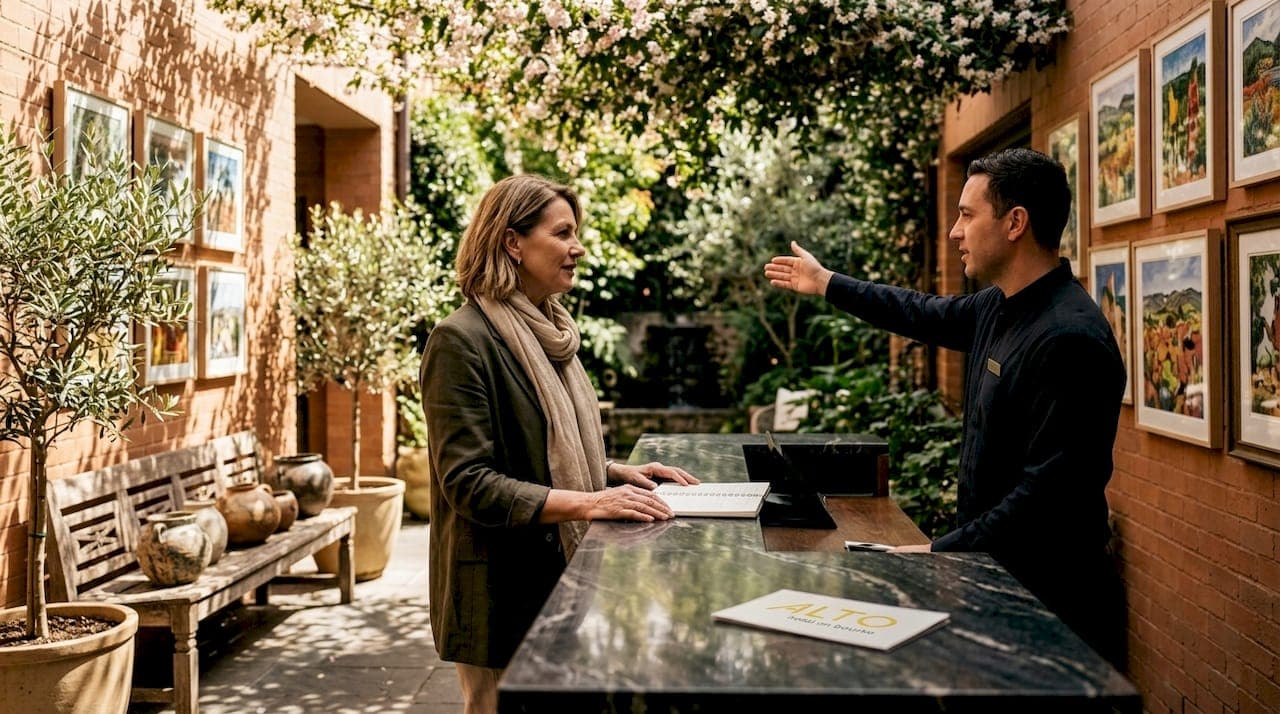
Locally curated hotel experiences are defined as stays where a property embeds authentic regional culture, locally sourced products, and place-based programming throughout every touchpoint of the guest journey. The benefits of locally curated hotel experiences are measurable: hotels with deep local culture integration command room rates 30% higher, 5% greater occupancy, and recommendation scores of 83%. That performance gap is not accidental. It reflects a structural shift in what travellers value, moving away from generic luxury toward stays that feel genuinely rooted in place. Cultural tourism accounts for 40% of international tourism revenue, which confirms this is not a niche preference but a dominant market force.
1. Benefits of locally curated hotel experiences for guest satisfaction
Guest satisfaction rises sharply when hotels move beyond surface-level local theming. The industry term for this approach is cultural stewardship, defined as the active integration of local heritage, artisanship, and community knowledge into core hotel operations. Superficial décor with a regional motif does not qualify. What qualifies is programming that lets guests participate in the culture rather than observe it from a distance.
Practical examples include artisan workshops where guests work alongside local craftspeople, farm-to-table cooking classes that trace ingredients to named regional producers, and guided market tours led by hotel staff trained as cultural hosts. Hotels that employ local experts as cultural hosts provide richer narrative experiences and actively support heritage preservation. Guests leave with knowledge and memories that a standard hotel stay cannot replicate.
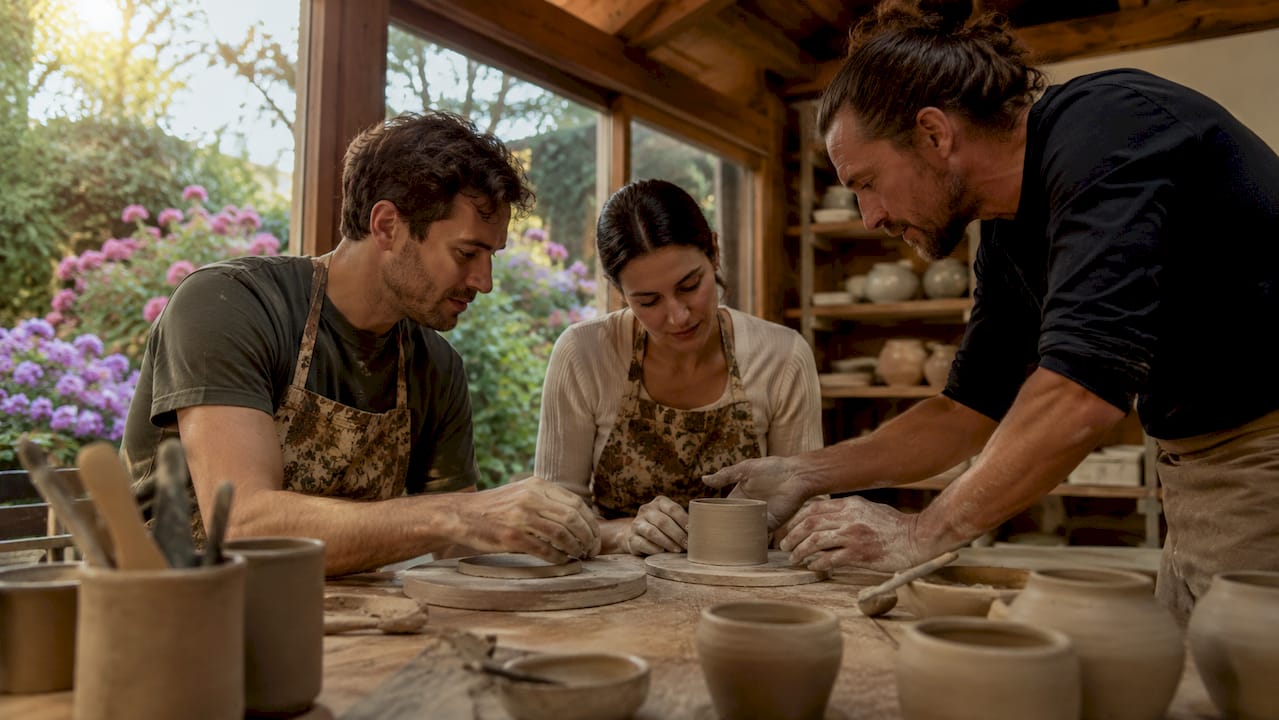
Staff training is the hidden engine behind authentic storytelling. A front-of-house team that can explain the provenance of a handwoven textile in the lobby, or recommend a local ceramicist whose work appears in the room, converts a passive stay into an active cultural encounter. That depth of engagement is what drives the recommendation scores that Arthur D. Little's 2026 study attributes to culturally integrated properties.
Pro Tip: When evaluating a hotel's cultural credentials, ask the reservations team a specific question: "Can you name the local artisan who made the in-room products?" A hotel practising genuine cultural stewardship will answer without hesitation.
2. Sustainable benefits of locally sourced hotel amenities
Locally sourced amenities deliver two advantages at once: they reduce environmental impact and they lower long-term operating costs. Boutique hotels using refillable, locally sourced amenities reduce total ownership costs while building guest loyalty tied to bespoke programmes. The logic is straightforward. A refillable dispenser filled with a locally made botanical product costs less per use over a season than individually wrapped single-use plastics, and it generates far less waste.
The operational benefits extend further than waste reduction:
- Circular procurement keeps supplier relationships local, reducing freight emissions and supporting regional makers.
- Regulatory alignment positions hotels ahead of tightening single-use plastic bans across Australian states and territories.
- Brand differentiation gives properties a genuine story to tell, rather than a generic sustainability claim.
- Retail revenue opens when bespoke amenity products become available for guest purchase, creating an additional income stream.
- Guest loyalty strengthens when travellers associate a scent, texture, or product with a specific place and return to experience it again.
Bespoke refillable amenities also create unique retail product lines that drive incremental revenue beyond the room rate. That is a financial asset most standard amenity programmes cannot offer.
Pro Tip: Look for in-room product labels that name the maker and the region of origin. A label reading "handcrafted in the Yarra Valley" signals genuine local sourcing. A label reading "inspired by Australian botanicals" signals a marketing claim, not a supply chain.
3. How local sourcing shapes the guest experience
The guest experience in a locally curated hotel is qualitatively different from a standard stay. Every object in the room, every ingredient on the breakfast menu, and every activity on the concierge board carries a story that connects the guest to the destination. That connection is what eco-conscious travellers increasingly seek.
Travellers now treat their spending as an impact investment. Eco-conscious travellers demand transparency in local sourcing and use their travel spend to support the destinations they visit. A hotel that can demonstrate where its food, its textiles, and its toiletries come from gives these travellers a reason to choose it over a property that cannot.
The benefits of locally sourced hotel amenities also show up in guest reviews. Travellers who encounter named producers, seasonal menus, and handcrafted products write longer, more specific reviews. Those reviews carry more weight in search algorithms and on booking platforms than generic five-star ratings.
4. Economic and community impact of local hotel partnerships
Culturally integrated tourism increases local sector output by 2.2%, supporting jobs and preserving traditional crafts. That figure represents real employment for artisans, farmers, guides, and makers who might otherwise lose their market as mass tourism homogenises destinations.
Hotels that champion local food producers keep tourist spending within the regional economy rather than routing it to distant corporate suppliers. The cyclical effect is significant. A hotel that sources its breakfast produce from a local farm supports that farm's viability, which preserves the agricultural character of the region, which in turn becomes an attraction for future visitors.
Community partnerships extend beyond food:
- Local craftspeople supply in-room art, textiles, and ceramics, creating stable commissions for makers who depend on institutional buyers.
- Regional guides and cultural hosts gain employment that values their knowledge rather than replacing it with generic tour scripts.
- Heritage preservation receives indirect funding when hotels invest in programming that keeps traditional skills alive and visible.
- Local economies retain a greater share of tourism revenue when hotels prioritise regional suppliers over national chains.
Types of community partnerships that boutique hotels build with local communities demonstrate that this model is replicable across different regions and property sizes.
5. What makes a hotel's local curation genuine
Genuine local curation is verifiable. Vague claims are not. The distinction matters because the market now contains many properties that use local imagery and language without the supply chain or programming to back it up.
Authentic local sourcing involves named artisans, regional menus, and transparency such as provenance QR codes on in-room products. A QR code that links to a supplier's farm or workshop is evidence. A tagline about "celebrating local flavours" is not.
Concierge-led cultural programming embedded in daily operations is another reliable signal. The concierge desk in top hotels transforms into a cultural curation hub, offering directly integrated activities that make authentic local experiences part of a routine stay. That is structurally different from a rack of brochures for third-party tours.
| Signal | Genuine curation | Surface-level claim |
|---|---|---|
| Amenity labelling | Named maker, region, and ingredients listed | "Inspired by local botanicals" |
| Food and beverage | Seasonal menu crediting named producers | "Locally inspired cuisine" |
| Cultural programming | Workshops led by resident artisans | Generic city walking tour brochures |
| Concierge knowledge | Staff can name suppliers and explain provenance | Staff refer guests to external tour operators only |
| Sustainability evidence | Refillable dispensers, named local suppliers | "We care about the environment" statement |
What is an authentic travel experience hotel? is a question worth asking before you book. The answer lies in specificity, not sentiment.
6. Why boutique hotels lead on local cultural integration
Boutique hotels hold a structural advantage over large chain properties when it comes to local cultural integration. Their smaller scale allows procurement decisions to be made at property level, which means a general manager can choose a local soap maker over a national distributor without navigating a corporate approval process.
Luxury and boutique hotels are now cultural stewards, moving past decoration to deliver immersive local heritage experiences. That shift is not cosmetic. It reflects a deliberate operational model where the hotel's identity is inseparable from its location. Altohotel exemplifies this model in Melbourne, holding Hall of Fame recognition in the Victorian tourism sector and maintaining partnerships with local artisans and organisations that shape the guest experience from arrival to departure.
Local sourcing in hospitality does present challenges, including supply consistency and higher unit costs for small-batch products. Boutique hotels that commit to the model, however, find that the premium guest perception and loyalty it generates outweighs those operational complexities over time.
Key takeaways
Locally curated hotel experiences deliver measurable advantages in guest satisfaction, environmental performance, and community economic impact, making them the most effective model for sustainable hospitality in 2026.
| Point | Details |
|---|---|
| Higher rates and occupancy | Cultural integration supports room rates 30% above standard properties and 83% recommendation scores. |
| Amenity savings and loyalty | Refillable, locally sourced amenities cut long-term costs and build guest loyalty through unique product stories. |
| Community economic benefit | Cultural tourism integration increases local sector output by 2.2%, supporting artisans, farmers, and guides. |
| Authenticity is verifiable | Named makers, provenance QR codes, and concierge-led programming distinguish genuine curation from vague claims. |
| Boutique hotels lead the model | Smaller properties make local procurement decisions faster and embed cultural identity more deeply than chain hotels. |
Why local curation is the most honest form of hospitality
I have stayed in hotels that described themselves as "locally inspired" and found nothing in the room that could not have been sourced from a national distributor. The soap was generic. The art was stock photography of a landscape. The breakfast menu credited no one. That experience taught me more about authentic local curation than any industry report.
What I have come to believe, after years of observing how hotels position themselves, is that genuine local curation requires a hotel to make itself vulnerable. It means committing to a supplier who might have a short season, a craftsperson whose output is limited, and a menu that changes when the harvest does. That kind of commitment cannot be faked with a tagline.
The hotels that do this well, including Altohotel in Melbourne, treat their location as the product. The room is not just a room. It is an argument for why this city, this neighbourhood, and these makers deserve your attention and your spending. That argument, when made honestly, is the most compelling one in hospitality.
Travellers who seek immersive hotel experiences are not looking for perfection. They are looking for truth. A hotel that can say "this was made here, by this person, using these materials" gives them something no chain property can replicate: a reason to care about where they slept.
— Kamal
Altohotel: where Melbourne's local culture meets sustainable stays
Altohotel on Bourke is one of Melbourne's first environmentally rated boutique hotels, and its approach to local curation is built into its operations rather than bolted on as a marketing layer.
Altohotel's partnerships with local artisans and organisations shape the guest experience from the in-room products to the cultural knowledge its team carries. Its Hall of Fame recognition in the Victorian tourism sector reflects a sustained commitment to eco-conscious hospitality that goes beyond compliance. For travellers who want a stay that genuinely connects them to Melbourne's creative and cultural community, explore Altohotel's rooms and studios and see how a boutique property can make a city feel like it belongs to you.
FAQ
What are the main benefits of locally curated hotel experiences?
Locally curated hotel experiences deliver higher guest satisfaction, stronger recommendation scores, and a direct economic benefit to local communities. Hotels with deep cultural integration command room rates 30% higher and achieve recommendation scores of 83%.
How do locally sourced amenities benefit boutique hotels?
Refillable, locally sourced amenities reduce total operating costs over a season while building guest loyalty through unique, place-based product stories. They also position hotels ahead of tightening single-use plastic regulations across Australia.
How can I tell if a hotel's local curation is genuine?
Look for named artisans on product labels, seasonal menus that credit producers, and concierge-led cultural programming built into daily operations. Provenance QR codes on in-room products are the clearest signal of a verified local supply chain.
Why do boutique hotels outperform chain hotels on local cultural integration?
Boutique hotels make procurement decisions at property level, which allows them to choose local suppliers without corporate approval processes. That operational freedom lets them embed regional identity into every aspect of the guest experience.
Does choosing a locally curated hotel support the local economy?
Culturally integrated tourism increases local sector output by 2.2%, supporting employment for artisans, farmers, and cultural guides. Staying at a hotel with genuine local sourcing keeps tourist spending within the regional economy.