
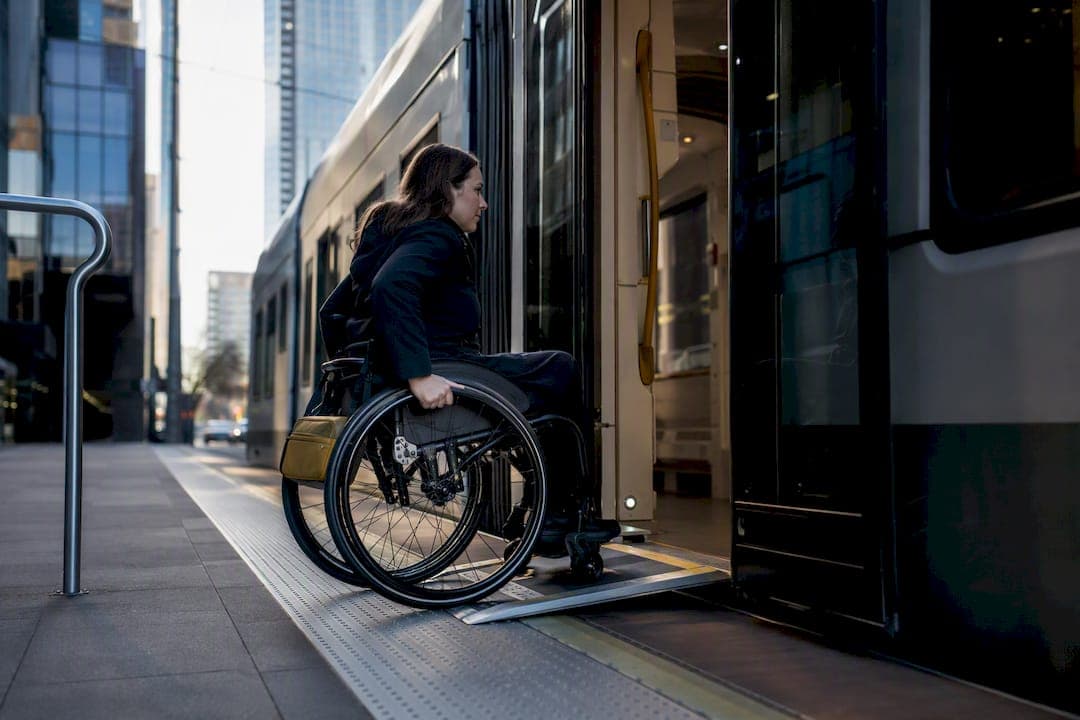
Melbourne Museum, the NGV, the Royal Botanic Gardens, Federation Square and Melbourne Park at Rod Laver Arena rank as the CBD's most wheelchair-friendly attractions, all offering level access, accessible toilets and Companion Card acceptance. Before leaving home, check each venue's own access page and run your trip through the PTV accessibility filter or Yarra Trams' journey tools. The details below cover trams, bookings, sensory support, and dining so the whole outing runs smoothly.
TL;DR:
- Most major CBD attractions like Melbourne Museum and the NGV provide detailed accessibility information, including lift locations, step-free routes, and companion card policies, which should be checked in advance.
- Level-access tram stops are essential for accessible travel; always cross-check the PTV journey planner with Yarra Trams guidance and arrive early to avoid missed services.
- Venues requiring booking for wheelchairs, sensory support, or Changing Places facilities are best contacted the day before travel to secure equipment and assistance.
- Heritage sites like the Old Treasury Building may require staff-led access through side entrances and should be contacted beforehand to confirm entry procedures.
- Staying near a level-access tram stop in the CBD, such as at Alto Hotel on Bourke, minimizes transit hassle and allows easy, central access to Melbourne’s main attractions.
Table of Contents
- A shortlist of wheelchair-friendly attractions in Melbourne CBD
- Getting around: trams, level-access stops and PTV tools
- Venue services worth booking before you arrive
- What to check before you leave home
- Sensory-friendly options for autism and sensory processing needs
- Accessible dining near the CBD's major attractions
- Getting help on the day: assistance programs and volunteer support
- Accessibility laws and standards behind Melbourne's attractions
- Local perspective: planning an inclusive day out in Melbourne CBD
- Stay central with Alto Hotel on Bourke
- Where to check accessibility details before you travel
- Sources
- FAQ
A shortlist of wheelchair-friendly attractions in Melbourne CBD
Not every CBD landmark handles wheelchairs, prams and mobility scooters equally well. These five are the ones locals point visiting family and interstate friends toward first, and each has a published access page worth bookmarking before you go.
- Melbourne Museum — Lifts service every level, gallery routes are wide and flat, and staff can arrange a loan wheelchair on request. The Museums Victoria accessibility page lists exact lift locations and accessible entry points, so check it before your visit if you're bringing your own equipment or need one supplied.
- NGV (National Gallery of Victoria) — Both the International and Australian sites have step-free routes between galleries, hearing loops at information desks, and clear Companion Card booking guidance for ticketed exhibitions.
- Royal Botanic Gardens Melbourne — The main visitor loop is flat, sealed and wide enough for two wheelchairs to pass. Accessible toilets sit near the Observatory Gate and Visitor Centre, and the Melbourne Gardens accessibility guide maps out which side paths get steep or gravelled.
- Federation Square — The open plaza is step-free from Flinders Street, with ramped access into the Ian Potter Centre and Koorie Heritage Trust, plus staffed information points if you need directions or assistance mid-visit.
- Melbourne Park (Rod Laver Arena / John Cain Arena) — Accessible seating bays sit at multiple levels, a Changing Places facility operates at Rod Laver Arena, and Companion Card bookings for events run through Ticketek/AXS with detailed access notes published by Melbourne Park.
SEA LIFE Melbourne Aquarium and Melbourne Skydeck both advertise lift access and accessible toilets, but neither publishes the same depth of detail as the five above, so ring ahead if either is on your list.
Getting around: trams, level-access stops and PTV tools
"Accessible tram travel" means two things lining up at once: a low-floor tram and a level-access stop. Get one without the other and you're still stuck at the kerb. The City of Melbourne's own guidance recommends using the accessibility settings in the PTV journey planner to filter routes down to trips where both conditions are met.
That said, don't treat the app as gospel. A Victorian Auditor-General's Office audit of Melbourne's tram network found real gaps: not every route runs low-floor trams consistently, and PTV's accessibility data only gives reliable visibility over a short scheduling window, rather than a full-day forecast.
Pro Tip: Build a buffer into your schedule rather than trusting the app's real-time countdown. If a low-floor service is running late or gets swapped for an older tram, you want time up your sleeve, not a missed gallery booking.
Practical steps for the day:
- Plan your route using the PTV accessibility filter first, then cross-check it against Yarra Trams' own accessibility guidance, which lists staffed major stops.
- Arrive at the stop five to ten minutes early. Staffed stops can help if the rostered low-floor tram doesn't show.
- If you need in-person help, Travellers Aid runs a CBD location near Southern Cross Station and Flinders Street. Their staff can assist with transfers, equipment hire and general trip planning, and they're worth calling ahead if you're arriving from out of town.
Venue services worth booking before you arrive
Most major venues will look after you well, but only if you've told them you're coming. Companion Card holders get a free ticket for their support person at institutions including the Melbourne Recital Centre, Arts Centre Melbourne and Melbourne Park, though the booking process differs slightly at each. Ring the box office directly rather than booking online if you're using a Companion Card for a ticketed show or match.
- Wheelchair loans exist at ACMI, Melbourne Museum and several other CBD institutions, but stock is limited and gets snapped up on busy weekends. ACMI's access page recommends pre-booking equipment rather than turning up and hoping.
- Sensory supports, including quiet kits and sensory bags, are increasingly available through partnerships with programs such as KultureCity. Ask guest services when you book tickets, since these usually need to be requested in advance rather than picked up on arrival.
- Changing Places facilities, which offer adult-sized change tables and hoists that standard accessible toilets don't, operate at Rod Laver Arena. Some CBD Changing Places require an MLAK key, which you can arrange through the Changing Places national register before you travel.
Pro Tip: Call venues the day before, not the morning of. Wheelchair loans and Companion Card allocations are handled by small teams, and a same-day request can arrive after the slot's already gone.
What to check before you leave home
A five-minute phone call saves an hour of frustration at the entrance. Before you head out, confirm these details directly with the venue rather than relying on a map app or a general listing site.
- Entrance and route. Ask which entrance is step-free and whether it's the same one everyone else uses, or a separate access point.
- Toilets and Changing Places. Confirm the nearest accessible toilet and whether a Changing Places facility exists on-site or nearby.
- Companion Card and equipment. Ask how Companion Card bookings work for that specific venue, and whether a wheelchair loan needs to be reserved in advance.
Sample questions worth asking on that call: "Which entrance has step-free access?", "Where's your nearest accessible toilet from that entrance?" and "Can I book a Companion Card ticket over the phone, or does it need to go through the online system?"
Heritage buildings need an extra layer of planning. Places like the Old Treasury Building often route wheelchair users through a side or rear door that requires a buzzer or staff assistance rather than the grand front entrance everyone else uses. The Old Treasury Building's own accessibility page spells this out clearly, and it's a pattern worth expecting at other heritage sites across the CBD.
Sensory-friendly options for autism and sensory processing needs
Quiet zones and low-sensory sessions have become far more common across Melbourne's CBD venues, though availability still varies a lot from one attraction to the next. Some galleries and museums now offer sensory-friendly opening hours with dimmed lighting, reduced crowd caps and no scheduled audio or video displays running.
Sensory bags, typically containing noise-cancelling headphones, fidget tools, and visual schedules, are increasingly loaned out at major venues through partnerships with sensory accreditation programs. These aren't always advertised prominently on a venue's main accessibility page, so it's worth a direct call or email asking specifically about sensory supports rather than assuming they don't exist because the website doesn't mention them.
Quiet rooms, separate from general accessible toilets, are the other feature to ask about. They give visitors a space to decompress mid-visit without leaving the building entirely, which matters on a day involving several attractions back to back. If a venue doesn't have a dedicated quiet room, ask whether staff can point you toward a low-traffic area during quieter hours, since most large institutions have at least an informal answer to this even without a marked space.
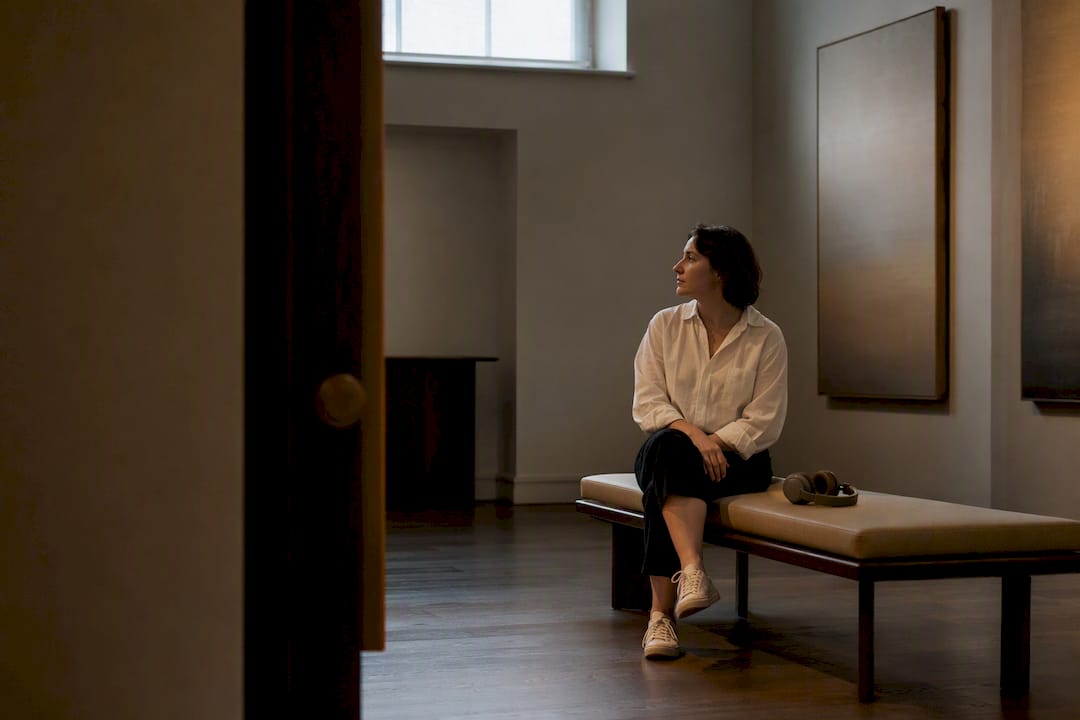
Timing your visit matters as much as the venue itself. Weekday mornings, particularly outside school holidays, tend to be markedly calmer than weekend afternoons at every major CBD attraction, and that gap alone can make or break a sensory-sensitive visitor's day.
Accessible dining near the CBD's major attractions
Most CBD dining precincts sit close enough to the major attractions that you won't need a second tram trip just to eat. Federation Square's own cafes and restaurants offer step-free access straight off the plaza, which makes it a practical lunch stop between the NGV and the Ian Potter Centre without backtracking through traffic.
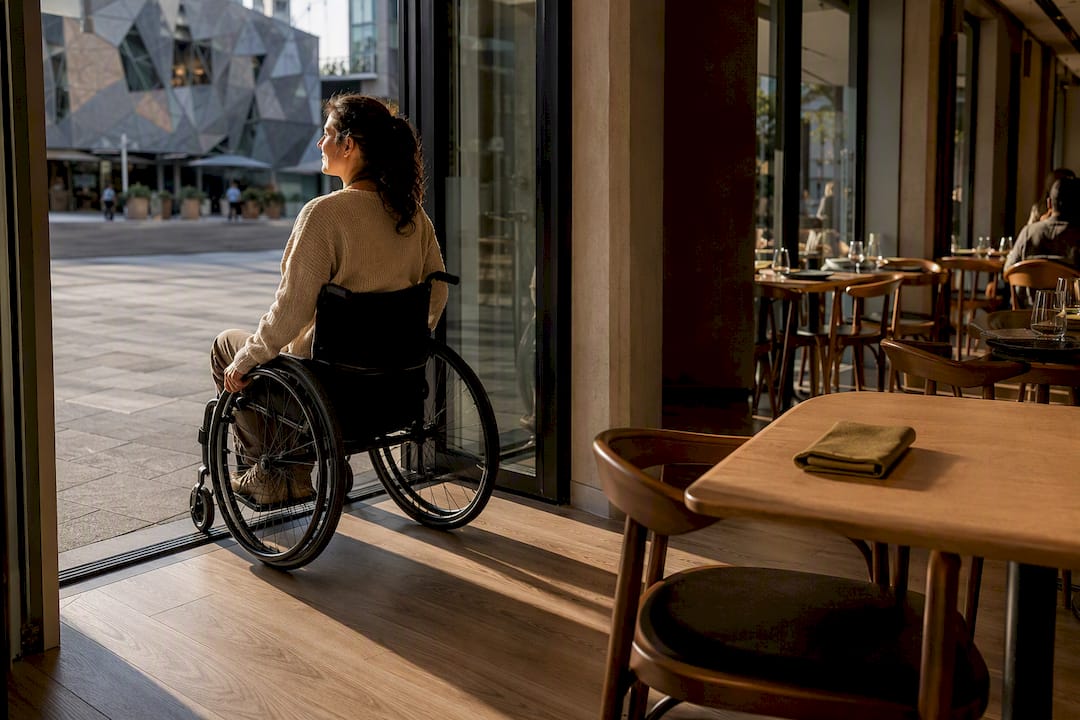
Around Melbourne Museum and the Royal Exhibition Building, Carlton Gardens' surrounding strip has several ground-floor cafes with flat entries, though footpath width varies block to block, so it pays to check Google Street View or call ahead if you're using a larger mobility device. Bourke Street Mall and the surrounding laneways near Melbourne Park have a mix of chain cafes with reliable step-free entry and smaller independent spots where accessibility depends entirely on the individual building, since many CBD laneway venues occupy older, narrower shopfronts.
The safest approach is the same one that works for venues: ring ahead and ask about entrance width, table spacing and toilet access rather than assuming a modern-looking cafe automatically clears the bar. Larger food courts, including those attached to major shopping centres along Bourke Street and Elizabeth Street, tend to offer the most reliable combination of wide aisles, accessible toilets and flexible seating for groups travelling with mobility equipment.
Getting help on the day: assistance programs and volunteer support
Travellers Aid is the main organisation offering hands-on support for visitors with disabilities moving through central Melbourne, with a presence near Southern Cross Station and Flinders Street Station. Staff can assist with transfers between transport and venues, provide equipment loans in some cases, and offer general trip planning advice for visitors unfamiliar with the CBD layout.
Individual venues also run their own guest services teams trained to assist on arrival, whether that's guiding someone from a drop-off point to an accessible entrance or coordinating a wheelchair loan that's already been booked. These aren't formal "volunteer guide" programs in the way some overseas cities run them, but the practical effect is similar: contact the venue's guest services line ahead of time, explain what support you need, and staff will usually meet you at the entrance rather than leaving you to navigate alone.
Companion Card holders get an added layer of support built into the system itself, since the free companion ticket exists specifically so someone can provide assistance throughout the visit without the cost of a second full-price ticket. If you're travelling without a regular support person, ask the venue directly whether staff can provide equivalent assistance for the duration of your visit.
Accessibility laws and standards behind Melbourne's attractions
Australia's Disability Discrimination Act 1992 sets the legal baseline requiring public venues and transport services to provide access for people with disability, and it's the framework behind most of what you'll see enforced at CBD attractions. On top of that sits the Disability Standards for Accessible Public Transport, which sets specific technical benchmarks for things like low-floor vehicle design and platform height, though the VAGO audit's findings show compliance across Melbourne's tram fleet remains a work in progress rather than a finished job.
Individual venues also follow the Premises Standards, a building code addition that governs step-free entry, ramp gradients and accessible toilet design in new and renovated buildings. That's why newer CBD developments and recently renovated galleries tend to outperform older heritage buildings on straightforward physical access. It also explains why heritage sites so often rely on side entrances and staff assistance rather than a fully compliant front door. None of these standards guarantee a perfect experience at every venue, which is exactly why checking a venue's own access page before you travel matters more than assuming legal minimums have closed every gap.
Local perspective: planning an inclusive day out in Melbourne CBD
Accessibility in this city rewards the people who plan ahead and frustrates everyone who doesn't. That's not a criticism of Melbourne specifically. It's true of any dense CBD where heritage buildings sit next to brand-new galleries, and where a five-minute walk can mean three different tram stops with three different levels of access. The gap between a great day out and a stressful one usually comes down to two phone calls made the day before, not luck on the day itself.
One thing that consistently makes the difference: staying somewhere within easy reach of a level-access tram stop. It sounds minor until you're the one working out a return trip at 4pm with a tired kid or a partner who's had enough of transfers for one day. A central CBD base near the free tram zone cuts that friction out almost entirely, which is exactly the kind of practical detail worth weighing when you book.
— Kamal
Stay central with Alto Hotel on Bourke
Alto Hotel on Bourke sits inside Melbourne's free tram zone, close to level-access stops that connect directly to Melbourne Museum, the NGV and Federation Square, so your day doesn't hinge on a single tram running to schedule. It also means you're not trading sustainability for convenience just to stay somewhere central.
The accommodation range includes options suited to different travel groups: the Studio Queen works well for solo travellers or couples who want a compact CBD base, while the 2 Bedroom Sleepover gives families or small groups extra room and in-suite kitchen facilities, useful if you're managing dietary needs or just want a quiet breakfast before a full day out. If you're travelling with mobility equipment or have specific access requirements, contact the hotel directly ahead of your stay so the team can talk through what's available. You can check dates and book directly through the Alto Hotel on Bourke website to lock in your central base before the rest of your itinerary.
Where to check accessibility details before you travel
Venue websites change faster than any guide can keep up with, so treat these as your primary sources on the day you're booking. Museums Victoria's Melbourne Museum accessibility page, the NGV access page and Melbourne Park's accessibility information all cover entry points, toilets and booking processes in detail.
For transport, Yarra Trams' accessibility guidance lists staffed stops, and the VAGO tram accessibility audit is worth a skim if you want to understand exactly where the network's gaps sit. Cross-checking more than one source before you travel, rather than trusting a single app, remains the most reliable habit for avoiding surprises on the day.
Sources
- Accessibility | Melbourne Museum (Museums Victoria)
- Accessibility - Melbourne Park
- Accessibility of tram services (Victorian Auditor‑General’s Office)
- Access | NGV
FAQ
What are the best wheelchair-accessible attractions in Melbourne CBD?
Melbourne Museum, the NGV, the Royal Botanic Gardens, Federation Square and Melbourne Park at Rod Laver Arena are the most consistently accessible, each with level access, accessible toilets and published access guides.
Where should I take elderly parents in Melbourne?
The Royal Botanic Gardens and Federation Square both suit visitors who tire easily, thanks to flat paved paths, plenty of seating and nearby accessible toilets, with the added benefit of level-access tram stops close by.
What are some hidden gems and accessible activities in Melbourne CBD?
Federation Square's Koorie Heritage Trust offers step-free cultural exhibits many visitors overlook, and the Royal Botanic Gardens' quieter side paths near the Observatory Gate provide a calmer, less crowded accessible route than the main visitor loop.
How do I check accessibility at a specific Melbourne venue before I go?
Check the venue's own accessibility page first, then call to confirm Companion Card booking, wheelchair loan availability and entrance details, since online listings don't always reflect current arrangements.
Does Alto Hotel on Bourke suit guests planning accessible outings?
Alto Hotel on Bourke sits within the free tram zone near level-access stops connecting to Melbourne's major attractions, and guests with specific access needs can contact the hotel directly to discuss room and facility options.