
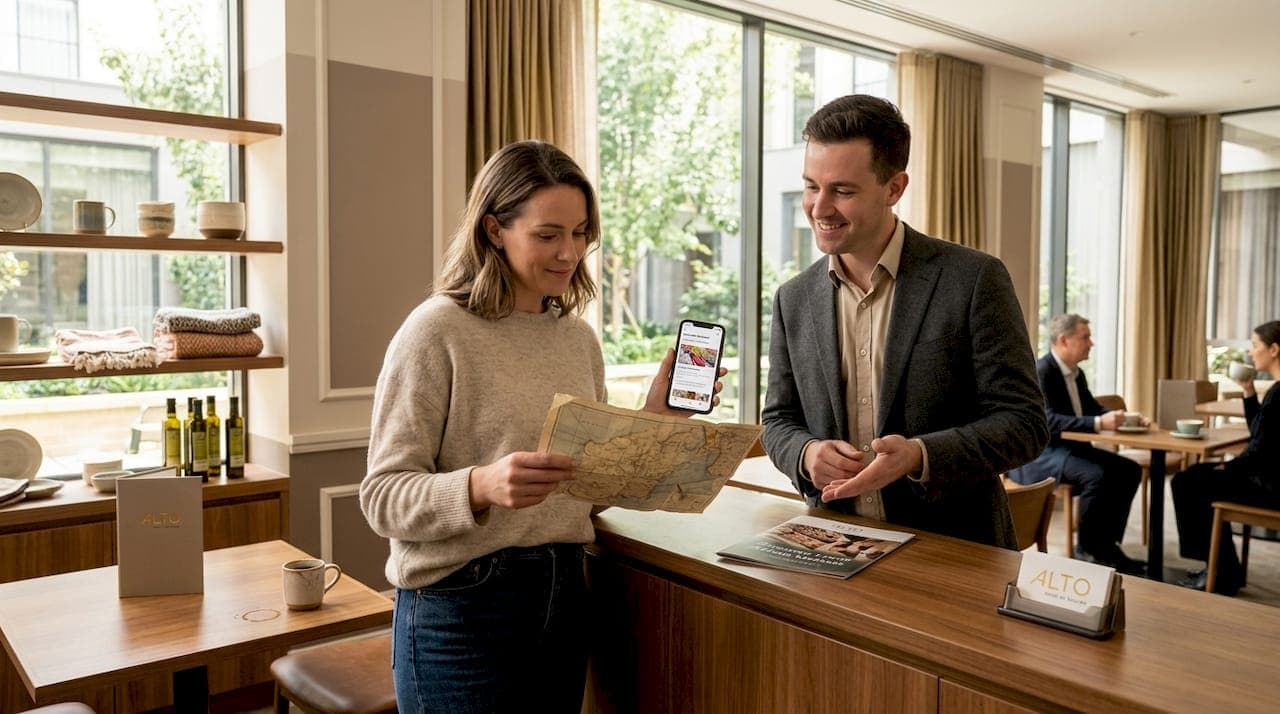
The most direct way to access local markets while staying at a boutique hotel is to let the hotel itself do the heavy lifting. Boutique properties, unlike large chain hotels, are wired into their neighbourhoods. They know which farmers' market opens at dawn on Saturday, which floating market peaks before 6:30am, and which stall sells the best produce before the crowds arrive. Booking.com research shows 77% of travellers want cultural authenticity and 73% want their spending to support local communities. Boutique hotels are built precisely to deliver both.
How boutique hotels connect guests with local markets
Boutique hotels are defined by their smaller scale, independent ownership, and deep ties to the neighbourhoods they occupy. EHL Hospitality Insights identifies hyper-local curation as the defining advantage of boutique properties. Where a large chain hotel offers a generic city map, a boutique hotel offers a handwritten list of vendors, a preferred time to arrive, and a staff member who knows the stallholder by name.
This local-rootedness shapes every part of the guest experience. Boutique hotels source amenities from nearby artisans, stock in-room provisions from local producers, and design their concierge services around the rhythms of the surrounding community. The result is a stay that feels genuinely connected to place rather than interchangeable with any other city.

The community hub model takes this further. Platform Magazine describes Hotel Bardo's Club Bardo programme, which runs cooking classes using fresh market ingredients, weekly jazz nights, and yoga sessions designed to draw both guests and locals into shared cultural activities. This model turns the hotel into a meeting point between travellers and the community, rather than a sealed bubble that keeps them apart.
The contrast with standard hotels is stark. A large chain property may mention a nearby market in a printed leaflet. A boutique hotel builds the market into its programming, its breakfast menu, and its staff knowledge. For travellers exploring local markets as a core part of their trip, this difference is the entire point.
"Boutique hotels have more capacity to craft hyper-local curated experiences, making them ideal for travellers seeking true immersion in local market culture." — EHL Hospitality Insights
Pro Tip: Ask your boutique hotel concierge for a vendor-specific recommendation, not just a market name. The best staff will tell you which stall to visit first and what to buy before it sells out.
How to plan your market visits from a boutique hotel stay
Timing is the single most important variable in any market visit. The first two hours after a market opens are when the freshest produce is available, the best selection exists, and the atmosphere is at its most alive. Italian market experts recommend arriving before 9am for Rome's Campo de' Fiori, which runs from 7am to 1pm. By late morning, the best vendors have sold out and the energy has shifted.
For floating markets, the timing is even more precise. The Cai Rang floating market in Can Tho, Vietnam, opens at 5:00am with peak wholesale trading between 5:30 and 6:30am. Being on the water at Ninh Kieu Wharf before 5:00am is not optional. It is the difference between witnessing a working market and arriving at its tail end.
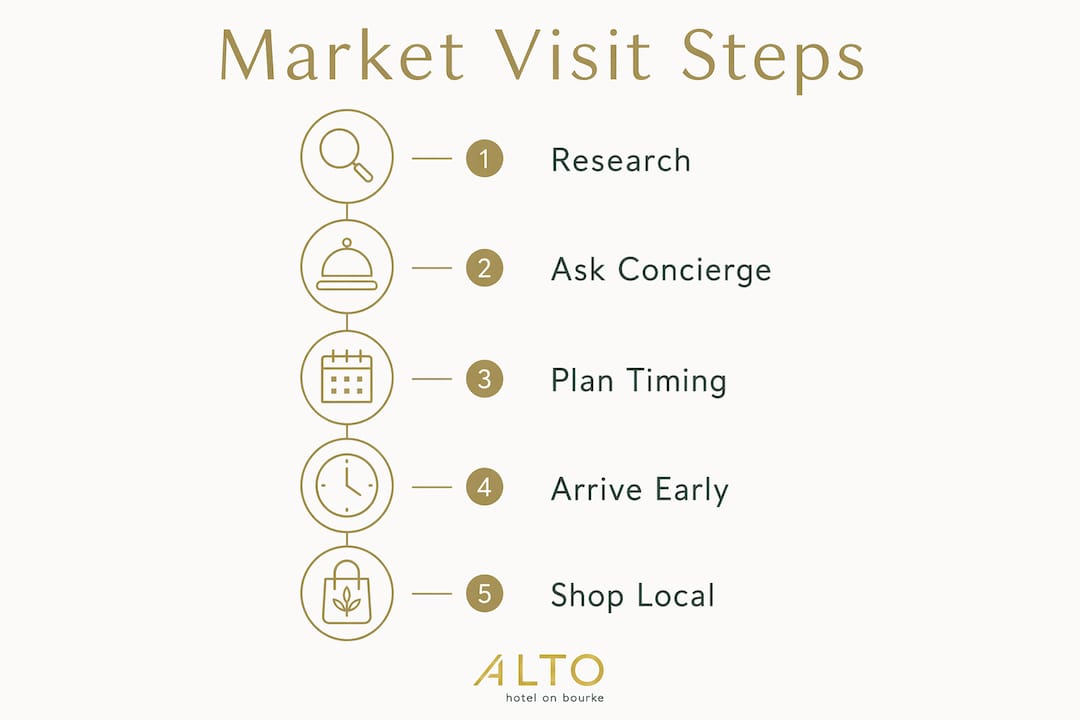
Here is a practical planning sequence for market visits from a boutique hotel base:
- Confirm market days and hours with your hotel concierge before you arrive. Weekly markets in Italy, Australia, and Southeast Asia often run on specific days only.
- Book transport in advance through the hotel. Hotels in Can Tho manage boat bookings for Cai Rang with fixed rates and departure times aligned to peak hours.
- Set your alarm for the opening hour, not a comfortable hour after. The best market selection is gone within the first two hours.
- Dress for the conditions. Outdoor markets in Melbourne's South Melbourne or Queen Victoria Market require layers in winter. Floating markets in Vietnam demand light, quick-dry clothing and sun protection.
- Carry small notes and a reusable bag. Many market vendors prefer cash, and a fabric bag signals respect for the culture of the market.
- Learn two or three phrases in the local language. Even a basic greeting shifts vendor interactions from transactional to genuinely warm.
Pro Tip: Sync your hotel check-in day with a major local market day. Arriving the evening before a Saturday farmers' market means you can be there at opening without rushing.
What hotel services can enhance your access to local markets?
The services a boutique hotel offers around market access range from simple information to fully organised experiences. The table below outlines the most common options and what each delivers.
| Service | What it delivers |
|---|---|
| Concierge market routes | Personalised vendor lists, timing advice, and neighbourhood walking directions |
| Organised transport | Pre-booked taxis, tuk-tuks, or boat rides timed to market peak hours |
| Cooking classes | Hands-on sessions using produce bought at local markets that morning |
| In-room local provisions | Artisan products sourced from nearby vendors, giving guests a taste before they visit |
| Vendor partnerships | Direct introductions to stallholders, sometimes with preferred pricing or reserved items |
Beyond the table, the most underused service is the concierge conversation. Most travellers ask "where is the market?" A better question is "what should I buy there, and who should I buy it from?" Boutique hotel staff who live in the neighbourhood answer this differently from a chain hotel employee reading from a script.
Locally sourced in-room amenities also serve a practical purpose beyond comfort. When a boutique hotel stocks its rooms with honey from a nearby apiary or soap from a local maker, it gives you a reference point. You arrive at the market already knowing what the region produces and what quality looks like. This makes the shopping experience more confident and more rewarding.
- Boutique hotels with local artisan partnerships often provide guests with producer cards or QR codes linking to vendor stories.
- Some properties offer a "market basket" service, where staff shop on your behalf if you cannot make the early opening.
- Hotel-organised tastings and pop-up stalls in the lobby bring the market to guests who have limited mobility or time.
How do eco-friendly boutique hotels promote sustainable market experiences?
Sustainable tourism, as applied to boutique hotels, means reducing the environmental and cultural footprint of a stay while increasing the benefit to local communities. Eco-friendly boutique hotels operationalise this through their market relationships. When a hotel sources its breakfast produce from a farmers' market two kilometres away, it cuts transport emissions, supports a local grower, and gives guests a direct connection to the food they eat.
The benefits of staying boutique extend to how guests spend money during their trip. Shopping at a local market rather than a tourist-facing retail chain keeps spending within the community. This is the practical expression of the 73% of travellers who say they want their money to support local people.
Eco-conscious boutique hotels also guide guests toward ethical vendors. This means recommending stallholders who use minimal packaging, grow without synthetic pesticides, or produce goods using traditional methods that preserve cultural knowledge. The hotel acts as a filter, helping guests make choices that align with their values without requiring them to research every purchase independently.
Tips for minimising your environmental impact at local markets:
- Bring a reusable bag and refuse plastic packaging where possible.
- Buy produce in quantities you will actually use. Food waste at markets is a real issue.
- Choose vendors selling seasonal, locally grown goods over imported products.
- Avoid purchasing items made from protected species or materials with unclear provenance.
- Pay fair prices. Aggressive bargaining at small community markets undercuts the livelihoods the market is designed to support.
The slow travel principle applies here directly. Spending three days at a single market, returning each morning, builds a relationship with vendors and a genuine understanding of what the region produces. This is the opposite of a rushed tourist circuit and it is exactly what boutique hotels reflecting local culture are designed to support.
What challenges might travellers face accessing local markets?
The most common mistake is arriving too late. Markets that open at 7am are effectively over by 11am for serious shoppers. Travellers who treat a market visit as a mid-morning activity after a leisurely hotel breakfast consistently miss the best of what is on offer.
Language barriers are the second challenge. In Italy, Vietnam, and many parts of Australia's regional areas, vendors appreciate even a basic attempt at the local language. A simple "buongiorno" in Rome or "xin chào" in Can Tho opens conversations that a silent point-and-pay transaction never will.
Here is how to avoid the most common pitfalls:
- Confirm the market is running. Seasonal markets, public holidays, and weather events cancel markets without much notice. Your hotel concierge is the fastest way to verify.
- Avoid peak tourist hours. At Melbourne's Queen Victoria Market, the 10am to noon window is the most crowded and least authentic. Arrive at 7am for a different experience entirely.
- Navigate with purpose. Walk the full market before buying anything. This prevents overpaying at the first stall when a better option exists three rows back.
- Understand the culture of negotiation. In Southeast Asian markets, gentle bargaining is expected. At Australian farmers' markets, it is generally not. Misreading this creates awkward interactions.
- Plan your return route. Carrying fresh produce, ceramics, or textiles back to your hotel requires thought. Ask the concierge about the best transport option before you leave.
Pro Tip: If you are visiting a market in a language you do not speak, download Google Translate's offline language pack the night before. It works without data and handles most vendor conversations adequately.
Key takeaways
Boutique hotels are the most effective base for accessing local markets because their scale, staff knowledge, and community ties directly translate into better timing, better vendor access, and more authentic experiences.
| Point | Details |
|---|---|
| Arrive in the first two hours | The best produce and products sell out quickly; plan your schedule around market opening times. |
| Use your concierge specifically | Ask for vendor names and timing, not just market locations, to get genuinely useful guidance. |
| Book transport through the hotel | Pre-arranged rides aligned to market peak hours save time and prevent missed windows. |
| Shop local to support communities | Spending at markets rather than tourist retail keeps money within the community you are visiting. |
| Eco-friendly hotels filter your choices | Boutique properties with sustainability values recommend vendors who align with ethical and environmental standards. |
Why boutique hotels changed how I think about market travel
I used to treat markets as a side activity. Something to tick off between the main sights. What changed my thinking was a stay at a small property in regional Victoria where the owner handed me a handwritten note at breakfast. It listed three stalls at the Saturday market, what each one sold, and what time to be there. That note was worth more than any travel app I had used.
The insight I keep coming back to is this: the hotel is not separate from the market. In a well-run boutique property, the two are the same ecosystem. The honey on your breakfast table came from the beekeeper at the Saturday market. The soap in your bathroom was made by the woman who sells at the Sunday artisan fair. When you visit those stalls, you are not discovering something new. You are completing a connection the hotel already started.
I have also noticed that eco-friendly boutique hotels attract guests who shop differently at markets. They ask questions about growing methods. They buy less but choose more carefully. They come back to the same vendor on the second morning. This is the kind of market engagement that actually benefits the community, rather than extracting from it.
The timing discipline is real and worth taking seriously. Missing the first hour of a market is not a minor inconvenience. It is the difference between the market as a living, working place and the market as a tourist backdrop. Boutique hotels that understand this build their morning programmes around it. That is the detail that separates a genuinely local stay from one that merely uses the word.
— Kamal
Stay at Altohotel and discover Melbourne's markets
Altohotel, Melbourne's premier eco-friendly boutique hotel on Bourke Street, is positioned to connect you directly with the city's most rewarding market experiences. From the Queen Victoria Market to South Melbourne Market, the hotel's concierge team provides specific vendor recommendations, timing guidance, and transport options tailored to your stay. Altohotel's partnerships with local artisans mean you arrive at markets already knowing the region's best producers. Whether you choose the spacious 2 bedroom sleepover for a group market trip or a studio queen for a solo cultural stay, Altohotel gives you the boutique base that makes authentic Melbourne market access genuinely easy.
FAQ
What makes boutique hotels better for accessing local markets?
Boutique hotels offer hyper-local knowledge, personalised concierge services, and community ties that large chain hotels cannot replicate. EHL Hospitality Insights confirms boutique properties provide tailored market routes and direct vendor connections as part of their core offering.
What time should I arrive at a local market?
Arrive within the first two hours of opening for the best selection. Italian market experts recommend being at Rome's Campo de' Fiori before 9am, while the Cai Rang floating market peaks between 5:30 and 6:30am.
How do I find local markets near my boutique hotel?
Ask your concierge for a specific list of market days, opening times, and vendor recommendations rather than a generic map. Boutique hotel staff with genuine neighbourhood knowledge will give you far more useful guidance than a tourist information brochure.
How do eco-friendly boutique hotels support sustainable market shopping?
Eco-conscious properties recommend vendors who use minimal packaging, grow seasonally, and produce goods using traditional methods. They also source their own in-room amenities from local markets, giving guests a direct reference point before they visit.
Can boutique hotels arrange transport to early morning markets?
Yes. Many boutique hotels pre-book transport timed to market peak hours. Hotels near floating markets in Vietnam, for example, manage boat bookings with fixed rates and departure times aligned to the busiest trading window.